The Personality Atlas
THE CELEBRITY PERSONALITY ARCHIVE / PERSONAL FINANCE

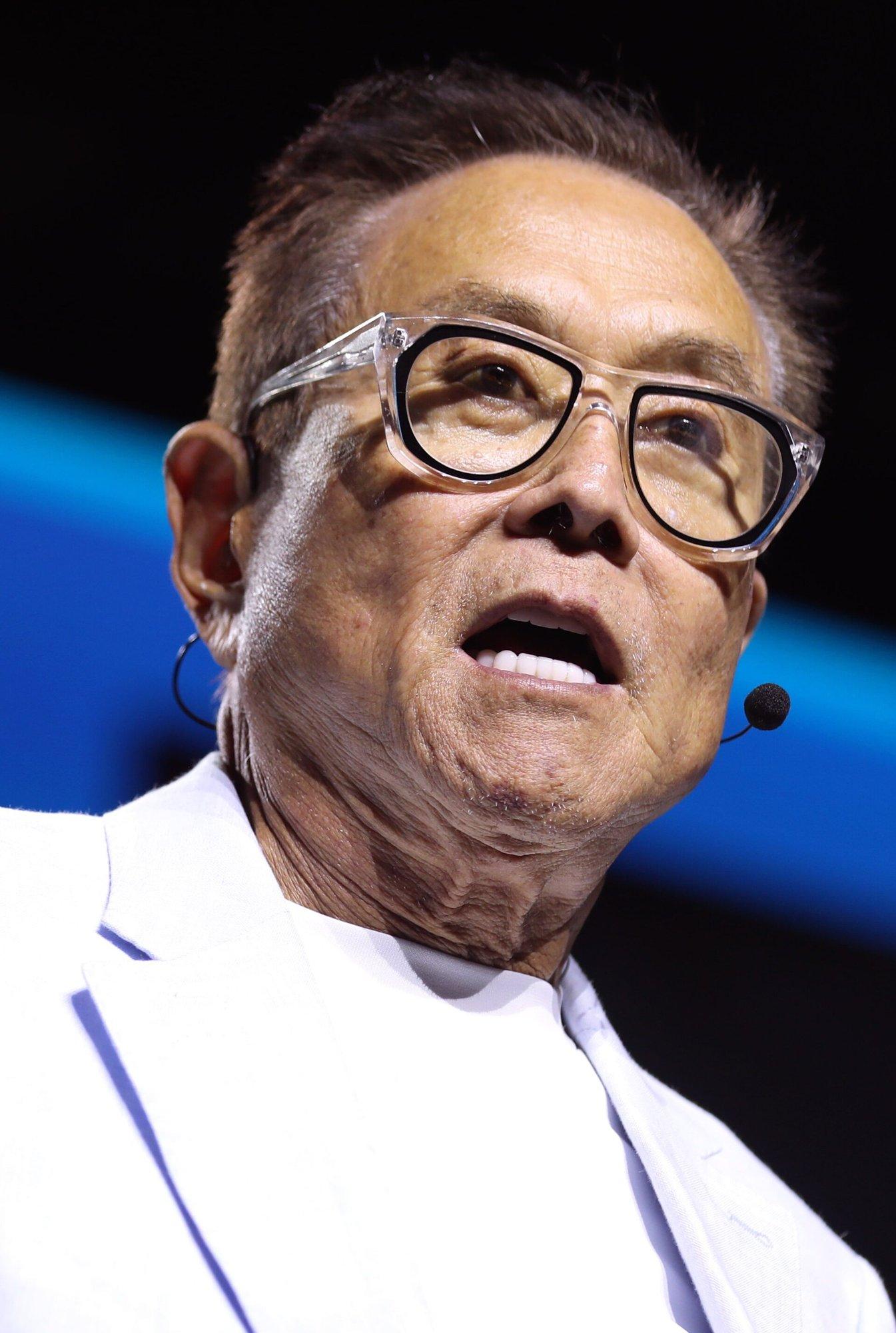
Robert Kiyosaki.

Entrepreneur · Author · Financial Educator

Robert Kiyosaki turned personal finance into a repeatable parable: Rich Dad Poor Dad, Cashflow games, seminar stages, and a decades-long argument that jobs and school train dependence while assets buy freedom. Even the rougher facts in his public record—two early bankruptcies, a later corporate bankruptcy, criticism of seminars, constant reinvention—fit a man who keeps trying to impose one overarching map on a messy economic world.

OBJECTIVE PERSONALITY CLASSIFICATIONMM-Ni/Fi-SB/P(C)What does this mean?
PERSONALITY SYSTEMObjective Personality
LEAD FUNCTIONNi · Introverted Intuition
SECOND SAVIOR FUNCTIONFi · Introverted Feeling
MBTI EQUIVALENTINTJ
01 / BEHIND THE CLASSIFICATION

The personality behind the fame.

How does a recorded OPS classification like MM-Ni/Fi-SB/P(C) break down? Walk through nine coins and watch the proposed type take shape. These are deductions from the archived code, not independent evidence of typing accuracy.

Scroll below to see Robert Kiyosaki take shape.

STARTING POINT512 possible OPS typesEach type combines core functions, an animal order, and sexual modalities.
THE FINISH LINEMM-Ni/Fi-SB/P(C)One recorded classification, decoded from its components.
Robert Kiyosaki’s HUMAN NEEDS 01—03
01
DECIDER OR OBSERVER?

Observer over Decider

Observers have more balanced Decider poles in the middle: Self (Di) and Tribe (De). Their own perspective and other people's perspectives tend to be easier to navigate. Things are the harder territory. Control (Oi) and Chaos (Oe) sit at the extremes, so disrupted plans, uncertainty, and a changing world can trigger the strongest reactions.

Kiyosaki’s public life keeps circling circumstances he cannot simply talk into submission: early companies that went bankrupt, a brand that kept expanding anyway, and a financial gospel built around surviving unstable markets. That points to Observer friction, where the pressure lands on conditions, systems, timing and control. The strength is resilience inside changing realities; he does not stop at one failed venture. The blind spot is assuming a stronger framework will tame every messy variable. Growth costs him certainty, because reality sometimes refuses the neat lesson.
O
02
SELF OR TRIBE?

Di · Self over De · Tribe

Self (Di) is the stronger deciding pole. They check decisions against their own values or reasons first: what makes sense to me, what feels right to me? The strength is independent conviction; the recurring friction is the Tribe (De)—other people's standards, feedback, and expectations. As the portrait unfolds, notice how Self takes the lead.

Kiyosaki’s most recognizable message did not come from waiting for institutional approval. He published books urging parents to reconsider college, insisted wealth comes from assets rather than traditional employment, and kept repeating those views even when critics pushed back. That Self-first tilt gives his work a strong spine: the teaching sounds owned, not committee-written. The cost is obvious. A private standard can harden into a closed circuit, where criticism from partners, attendees or journalists is heard as resistance rather than potentially useful correction.

Di
03
GATHER OR ORGANIZE?

Oi · Organize over Oe · Gather

Organize (Oi) leads with refining, preserving, and structuring what is already known. Its strength is preparation and clear direction; the recurring friction is unexpected change that disrupts the plan. Another layer of the personality portrait comes into focus.

The Rich Dad empire runs on organized repetition: the same core distinctions about assets, liabilities, passive income and leverage appear across books, videos, games and seminars. Organize-first helps Kiyosaki turn finance into a portable framework ordinary people can remember. That is a real strength; systems scale better than scattered tips. The weakness is that a settled model can become too persuasive to its creator. When market conditions change or a favored thesis stops fitting, the cost of updating the structure can feel higher than defending it.

Oi
FIRST THREE COINSO + Di + Oi

These establish the preferred human needs in the OPS framework.

Robert Kiyosaki’s FUNCTIONS 04—05
04
FEELING OR THINKING?

Feeling · F over Thinking · T

Feeling (F) evaluates decisions through values, meaning, and what matters—not simply through emotion. Its strength is a clear sense of significance; Thinking (T) provides balance through impersonal reasons, consistency, and evidence. Combined with Self (Di), this forms the recorded Savior Fi.

Kiyosaki’s Feeling coin shows up in the value-laden way he frames money. In If You Want to Be Rich and Happy, Don’t Go to School? and later Rich Dad books, he does not sound like a neutral technician. He sounds like someone making a personal judgment about what kind of life is worth pursuing and what forms of dependence are unacceptable. Fi gives conviction and a recognizable moral center. The limit is that a deeply held value can outrun shared proof. A strong personal stance still needs transparent evidence and practical accountability.

F → Fi
05
SENSING OR INTUITION?

Intuition · N over Sensing · S

Intuition (N) focuses on concepts, patterns, and what information might mean. Sensing (S) balances it through observable facts, physical detail, and direct experience. Combined with Organize (Oi), this gives the recorded Savior Ni.

His Intuition is hard to miss because Kiyosaki sells an overarching pattern, not a stack of isolated tactics. Rich dad versus poor dad, assets versus liabilities, good debt versus bad habits: he compresses sprawling economic behavior into memorable themes. That makes complicated material portable and marketable. The tradeoff is simplification. Critics have argued that his advice leans on anecdotes and broad claims more than step-by-step guidance. A powerful long-range story can focus attention brilliantly while still skipping the stubborn details that decide whether a strategy actually works.

N → Ni
THE TWO SAVIOR FUNCTIONSNi / Fi

Opposing functions: Se and Te. This is a jumper classification.

Robert Kiyosaki’s ANIMAL STACK 06—07
06
PLAY OR SLEEP?

Sleep over Play

Play emphasizes external real-time engagement; Sleep emphasizes internal processing. The recorded stack places Sleep earlier.

The Rich Dad message feels heavily processed before it reaches the public. Play versus Sleep lands in favor of Sleep: the books, games and recurring lessons present a worldview that has been privately settled and rehearsed, not improvised in the moment. That creates consistency, which is part of the brand’s power. The drawback is rigidity. When a framework has been internally refined for years, spontaneous pushback can look like distraction instead of data. Growth means letting live interaction test the certainty rather than merely receive it.

S > P
07
CONSUME OR BLAST?

Blast over Consume

Consume gathers information for internal processing; Blast organizes and communicates information. The recorded order is Sleep → Blast → Play → Consume. This comparison follows their positions in that stack.

Blast comes earlier than Consume in the way Kiyosaki built his public career. He has produced more than 26 books, used them as gateways to seminars, and repeatedly translated his framework into direct, emphatic teaching. That is the strength: he can state a thesis plainly enough that millions remember it. The shadow is that broadcasting can outrun fresh intake. Public criticism of Rich Dad seminars often centered on the gap between big promises and concrete guidance. The growth cost is slowing the message long enough to absorb inconvenient specifics before declaring the lesson finished.

B > C
Robert Kiyosaki’s ANIMAL ORIENTATION 08—09
08
INFO OR ENERGY DOMINANT?

Energy over Info

Energy dominant means Play and Sleep are both in the top three: there is access to expending energy through engagement and conserving it through internal processing. Consume last leaves the information side uneven—Blast may broadcast more than gets taken in.

Kiyosaki’s stack lands on Energy over Info because Sleep, Blast and Play all arrive before the missing fourth-animal work of Consume. Publicly, that looks like someone able to hold a private thesis, project it outward, and keep people engaged through books, seminars and media appearances. The strength is momentum with a center. The void is not a lack of passion; it is thin intake. When documentaries, lawsuits or market reversals challenge the message, the balancing act is taking in more unflattering detail rather than simply sharpening the pitch.

Energy
09
INTROVERSION OR EXTROVERSION?

Extroversion over Introversion

The last animal, Consume, determines this OPS coin: Play or Blast last means Introversion; Consume or Sleep last means Extroversion. This describes animal orientation, not sociability or shyness.

This final coin is Extroversion in the OPS sense, not a claim about charm or party energy. Because Consume sits last, Kiyosaki’s pattern puts private processing, outward explanation and active engagement ahead of taking in new information. That matches a career that keeps issuing strong conclusions—about debt, real estate, gold, silver or Bitcoin—without waiting for universal agreement. The advantage is decisiveness and reach. The liability is informational lag: by the time fresh facts are fully admitted, the next big claim may already be onstage.

E
Sexual Modalities

The four sexual modalities.

OPS uses masculine/feminine sensory and extroverted-deciding distinctions as framework-specific terms, not gender categories. The four modalities are already included in the original 512 types. The recorded modality is MM · Kinesthetic.

MM RECORDED MODALITYKinestheticMasculine Sensory · Masculine De
MF AudioMasculine Sensory · Feminine De
FF TesterFeminine Sensory · Feminine De
FM VisualFeminine Sensory · Masculine De
COMPLETE RECORDED OPS TYPE · MODALITY INCLUDEDMM-Ni/Fi-SB/P(C)

Ni leads, Fi supports, and the animal stack is Sleep → Blast → Play → Consume.

THE FINISHED PORTRAIT · ALL NINE COINS REVEALED

Robert Kiyosaki's complete function and animal stack

SleepBlastPlayConsumefNimTefFimSe
MM-Ni/Fi-SB/P(C)DOUBLE ACTIVATED · BLASTExplore the Interactive Coin Builder →
THE ROBERT KIYOSAKI LENS

The fable is the product.

Rich Dad Poor Dad made Kiyosaki famous by turning finance into a portable fable: two father figures, two value systems, one sharp lesson about assets and dependence. Behind that public image is a relentless brand builder who kept repackaging the same economic map through books, games and seminars, even as bankruptcies and critical reporting complicated the pitch.

His savior pairing is Ni with Fi. The strength is compression with conviction: Kiyosaki can reduce a sprawling subject to a directional thesis and make it sound personally staked. That makes the message memorable. The limit is a closed loop. A powerful internal narrative plus private certainty can stay persuasive to him after outside evidence turns messy, thin or inconvenient.

As an Observer and Double Decider, his core imbalance is not mainly approval or rejection from the tribe. It is the need to control chaotic circumstances by forcing them into a stable forecast. That pressure overworks certainty about things. Neglected Se, opposite his lead Ni, asks for the immediate facts on the ground, especially when they disrupt the cleaner long-range story.

Sleep → Blast → Play → Consume is the full animal order, and last Consume creates the classic imbalance: he can refine a worldview, teach it forcefully and keep it socially active before fully taking in new information. The balancing move is not softening the thesis into mush. It is pressure-testing each big claim against current numbers, failed case studies and direct contradictions before selling the next lesson.

Want to understand the Savior and Demon states behind these nine coins? Explore the complete explanation, visual examples, and typing principles on our Methodology page →

02 / KEEP EXPLORING

Different faces. Familiar patterns.

Explore other celebrities with related recorded OPS classifications. Related functions are not necessarily exact type matches.

Discover Type Twins
YOUR TURN

Curious about your own type?

Discover how your own personality might be classified through Objective Personality.

Get objectively typed
Robert Kiyosaki's Personality Type & OPS Profile | The Personality Atlas