The Personality Atlas
THE CELEBRITY PERSONALITY ARCHIVE / BUSINESS & TECH

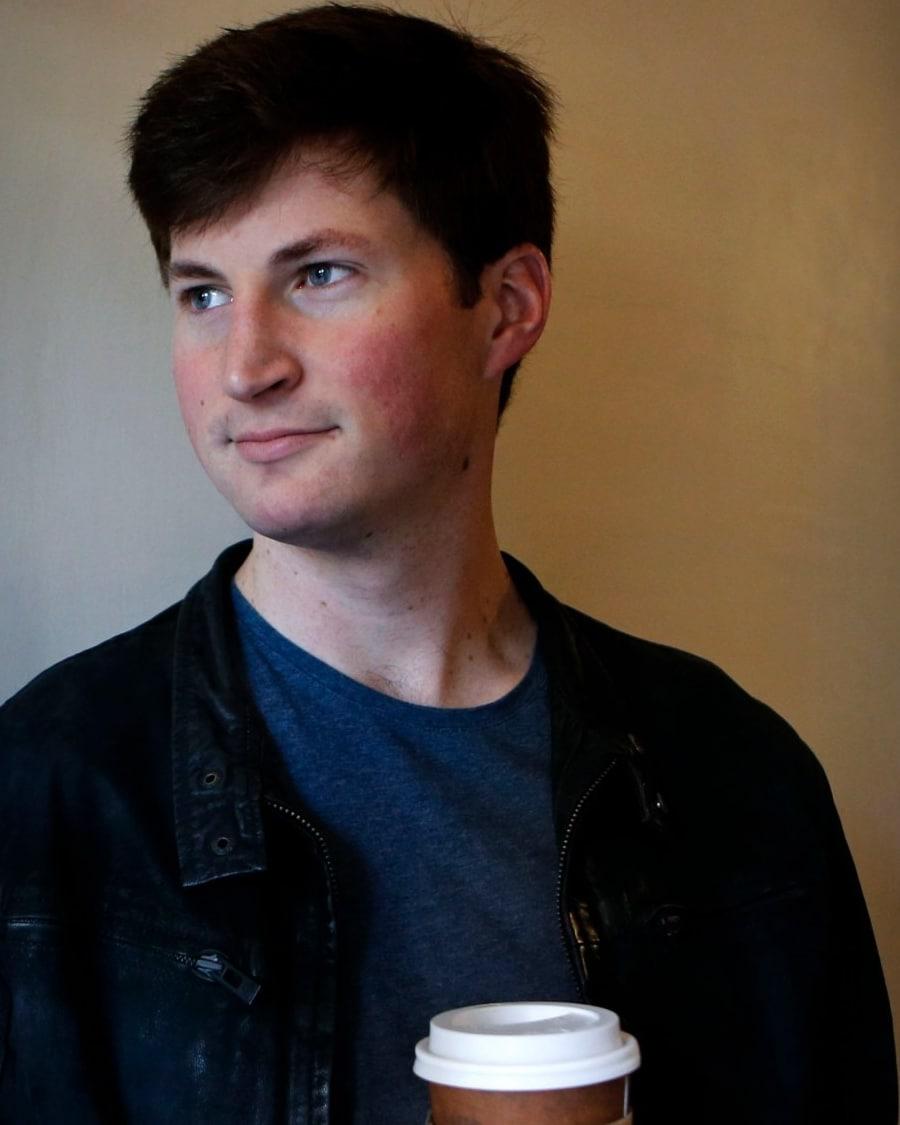
Rob Rhinehart.

Software engineer · Soylent founder · Entrepreneur

Rob Rhinehart did not enter business culture as a conventional food founder. He entered by buying 35 chemical ingredients, trying to engineer a complete diet from first principles, and turning that self-run experiment into Soylent—a brand that moved from blog-era curiosity and $1.5 million in preorders to major retail shelves, profitability, and eventual acquisition.

OBJECTIVE PERSONALITY CLASSIFICATIONMF-Ne/Ti-CS/P(B)What does this mean?
PERSONALITY SYSTEMObjective Personality
LEAD FUNCTIONNe · Extroverted Intuition
SECOND SAVIOR FUNCTIONTi · Introverted Thinking
MBTI EQUIVALENTENTP
01 / BEHIND THE CLASSIFICATION

The personality behind the fame.

How does a recorded OPS classification like MF-Ne/Ti-CS/P(B) break down? Walk through nine coins and watch the proposed type take shape. These are deductions from the archived code, not independent evidence of typing accuracy.

Scroll below to see Rob Rhinehart take shape.

STARTING POINT512 possible OPS typesEach type combines core functions, an animal order, and sexual modalities.
THE FINISH LINEMF-Ne/Ti-CS/P(B)One recorded classification, decoded from its components.
Rob Rhinehart’s HUMAN NEEDS 01—03
01
DECIDER OR OBSERVER?

Observer over Decider

Observers have more balanced Decider poles in the middle: Self (Di) and Tribe (De). Their own perspective and other people's perspectives tend to be easier to navigate. Things are the harder territory. Control (Oi) and Chaos (Oe) sit at the extremes, so disrupted plans, uncertainty, and a changing world can trigger the strongest reactions.

In January 2013, Rhinehart bought 35 chemical ingredients and tried to build a complete diet from them, then spent two months adjusting proportions as practical problems showed up. That is Observer pressure in plain sight: the world keeps throwing variables back at the plan. The strength is unusual adaptability. He kept iterating until the formula, cost, and logistics worked well enough to launch. The blind spot is treating every obstacle as another system bug to solve, when taste, regulation, and consumer habits do not always submit to control on the engineer's timetable.
O
02
SELF OR TRIBE?

Di · Self over De · Tribe

Self (Di) is the stronger deciding pole. They check decisions against their own values or reasons first: what makes sense to me, what feels right to me? The strength is independent conviction; the recurring friction is the Tribe (De)—other people's standards, feedback, and expectations. As the portrait unfolds, notice how Self takes the lead.

Rhinehart’s original Soylent experiment was built from his own readings of biochemistry textbooks and government websites, not from waiting for mainstream food culture to bless the idea first. He even chose a name with morbid science-fiction associations because he wanted to provoke curiosity and deeper investigation. Self over Tribe gives him a decisive edge: he can move on a private standard even when the idea sounds socially absurd. The cost is obvious. A standard that feels coherent from the inside can still collide with customers, regulators, or collaborators who need more than one founder’s confidence before they follow.

Di
03
GATHER OR ORGANIZE?

Oe · Gather over Oi · Organize

Gather (Oe) leads with new information, experiences, and possibilities. Its strength is curiosity and adaptability; the recurring friction is narrowing the options and settling into what is already known. Another layer of the personality portrait comes into focus.

Soylent did not stay one fixed object. The formula changed repeatedly, the company moved from powders into ready-to-drink products, and distribution expanded from online orders to 7-Eleven, Walmart, Target, Kroger, Meijer, and eventually over 28,000 stores. Gather over Organize fits that willingness to keep opening the map. The strength is range: new channels and new versions can keep a startup alive. The growth cost is selectivity. Every new formulation, market, or retail opportunity competes with the calmer work of deciding what the product should stop becoming.

Oe
FIRST THREE COINSO + Di + Oe

These establish the preferred human needs in the OPS framework.

Rob Rhinehart’s FUNCTIONS 04—05
04
FEELING OR THINKING?

Thinking · T over Feeling · F

Thinking (T) evaluates decisions through reasons, logic, and what works—not a lack of emotion. Its strength is analytical consistency; Feeling (F) provides balance through values, meaning, and the human consequences of a decision. Combined with Self (Di), this forms the recorded Savior Ti.

Rhinehart’s founding move was almost aggressively analytical: reduce eating to nutrient requirements, source the ingredients, and test the formula against a logical standard of survival, cost, and efficiency. That is why Thinking makes more sense here than sentimentality about food culture. The advantage is clarity. He can strip a messy habit down to mechanisms and tradeoffs. The blind spot is that a logically elegant system can still feel punishingly thin in human terms. Reviews repeatedly turned on taste, texture, boredom, and ritual—the parts a clean model notices last.

T → Ti
05
SENSING OR INTUITION?

Intuition · N over Sensing · S

Intuition (N) focuses on concepts, patterns, and what information might mean. Sensing (S) balances it through observable facts, physical detail, and direct experience. Combined with Gather (Oe), this gives the recorded Savior Ne.

The idea itself is conspicuously intuitive: not just a drink, but a reimagining of meals as an engineered interface. Even the name reaches outward from nutrition labels to speculative fiction, with Rhinehart openly saying he wanted the unsettling reference to trigger deeper investigation. Intuition gives him a strength in framing possibilities that other people would dismiss as too weird or too abstract. The cost is concrete resistance. Regulations, flavor, texture, gastrointestinal complaints, and shelf realities force the concept back into the physical world, where a provocative idea has to survive more than its own originality.

N → Ne
THE TWO SAVIOR FUNCTIONSNe / Ti

Opposing functions: Si and Fe.

Rob Rhinehart’s ANIMAL STACK 06—07
06
CONSUME OR BLAST?

Consume over Blast

Consume gathers information for internal processing; Blast organizes and communicates information. The recorded order is Consume → Sleep → Play → Blast. This comparison follows their positions in that stack.

Before Soylent became a company, Rhinehart spent months reading biochemistry textbooks and government websites, buying ingredients, and revising the mix in response to problems. That is Consume earlier than Blast in unusually plain view. The strength is depth before declaration: he does not start with a slogan and hope the details catch up. He starts by absorbing. The blind spot is the classic cost of Consume. Another round of reading, testing, or tweaking can feel more honest than turning the findings into a simple message that other people can immediately evaluate or challenge.

C > B
07
PLAY OR SLEEP?

Sleep over Play

Play emphasizes external real-time engagement; Sleep emphasizes internal processing. The recorded stack places Sleep earlier.

Sleep comes earlier than Play here, and Soylent’s origin story shows why. Rhinehart first built an internal model—what nutrients mattered, how the formula should work, what tradeoffs he could tolerate—then brought that processed thesis into a company with co-founders, crowdfunding, and retail growth. The strength is coherence. The product starts from a private framework rather than from whatever the room happens to want that day. The cost is friction when the world answers back. Real-time input from customers, partners, and regulators can arrive as a disruption to a model that already feels finished.

S > P
Rob Rhinehart’s ANIMAL ORIENTATION 08—09
08
INFO OR ENERGY DOMINANT?

Energy over Info

Energy dominant means Play and Sleep are both in the top three: there is access to expending energy through engagement and conserving it through internal processing. Blast last leaves the information side uneven—Consume may gather far more than gets communicated.

Rhinehart’s stack lands on Energy rather than Info because outward action and private processing both stay active before the final communication piece. Soylent was not only researched; it was built, shipped, crowdfunded, funded again, and pushed into retail at scale. That balance can move a strange idea much farther than a notebook. The missing pressure point is Blast last. When the formula, regulations, or customer questions get complicated, the danger is not lack of effort but lack of a clean, broadly legible explanation. He can keep refining the system while other people are still waiting for the concise version.

Energy
09
INTROVERSION OR EXTROVERSION?

Introversion over Extroversion

The last animal, Blast, determines this OPS coin: Play or Blast last means Introversion; Consume or Sleep last means Extroversion. This describes animal orientation, not sociability or shyness.

This Introversion coin is easy to miss because Soylent became a highly public brand with venture backing, store placement, and a founder visible enough to turn a blog experiment into national curiosity. OPS Introversion here is not about shyness. It comes from Blast landing last, with Consume, Sleep, and Play arriving earlier in the stack. Rhinehart can study, refine, and mobilize around an idea before broadcasting a settled conclusion becomes the natural step. The growth edge is simple but costly: state the thesis sooner, in plainer language, while there is still time for the market to answer it.

I
Sexual Modalities

The four sexual modalities.

OPS uses masculine/feminine sensory and extroverted-deciding distinctions as framework-specific terms, not gender categories. The four modalities are already included in the original 512 types. The recorded modality is MF · Audio.

MM KinestheticMasculine Sensory · Masculine De
MF RECORDED MODALITYAudioMasculine Sensory · Feminine De
FF TesterFeminine Sensory · Feminine De
FM VisualFeminine Sensory · Masculine De
COMPLETE RECORDED OPS TYPE · MODALITY INCLUDEDMF-Ne/Ti-CS/P(B)

Ne leads, Ti supports, and the animal stack is Consume → Sleep → Play → Blast.

THE FINISHED PORTRAIT · ALL NINE COINS REVEALED

Rob Rhinehart's complete function and animal stack

ConsumeSleepPlayBlastfNemTifFemSi
MF-Ne/Ti-CS/P(B)DOUBLE ACTIVATED · CONSUMEExplore the Interactive Coin Builder →
THE ROB RHINEHART LENS

The engineer who tried to redesign lunch

Rhinehart entered public view with one of Silicon Valley’s strangest origin stories: buying 35 chemical ingredients, mixing his own meal replacement, and then naming it Soylent partly because the morbid sci-fi reference would make people look closer. Behind the provocation was a software engineer trying to reduce food’s cost, time, and unpredictability into something manageable and repeatable.

Ne/Ti is excellent at spotting a conceptual gap and then pressure-testing the idea against an internal model. That pairing helped turn a homemade nutrition experiment into a venture-backed company and, eventually, a profitable brand. Its limit is built into the same gift: a clever system can feel complete long before taste, routine, regulation, and ordinary human use have finished arguing with it.

As an Observer and Double Decider, Rhinehart’s central strain sits more in changing conditions than in chronic people drama. The world keeps introducing variables—ingredients, shipping, regulation, consumer tolerance—and he keeps trying to solve them. That pairing can leave the body-level need for precedent, maintenance, and familiar reliability underweighted. Neglected Si is the missing question: what already works consistently, what can be repeated comfortably, and what happens when the elegant new solution has to become ordinary.

Consume → Sleep → Play → Blast shows a builder who learns, processes, and mobilizes before making the final explanation maximally clear. Blast last can create a bottleneck: the system keeps improving, but the message arrives later than the market wants. The balance move is not less experimentation. It is forcing each major change into a brief, plain-language rationale for customers and teams—what changed, why it changed, and what to do next.

Want to understand the Savior and Demon states behind these nine coins? Explore the complete explanation, visual examples, and typing principles on our Methodology page →

02 / KEEP EXPLORING

Different faces. Familiar patterns.

Explore other celebrities with related recorded OPS classifications. Related functions are not necessarily exact type matches.

Discover Type Twins
YOUR TURN

Curious about your own type?

Discover how your own personality might be classified through Objective Personality.

Get objectively typed
Rob Rhinehart's Personality Type & OPS Profile | The Personality Atlas