The Personality Atlas
THE CELEBRITY PERSONALITY ARCHIVE / COMEDY & MEDIA

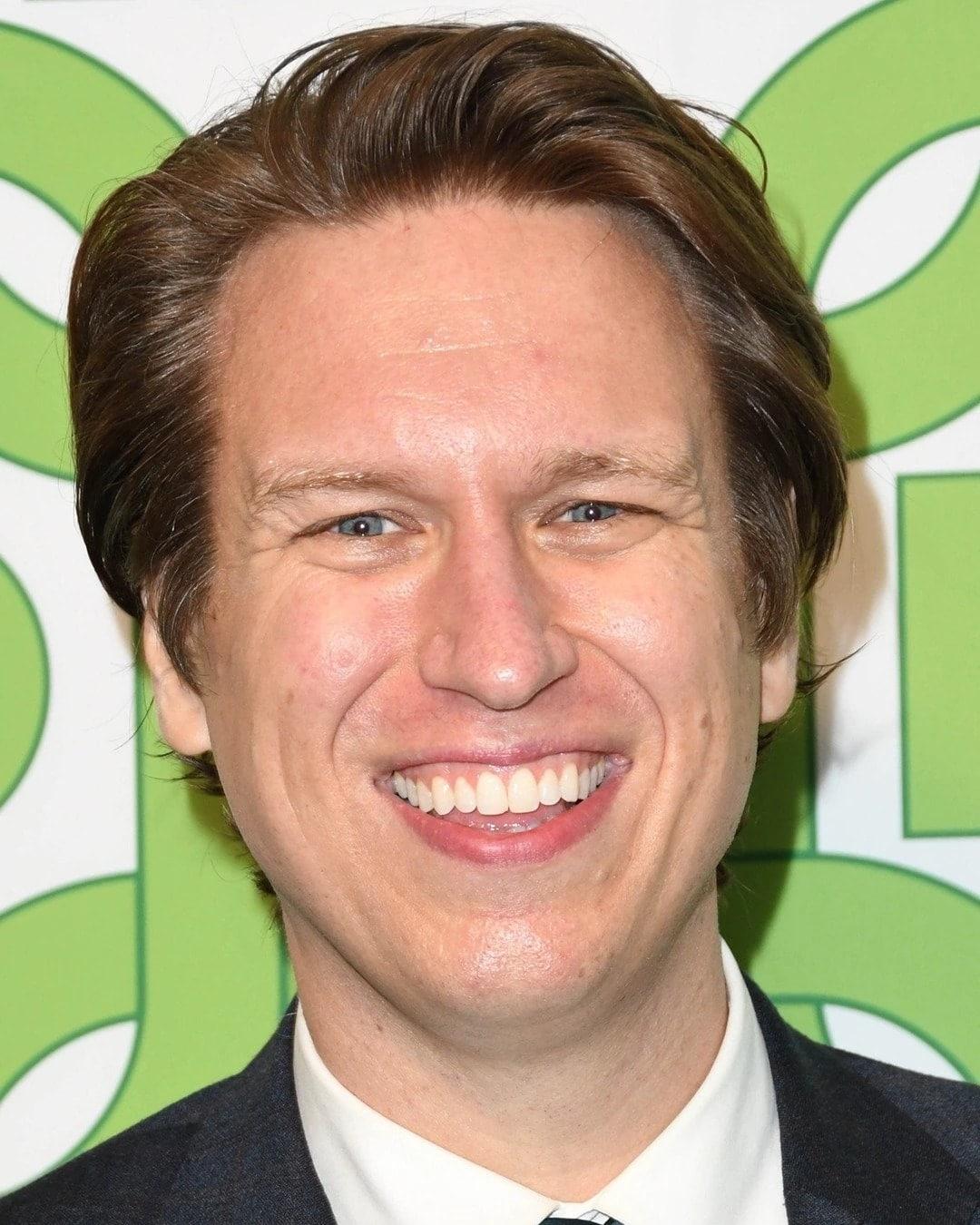
Pete Holmes.

Stand-up Comedian · Podcaster · Writer

Pete Holmes has made a career out of sounding wide awake to life’s weirdness: a stand-up comic who turned the long, searching conversations of You Made It Weird into a second calling, moved from club sets and CollegeHumor’s Badman to hosting after Conan, and then folded divorce, faith and ambition into the HBO series Crashing. The buoyant public impression can make him look effortlessly loose, but his body of work is driven by a much more personal hunt for meaning.

OBJECTIVE PERSONALITY CLASSIFICATIONMF-Fi/Ne-CP/B(S)What does this mean?
PERSONALITY SYSTEMObjective Personality
LEAD FUNCTIONFi · Introverted Feeling
SECOND SAVIOR FUNCTIONNe · Extroverted Intuition
MBTI EQUIVALENTINFP
01 / BEHIND THE CLASSIFICATION

The personality behind the fame.

How does a recorded OPS classification like MF-Fi/Ne-CP/B(S) break down? Walk through nine coins and watch the proposed type take shape. These are deductions from the archived code, not independent evidence of typing accuracy.

Scroll below to see Pete Holmes take shape.

STARTING POINT512 possible OPS typesEach type combines core functions, an animal order, and sexual modalities.
THE FINISH LINEMF-Fi/Ne-CP/B(S)One recorded classification, decoded from its components.
Pete Holmes’ HUMAN NEEDS 01—03
01
DECIDER OR OBSERVER?

Decider over Observer

Deciders have more balanced Observer poles in the middle: Control (Oi) and Chaos (Oe). Organizing what's known and handling what's new tend to feel more manageable. People are the harder territory. Self (Di) and Tribe (De) sit at the extremes, so judgment, rejection, approval, and conflict can trigger the strongest reactions.

Holmes’s public story is full of uncontrollable circumstances: leaving Massachusetts for New York, Chicago and Los Angeles, building a career across clubs, podcasts, HBO and network TV, then watching both The Pete Holmes Show and How We Roll get canceled. That reads less like a referendum on his worth than a long wrestling match with timing, platforms and opportunity. The strength of an Observer lens is flexibility when the path changes. The blind spot is waiting for the next format, network or opening to remove uncertainty that no career ever fully removes.
D
02
SELF OR TRIBE?

Di · Self over De · Tribe

Self (Di) is the stronger deciding pole. They check decisions against their own values or reasons first: what makes sense to me, what feels right to me? The strength is independent conviction; the recurring friction is the Tribe (De)—other people's standards, feedback, and expectations. As the portrait unfolds, notice how Self takes the lead.

Launching You Made It Weird in 2011 and later publishing Comedy Sex God gave Holmes unusually direct control over tone: earnest, silly, spiritual, confessional and unmistakably his. Self over Tribe is not antisocial; it is a habit of checking an inner standard before chasing consensus. That independence helps him sound like Pete Holmes instead of a polished generic host. The cost is obvious in any personal brand: what feels truthful and liberating to him can still miss another person’s priorities, or require more translation than he naturally wants to give.

Di
03
GATHER OR ORGANIZE?

Oe · Gather over Oi · Organize

Gather (Oe) leads with new information, experiences, and possibilities. Its strength is curiosity and adaptability; the recurring friction is narrowing the options and settling into what is already known. Another layer of the personality portrait comes into focus.

Holmes’s résumé keeps swerving into new lanes: Christian comedy rooms, VH1 panels, CollegeHumor’s Badman, a long-form podcast, late night, an HBO dramedy and a CBS sitcom. That pattern fits Gather over Organize. New openings are not noise to him; they are raw material. The strength is range. When one format closes, another experiment can begin. The tradeoff is that a life built on options can postpone ruthless selectivity. An interesting possibility is not yet a durable structure, and a creator who can do many things still has to decide which lane deserves the next chapter.

Oe
FIRST THREE COINSD + Di + Oe

These establish the preferred human needs in the OPS framework.

Pete Holmes’ FUNCTIONS 04—05
04
FEELING OR THINKING?

Feeling · F over Thinking · T

Feeling (F) evaluates decisions through values, meaning, and what matters—not simply through emotion. Its strength is a clear sense of significance; Thinking (T) provides balance through impersonal reasons, consistency, and evidence. Combined with Self (Di), this forms the recorded Savior Fi.

Holmes’s book Comedy Sex God is described as autobiography, philosophical inquiry and spiritual quest, which is almost comically on-brand for Fi. His public work keeps circling what feels personally true—faith after evangelical plans, marriage and divorce turned into Crashing, the value judgments hidden inside a joke. Feeling here does not mean softness or sentimentality; it means leading with inner conviction. The strength is emotional authorship. The blind spot is assuming sincerity settles the question. A perspective can be deeply honest to him and still need clearer evidence, sharper framing or better consideration of other people’s standards.

F → Fi
05
SENSING OR INTUITION?

Intuition · N over Sensing · S

Intuition (N) focuses on concepts, patterns, and what information might mean. Sensing (S) balances it through observable facts, physical detail, and direct experience. Combined with Gather (Oe), this gives the recorded Savior Ne.

You Made It Weird works because Holmes rarely treats a guest as a single lane. Comedy turns into religion, sexuality, shame, craft, death or absurd metaphysics halfway through the conversation. That associative reach points to Intuition, specifically the willingness to keep pulling threads until one subject opens into five more. It is also there in Badman, where a familiar superhero becomes a new comic premise by changing the angle. The gift is conceptual expansion. The cost is that possibility multiplies faster than reality cooperates, so a great riff still has to survive editing, production and practical limits.

N → Ne
THE TWO SAVIOR FUNCTIONSFi / Ne

Opposing functions: Te and Si.

Pete Holmes’ ANIMAL STACK 06—07
06
CONSUME OR BLAST?

Consume over Blast

Consume gathers information for internal processing; Blast organizes and communicates information. The recorded order is Consume → Play → Blast → Sleep. This comparison follows their positions in that stack.

Between Consume and Blast, Holmes’s career shows the earlier pull toward taking things in. You Made It Weird is built on long conversations, curiosity and letting a topic unfold instead of rushing to a neat conclusion. His specials and book also draw from years of absorbed material—faith, marriage, comedy rooms, philosophy, awkwardness. Consume’s strength is depth; he gathers enough texture to make the eventual joke or insight feel lived-in. The cost is familiar: more input can always seem useful, even when the sharper move would be to state the point cleanly and stop turning the kaleidoscope.

C > B
07
PLAY OR SLEEP?

Play over Sleep

Play emphasizes external real-time engagement; Sleep emphasizes internal processing. The recorded stack places Play earlier.

Between Play and Sleep, Holmes lands earlier on the side of live exchange. That shows up in an improvisational background, a podcast that depends on chemistry with guests, and a career repeatedly pulled toward rooms where ideas get tested aloud. Paired with his earlier Consume, the result is not just collecting insight but sparking it in motion with another person present. The strength is momentum and warmth. The growth cost is subtler: if outward interaction keeps generating fresh material, the quieter work of fully digesting it can become the part that gets delayed.

P > S
Pete Holmes’ ANIMAL ORIENTATION 08—09
08
INFO OR ENERGY DOMINANT?

Info over Energy

Info dominant means Consume and Blast are both in the top three: gathering and communicating information are more balanced. Sleep last leaves the energy side uneven—Play can keep engagement going without enough private recovery.

Holmes is Info-dominant here because both gathering material and eventually packaging it for an audience sit in the top three. His public life makes that easy to picture: absorb stories through podcasting and stand-up, then turn them into a special, a book, a late-night segment or a scripted series. That balance can make him prolific and unusually articulate about his own material. The void is not a lack of ideas. With Sleep last, the strain falls on internal recovery and private consolidation. A career of constant conversation can outrun the quieter pause that gives it depth and stamina.

Info
09
INTROVERSION OR EXTROVERSION?

Extroversion over Introversion

The last animal, Sleep, determines this OPS coin: Play or Blast last means Introversion; Consume or Sleep last means Extroversion. This describes animal orientation, not sociability or shyness.

Holmes’s final coin is OPS Extroversion, and the important evidence is structural, not social charm. With Sleep last after Consume, Play and Blast, the pressure point is not whether he can be friendly on camera; it is how naturally energy goes outward before it settles inward. His career has repeatedly rewarded that outward tilt: touring, podcasting, late-night hosting, writing and performing semi-autobiographical material in public. The strength is reach and momentum. The blind spot is treating reflection like something that can always happen later, after one more episode, tour date, pitch or conversation.

E
Sexual Modalities

The four sexual modalities.

OPS uses masculine/feminine sensory and extroverted-deciding distinctions as framework-specific terms, not gender categories. The four modalities are already included in the original 512 types. The recorded modality is MF · Audio.

MM KinestheticMasculine Sensory · Masculine De
MF RECORDED MODALITYAudioMasculine Sensory · Feminine De
FF TesterFeminine Sensory · Feminine De
FM VisualFeminine Sensory · Masculine De
COMPLETE RECORDED OPS TYPE · MODALITY INCLUDEDMF-Fi/Ne-CP/B(S)

Fi leads, Ne supports, and the animal stack is Consume → Play → Blast → Sleep.

THE FINISHED PORTRAIT · ALL NINE COINS REVEALED

Pete Holmes's complete function and animal stack

ConsumePlayBlastSleepmFifNemSifTe
MF-Fi/Ne-CP/B(S)DOUBLE ACTIVATED · PLAYExplore the Interactive Coin Builder →
THE PETE HOLMES LENS

The comic engine that rarely stops

Holmes can look like pure amiable overflow: the grinning comic after Conan, the curious host of You Made It Weird, the performer who turned divorce and religious upheaval into Crashing and Comedy Sex God. But the public warmth is crafted. He makes faith, shame, ambition and heartbreak discussable without flattening them into bland uplift.

His Fi/Ne pairing gives him personal conviction plus conceptual range. Fi keeps the material owned; even in a riff, there is usually a private standard underneath it. Ne keeps opening doors, letting one premise become three. That makes Holmes expansive without sounding empty. The limit is that strong meaning and many options can postpone the cleaner, more impersonal conclusion.

Holmes is a Decider and therefore a Double Observer. The friction sits more in the human world of identity, judgment and significance, while his Observer side stays comparatively adaptable with changing formats and career turns. The unmet need gathers around neglected Te, the function opposite his lead Fi. Personal truth can carry a project far before blunt structure, prioritization and external accountability demand equal weight.

Consume → Play → Blast → Sleep makes the last imbalance plain. Holmes can absorb, engage and express before he naturally slows down enough to settle inwardly. Sleep last does not cancel his depth; it explains why the engine keeps running outward. The balancing move is protecting real off-mic processing time before the next tour, pitch or episode so the insight lands sharper.

Want to understand the Savior and Demon states behind these nine coins? Explore the complete explanation, visual examples, and typing principles on our Methodology page →

02 / KEEP EXPLORING

Different faces. Familiar patterns.

Explore other celebrities with related recorded OPS classifications. Related functions are not necessarily exact type matches.

Discover Type Twins
YOUR TURN

Curious about your own type?

Discover how your own personality might be classified through Objective Personality.

Get objectively typed
Pete Holmes's Personality Type & OPS Profile | The Personality Atlas