The Personality Atlas
THE CELEBRITY PERSONALITY ARCHIVE / FILM & COMEDY

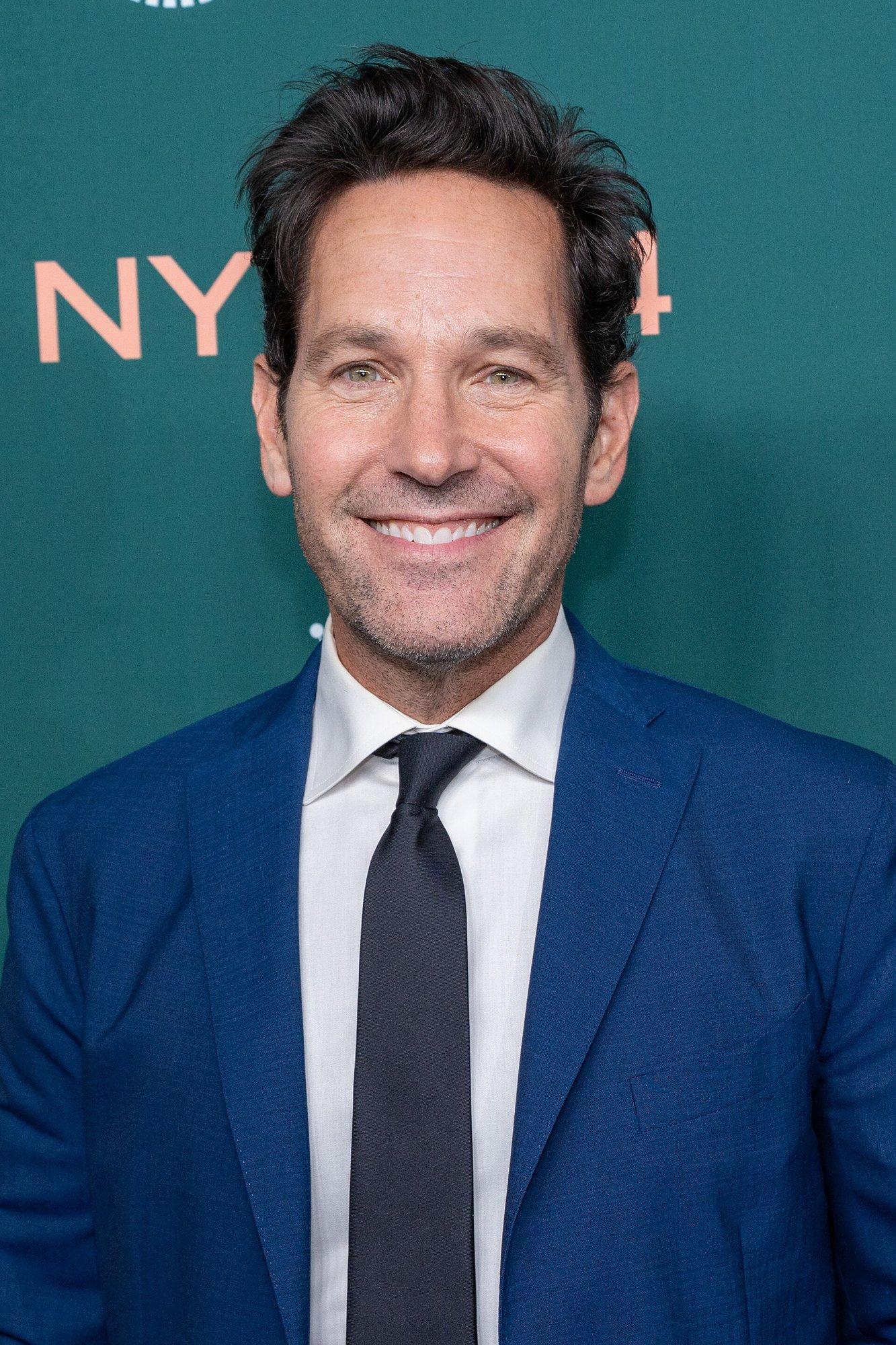
Paul Rudd.

Actor · Producer · Comedian

Paul Rudd has made an entire career out of seeming lighter than the machinery around him. From Clueless and Anchorman to Friends, Ant-Man and the long-running Conan Mac and Me ambush, he keeps turning high-visibility show business into something that feels personal, nimble and socially effortless. That ease is part of the appeal, but it also hints at a type built less around control of circumstances than around reading people, keeping rapport alive and finding the next angle that keeps the room with him.

OBJECTIVE PERSONALITY CLASSIFICATIONMF-Fe/Ne-PC/S(B)What does this mean?
PERSONALITY SYSTEMObjective Personality
LEAD FUNCTIONFe · Extroverted Feeling
SECOND SAVIOR FUNCTIONNe · Extroverted Intuition
MBTI EQUIVALENTESFJ
01 / BEHIND THE CLASSIFICATION

The personality behind the fame.

How does a recorded OPS classification like MF-Fe/Ne-PC/S(B) break down? Walk through nine coins and watch the proposed type take shape. These are deductions from the archived code, not independent evidence of typing accuracy.

Scroll below to see Paul Rudd take shape.

STARTING POINT512 possible OPS typesEach type combines core functions, an animal order, and sexual modalities.
THE FINISH LINEMF-Fe/Ne-PC/S(B)One recorded classification, decoded from its components.
Paul Rudd’s HUMAN NEEDS 01—03
01
DECIDER OR OBSERVER?

Decider over Observer

Deciders have more balanced Observer poles in the middle: Control (Oi) and Chaos (Oe). Organizing what's known and handling what's new tend to feel more manageable. People are the harder territory. Self (Di) and Tribe (De) sit at the extremes, so judgment, rejection, approval, and conflict can trigger the strongest reactions.

Paul Rudd’s public image is almost absurdly likable: Phoebe’s husband on Friends, the sweet center of I Love You, Man, the guy who can walk onto Conan for two decades and turn promotion into a communal prank. The friction here is people, not chaos. A Decider profile lives inside questions of approval, tone and how to land with the room. His strength is social elasticity; he can fit wildly different ensembles without looking forced. The blind spot is that managing atmosphere can become its own pressure, making blunt judgment feel ruder than it really is.
D
02
SELF OR TRIBE?

De · Tribe over Di · Self

Tribe (De) is the stronger deciding pole. They check decisions against people, shared standards, and what works for the group: what do we need, what will others think? The strength is coordination and responsiveness; the recurring friction is the Self (Di)—knowing and defending their own position. As the portrait unfolds, notice how Tribe takes the lead.

Rudd’s career is packed with group chemistry—Apatow comedies, multiple Saturday Night Live hosting gigs, Big Slick in Kansas City, and even saving Samuel’s Sweet Shop with friends after the owner died. Tribe over Self shows up in the habit of moving toward shared morale, shared laughter and shared buy-in. That is powerful: he makes collaborators and audiences feel included rather than managed. The cost is that outside response can quietly set the standard. When everyone likes the easy version of you, it gets harder to insist on a sharper private verdict that may interrupt the mood.

De
03
GATHER OR ORGANIZE?

Oe · Gather over Oi · Organize

Gather (Oe) leads with new information, experiences, and possibilities. Its strength is curiosity and adaptability; the recurring friction is narrowing the options and settling into what is already known. Another layer of the personality portrait comes into focus.

Rudd has never built a career on one neat lane. He moves from Clueless to Halloween, from Broadway to Anchorman, from Ant-Man to Only Murders in the Building, then shows up narrating documentaries or revisiting a 1991 game-console ad in 2025. Gather over Organize likes the open door and the next usable possibility. The advantage is range without panic; he can pivot as culture changes. The blind spot is that endless viable options reduce the pressure to narrow. A broadly appealing career can still avoid the discomfort of committing to one clearer long-term identity.

Oe
FIRST THREE COINSD + De + Oe

These establish the preferred human needs in the OPS framework.

Paul Rudd’s FUNCTIONS 04—05
04
FEELING OR THINKING?

Feeling · F over Thinking · T

Feeling (F) evaluates decisions through values, meaning, and what matters—not simply through emotion. Its strength is a clear sense of significance; Thinking (T) provides balance through impersonal reasons, consistency, and evidence. Combined with Tribe (De), this forms the recorded Savior Fe.

Fe is visible less in confessional oversharing than in Rudd’s calibration of tone. The Mac and Me bit with Conan works because he knows exactly how to turn promotion, host expectation and audience recognition into a shared laugh instead of an awkward derailment. That social timing is a real strength: he can harmonize with a room fast. The void sits across from it. Feeling-led judgment can keep the emotional current moving while leaving the colder question underdeveloped—what is the clean, impersonal conclusion if the vibe no longer gets a vote?

F → Fe
05
SENSING OR INTUITION?

Intuition · N over Sensing · S

Intuition (N) focuses on concepts, patterns, and what information might mean. Sensing (S) balances it through observable facts, physical detail, and direct experience. Combined with Gather (Oe), this gives the recorded Savior Ne.

Ne helps explain why Rudd’s career feels lighter on its feet than his résumé should. He keeps finding another angle: sitcom boyfriend, absurdist ensemble player, Marvel lead, dual-role streaming experiment, even turning a decades-old bad-movie clip into a renewable comic weapon. Intuition here is not mysticism; it is pattern-jumping and conceptual reuse. The strength is freshness without a full reinvention campaign every few years. The tradeoff is diffusion. When possibilities multiply this easily, the next clever angle can delay the harder job of simplifying what, exactly, he wants the audience to take away.

N → Ne
THE TWO SAVIOR FUNCTIONSFe / Ne

Opposing functions: Ti and Si. This is a jumper classification.

Paul Rudd’s ANIMAL STACK 06—07
06
PLAY OR SLEEP?

Play over Sleep

Play emphasizes external real-time engagement; Sleep emphasizes internal processing. The recorded stack places Play earlier.

Rudd’s best public moments often happen with another person in the frame: volleying with Conan, fitting into the organized chaos of Anchorman, or hosting Big Slick in a room built on live chemistry. Play over Sleep favors real-time exchange, quick adjustment and momentum between people. It gives him a buoyant accessibility that reads as effortless. The cost is subtler. When interaction is this natural, private consolidation can look optional, as though a lively exchange has already finished the thought. It usually has not; sometimes the joke lands before the deeper position fully settles.

P > S
07
CONSUME OR BLAST?

Consume over Blast

Consume gathers information for internal processing; Blast organizes and communicates information. The recorded order is Play → Consume → Sleep → Blast. This comparison follows their positions in that stack.

After that outward Play, the next priority looks more like taking in than formally declaring. Rudd trained in theater at Kansas, the American Academy of Dramatic Arts and Oxford, then built a career by slipping between genres, mediums and ensemble styles rather than pinning everything to one grand manifesto. Consume before Blast keeps him receptive, prepared and curious. It also explains a familiar charm: he often seems more interested in the material and the bit than in delivering a heavy-handed thesis. The downside is obvious—clear conclusions can arrive later than the talent behind them.

C > B
Paul Rudd’s ANIMAL ORIENTATION 08—09
08
INFO OR ENERGY DOMINANT?

Energy over Info

Energy dominant means Play and Sleep are both in the top three: there is access to expending energy through engagement and conserving it through internal processing. Blast last leaves the information side uneven—Consume may gather far more than gets communicated.

Rudd’s stack lands on Energy over Info, which fits a career balancing public engagement with enough internal pacing to stay durable across decades. He can lead a Marvel film, guest host SNL, show up for charity weekends in Kansas City, then keep a lower-key center outside the noise. The missing pressure point is Blast last. The issue is not a lack of intelligence or warmth; it is the extra work of turning everything absorbed and socially navigated into a crisp, directive message. He can carry the room. He may still understate the full conclusion he has earned.

Energy
09
INTROVERSION OR EXTROVERSION?

Introversion over Extroversion

The last animal, Blast, determines this OPS coin: Play or Blast last means Introversion; Consume or Sleep last means Extroversion. This describes animal orientation, not sociability or shyness.

Calling Paul Rudd OPS Introverted sounds wrong only if introversion is reduced to shyness. It is not. Blast sits last, and his most famous recurring talk-show stunt almost advertises that fact: when given the standard “here is my project, here is the clip” moment, he swerves into the Mac and Me joke instead of straightforward promotion. Public visibility is easy; settled explanation is less enticing. The strength is disarming spontaneity. The blind spot is that a charming detour can replace a firmer statement. Sometimes the audience still needs the plain version, not just the funniest available one.

I
Sexual Modalities

The four sexual modalities.

OPS uses masculine/feminine sensory and extroverted-deciding distinctions as framework-specific terms, not gender categories. The four modalities are already included in the original 512 types. The recorded modality is MF · Audio.

MM KinestheticMasculine Sensory · Masculine De
MF RECORDED MODALITYAudioMasculine Sensory · Feminine De
FF TesterFeminine Sensory · Feminine De
FM VisualFeminine Sensory · Masculine De
COMPLETE RECORDED OPS TYPE · MODALITY INCLUDEDMF-Fe/Ne-PC/S(B)

Fe leads, Ne supports, and the animal stack is Play → Consume → Sleep → Blast.

THE FINISHED PORTRAIT · ALL NINE COINS REVEALED

Paul Rudd's complete function and animal stack

PlayConsumeSleepBlastfFemSifNemTi
MF-Fe/Ne-PC/S(B)DOUBLE ACTIVATED · CONSUMEExplore the Interactive Coin Builder →
THE PAUL RUDD LENS

The nice guy with the sidestep.

Rudd’s public image is the charming guy who never sweats: Ant-Man on a blockbuster press tour, then the same man sabotaging his own promotion with Mac and Me on Conan. Behind that ease is somebody who built slowly—training, ensemble work, television, stage, comedy, then superhero scale—rather than arriving as a prepackaged leading man.

His Fe/Ne pairing makes him unusually good at reading a room and finding the next workable angle. That helps explain how he can move from Friends to Apatow to Marvel without feeling mechanically rebranded. The limit is softness around finality: charm and possibilities can keep the performance nimble while postponing the colder, cleaner statement.

As a Decider and Double Observer, his recurring pressure centers more on people, approval and social calibration than on chaos in the world. The Double Observer side gives range with changing circumstances; the imbalance is human significance over impersonal precision. Neglected Ti—the opposite of his lead Fe—asks for a sharper internal standard that does not depend on the room staying comfortable.

Play → Consume → Sleep → Blast explains the paradox: lively in public, but less naturally drawn to turning everything into a firm packaged message. Blast last can leave the takeaway gentler or blurrier than the talent warrants. Keep the improvisational warmth, but before the next press cycle or passion project, force one plain thesis onto the page and say it without hiding behind the bit.

Want to understand the Savior and Demon states behind these nine coins? Explore the complete explanation, visual examples, and typing principles on our Methodology page →

02 / KEEP EXPLORING

Different faces. Familiar patterns.

Explore other celebrities with related recorded OPS classifications. Related functions are not necessarily exact type matches.

Discover Type Twins
YOUR TURN

Curious about your own type?

Discover how your own personality might be classified through Objective Personality.

Get objectively typed
Paul Rudd's Personality Type & OPS Profile | The Personality Atlas