The Personality Atlas
THE CELEBRITY PERSONALITY ARCHIVE / COMEDY & MEDIA

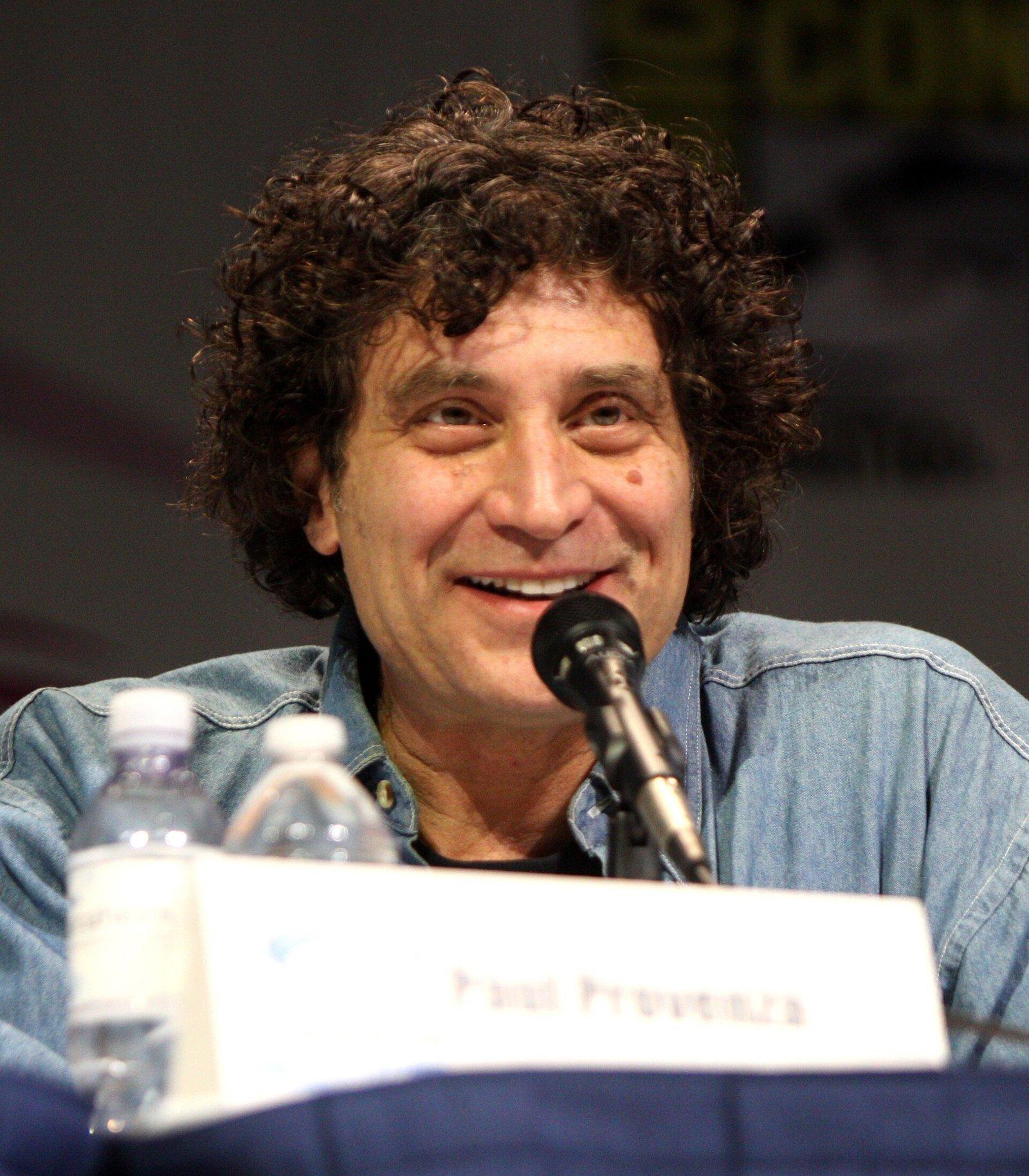
Paul Provenza.

Comedian · Host · Director · Author

Paul Provenza built a career less like a tidy ladder and more like a roaming comedy laboratory: Bronx kid, RADA-trained stage actor, Johnny Carson stand-up, Comedy Central host, then the filmmaker and ringmaster behind The Aristocrats, The Green Room and Set List. The public impression is a connected comic insider with range. The deeper throughline is someone who keeps turning messy performance worlds into material he can study, shape and hand back to an audience.

OBJECTIVE PERSONALITY CLASSIFICATIONMF-Ti/Se-CS/B(P)What does this mean?
PERSONALITY SYSTEMObjective Personality
LEAD FUNCTIONTi · Introverted Thinking
SECOND SAVIOR FUNCTIONSe · Extroverted Sensing
MBTI EQUIVALENTISTP
01 / BEHIND THE CLASSIFICATION

The personality behind the fame.

How does a recorded OPS classification like MF-Ti/Se-CS/B(P) break down? Walk through nine coins and watch the proposed type take shape. These are deductions from the archived code, not independent evidence of typing accuracy.

Scroll below to see Paul Provenza take shape.

STARTING POINT512 possible OPS typesEach type combines core functions, an animal order, and sexual modalities.
THE FINISH LINEMF-Ti/Se-CS/B(P)One recorded classification, decoded from its components.
Paul Provenza’s HUMAN NEEDS 01—03
01
DECIDER OR OBSERVER?

Decider over Observer

Deciders have more balanced Observer poles in the middle: Control (Oi) and Chaos (Oe). Organizing what's known and handling what's new tend to feel more manageable. People are the harder territory. Self (Di) and Tribe (De) sit at the extremes, so judgment, rejection, approval, and conflict can trigger the strongest reactions.

Provenza’s public life keeps swinging through changing formats and setups: stand-up at 17 at the original Improv, classical theater in London, Carson in 1983, sitcom acting, radio panels, directing, festival producing, then interview shows about other comics. That pattern points to friction with circumstances more than with belonging. The challenge is not mainly, “Do people like me?” but, “What is the right vehicle now, and how do I work with what’s available?” The strength is adaptability across environments. The blind spot is trusting the next format change to supply clarity by itself.

D
02
SELF OR TRIBE?

Di · Self over De · Tribe

Self (Di) is the stronger deciding pole. They check decisions against their own values or reasons first: what makes sense to me, what feels right to me? The strength is independent conviction; the recurring friction is the Tribe (De)—other people's standards, feedback, and expectations. As the portrait unfolds, notice how Self takes the lead.

A year’s leave from the University of Pennsylvania to study at RADA, then becoming one of the few Americans to play Romeo on the London stage, is a sharp public example of Self over Tribe. Provenza repeatedly backs his own read of what is worth pursuing, even when the path is unusual. The advantage is obvious: a career that does not feel committee-designed. The cost is subtler. An internal standard can become so convincing that other people’s priorities look secondary, even when their buy-in is what turns a strong idea into a durable public project.

Di
03
GATHER OR ORGANIZE?

Oe · Gather over Oi · Organize

Gather (Oe) leads with new information, experiences, and possibilities. Its strength is curiosity and adaptability; the recurring friction is narrowing the options and settling into what is already known. Another layer of the personality portrait comes into focus.

Look at the range: stand-up, television acting, hosting Kids Court and Comics Only, frequent podcasts, directing The Aristocrats, producing festival and television projects, then developing Set List for festivals and Sky Atlantic. That is a career built by chasing openings rather than protecting one fixed lane. Gather-first brings versatility and freshness; Provenza can keep finding another angle, room or format. The drag is selectivity. A life full of possible stages can postpone the harder move of narrowing down which stage deserves the next serious stretch of time.

Oe
FIRST THREE COINSD + Di + Oe

These establish the preferred human needs in the OPS framework.

Paul Provenza’s FUNCTIONS 04—05
04
FEELING OR THINKING?

Thinking · T over Feeling · F

Thinking (T) evaluates decisions through reasons, logic, and what works—not a lack of emotion. Its strength is analytical consistency; Feeling (F) provides balance through values, meaning, and the human consequences of a decision. Combined with Self (Di), this forms the recorded Savior Ti.

The Aristocrats and the interview book ¡Satiristas! both show Ti in a very public way. Provenza is not just performing comedy; he is pulling the machinery apart, comparing structures, and asking what actually makes a joke or a satirical voice work. That is the strength of Thinking here: an independent framework sturdy enough to organize a chaotic art form. The void sits across from it. A model that makes perfect sense internally can still miss how much social calibration, reassurance or shared emotional framing other people need in order to come along willingly.

T → Ti
05
SENSING OR INTUITION?

Sensing · S over Intuition · N

Sensing (S) focuses on concrete details, observable reality, and lived experience. Intuition (N) balances it by looking for broader patterns, concepts, and implications. Combined with Gather (Oe), this gives the recorded Savior Se.

Se shows up in the sheer concreteness of his career. Provenza started on an actual stage at 17, opened for Diana Ross for years, acted on camera, and built live late-night festival conversations where the room itself mattered. Even The Green Room concept depended on tangible chemistry among specific guests, not just abstract ideas about comedy. The strength is responsiveness to what is right in front of him: the audience, the guest, the timing, the bit. The cost is that the immediate moment can feel so alive that the longer strategic throughline gets less emphasis than the live exchange.

S → Se
THE TWO SAVIOR FUNCTIONSTi / Se

Opposing functions: Fe and Ni.

Paul Provenza’s ANIMAL STACK 06—07
06
CONSUME OR BLAST?

Consume over Blast

Consume gathers information for internal processing; Blast organizes and communicates information. The recorded order is Consume → Sleep → Blast → Play. This comparison follows their positions in that stack.

Consume has an unusually visible paper trail in Provenza’s work. He spent decades in stand-up, theater and television before directing The Aristocrats in 2005, and his 2010 book ¡Satiristas! was built from in-depth interviews with major comics. He keeps taking in material, stories, perspectives and craft detail before deciding what to do with them. That gives him real substance; he is rarely working from thin air. The blind spot is classic Consume versus Blast: more input always feels useful, while making the takeaway plain and final can wait one round longer.

C > B
07
PLAY OR SLEEP?

Sleep over Play

Play emphasizes external real-time engagement; Sleep emphasizes internal processing. The recorded stack places Sleep earlier.

Sleep comes after that intake, and Provenza’s best hosting concepts show it. Talk of the Fest was described by him as a “green room for the whole festival,” and The Green Room turned similar lineups into conversations with a center rather than a pile of banter. Sleep over Play brings internal consolidation: he wants the material to pass through a personal frame first. The advantage is a recognizable point of view. The cost is that spontaneous exchange can get subtly managed, with the conversation shaped around an already processed sense of what matters most.

S > P
Paul Provenza’s ANIMAL ORIENTATION 08—09
08
INFO OR ENERGY DOMINANT?

Info over Energy

Info dominant means Consume and Blast are both in the top three: gathering and communicating information are more balanced. Play last leaves the energy side uneven—Sleep can conserve energy without enough spontaneous outward engagement.

This profile lands on Info over Energy, which fits Provenza’s public arc unusually well. He does not merely collect comedy culture; he repeatedly turns it into a shareable format—The Aristocrats, ¡Satiristas!, The Green Room, Set List. Intake and delivery both have real weight in the stack. That balance is powerful because it lets him act as a curator, not just a participant. The missing pressure point is spontaneous external engagement for its own sake. When the exchange is least structured, the temptation is to pull it back toward a frame instead of letting the mess teach him something new.

Info
09
INTROVERSION OR EXTROVERSION?

Introversion over Extroversion

The last animal, Play, determines this OPS coin: Play or Blast last means Introversion; Consume or Sleep last means Extroversion. This describes animal orientation, not sociability or shyness.

Hosting television, emceeing the 2012 Reason Rally for roughly 30,000 people, and appearing across podcasts could make Provenza look obviously extroverted in the ordinary social sense. This coin is not measuring that. OPS Introversion here comes from Play being last: Consume and Sleep arrive before the more externally improvisational mode. The strength is that his public output usually comes with prior digestion instead of pure impulse. The growth cost is real-time unpredictability. Even a gifted host can prefer entering interaction with a formed read, rather than discovering the shape of it only after contact begins.

I
Sexual Modalities

The four sexual modalities.

OPS uses masculine/feminine sensory and extroverted-deciding distinctions as framework-specific terms, not gender categories. The four modalities are already included in the original 512 types. The recorded modality is MF · Audio.

MM KinestheticMasculine Sensory · Masculine De
MF RECORDED MODALITYAudioMasculine Sensory · Feminine De
FF TesterFeminine Sensory · Feminine De
FM VisualFeminine Sensory · Masculine De
COMPLETE RECORDED OPS TYPE · MODALITY INCLUDEDMF-Ti/Se-CS/B(P)

Ti leads, Se supports, and the animal stack is Consume → Sleep → Blast → Play.

THE FINISHED PORTRAIT · ALL NINE COINS REVEALED

Paul Provenza's complete function and animal stack

ConsumeSleepBlastPlaymTimSefNifFe
MF-Ti/Se-CS/B(P)DOUBLE ACTIVATED · SLEEPExplore the Interactive Coin Builder →
THE PAUL PROVENZA LENS

The curator inside the comic

At Edinburgh in 2006, Provenza called Talk of the Fest a “green room for the whole festival,” then carried that same instinct into Showtime’s The Green Room. The public impression is a plugged-in comedy insider. Underneath is a curator: someone less interested in mere access than in exposing how comics actually think, talk and build material.

His Ti and Se pairing fits The Aristocrats and ¡Satiristas! perfectly. Ti wants the inner mechanism, the rule beneath the laugh; Se keeps him tied to actual rooms, performers and timing. That combination gives him sharp, concrete insight. Its limit is social: a brilliant internal breakdown of comedy does not automatically create the warmest consensus around it.

As a Decider and Double Observer, Provenza’s recurring imbalance is about people and significance more than changing circumstances. He can move across stages, formats and festival settings, but the sharper pressure is still self-versus-tribe judgment. The neglected function opposite his lead savior Ti is Fe, so the growth cost is underweighting shared emotional calibration while trusting his own clean read of what makes sense.

Consume → Sleep → Blast → Play. He naturally learns, distills and then delivers before fully unstructured interaction becomes the easy mode. With Play last, the pressure point is not shyness but leaving enough room for another comic or audience to redirect the exchange. The balancing move is specific: keep the deep prep, but build interview segments where he must follow someone else’s live thread before reframing it.

Want to understand the Savior and Demon states behind these nine coins? Explore the complete explanation, visual examples, and typing principles on our Methodology page →

02 / KEEP EXPLORING

Different faces. Familiar patterns.

Explore other celebrities with related recorded OPS classifications. Related functions are not necessarily exact type matches.

Discover Type Twins
YOUR TURN

Curious about your own type?

Discover how your own personality might be classified through Objective Personality.

Get objectively typed
Paul Provenza's Personality Type & OPS Profile | The Personality Atlas