The Personality Atlas
THE CELEBRITY PERSONALITY ARCHIVE / FILM & MEDIA

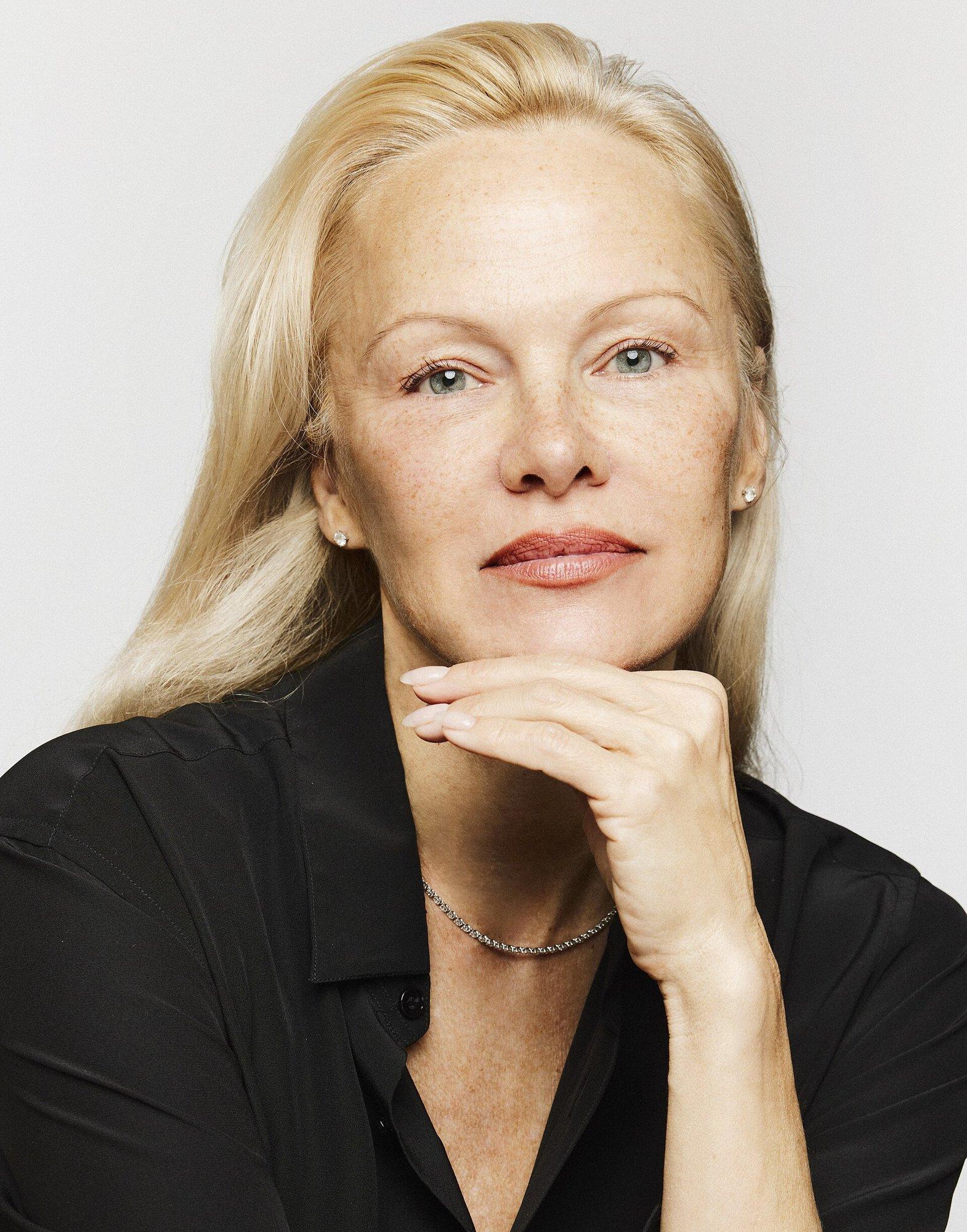
Pamela Anderson.

Actor · Model · Author · Activist

Pamela Anderson has spent decades being seen before being understood: a Playboy record-holder and Baywatch icon who kept rerouting a career through sitcoms, reality TV, Broadway, books, animal-rights campaigns and, with The Last Showgirl, a late critical reset that finally forced Hollywood to look past the poster.

OBJECTIVE PERSONALITY CLASSIFICATIONFM-Te/Se-PC/S(B) #3What does this mean?
PERSONALITY SYSTEMObjective Personality
LEAD FUNCTIONTe · Extroverted Thinking
SECOND SAVIOR FUNCTIONSe · Extroverted Sensing
MBTI EQUIVALENTENTJ
01 / BEHIND THE CLASSIFICATION

The personality behind the fame.

How does a recorded OPS classification like FM-Te/Se-PC/S(B) #3 break down? Walk through nine coins and watch the proposed type take shape. These are deductions from the archived code, not independent evidence of typing accuracy.

Scroll below to see Pamela Anderson take shape.

STARTING POINT512 possible OPS typesEach type combines core functions, an animal order, and sexual modalities.
THE FINISH LINEFM-Te/Se-PC/S(B) #3One recorded classification, decoded from its components.
Pamela Anderson’s HUMAN NEEDS 01—03
01
DECIDER OR OBSERVER?

Decider over Observer

Deciders have more balanced Observer poles in the middle: Control (Oi) and Chaos (Oe). Organizing what's known and handling what's new tend to feel more manageable. People are the harder territory. Self (Di) and Tribe (De) sit at the extremes, so judgment, rejection, approval, and conflict can trigger the strongest reactions.

Pamela Anderson’s recurring battle has not been a shortage of openings so much as other people deciding what she means. The stolen home videos turned a violation into a public referendum; the Roast of Pamela Anderson and endless sex-symbol shorthand kept reducing a working actor and activist to an image. Even her later comeback through Chicago, Pamela, a Love Story and The Last Showgirl arrived in conversation with that public judgment. The strength is resilience under scrutiny. The cost is that managing significance can eat time that might otherwise go toward slower, quieter self-definition.
D
02
SELF OR TRIBE?

De · Tribe over Di · Self

Tribe (De) is the stronger deciding pole. They check decisions against people, shared standards, and what works for the group: what do we need, what will others think? The strength is coordination and responsiveness; the recurring friction is the Self (Di)—knowing and defending their own position. As the portrait unfolds, notice how Tribe takes the lead.

Anderson often takes her case to the tribe instead of keeping it private. You can see it in the PETA campaigns, in her public response when Montreal banned one of those ads, and in open letters to figures like Vladimir Putin and Scott Morrison. Tribe over Self is not mere friendliness; it is a reflex to work through shared standards, public pressure and visible impact. That makes her unusually effective at turning celebrity into a collective message. The tradeoff is that the crowd’s framing can become the battlefield, leaving her own terms easier to blur or overrun.

De
03
GATHER OR ORGANIZE?

Oe · Gather over Oi · Organize

Gather (Oe) leads with new information, experiences, and possibilities. Its strength is curiosity and adaptability; the recurring friction is narrowing the options and settling into what is already known. Another layer of the personality portrait comes into focus.

Her career keeps behaving as if another door might be worth opening. Anderson moves from Playboy to Home Improvement, Baywatch, V.I.P., reality television across several countries, Broadway’s Chicago, a Netflix documentary, a memoir, a cookbook and a cooking show. Gather over Organize helps explain that range better than any single reinvention narrative. She is good at stepping into the next live option instead of protecting one fixed lane. The obvious cost is selectivity. A career with this many possible forms can become harder to summarize, defend or steadily narrow.

Oe
FIRST THREE COINSD + De + Oe

These establish the preferred human needs in the OPS framework.

Pamela Anderson’s FUNCTIONS 04—05
04
FEELING OR THINKING?

Thinking · T over Feeling · F

Thinking (T) evaluates decisions through reasons, logic, and what works—not a lack of emotion. Its strength is analytical consistency; Feeling (F) provides balance through values, meaning, and the human consequences of a decision. Combined with Tribe (De), this forms the recorded Savior Te.

Thinking shows up in how directly Anderson makes a case in public. When Montreal banned her 2010 PETA ad, she answered with a pointed argument about censorship and political protest rather than softening the controversy. Her Wall Street Journal op-ed on online pornography also framed the subject as a public problem that needed a clear social response. Te’s strength is usefulness: it turns a celebrity presence into a blunt instrument that can move a debate. The limit is tone. Strong external arguments can sound cleaner than the underlying human complexity really is.

T → Te
05
SENSING OR INTUITION?

Sensing · S over Intuition · N

Sensing (S) focuses on concrete details, observable reality, and lived experience. Intuition (N) balances it by looking for broader patterns, concepts, and implications. Combined with Gather (Oe), this gives the recorded Savior Se.

Anderson’s public story is intensely physical and immediate. She is discovered on a stadium jumbotron, becomes an unmistakable Baywatch image, guest-hosts Saturday Night Live, performs live at Crazy Horse, steps into Roxie Hart on Broadway, restores a family property on Pamela’s Garden of Eden and releases a plant-based cookbook built around concrete recipes. Se gives her a gift for making an idea visible now, not eventually. That vividness is a strength. The blind spot is obvious too: the image can become so memorable that it eclipses the architect behind it.

S → Se
THE TWO SAVIOR FUNCTIONSTe / Se

Opposing functions: Fi and Ni. This is a jumper classification.

Pamela Anderson’s ANIMAL STACK 06—07
06
PLAY OR SLEEP?

Play over Sleep

Play emphasizes external real-time engagement; Sleep emphasizes internal processing. The recorded stack places Play earlier.

Pam: Girl on the Loose, Bigg Boss, Dancing with the Stars, VIP Brother and an eight-week Broadway run as Roxie Hart all show a person who comes alive in active exchange. With Play earlier than Sleep, Anderson’s strength is jumping into the room, reading what is happening and meeting it in real time. She does not need a perfectly controlled setup to become memorable. The cost is that Sleep arrives later. Public momentum can keep carrying her forward before there is enough quiet distance to consolidate what the experience is actually becoming.

P > S
07
CONSUME OR BLAST?

Consume over Blast

Consume gathers information for internal processing; Blast organizes and communicates information. The recorded order is Play → Consume → Sleep → Blast. This comparison follows their positions in that stack.

With Consume ahead of Blast, Anderson’s pattern is not just performance but accumulation. She has kept adding source material to the public record: two books, a documentary, a memoir, a cookbook, years of activism and even a Criterion Closet appearance centered on films she loves. That gives her a richer archive than the old pinup shorthand allows. The drawback is that Blast lands later. She can gather, curate and embody plenty before delivering one hard, simplified thesis, which leaves room for other people to summarize her faster than she does.

C > B
Pamela Anderson’s ANIMAL ORIENTATION 08—09
08
INFO OR ENERGY DOMINANT?

Energy over Info

Energy dominant means Play and Sleep are both in the top three: there is access to expending energy through engagement and conserving it through internal processing. Blast last leaves the information side uneven—Consume may gather far more than gets communicated.

This profile is Energy-dominant because the active back-and-forth of life and the need to step back are both available early. Anderson can bounce from global television exposure to a quieter Vancouver Island restoration project without looking trapped in only one mode. That balance is a real strength: she can keep moving without becoming permanently performative. The missing balance shows up elsewhere. After so much living, appearing and collecting material, the clean official takeaway can lag behind the motion. Activity is plentiful; a single shared conclusion is harder to lock and repeat.

Energy
09
INTROVERSION OR EXTROVERSION?

Introversion over Extroversion

The last animal, Blast, determines this OPS coin: Play or Blast last means Introversion; Consume or Sleep last means Extroversion. This describes animal orientation, not sociability or shyness.

Blast sits fourth, which makes this an OPS Introversion result even for someone whose face was once one of the most recognizable in popular culture. This is not a claim about shyness or sociability. Anderson has obviously done the public-facing work: live television, reality competitions, advocacy, Broadway, documentaries. The point is narrower. Experience, interaction and personal processing come more readily than sustained one-way explanation. That protects complexity, but it also creates a cost: if she does not state the frame early enough, somebody else usually will.

I
Sexual Modalities

The four sexual modalities.

OPS uses masculine/feminine sensory and extroverted-deciding distinctions as framework-specific terms, not gender categories. The four modalities are already included in the original 512 types. The recorded modality is FM · Visual.

MM KinestheticMasculine Sensory · Masculine De
MF AudioMasculine Sensory · Feminine De
FF TesterFeminine Sensory · Feminine De
FM RECORDED MODALITYVisualFeminine Sensory · Masculine De
ADDITIONAL LAYER · SOCIAL TYPE

The four social types.

Social types are an additional layer on top of the original Objective Personality classification, introduced later in OPS research. They describe two proposed social preference coins: Flex vs. Friends and Generalize vs. Specialize. The combination and priority of these preferences produce four social types. Pamela Anderson's recorded social type is #3.

SOCIAL #1 #1Flex · Generalize
SOCIAL #2 #2Generalize · Friends
SOCIAL #3 RECORDED SOCIAL TYPE#3Specialize · Flex
SOCIAL #4 #4Friends · Specialize
COMPLETE RECORDED OPS TYPE · MODALITY INCLUDED + SOCIAL TYPEFM-Te/Se-PC/S(B) #3

Te leads, Se supports, and the animal stack is Play → Consume → Sleep → Blast.

THE FINISHED PORTRAIT · ALL NINE COINS REVEALED

Pamela Anderson's complete function and animal stack

PlayConsumeSleepBlastmTemNifSefFi
FM-Te/Se-PC/S(B) #3DOUBLE ACTIVATED · CONSUMEExplore the Interactive Coin Builder →
THE PAMELA ANDERSON LENS

Seen first, explained later

At the height of Baywatch, Pamela Anderson became one of the most recyclable images in popular culture; decades later, Chicago and The Last Showgirl forced a second look. Behind the icon is someone who kept working across television, books, activism and home-building long after the pinup shorthand should have flattened the story.

Her Te/Se pairing is built for visible impact. Te states the case, Se makes it tangible: a PETA campaign, a Broadway run, a cookbook, a restoration series. That combination can turn attention into action fast. Its limit is that what lands most immediately can overshadow the quieter authorship, discipline and curation required to sustain it.

As a Decider and Double Observer, Anderson’s recurring strain is less about chaotic circumstances than about people, significance and whose framing wins. She can pivot across formats more readily than she can stop the tribe from reducing her to one symbol. The neglected Fi opposite lead Te is the private personal valuation that asks what matters before public usefulness takes over.

Play → Consume → Sleep → Blast gives her momentum first and polished explanation last. Blast fourth does not cancel charisma; it means direct, settled messaging is the least automatic part of the stack. The balancing move is specific: keep the spontaneity and sensory punch, but name the thesis early—before a role, campaign or reinvention gets summarized by louder outsiders.

Want to understand the Savior and Demon states behind these nine coins? Explore the complete explanation, visual examples, and typing principles on our Methodology page →

02 / KEEP EXPLORING

Different faces. Familiar patterns.

Explore other celebrities with related recorded OPS classifications. Related functions are not necessarily exact type matches.

Discover Type Twins
YOUR TURN

Curious about your own type?

Discover how your own personality might be classified through Objective Personality.

Get objectively typed
Pamela Anderson's Personality Type & OPS Profile | The Personality Atlas