The Personality Atlas
THE CELEBRITY PERSONALITY ARCHIVE / FILM & STAGE

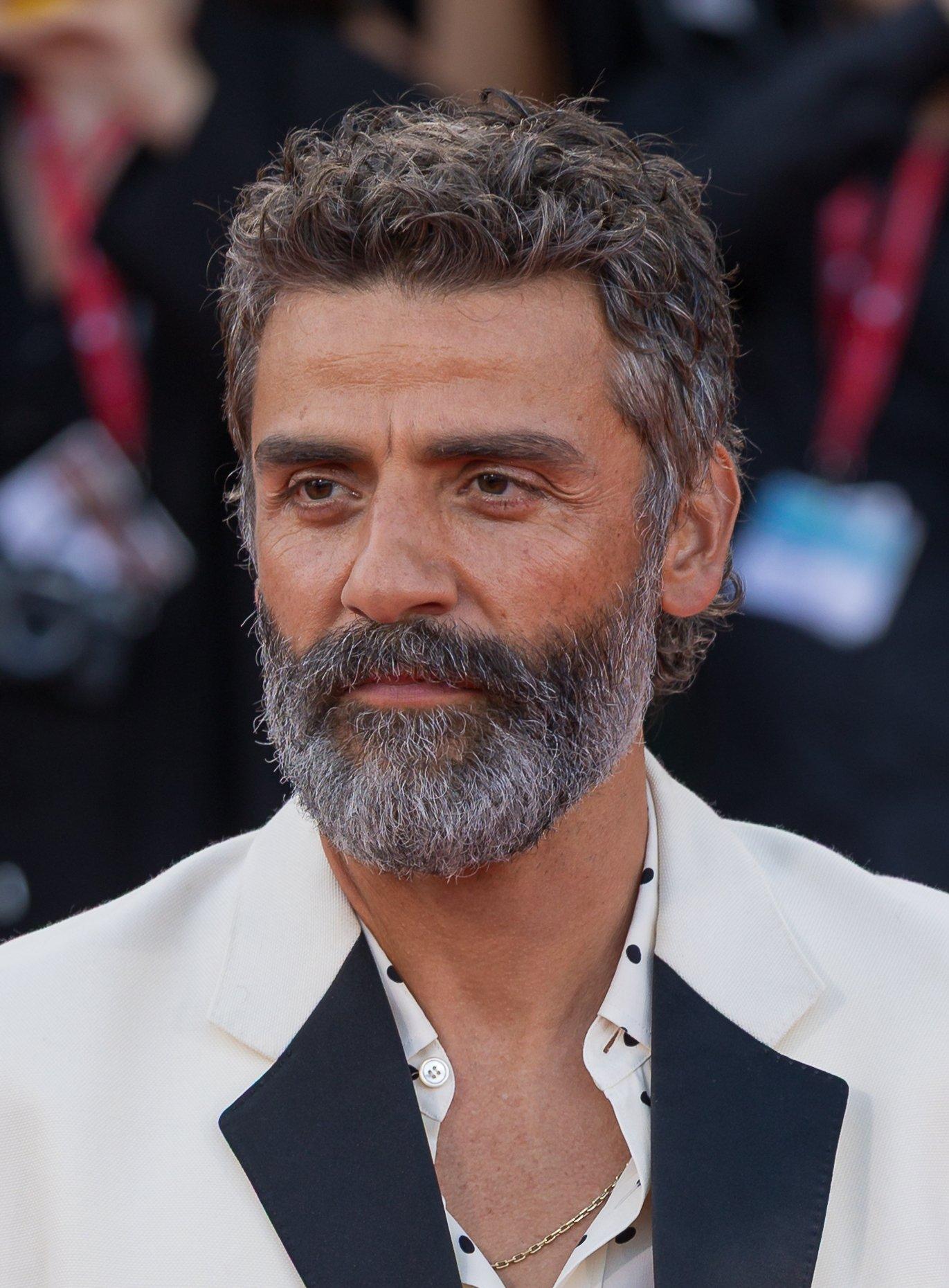
Oscar Isaac.

Actor · Producer · Musician

From the bruised folk singer of Inside Llewyn Davis to Poe Dameron’s franchise swagger, Hamlet’s stage gravitas, and Moon Knight’s fractured TV lead, Oscar Isaac has made versatility look less like a résumé trick than a survival skill. The Guatemalan-born Juilliard actor spent years stealing scenes, dodging stereotypes, and reshaping roles from the inside before Hollywood started treating him like the event rather than the supporting detail.

OBJECTIVE PERSONALITY CLASSIFICATIONMF-Ne/Fi-CS/P(B) #2What does this mean?
PERSONALITY SYSTEMObjective Personality
LEAD FUNCTIONNe · Extroverted Intuition
SECOND SAVIOR FUNCTIONFi · Introverted Feeling
MBTI EQUIVALENTENFP
01 / BEHIND THE CLASSIFICATION

The personality behind the fame.

How does a recorded OPS classification like MF-Ne/Fi-CS/P(B) #2 break down? Walk through nine coins and watch the proposed type take shape. These are deductions from the archived code, not independent evidence of typing accuracy.

Scroll below to see Oscar Isaac take shape.

STARTING POINT512 possible OPS typesEach type combines core functions, an animal order, and sexual modalities.
THE FINISH LINEMF-Ne/Fi-CS/P(B) #2One recorded classification, decoded from its components.
Oscar Isaac’s HUMAN NEEDS 01—03
01
DECIDER OR OBSERVER?

Observer over Decider

Observers have more balanced Decider poles in the middle: Self (Di) and Tribe (De). Their own perspective and other people's perspectives tend to be easier to navigate. Things are the harder territory. Control (Oi) and Chaos (Oe) sit at the extremes, so disrupted plans, uncertainty, and a changing world can trigger the strongest reactions.

Isaac’s career is full of variables he could not command: his family moved repeatedly, Hurricane Andrew destroyed their Miami home, and he spent much of the 2000s as a character actor waiting for a role big enough to hold the camera. That kind of friction is fundamentally about circumstances, timing, and an unstable path, not just whether other people approve. His strength is adaptability—turning Joseph, King John, or a one-scene assassin into something memorable. The blind spot is believing one more changed condition will finally remove the need to choose a lane and live with its limits.


O
02
SELF OR TRIBE?

Di · Self over De · Tribe

Self (Di) is the stronger deciding pole. They check decisions against their own values or reasons first: what makes sense to me, what feels right to me? The strength is independent conviction; the recurring friction is the Tribe (De)—other people's standards, feedback, and expectations. As the portrait unfolds, notice how Self takes the lead.

Using “Isaac” at auditions to avoid being boxed in as a “Latino gangster” is a sharp public example of Self over Tribe. He did not simply wait for Hollywood to decide who he was allowed to be; he imposed a standard of his own. The same streak shows up when he convinced J. J. Abrams not to kill Poe Dameron and pitched Yavin 4 as part of the character’s background. The strength is authorship. The cost is that a personally right answer can still collide with studio priorities, branding, or other people’s plans.

Di
03
GATHER OR ORGANIZE?

Oe · Gather over Oi · Organize

Gather (Oe) leads with new information, experiences, and possibilities. Its strength is curiosity and adaptability; the recurring friction is narrowing the options and settling into what is already known. Another layer of the personality portrait comes into focus.

Few mainstream actors bounce as restlessly as Isaac: punk-band kid, Juilliard graduate, biblical drama, Coen brothers folk antihero, sci-fi manipulator, Shakespeare lead, Marvel vigilante, animated Spider-Man voice. That range fits Gather over Organize. New possibilities are not a distraction from the career; they are part of how the career keeps expanding. He can find the next opening inside a changing industry. The tradeoff is selectivity. If every intriguing role or angle stays alive, the harder task becomes deciding which version of Oscar Isaac deserves the next several years.

Oe
FIRST THREE COINSO + Di + Oe

These establish the preferred human needs in the OPS framework.

Oscar Isaac’s FUNCTIONS 04—05
04
FEELING OR THINKING?

Feeling · F over Thinking · T

Feeling (F) evaluates decisions through values, meaning, and what matters—not simply through emotion. Its strength is a clear sense of significance; Thinking (T) provides balance through impersonal reasons, consistency, and evidence. Combined with Self (Di), this forms the recorded Savior Fi.

When Isaac played Joseph in The Nativity Story, he said it mattered to portray him “as human as possible” and read historical material to ground the role. In Drive, he only accepted the ex-con part after working out a more nuanced version with Nicolas Winding Refn and Hossein Amini. That is Feeling in the recorded Fi sense: a personal value filter deciding what rings true and worth standing behind. The strength is moral and emotional specificity. The void is that sincerity does not automatically answer every practical question about messaging, evidence, or shared standards.

F → Fi
05
SENSING OR INTUITION?

Intuition · N over Sensing · S

Intuition (N) focuses on concepts, patterns, and what information might mean. Sensing (S) balances it through observable facts, physical detail, and direct experience. Combined with Gather (Oe), this gives the recorded Savior Ne.

Isaac’s Intuition shows up in the leaps he makes between ideas rather than in any mystical fog. For Ex Machina, he fused Stanley Kubrick’s speech patterns with Bobby Fischer’s competitive mentality to build Nathan Bateman. For A Most Violent Year, he noticed missing background in Abel Morales and invented one through wider historical research. Ne is useful because it keeps seeing another angle, another connection, another way into the part. The cost is that reality still imposes limits: prosthetics, scripts, budgets, and time do not bend just because the concept keeps multiplying.

N → Ne
THE TWO SAVIOR FUNCTIONSNe / Fi

Opposing functions: Si and Te.

Oscar Isaac’s ANIMAL STACK 06—07
06
CONSUME OR BLAST?

Consume over Blast

Consume gathers information for internal processing; Blast organizes and communicates information. The recorded order is Consume → Sleep → Play → Blast. This comparison follows their positions in that stack.

Isaac’s preparation often looks like Consume winning the race against Blast. He read The Life and Times of Jesus the Messiah for Joseph, studied King John for Robin Hood, researched Latin American history for A Most Violent Year, and read about war before playing Poe Dameron. The strength is obvious: when he arrives, the role already has layers. Consume gives him material to draw from instead of generic intensity. The cost is subtler. More research can always promise one more nuance, while Blast asks for the harsher move—state the take plainly and let it stand.

C > B
07
PLAY OR SLEEP?

Sleep over Play

Play emphasizes external real-time engagement; Sleep emphasizes internal processing. The recorded stack places Sleep earlier.

Sleep comes earlier than Play here, and Isaac’s public process often shows why. Before Inside Llewyn Davis he learned Travis picking, dressed and behaved like Llewyn to watch reactions, then let the character settle into an internal center. He described Show Me a Hero as initially “impenetrable” until he found footage of Nick Wasicsko and could lock onto a personal way in. The advantage of Sleep over Play is depth before exposure. The cost is that real-time exchange can arrive as interruption, forcing the work outward before the private version feels fully distilled.

S > P
Oscar Isaac’s ANIMAL ORIENTATION 08—09
08
INFO OR ENERGY DOMINANT?

Energy over Info

Energy dominant means Play and Sleep are both in the top three: there is access to expending energy through engagement and conserving it through internal processing. Blast last leaves the information side uneven—Consume may gather far more than gets communicated.

Isaac’s top three animals create an Energy emphasis: private processing and active engagement both stay available, while the missing piece is last-place Blast. That combination helps explain the strange blend of reclusive precision and instant screen charge. He can disappear into preparation, then step into an ensemble like Star Wars, Dune, or Scenes from a Marriage and still feel vividly alive in the moment. The blind spot is an information bottleneck. With Blast last, there is always a risk of carrying a rich inner map that never gets stated simply enough for collaborators, interviewers, or audiences to track.

Energy
09
INTROVERSION OR EXTROVERSION?

Introversion over Extroversion

The last animal, Blast, determines this OPS coin: Play or Blast last means Introversion; Consume or Sleep last means Extroversion. This describes animal orientation, not sociability or shyness.

Blast landing last makes the final coin Introversion, and that has almost nothing to do with whether Oscar Isaac can charm a talk-show couch or command a giant franchise. He clearly can. The OPS point is narrower: Consume, Sleep, and Play come more readily than broadcasting a settled conclusion. His career is full of absorbing, refining, and embodying rather than endlessly announcing a doctrine. The strength is elasticity; he does not feel trapped inside one oversimplified persona. The growth edge is clearer declaration—letting the point of view become explicit before the role, the scene, or the next opportunity has to say it for him.

I
Sexual Modalities

The four sexual modalities.

OPS uses masculine/feminine sensory and extroverted-deciding distinctions as framework-specific terms, not gender categories. The four modalities are already included in the original 512 types. The recorded modality is MF · Audio.

MM KinestheticMasculine Sensory · Masculine De
MF RECORDED MODALITYAudioMasculine Sensory · Feminine De
FF TesterFeminine Sensory · Feminine De
FM VisualFeminine Sensory · Masculine De
ADDITIONAL LAYER · SOCIAL TYPE

The four social types.

Social types are an additional layer on top of the original Objective Personality classification, introduced later in OPS research. They describe two proposed social preference coins: Flex vs. Friends and Generalize vs. Specialize. The combination and priority of these preferences produce four social types. Oscar Isaac's recorded social type is #2.

SOCIAL #1 #1Flex · Generalize
SOCIAL #2 RECORDED SOCIAL TYPE#2Generalize · Friends
SOCIAL #3 #3Specialize · Flex
SOCIAL #4 #4Friends · Specialize
COMPLETE RECORDED OPS TYPE · MODALITY INCLUDED + SOCIAL TYPEMF-Ne/Fi-CS/P(B) #2

Ne leads, Fi supports, and the animal stack is Consume → Sleep → Play → Blast.

THE FINISHED PORTRAIT · ALL NINE COINS REVEALED

Oscar Isaac's complete function and animal stack

ConsumeSleepPlayBlastfNemFifTemSi
MF-Ne/Fi-CS/P(B) #2DOUBLE ACTIVATED · CONSUMEExplore the Interactive Coin Builder →
THE OSCAR ISAAC LENS

The man behind the shapeshifter

Isaac’s public image is all magnetism and range: the bruised singer of Inside Llewyn Davis, the cool pilot of Star Wars, the severe prince of Hamlet. Behind that impression is someone whose career was built less on one fixed brand than on repeatedly finding a live angle inside unstable material and changing conditions.

Ne paired with Fi is a potent acting engine. He spots unexpected ways into a character, then tests them against a personal sense of what feels human and worth protecting. That combination produces specificity instead of stereotype. Its limit is that a role can feel deeply right to him while still needing clearer translation for everyone else.

As an Observer and Double Decider, Isaac is not missing the people side so much as overworking the uncertainty side. The recurring pressure is circumstances, options, and how to steer chaos without getting swallowed by it. The neglected function is Si, opposite his lead Ne: the quieter demand for steadiness, repetition, and trusting what is already known enough.

Consume → Sleep → Play → Blast shows why the final imbalance is not shyness but last-place broadcasting. He can absorb, internalize, and animate material before he naturally wants to package it into a firm message. The useful correction is concrete: keep the research and nuance, but state the through-line earlier—at the table read, in rehearsal, or in development—so the performance is supported instead of decoded after the fact.

Want to understand the Savior and Demon states behind these nine coins? Explore the complete explanation, visual examples, and typing principles on our Methodology page →

02 / KEEP EXPLORING

Different faces. Familiar patterns.

Explore other celebrities with related recorded OPS classifications. Related functions are not necessarily exact type matches.

Discover Type Twins
YOUR TURN

Curious about your own type?

Discover how your own personality might be classified through Objective Personality.

Get objectively typed
Oscar Isaac's Personality Type & OPS Profile | The Personality Atlas