The Personality Atlas
THE CELEBRITY PERSONALITY ARCHIVE / PUBLIC SERVICE

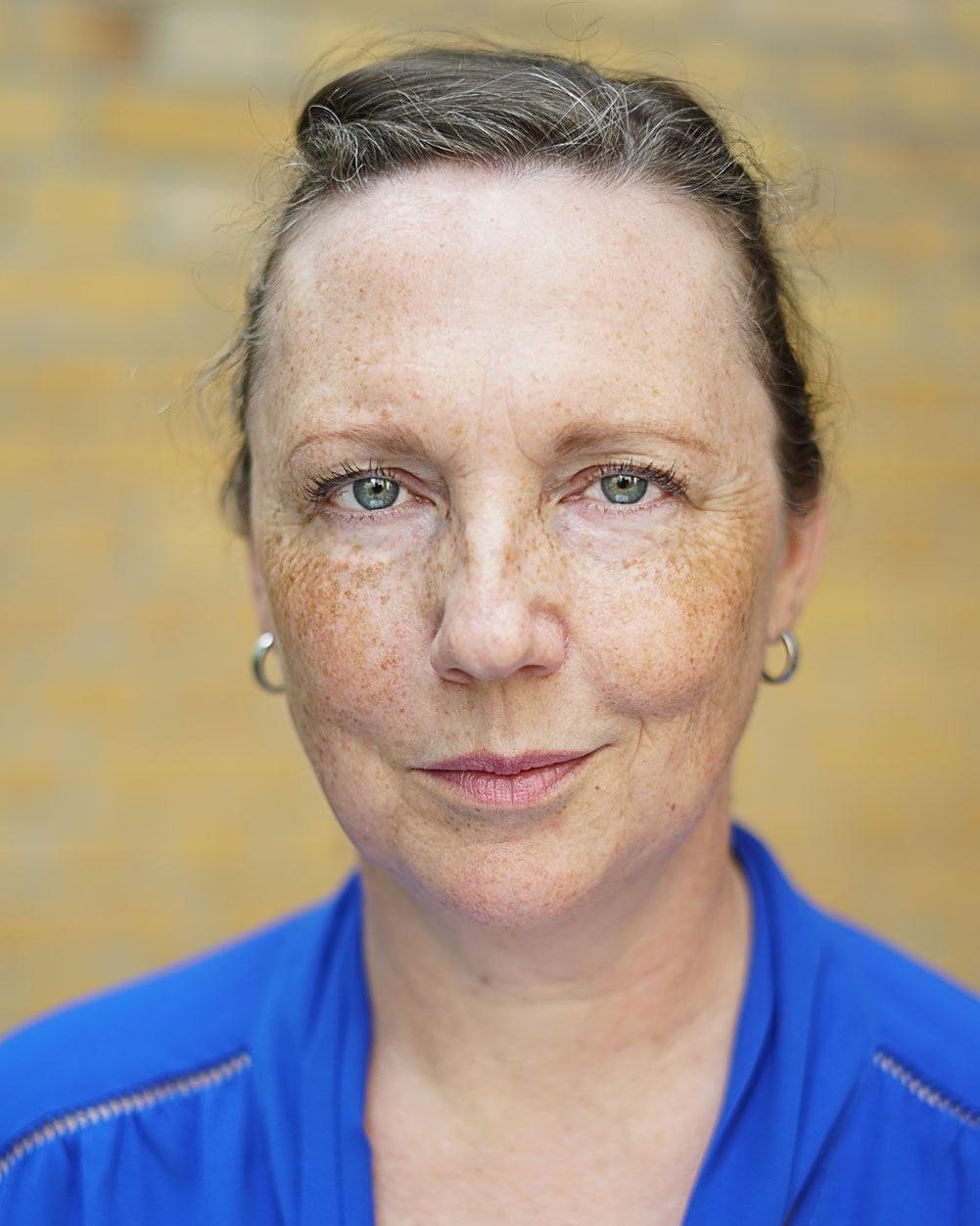
Nicola Chapman.

British peer · disability rights activist

Nicola Chapman carried disability rights into rooms that were not built with her in mind, from Leeds activism to the House of Lords. As the first person with a congenital disability to sit as a peer, she turned access, transport and medical autonomy from abstract policy into immediate public fact.

OBJECTIVE PERSONALITY CLASSIFICATIONMF-Se/Fi-CP/S(B)What does this mean?
PERSONALITY SYSTEMObjective Personality
LEAD FUNCTIONSe · Extroverted Sensing
SECOND SAVIOR FUNCTIONFi · Introverted Feeling
MBTI EQUIVALENTESFP
01 / BEHIND THE CLASSIFICATION

The personality behind the fame.

How does a recorded OPS classification like MF-Se/Fi-CP/S(B) break down? Walk through nine coins and watch the proposed type take shape. These are deductions from the archived code, not independent evidence of typing accuracy.

Scroll below to see Nicola Chapman take shape.

STARTING POINT512 possible OPS typesEach type combines core functions, an animal order, and sexual modalities.
THE FINISH LINEMF-Se/Fi-CP/S(B)One recorded classification, decoded from its components.
Nicola Chapman’s HUMAN NEEDS 01—03
01
DECIDER OR OBSERVER?

Observer over Decider

Observers have more balanced Decider poles in the middle: Self (Di) and Tribe (De). Their own perspective and other people's perspectives tend to be easier to navigate. Things are the harder territory. Control (Oi) and Chaos (Oe) sit at the extremes, so disrupted plans, uncertainty, and a changing world can trigger the strongest reactions.

Chapman’s public life kept colliding with reality in the most literal way: a body marked by hundreds of fractures, public buildings that excluded wheelchair users, and taxi rules that still treated access as optional. That pattern reads more like Observer pressure than people-drama obsession. The central fight is with conditions, logistics and a world that does not automatically cooperate. Her strength is practical resilience—working the problem that is actually in front of her. The cost is that constant adaptation can tempt a person to keep solving the next barrier instead of stepping back to define the longer arc.


O
02
SELF OR TRIBE?

Di · Self over De · Tribe

Self (Di) is the stronger deciding pole. They check decisions against their own values or reasons first: what makes sense to me, what feels right to me? The strength is independent conviction; the recurring friction is the Tribe (De)—other people's standards, feedback, and expectations. As the portrait unfolds, notice how Self takes the lead.

In her maiden speech on the Mental Capacity Bill, Chapman cut through parliamentary distance with a line nobody else in that chamber could borrow: “If the Bill had been passed 43 years ago, I would not be here.” That is Self over Tribe in a serious register. She was not waiting for the room to hand her a standard before speaking. The advantage is moral ownership; her public arguments had an author, not just a committee tone. The tradeoff is expensive. A conviction rooted in personal certainty can still meet other people who believe they are protecting the vulnerable by very different means.

Di
03
GATHER OR ORGANIZE?

Oe · Gather over Oi · Organize

Gather (Oe) leads with new information, experiences, and possibilities. Its strength is curiosity and adaptability; the recurring friction is narrowing the options and settling into what is already known. Another layer of the personality portrait comes into focus.

Chapman’s path was not one fixed lane. She moved from home education and a specialist school into mainstream higher education, studied mathematics and management, worked in local government, taught adults, chaired disability organizations and eventually entered the House of Lords. Gather over Organize fits that expanding pattern. New settings and new openings became material rather than threats. The strength is adaptability across institutions that often were not designed for her. The blind spot is selectivity: when many worthwhile avenues appear—teaching, policy, access, sport, housing—someone still has to decide which few deserve the next sustained push.

Oe
FIRST THREE COINSO + Di + Oe

These establish the preferred human needs in the OPS framework.

Nicola Chapman’s FUNCTIONS 04—05
04
FEELING OR THINKING?

Feeling · F over Thinking · T

Feeling (F) evaluates decisions through values, meaning, and what matters—not simply through emotion. Its strength is a clear sense of significance; Thinking (T) provides balance through impersonal reasons, consistency, and evidence. Combined with Self (Di), this forms the recorded Savior Fi.

Her record around independent living, the Mental Capacity Bill and accessible transport points to Feeling through Fi: judgment anchored in personal values, dignity and what she could stand behind, even in formal policy debates. That gave her advocacy unusual force. She was not arguing access as an abstract management puzzle; she was arguing for a way of treating human lives. The limitation sits on the other side of that strength. A position can be ethically vivid and deeply sincere while still needing impersonal evidence, legal structure and language that reaches people who do not begin from the same value frame.

F → Fi
05
SENSING OR INTUITION?

Sensing · S over Intuition · N

Sensing (S) focuses on concrete details, observable reality, and lived experience. Intuition (N) balances it by looking for broader patterns, concepts, and implications. Combined with Gather (Oe), this gives the recorded Savior Se.

Chapman’s activism stayed stubbornly concrete. She campaigned for access to public buildings and for wheelchair users’ right to be carried by taxi drivers under section 36 of the Disability Discrimination Act. Even her public presence—electric wheelchair, regular attendance at Elland Road, committee leadership—kept the fight in the world of what physically happens. That is Sensing through Se at work: reality tested in doors, vehicles, routes and immediate consequences. The advantage is precision. The cost is that urgent present barriers can consume attention, while broader long-range patterning and future framing may need more deliberate effort.

S → Se
THE TWO SAVIOR FUNCTIONSSe / Fi

Opposing functions: Ni and Te.

Nicola Chapman’s ANIMAL STACK 06—07
06
CONSUME OR BLAST?

Consume over Blast

Consume gathers information for internal processing; Blast organizes and communicates information. The recorded order is Consume → Play → Sleep → Blast. This comparison follows their positions in that stack.

Consume comes before Blast here, and Chapman’s public credibility was built that way. She gathered experience across education, council work, teaching, disability organizations and lived access battles before delivering pointed interventions in the Lords. The result is substance; when she spoke about capacity or transport, she was not guessing from a distance. Consume’s strength is depth fed by real contact with the material. Its cost is familiar and uncomfortable: there is always one more case, meeting or practical detail to absorb before distilling the clean public message. Blast eventually has to close the file and state the conclusion plainly.

C > B
07
PLAY OR SLEEP?

Play over Sleep

Play emphasizes external real-time engagement; Sleep emphasizes internal processing. The recorded stack places Play earlier.

Play comes earlier than Sleep, which helps explain why Chapman’s activism kept showing up in shared arenas: chairing the Leeds Centre for Integrated Living, leading the Leeds United disabled supporters organization, working through campaigns that required other people to respond in real time. Play gives traction with the live environment rather than waiting for perfect internal consolidation. That can make public service feel energizing and immediate. The tradeoff is that constant interaction can outrun quieter processing. A person can be effective in the room and still need more deliberate space to step back, sort priorities and protect an inner through-line.

P > S
Nicola Chapman’s ANIMAL ORIENTATION 08—09
08
INFO OR ENERGY DOMINANT?

Energy over Info

Energy dominant means Play and Sleep are both in the top three: there is access to expending energy through engagement and conserving it through internal processing. Blast last leaves the information side uneven—Consume may gather far more than gets communicated.

Her recorded stack lands on Energy over Info in OPS terms, and that is easy to picture without confusing it with physical health or popularity. Chapman’s public life shows both outward engagement and necessary internal regrouping near the front: leadership roles, parliamentary speeches and campaign work balanced with a strong private center. What falls to the bottom is not learning, but broad broadcasting. The strength is a life that can alternate between doing and consolidating. The blind spot is a message bottleneck: more firsthand material than many public figures, yet less natural pressure to package it into a simple, repeatable doctrine.

Energy
09
INTROVERSION OR EXTROVERSION?

Introversion over Extroversion

The last animal, Blast, determines this OPS coin: Play or Blast last means Introversion; Consume or Sleep last means Extroversion. This describes animal orientation, not sociability or shyness.

Chapman’s Introversion result does not mean shy, antisocial or absent from public life. She sat in the House of Lords, chaired organizations and showed up visibly as a supporter at Leeds United. In OPS, the coin lands here because Blast is last: shared conclusions come later than taking in, engaging and privately sorting. The strength is that public statements can stay grounded instead of becoming constant noise. The growth cost is equally real. If the conclusion is left too implicit, other people have to infer the policy direction from fragments. The challenge is making the through-line unmistakably clear.

I
Sexual Modalities

The four sexual modalities.

OPS uses masculine/feminine sensory and extroverted-deciding distinctions as framework-specific terms, not gender categories. The four modalities are already included in the original 512 types. The recorded modality is MF · Audio.

MM KinestheticMasculine Sensory · Masculine De
MF RECORDED MODALITYAudioMasculine Sensory · Feminine De
FF TesterFeminine Sensory · Feminine De
FM VisualFeminine Sensory · Masculine De
COMPLETE RECORDED OPS TYPE · MODALITY INCLUDEDMF-Se/Fi-CP/S(B)

Se leads, Fi supports, and the animal stack is Consume → Play → Sleep → Blast.

THE FINISHED PORTRAIT · ALL NINE COINS REVEALED

Nicola Chapman's complete function and animal stack

ConsumePlaySleepBlastmSemFifTefNi
MF-Se/Fi-CP/S(B)DOUBLE ACTIVATED · CONSUMEExplore the Interactive Coin Builder →
THE NICOLA CHAPMAN LENS

She made access impossible to ignore.

Chapman’s maiden speech on the Mental Capacity Bill was not ceremonial filler. When she warned, “If the Bill had been passed 43 years ago, I would not be here,” she pulled the debate out of abstraction and into a life already in the chamber. The public impression is courage; the fuller picture is disciplined specificity, turning lived access issues into legislative pressure.

Her Se/Fi pairing made that pressure unusually concrete. Se returns to what physically happens—buildings, taxis, wheelchairs, routes, the immediate consequence of a rule. Fi supplies the personal line she would not outsource. Together they produce advocacy with backbone and texture. The limit is familiar: firsthand certainty can feel so compelling that broader long-range framing or impersonal system language gets less emphasis.

As an Observer and Double Decider, Chapman’s recurring strain lands on circumstances more than tribe drama. She could work across councils, charities, supporters and parliamentary settings, yet the world kept presenting barriers that needed fixing now. That human-needs imbalance can glue attention to immediate obstacles and control points. The neglected function opposite her lead savior is Ni, asking what larger pattern these access fights are building toward.

Consume → Play → Sleep → Blast shows the last pressure point. She could gather real material, engage people in real time, and consolidate privately before broadcasting the full summary. With Blast last, the risk is not weak conviction; it is leaving the conclusion scattered across examples. Keep the grounded casework, but end each speech or campaign with one crisp policy ask and the future it is meant to build.

Want to understand the Savior and Demon states behind these nine coins? Explore the complete explanation, visual examples, and typing principles on our Methodology page →

02 / KEEP EXPLORING

Different faces. Familiar patterns.

Explore other celebrities with related recorded OPS classifications. Related functions are not necessarily exact type matches.

Discover Type Twins
YOUR TURN

Curious about your own type?

Discover how your own personality might be classified through Objective Personality.

Get objectively typed
Nicola Chapman's Personality Type & OPS Profile | The Personality Atlas