The Personality Atlas
THE CELEBRITY PERSONALITY ARCHIVE / FILM, MUSIC & MEDIA

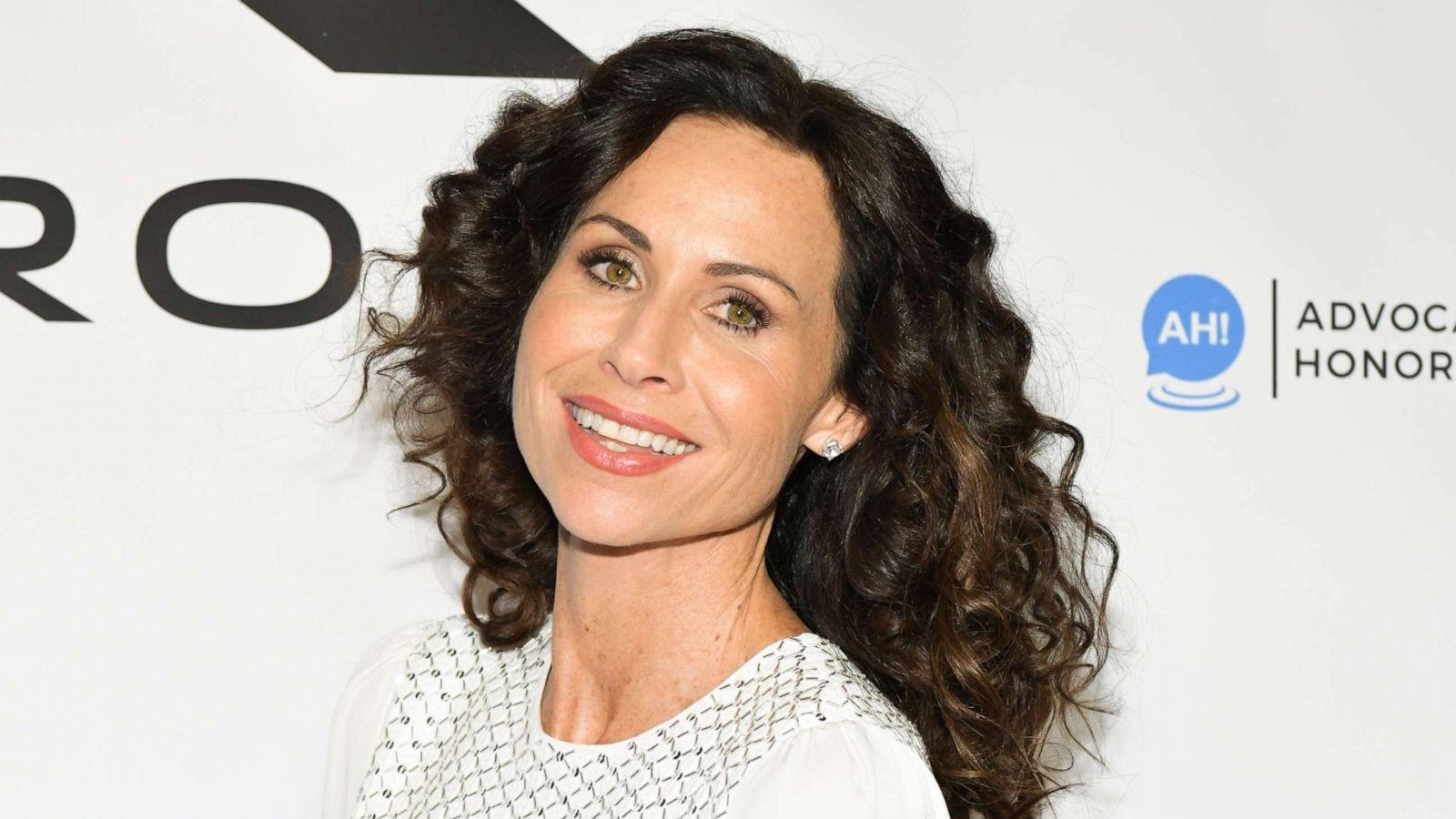
Minnie Driver.

Actor · Singer · Author · Podcast Host

Minnie Driver never stayed in one lane long enough to become easy to summarize: Circle of Friends made her a breakout, Good Will Hunting made her awards-season visible, and then she kept swerving into television, voice acting, records, a memoir, and a podcast. The through-line is not reinvention for its own sake so much as a socially vivid performer who keeps finding another room to work.

OBJECTIVE PERSONALITY CLASSIFICATIONFF-Fe/Se-PC/B(S)What does this mean?
PERSONALITY SYSTEMObjective Personality
LEAD FUNCTIONFe · Extroverted Feeling
SECOND SAVIOR FUNCTIONSe · Extroverted Sensing
MBTI EQUIVALENTENFJ
01 / BEHIND THE CLASSIFICATION

The personality behind the fame.

How does a recorded OPS classification like FF-Fe/Se-PC/B(S) break down? Walk through nine coins and watch the proposed type take shape. These are deductions from the archived code, not independent evidence of typing accuracy.

Scroll below to see Minnie Driver take shape.

STARTING POINT512 possible OPS typesEach type combines core functions, an animal order, and sexual modalities.
THE FINISH LINEFF-Fe/Se-PC/B(S)One recorded classification, decoded from its components.
Minnie Driver’s HUMAN NEEDS 01—03
01
DECIDER OR OBSERVER?

Decider over Observer

Deciders have more balanced Observer poles in the middle: Control (Oi) and Chaos (Oe). Organizing what's known and handling what's new tend to feel more manageable. People are the harder territory. Self (Di) and Tribe (De) sit at the extremes, so judgment, rejection, approval, and conflict can trigger the strongest reactions.

Driver's public story keeps returning to people. Breakout roles depended on chemistry, Good Will Hunting made her newly visible to the industry's judgments, and later work like Minnie Questions literally centers one person meeting another. That points to a Decider life, where the friction lands less on logistics than on approval, rapport, and significance inside a social field. The strength is reading a room and making connection feel alive. The blind spot is letting other people's reactions become the thing that quietly sets the stakes.

D
02
SELF OR TRIBE?

De · Tribe over Di · Self

Tribe (De) is the stronger deciding pole. They check decisions against people, shared standards, and what works for the group: what do we need, what will others think? The strength is coordination and responsiveness; the recurring friction is the Self (Di)—knowing and defending their own position. As the portrait unfolds, notice how Tribe takes the lead.

Her public work repeatedly leans outward. On Minnie Questions, the engine is not self-explanation but drawing guests into a shared space, and much of her visibility has come through ensemble-heavy projects where chemistry matters as much as individual flourish. Tribe-first can make someone unusually responsive to what other people need, value, or can live with. That is a real strength in collaborative careers. The cost is that the outside standard can get so loud that a private, less diplomatic judgment arrives later than it should.

De
03
GATHER OR ORGANIZE?

Oe · Gather over Oi · Organize

Gather (Oe) leads with new information, experiences, and possibilities. Its strength is curiosity and adaptability; the recurring friction is narrowing the options and settling into what is already known. Another layer of the personality portrait comes into focus.

Driver has built a career that refuses neat filing: breakout film roles, sitcoms, prestige drama, voice acting, three solo albums, a memoir, then a podcast. Gather-first fits that pattern better than a single locked route. New formats and fresh contexts keep creating usable openings, and she has repeatedly taken them. The strength is range without paralysis when the environment changes. The cost is selectivity. A life that can plausibly become several different things at once still has to choose where to place the next few years, and every choice closes other live options.

Oe
FIRST THREE COINSD + De + Oe

These establish the preferred human needs in the OPS framework.

Minnie Driver’s FUNCTIONS 04—05
04
FEELING OR THINKING?

Feeling · F over Thinking · T

Feeling (F) evaluates decisions through values, meaning, and what matters—not simply through emotion. Its strength is a clear sense of significance; Thinking (T) provides balance through impersonal reasons, consistency, and evidence. Combined with Tribe (De), this forms the recorded Savior Fe.

Fe shows up in the way Driver's public projects keep circling shared tone and human rapport. Minnie Questions is built around making guests legible through conversation, and her long Oxfam support ended when the organization violated a social standard she no longer wanted to publicly stand beside. Fe's strength is social attunement: knowing how people are landing and what a group can live with. The weakness is that harmony and broad consensus can start masquerading as clarity. A situation can feel more relationally settled without the hardest impersonal questions being answered.

F → Fe
05
SENSING OR INTUITION?

Sensing · S over Intuition · N

Sensing (S) focuses on concrete details, observable reality, and lived experience. Intuition (N) balances it by looking for broader patterns, concepts, and implications. Combined with Gather (Oe), this gives the recorded Savior Se.

Driver's career is unusually physical and present-tense. She moved from screen roles in Circle of Friends and Grosse Pointe Blank to voice performances in Tarzan and Princess Mononoke, sang publicly from her own records, and fronted an original song written for The Phantom of the Opera film. Se favors what can actually land in the room: the line reading, the voice, the performance, the immediate reality of the work. That gives her range a tangible snap. The tradeoff is that immediate opportunity can crowd out the slower job of narrowing everything toward one long-range through-line.

S → Se
THE TWO SAVIOR FUNCTIONSFe / Se

Opposing functions: Ti and Ni. This is a jumper classification.

Minnie Driver’s ANIMAL STACK 06—07
06
PLAY OR SLEEP?

Play over Sleep

Play emphasizes external real-time engagement; Sleep emphasizes internal processing. The recorded stack places Play earlier.

Play looks first here. Driver's public life is full of live exchange: ensemble acting, guest chemistry, interviews, performing music, and later a podcast whose whole premise is another person in the room. Play gives her quick relational movement and a visible willingness to engage before every variable is settled. That can make collaboration feel easy and generous. The Sleep side is the harder ask. Too little distance from the interaction can leave less space to privately sort what she actually thinks once the conversation, the production, or the applause has ended.

P > S
07
CONSUME OR BLAST?

Consume over Blast

Consume gathers information for internal processing; Blast organizes and communicates information. The recorded order is Play → Consume → Blast → Sleep. This comparison follows their positions in that stack.

With Play already driving the front end, Consume next makes Driver's style more curious than declarative. She wrote 10 of the 11 songs on her first album, built a podcast around asking questions, and later published a memoir whose very title, Managing Expectations, sounds less like a manifesto than an ongoing examination. Consume is a strength because it keeps taking in material, stories, and nuance before rushing to Blast a conclusion. The growth cost is obvious: gathering can outrun stating. Sometimes the sharper move is not another angle, but a cleaner public takeaway.

C > B
Minnie Driver’s ANIMAL ORIENTATION 08—09
08
INFO OR ENERGY DOMINANT?

Info over Energy

Info dominant means Consume and Blast are both in the top three: gathering and communicating information are more balanced. Sleep last leaves the energy side uneven—Play can keep engagement going without enough private recovery.

Driver's stack is Info-dominant, and her public career makes that easy to picture. She does not just perform; she keeps converting experience into something shareable—film roles, albums, interviews, a memoir, a guest-driven podcast. With Consume and Blast both in the top three, information moves through her life as input and output rather than sitting still for long. That creates reach and versatility. The missing balance is Sleep. The risk is not insufficient talent or curiosity, but insufficient private consolidation: turning the next project on before the previous one has fully settled into an inner center.

Info
09
INTROVERSION OR EXTROVERSION?

Extroversion over Introversion

The last animal, Sleep, determines this OPS coin: Play or Blast last means Introversion; Consume or Sleep last means Extroversion. This describes animal orientation, not sociability or shyness.

Sleep lands last, which makes this OPS Extroversion even though the public might lazily reduce that to "she seems outgoing." That is not the point. The point is priority: her stack more readily moves toward engagement, information flow, and shared reality than toward prolonged internal retreat. Even the memoir arrives as something offered outward, not a refusal of the audience. The strength is momentum and availability. The blind spot is subtler: if quiet self-processing keeps getting bumped down the list, she can stay impressively responsive while becoming less certain which conclusions still hold when nobody else is present.

E
Sexual Modalities

The four sexual modalities.

OPS uses masculine/feminine sensory and extroverted-deciding distinctions as framework-specific terms, not gender categories. The four modalities are already included in the original 512 types. The recorded modality is FF · Tester.

MM KinestheticMasculine Sensory · Masculine De
MF AudioMasculine Sensory · Feminine De
FF RECORDED MODALITYTesterFeminine Sensory · Feminine De
FM VisualFeminine Sensory · Masculine De
COMPLETE RECORDED OPS TYPE · MODALITY INCLUDEDFF-Fe/Se-PC/B(S)

Fe leads, Se supports, and the animal stack is Play → Consume → Blast → Sleep.

THE FINISHED PORTRAIT · ALL NINE COINS REVEALED

Minnie Driver's complete function and animal stack

PlayConsumeBlastSleepfFemNifSemTi
FF-Fe/Se-PC/B(S)DOUBLE ACTIVATED · PLAYExplore the Interactive Coin Builder →
THE MINNIE DRIVER LENS

Charm is not the whole mechanism.

Driver can look almost frictionless in public: Circle of Friends breakout, Good Will Hunting prestige, sitcoms, voice work, albums, then a memoir and Minnie Questions. The smoother truth is less effortless. Her career is not random dabbling; it is a performer repeatedly coming alive in formats built on contact, chemistry, and another human being in the room.

Her Fe/Se pairing is the obvious engine. Fe tracks tone, rapport, and what other people can receive; Se makes that social radar tangible through voice, timing, and presence. That combination helps her land across film, television, music, and conversation. Its limit is sharper than it looks: a moment can feel socially right before it has been logically sorted or strategically narrowed.

As a Decider and therefore a Double Observer, Driver's first pressure point is people, approval, and significance more than chaos in the environment. That Double Observer range does not erase the Decider ache; it just means the world itself is less central than the human stakes inside it. The neglected function opposite lead Fe is Ti, asking what still makes sense when charm and consensus drop away.

Play → Consume → Blast → Sleep shows the public rhythm: engage, gather, share, then finally retreat. Sleep last creates the extroversion imbalance here, not a verdict about sociability but a lower priority on prolonged private consolidation. The balancing move is practical: keep the collaborative momentum, then block protected offline time after a role, release, or interview so the next decision comes from reflection instead of room energy.

Want to understand the Savior and Demon states behind these nine coins? Explore the complete explanation, visual examples, and typing principles on our Methodology page →

02 / KEEP EXPLORING

Different faces. Familiar patterns.

Explore other celebrities with related recorded OPS classifications. Related functions are not necessarily exact type matches.

Discover Type Twins
YOUR TURN

Curious about your own type?

Discover how your own personality might be classified through Objective Personality.

Get objectively typed
Minnie Driver's Personality Type & OPS Profile | The Personality Atlas