The Personality Atlas
THE CELEBRITY PERSONALITY ARCHIVE / SPORT

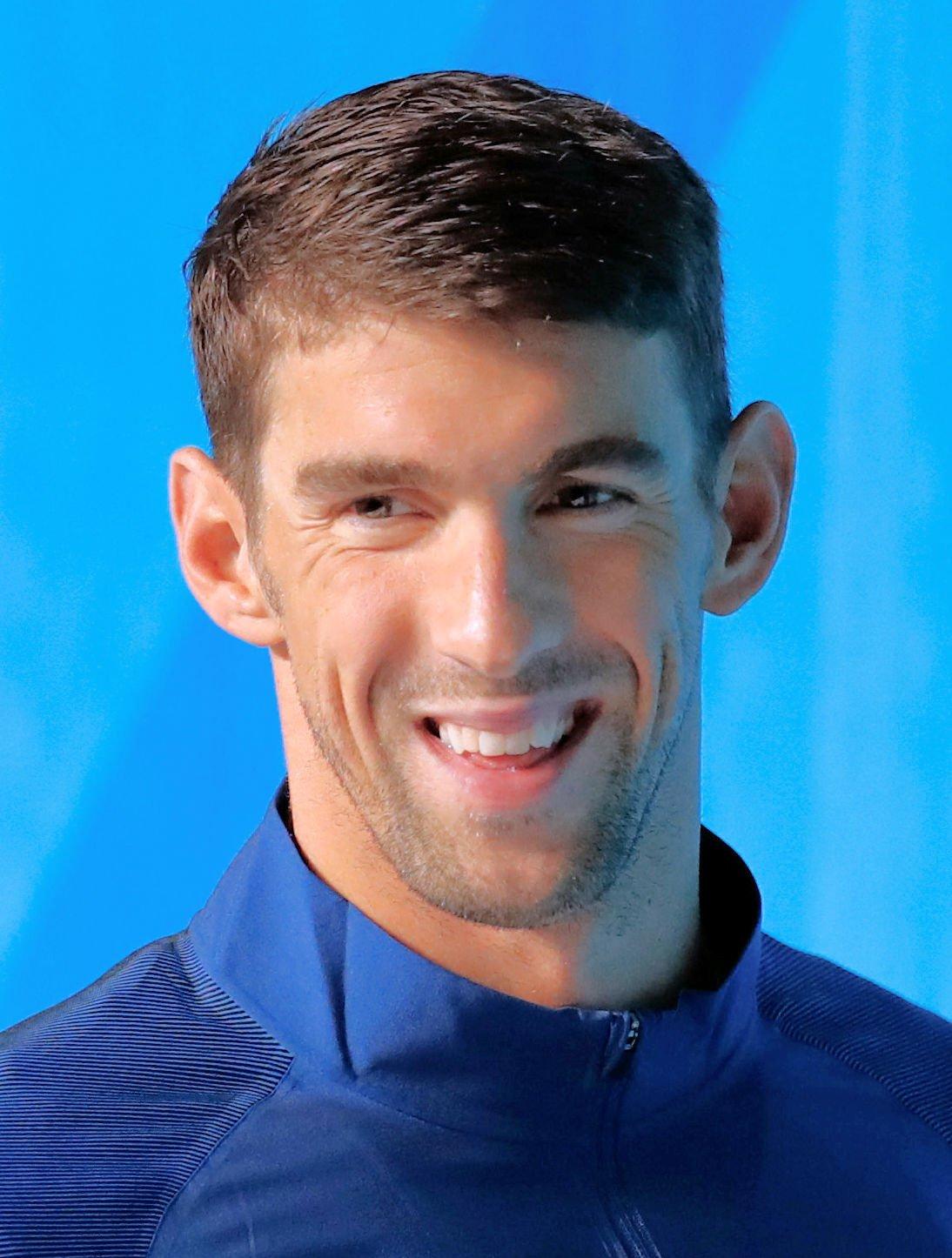
Michael Phelps.

Olympic swimmer · foundation founder

Michael Phelps turned elite swimming into a ruthless study of variables: event load, recovery windows, relay timing and race execution. Across the most decorated Olympic career ever, he kept attacking concrete problems until the impossible started looking almost methodical.

OBJECTIVE PERSONALITY CLASSIFICATIONFF-Se/Ti-CP/S(B)What does this mean?
PERSONALITY SYSTEMObjective Personality
LEAD FUNCTIONSe · Extroverted Sensing
SECOND SAVIOR FUNCTIONTi · Introverted Thinking
MBTI EQUIVALENTESTP
01 / BEHIND THE CLASSIFICATION

The personality behind the fame.

How does a recorded OPS classification like FF-Se/Ti-CP/S(B) break down? Walk through nine coins and watch the proposed type take shape. These are deductions from the archived code, not independent evidence of typing accuracy.

Scroll below to see Michael Phelps take shape.

STARTING POINT512 possible OPS typesEach type combines core functions, an animal order, and sexual modalities.
THE FINISH LINEFF-Se/Ti-CP/S(B)One recorded classification, decoded from its components.
Michael Phelps’ HUMAN NEEDS 01—03
01
DECIDER OR OBSERVER?

Observer over Decider

Observers have more balanced Decider poles in the middle: Self (Di) and Tribe (De). Their own perspective and other people's perspectives tend to be easier to navigate. Things are the harder territory. Control (Oi) and Chaos (Oe) sit at the extremes, so disrupted plans, uncertainty, and a changing world can trigger the strongest reactions.

At the 2004 U.S. Olympic Trials, Phelps qualified in six individual events, added relay duties, and then had to cut the 200-meter backstroke because the overall program became a physical math problem. Later Games brought the same fight with schedules, splits and recovery windows. That is Observer friction: the pressure sits in circumstances, limits and variables that refuse to obey ambition. His strength is adapting to reality faster than most rivals. The blind spot is assuming one more adjustment can eliminate uncertainty instead of merely managing it.
O
02
SELF OR TRIBE?

Di · Self over De · Tribe

Self (Di) is the stronger deciding pole. They check decisions against their own values or reasons first: what makes sense to me, what feels right to me? The strength is independent conviction; the recurring friction is the Tribe (De)—other people's standards, feedback, and expectations. As the portrait unfolds, notice how Self takes the lead.

When Gary Hall Jr. argued Phelps did not deserve a relay spot after skipping the 100-meter freestyle at Trials, Phelps answered from his own standard: his schedule was overloaded, and he had already proven his speed against top swimmers. He also stayed with Bob Bowman for years, following him to Michigan, back to Baltimore, then Arizona. Self over Tribe gives him decisive ownership. The cost is friction. A choice can be strategically coherent to him and still leave critics, teammates or officials unconvinced.

Di
03
GATHER OR ORGANIZE?

Oe · Gather over Oi · Organize

Gather (Oe) leads with new information, experiences, and possibilities. Its strength is curiosity and adaptability; the recurring friction is narrowing the options and settling into what is already known. Another layer of the personality portrait comes into focus.

Most great swimmers dominate one lane; Phelps kept opening new ones. By 2003 he had won national titles in three different strokes, and in 2005 he deliberately dropped specialty events to experiment with the 400-meter and 100-meter freestyle. Gather over Organize gives him range, adaptability and more than one route to the podium. The growth cost is selectivity. A career packed with possibilities still demands painful cuts, because chasing every available event can dilute the focus that makes an all-time outlier possible.

Oe
FIRST THREE COINSO + Di + Oe

These establish the preferred human needs in the OPS framework.

Michael Phelps’ FUNCTIONS 04—05
04
FEELING OR THINKING?

Thinking · T over Feeling · F

Thinking (T) evaluates decisions through reasons, logic, and what works—not a lack of emotion. Its strength is analytical consistency; Feeling (F) provides balance through values, meaning, and the human consequences of a decision. Combined with Self (Di), this forms the recorded Savior Ti.

Phelps often treated race planning like a logic puzzle, not a loyalty contest. At the 2004 Trials he dropped the 200-meter backstroke to protect a crowded Olympic program and target the races that best fit the whole schedule. That is Ti’s advantage: an internal standard for what is efficient, coherent and worth the energy. It produces exact decisions under pressure. The blind spot is social translation. A sound internal calculation does not automatically answer public questions about fairness, optics or what teammates hoped would happen.

T → Ti
05
SENSING OR INTUITION?

Sensing · S over Intuition · N

Sensing (S) focuses on concrete details, observable reality, and lived experience. Intuition (N) balances it by looking for broader patterns, concepts, and implications. Combined with Gather (Oe), this gives the recorded Savior Se.

His records were built in brutal present-tense reality: a 51.1 medley-relay split in 2002, world records in the 200-meter butterfly and individual medleys, and the eight-gold assault in Beijing that depended on what he could do right now, not in theory. Se keeps attention on the wall, the water, the stroke and the clock. That is a massive competitive strength. The limit is that immediate data can dominate the frame. A visible performance can feel so authoritative that longer-range pattern and meaning get pushed into the background.

S → Se
THE TWO SAVIOR FUNCTIONSSe / Ti

Opposing functions: Ni and Fe.

Michael Phelps’ ANIMAL STACK 06—07
06
CONSUME OR BLAST?

Consume over Blast

Consume gathers information for internal processing; Blast organizes and communicates information. The recorded order is Consume → Play → Sleep → Blast. This comparison follows their positions in that stack.

Long before Beijing turned him into shorthand for Olympic dominance, Phelps was stacking information: swimming from age seven, a national age-group record by ten, training under Bob Bowman from eleven, and building technical depth across multiple strokes. Consume gives him a huge reservoir to draw from when the stakes rise. The tension with Blast is straightforward. More reps, more details and more refinements can keep improving the machine while delaying the simpler public task of stating the plan clearly enough for everyone else to follow.

C > B
07
PLAY OR SLEEP?

Play over Sleep

Play emphasizes external real-time engagement; Sleep emphasizes internal processing. The recorded stack places Play earlier.

After taking in the material, Phelps did not stay sealed off with it. He kept moving through team settings—relays, coach changes, comeback training in Arizona, and repeated returns to international competition where timing with other people mattered as much as private confidence. Play earlier than Sleep helps turn preparation into action and makes him dangerous in fast, interactive environments. The cost is consolidation time. When competition, travel and collaboration keep the engine running, quieter internal settling can get postponed until the next demand is already in the water.

P > S
Michael Phelps’ ANIMAL ORIENTATION 08—09
08
INFO OR ENERGY DOMINANT?

Energy over Info

Energy dominant means Play and Sleep are both in the top three: there is access to expending energy through engagement and conserving it through internal processing. Blast last leaves the information side uneven—Consume may gather far more than gets communicated.

Phelps’s stack lands on Energy over Info, which fits a career that kept alternating exertion and reset instead of living mainly in explanation. Four medal-heavy Olympics, a 2012 retirement, a 2014 comeback and a final run in Rio all show how much his public life revolved around doing, recovering and doing again. With Play and Sleep both in the top three, the engine supports action and recharge. Blast last creates the void: experience can accumulate faster than it gets packaged into a clear message other people can immediately use.

Energy
09
INTROVERSION OR EXTROVERSION?

Introversion over Extroversion

The last animal, Blast, determines this OPS coin: Play or Blast last means Introversion; Consume or Sleep last means Extroversion. This describes animal orientation, not sociability or shyness.

Nothing about this coin says shy. Phelps was a relay star, the U.S. flag bearer in Rio, and one of the most recognized athletes on earth. OPS Introversion here comes from Blast being last: public certainty and settled explanation arrive later than taking in, acting and privately resetting. The strength is that he does not force a speech before the work feels earned. The growth cost is that demonstration is not always enough. Coaches, younger swimmers and even teammates may need the lesson spoken plainly, not only performed at world-record speed.

I
Sexual Modalities

The four sexual modalities.

OPS uses masculine/feminine sensory and extroverted-deciding distinctions as framework-specific terms, not gender categories. The four modalities are already included in the original 512 types. The recorded modality is FF · Tester.

MM KinestheticMasculine Sensory · Masculine De
MF AudioMasculine Sensory · Feminine De
FF RECORDED MODALITYTesterFeminine Sensory · Feminine De
FM VisualFeminine Sensory · Masculine De
COMPLETE RECORDED OPS TYPE · MODALITY INCLUDEDFF-Se/Ti-CP/S(B)

Se leads, Ti supports, and the animal stack is Consume → Play → Sleep → Blast.

THE FINISHED PORTRAIT · ALL NINE COINS REVEALED

Michael Phelps's complete function and animal stack

ConsumePlaySleepBlastfSemTifFemNi
FF-Se/Ti-CP/S(B)DOUBLE ACTIVATED · CONSUMEExplore the Interactive Coin Builder →
THE MICHAEL PHELPS LENS

The medals were obvious; the pattern was harder.

Beijing froze Phelps in public memory as a gold-collecting machine, but the fuller picture is more exacting than myth. He qualified for the Olympics at 15, followed Bob Bowman across states, and kept returning to swimming as the place where effort, pacing and recovery could be measured instead of guessed.

Se/Ti is viciously effective in elite sport. Se locks onto the wall, the water and the split in real time; Ti trims the program to what makes structural sense. That pairing creates precision under pressure. Its limit is translation: efficient decisions can still look abrupt or underexplained from the outside.

As an Observer and Double Decider, Phelps is built to manage conditions first and treat people drama as secondary noise. That exact pairing matters. The imbalance leans toward controlling chaos and variables, sometimes with less attention to the deeper through-line. The neglected function opposite his lead savior Se is Ni.

Consume → Play → Sleep → Blast shows the last pressure point. He can absorb, engage and reset for years before turning the lesson into a simple public message. Blast last makes articulation the stretch. Keep the ruthless race eye, but after major meets or foundation events, stop and state the principle younger swimmers should carry forward.

Want to understand the Savior and Demon states behind these nine coins? Explore the complete explanation, visual examples, and typing principles on our Methodology page →

02 / KEEP EXPLORING

Different faces. Familiar patterns.

Explore other celebrities with related recorded OPS classifications. Related functions are not necessarily exact type matches.

Discover Type Twins
YOUR TURN

Curious about your own type?

Discover how your own personality might be classified through Objective Personality.

Get objectively typed
Michael Phelps's Personality Type & OPS Profile | The Personality Atlas