The Personality Atlas
THE CELEBRITY PERSONALITY ARCHIVE / FILM & TELEVISION

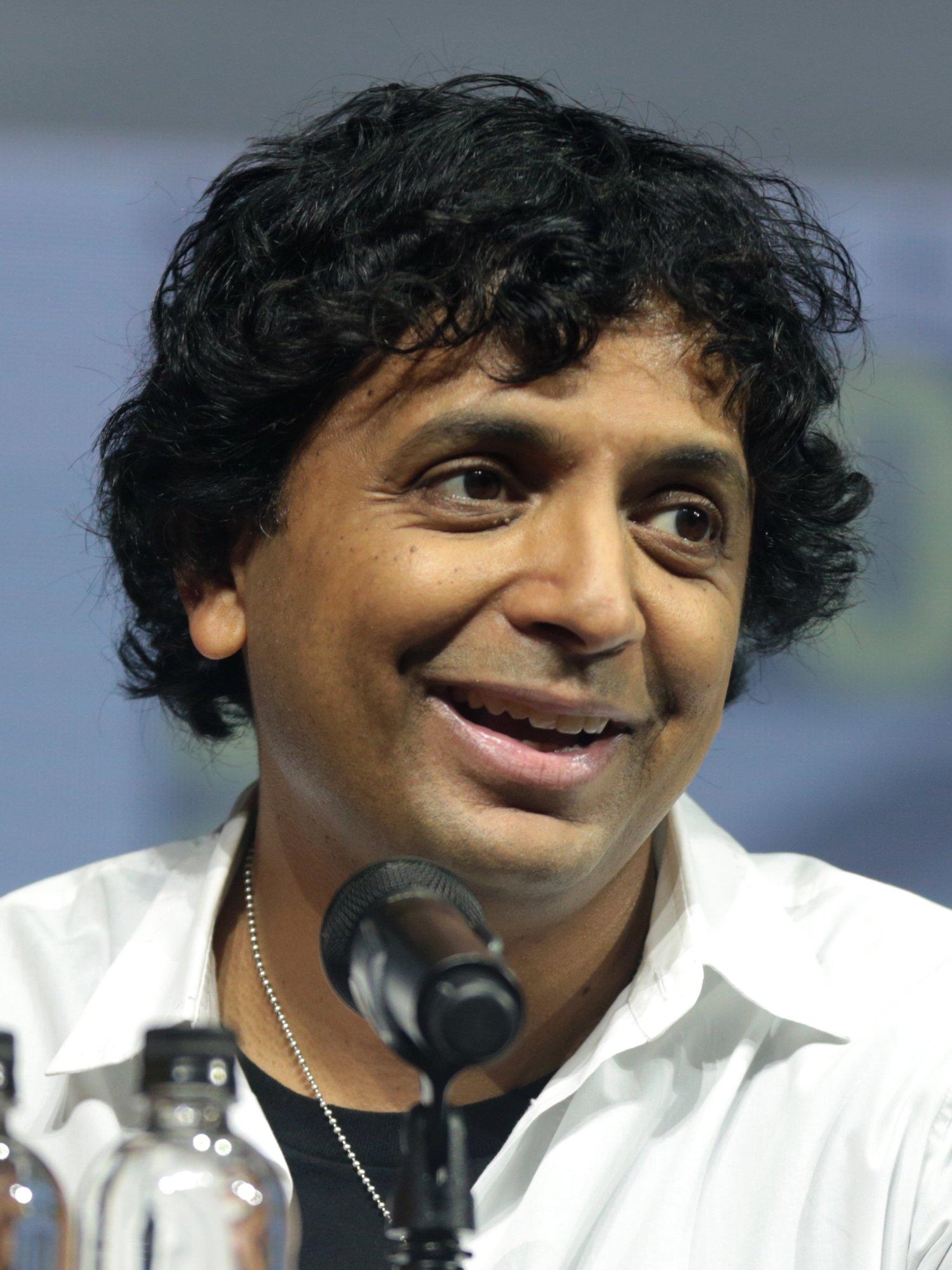
M. Night Shyamalan.

Filmmaker · Screenwriter · Showrunner

M. Night Shyamalan turned a childhood Super 8 obsession into one of Hollywood’s most recognizable signatures: supernatural thrillers, spiritual undertones, and premises so clean they can sell on his name alone. From The Sixth Sense to The Visit and Servant, his career keeps circling the same tension—how to protect a singular vision when the audience, the industry, and reality itself refuse to behave.

OBJECTIVE PERSONALITY CLASSIFICATIONMF-Ni/Fi-SB/P(C) #1What does this mean?
PERSONALITY SYSTEMObjective Personality
LEAD FUNCTIONNi · Introverted Intuition
SECOND SAVIOR FUNCTIONFi · Introverted Feeling
MBTI EQUIVALENTINTJ
01 / BEHIND THE CLASSIFICATION

The personality behind the fame.

How does a recorded OPS classification like MF-Ni/Fi-SB/P(C) #1 break down? Walk through nine coins and watch the proposed type take shape. These are deductions from the archived code, not independent evidence of typing accuracy.

Scroll below to see M. Night Shyamalan take shape.

STARTING POINT512 possible OPS typesEach type combines core functions, an animal order, and sexual modalities.
THE FINISH LINEMF-Ni/Fi-SB/P(C) #1One recorded classification, decoded from its components.
M. Night Shyamalan’s HUMAN NEEDS 01—03
01
DECIDER OR OBSERVER?

Observer over Decider

Observers have more balanced Decider poles in the middle: Self (Di) and Tribe (De). Their own perspective and other people's perspectives tend to be easier to navigate. Things are the harder territory. Control (Oi) and Chaos (Oe) sit at the extremes, so disrupted plans, uncertainty, and a changing world can trigger the strongest reactions.

Shyamalan’s career has been pushed around by conditions bigger than any single review. The Sixth Sense turned his surname into a marketing hook, and that same expectation later trailed his films like a shadow. Even The Visit only broke through after studios passed, he shot it in secret, revised it, and Universal finally picked it up. That is Observer pressure: timing, packaging, audience expectation, and whether the premise survives contact with reality. His strength is adapting to unstable conditions. The blind spot is treating every setback as a world problem when some conflicts are simply human ones.


O
02
SELF OR TRIBE?

Di · Self over De · Tribe

Self (Di) is the stronger deciding pole. They check decisions against their own values or reasons first: what makes sense to me, what feels right to me? The strength is independent conviction; the recurring friction is the Tribe (De)—other people's standards, feedback, and expectations. As the portrait unfolds, notice how Self takes the lead.

When Shyamalan backed away from Indiana Jones 4 as “not the right thing” for him, and later left Life of Pi partly because his name would alter the audience’s experience, you can see an internal bar at work. He is not waiting for the room to tell him what fits. That self-first posture protects originality; it helps explain why even his misses still feel unmistakably his. The cost is rigidity. A strong private standard can preserve integrity, then quietly harden into a system where outside perspective arrives too late to materially reshape the choice.

Di
03
GATHER OR ORGANIZE?

Oi · Organize over Oe · Gather

Organize (Oi) leads with refining, preserving, and structuring what is already known. Its strength is preparation and clear direction; the recurring friction is unexpected change that disrupts the plan. Another layer of the personality portrait comes into focus.

His films keep returning to sealed environments: the grieving family under pressure in Signs, the isolated community in The Village, the aging beach in Old. Even geographically, he repeatedly sets and shoots in and around Philadelphia. Organize over Gather shows up as a drive to lock the world into one governing logic and explore it all the way through. The payoff is coherence and atmosphere. The cost is brittleness. When the organizing idea springs a leak, critics do not experience a small flaw; they feel the entire structure wobble.

Oi
FIRST THREE COINSO + Di + Oi

These establish the preferred human needs in the OPS framework.

M. Night Shyamalan’s FUNCTIONS 04—05
04
FEELING OR THINKING?

Feeling · F over Thinking · T

Feeling (F) evaluates decisions through values, meaning, and what matters—not simply through emotion. Its strength is a clear sense of significance; Thinking (T) provides balance through impersonal reasons, consistency, and evidence. Combined with Self (Di), this forms the recorded Savior Fi.

Wide Awake searching for God, Signs treating faith as a live question, and Shyamalan’s own description of himself as “pretty spiritual” all point to Feeling as a real engine in the work. Even I Got Schooled began with a personal concern about education and became a public argument. That strength gives his films moral pressure instead of empty puzzle-box cleverness. The blind spot is that conviction is not consensus. A story can feel deeply right to its creator while leaving other people asking for clearer evidence, sturdier logic, or less sermon in the framing.

F → Fi
05
SENSING OR INTUITION?

Intuition · N over Sensing · S

Intuition (N) focuses on concepts, patterns, and what information might mean. Sensing (S) balances it through observable facts, physical detail, and direct experience. Combined with Organize (Oi), this gives the recorded Savior Ni.

Shyamalan’s signature is not just the twist ending. It is the insistence that scattered details belong to one hidden pattern. The Sixth Sense, Unbreakable, Signs, and the 19-year arc that eventually became Glass all work by narrowing attention toward a single underlying meaning. Intuition is powerful here because it compresses chaos into a memorable through-line audiences can feel immediately. The tradeoff is overcommitment. Once the pattern declares itself, contradictory details can look like nuisances instead of useful friction. That is how a visionary premise becomes a rigid one.

N → Ni
THE TWO SAVIOR FUNCTIONSNi / Fi

Opposing functions: Se and Te. This is a jumper classification.

M. Night Shyamalan’s ANIMAL STACK 06—07
06
PLAY OR SLEEP?

Sleep over Play

Play emphasizes external real-time engagement; Sleep emphasizes internal processing. The recorded stack places Sleep earlier.

His public comeback says a lot about the balance between Play and Sleep. After the poorly received stretch that ended with After Earth, Shyamalan later described his thinking in 2013 as full of doubts, introspection, and questioning. Then he shot The Visit in secret, revised it, and only after that let the world in. Sleep earlier than Play favors private consolidation before broad real-time exchange. The strength is a voice with an internal center. The cost is that by the time feedback arrives, the core idea may already feel too finished to be genuinely altered.

S > P
07
CONSUME OR BLAST?

Blast over Consume

Consume gathers information for internal processing; Blast organizes and communicates information. The recorded order is Sleep → Blast → Play → Consume. This comparison follows their positions in that stack.

Consume and Blast reveal why Shyamalan can market not just a movie, but a thesis. After The Sixth Sense, his name alone could help sell the next release, because the audience expected a clearly delivered premise with a point of view behind it. Blast earlier than Consume favors packaging the vision and getting it across. You can see the same push in I Got Schooled: he commissioned research, then drove toward five keys and a public conclusion. The growth cost is obvious. Delivery can outrun intake, especially when more outside material might have sharpened the message.

B > C
M. Night Shyamalan’s ANIMAL ORIENTATION 08—09
08
INFO OR ENERGY DOMINANT?

Energy over Info

Energy dominant means Play and Sleep are both in the top three: there is access to expending energy through engagement and conserving it through internal processing. Consume last leaves the information side uneven—Blast may broadcast more than gets taken in.

With Sleep, Blast, and Play all arriving before the final animal, Shyamalan lands on Energy over Info. The advantage is range: he can retreat into a private vision, then push it outward as writer-director, showrunner, executive producer, or pilot director. That helps explain the volume of work from dozens of home movies to features to Servant and Wayward Pines. The missing balance is intake. When Consume sits last, the temptation is to trust the formed vision and the delivery system before gathering enough fresh evidence, dissent, or raw material to pressure-test the premise.

Energy
09
INTROVERSION OR EXTROVERSION?

Extroversion over Introversion

The last animal, Consume, determines this OPS coin: Play or Blast last means Introversion; Consume or Sleep last means Extroversion. This describes animal orientation, not sociability or shyness.

Consume sitting fourth produces OPS Extroversion, which is easy to misunderstand because Shyamalan’s brand feels controlled, eerie, and inward. This coin is not about being socially outgoing. It is about where the final strain lands. He can move outward with a declared concept—launch Night Chronicles, direct pilots, self-fund The Visit, sign a Warner first-look deal—faster than he wants to linger in open-ended intake. That momentum is a strength; it keeps ideas from dying in development. The bill comes later, when the work needs more listening, more research, and less confidence that the premise is already complete.

E
Sexual Modalities

The four sexual modalities.

OPS uses masculine/feminine sensory and extroverted-deciding distinctions as framework-specific terms, not gender categories. The four modalities are already included in the original 512 types. The recorded modality is MF · Audio.

MM KinestheticMasculine Sensory · Masculine De
MF RECORDED MODALITYAudioMasculine Sensory · Feminine De
FF TesterFeminine Sensory · Feminine De
FM VisualFeminine Sensory · Masculine De
ADDITIONAL LAYER · SOCIAL TYPE

The four social types.

Social types are an additional layer on top of the original Objective Personality classification, introduced later in OPS research. They describe two proposed social preference coins: Flex vs. Friends and Generalize vs. Specialize. The combination and priority of these preferences produce four social types. M. Night Shyamalan's recorded social type is #1.

SOCIAL #1 RECORDED SOCIAL TYPE#1Flex · Generalize
SOCIAL #2 #2Generalize · Friends
SOCIAL #3 #3Specialize · Flex
SOCIAL #4 #4Friends · Specialize
COMPLETE RECORDED OPS TYPE · MODALITY INCLUDED + SOCIAL TYPEMF-Ni/Fi-SB/P(C) #1

Ni leads, Fi supports, and the animal stack is Sleep → Blast → Play → Consume.

THE FINISHED PORTRAIT · ALL NINE COINS REVEALED

M. Night Shyamalan's complete function and animal stack

SleepBlastPlayConsumefNifTemFimSe
MF-Ni/Fi-SB/P(C) #1DOUBLE ACTIVATED · BLASTExplore the Interactive Coin Builder →
THE M. NIGHT SHYAMALAN LENS

The twist is the control.

By the time The Visit arrived, Shyamalan was no longer just the wunderkind of The Sixth Sense. He was a filmmaker coming off a badly received stretch, shooting a small movie in secret, revising it, and betting that a stripped-down premise could restore trust. Behind the famous twists is a builder who keeps rebuilding.

Ni/Fi gives him a rare ability to turn spiritual unease into clean cinematic design: grief, faith, fear, isolation, revelation. That pairing is why his best films feel authored rather than assembled. The limit is concentration. When the inner pattern and inner value lock too tightly, inconvenient details can be treated as noise instead of needed correction.

As an Observer and Double Decider, Shyamalan is primarily wrangling uncertainty in the world, not living in permanent people chaos. That pairing can look steadier than it feels, because he can ride praise and backlash while staying fixated on the premise. The human-needs imbalance lands on control and prediction. Neglected Se, opposite his lead Ni, presses him to face the plain facts in front of the pattern.

Sleep → Blast → Play → Consume explains the rhythm: private consolidation first, then a strong public thesis, then engagement, with open-ended intake left for last. Last Consume is the tax on an otherwise forceful style. The balancing move is specific: keep the eerie vision, but force one early round of outside challenge before cameras roll so the premise gets stronger without losing its signature.

Want to understand the Savior and Demon states behind these nine coins? Explore the complete explanation, visual examples, and typing principles on our Methodology page →

02 / KEEP EXPLORING

Different faces. Familiar patterns.

Explore other celebrities with related recorded OPS classifications. Related functions are not necessarily exact type matches.

Discover Type Twins
YOUR TURN

Curious about your own type?

Discover how your own personality might be classified through Objective Personality.

Get objectively typed
M. Night Shyamalan's Personality Type & OPS Profile | The Personality Atlas