The Personality Atlas
THE CELEBRITY PERSONALITY ARCHIVE / COMEDY & SCREEN

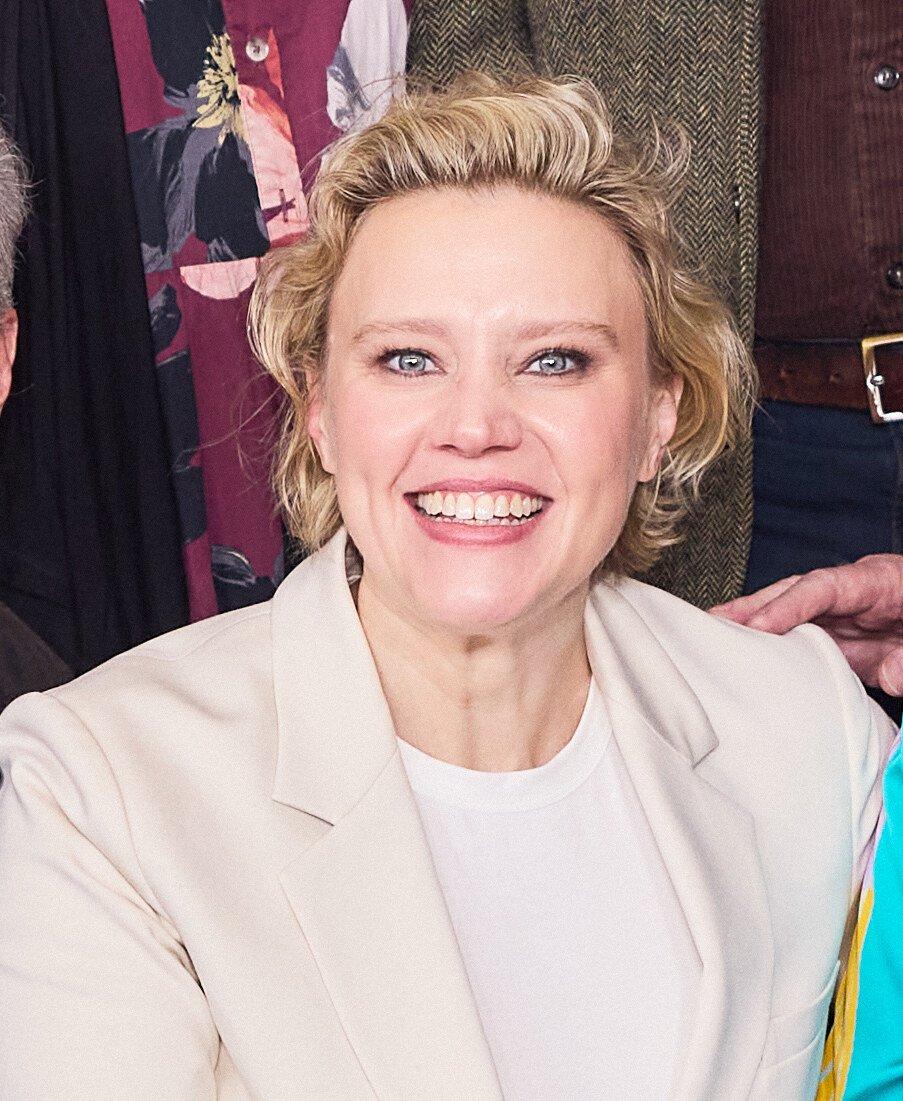
Kate McKinnon.

Comedian · Actor · Author

Kate McKinnon made herself indispensable by doing something harder than merely being funny: she could walk into a live sketch, grab the room in seconds, and turn a celebrity, politician, or total oddball into a fully playable public idea. From a decade on Saturday Night Live to Weird Barbie, voice work, and her Millicent Quibb books, her career has run on elastic range that still lands with a crisp point.

OBJECTIVE PERSONALITY CLASSIFICATIONFM-Te/Ne-PB/C(S)What does this mean?
PERSONALITY SYSTEMObjective Personality
LEAD FUNCTIONTe · Extroverted Thinking
SECOND SAVIOR FUNCTIONNe · Extroverted Intuition
MBTI EQUIVALENTESTJ
01 / BEHIND THE CLASSIFICATION

The personality behind the fame.

How does a recorded OPS classification like FM-Te/Ne-PB/C(S) break down? Walk through nine coins and watch the proposed type take shape. These are deductions from the archived code, not independent evidence of typing accuracy.

Scroll below to see Kate McKinnon take shape.

STARTING POINT512 possible OPS typesEach type combines core functions, an animal order, and sexual modalities.
THE FINISH LINEFM-Te/Ne-PB/C(S)One recorded classification, decoded from its components.
Kate McKinnon’s HUMAN NEEDS 01—03
01
DECIDER OR OBSERVER?

Decider over Observer

Deciders have more balanced Observer poles in the middle: Control (Oi) and Chaos (Oe). Organizing what's known and handling what's new tend to feel more manageable. People are the harder territory. Self (Di) and Tribe (De) sit at the extremes, so judgment, rejection, approval, and conflict can trigger the strongest reactions.

McKinnon’s most famous work puts her directly in the line of human reaction. On Saturday Night Live, impressions of Hillary Clinton, Kellyanne Conway, Jeff Sessions, Rudy Giuliani, and Ruth Bader Ginsburg were never just costume exercises; they had to survive audience expectation, media chatter, and the fact that the people being portrayed were real public figures. That is classic Decider terrain. The strength is nerve under social pressure. The blind spot is letting the assignment become too much about who will approve, object, or read themselves into the bit.
D
02
SELF OR TRIBE?

De · Tribe over Di · Self

Tribe (De) is the stronger deciding pole. They check decisions against people, shared standards, and what works for the group: what do we need, what will others think? The strength is coordination and responsiveness; the recurring friction is the Self (Di)—knowing and defending their own position. As the portrait unfolds, notice how Tribe takes the lead.

From Columbia comedy groups to years at Upright Citizens Brigade to ten seasons in an SNL ensemble, McKinnon’s work keeps circling back to the room: castmates, hosts, viewers, and collaborators. Tribe over Self suits an entertainer who can shape material for other people to immediately get. Her co-created projects with her sister Emily Lynne show the same outward orientation. The advantage is responsiveness and usefulness. The growth cost is that a career built around serving the sketch, the show, or the audience can make it easier to meet external needs than to stop and protect a purely personal standard.

De
03
GATHER OR ORGANIZE?

Oe · Gather over Oi · Organize

Gather (Oe) leads with new information, experiences, and possibilities. Its strength is curiosity and adaptability; the recurring friction is narrowing the options and settling into what is already known. Another layer of the personality portrait comes into focus.

McKinnon’s résumé sprawls in a very specific way: Big Gay Sketch Show, live sketch at UCB, political impressions, children’s voice acting, Ghostbusters, Barbie, fantasy-comedy audio, and a middle-grade mad-science book series. Even the origin story fits: a fifth-grade English accent that became a career. Gather over Organize gives her range real fuel; another lane is rarely hard to imagine. The strength is creative elasticity across formats. The blind spot is selectivity. When many directions are workable, choosing one long enough to build depth can feel less urgent than chasing the next promising possibility.

Oe
FIRST THREE COINSD + De + Oe

These establish the preferred human needs in the OPS framework.

Kate McKinnon’s FUNCTIONS 04—05
04
FEELING OR THINKING?

Thinking · T over Feeling · F

Thinking (T) evaluates decisions through reasons, logic, and what works—not a lack of emotion. Its strength is analytical consistency; Feeling (F) provides balance through values, meaning, and the human consequences of a decision. Combined with Tribe (De), this forms the recorded Savior Te.

McKinnon’s Thinking coin shows up in how quickly she can make a public figure readable. Her best SNL impressions often worked because she isolated the functional thesis of a person and drove it home so the audience could catch it instantly. That external clarity is the strength of Te: identify the point, sharpen the delivery, make the bit usable now. It is efficient, and in live comedy efficiency matters. The tradeoff is flattening. Once the premise is clear, subtler or more personal layers can get sacrificed to the cleanest available read.

T → Te
05
SENSING OR INTUITION?

Intuition · N over Sensing · S

Intuition (N) focuses on concepts, patterns, and what information might mean. Sensing (S) balances it through observable facts, physical detail, and direct experience. Combined with Gather (Oe), this gives the recorded Savior Ne.

The Intuition coin fits a performer who keeps finding the stranger angle inside familiar material. Colleen Rafferty’s alien-abduction chaos, the blobfish mermaid Shud, Weird Barbie, and the mad-science world of Millicent Quibb all show a mind that prefers the unexpected leap over the obvious replication. Ne helps her push past imitation into reinterpretation. That is why the work often feels inventive instead of merely accurate. The cost is that novelty can keep generating itself. Fresh angles appear faster than any career can develop them all, and not every possibility deserves equal commitment.

N → Ne
THE TWO SAVIOR FUNCTIONSTe / Ne

Opposing functions: Fi and Si. This is a jumper classification.

Kate McKinnon’s ANIMAL STACK 06—07
06
PLAY OR SLEEP?

Play over Sleep

Play emphasizes external real-time engagement; Sleep emphasizes internal processing. The recorded stack places Play earlier.

McKinnon’s career was built in motion. Live sketch at UCB, a weekly SNL grind, co-hosting the Independent Spirit Awards, and ensemble pieces that depend on instant timing all show Play getting the first swing. The strength is obvious: she becomes sharper when there is another person, a live room, or a scene partner to hit against. The blind spot is quieter than the performance. When Play leads, staying in motion can feel productive long after the work would benefit from Sleep and a slower internal pass.

P > S
07
CONSUME OR BLAST?

Blast over Consume

Consume gathers information for internal processing; Blast organizes and communicates information. The recorded order is Play → Blast → Consume → Sleep. This comparison follows their positions in that stack.

Blast arrives earlier than Consume here, and that tracks with how McKinnon’s work tends to land: not as endless behind-the-scenes study, but as quickly legible delivery. A political cold open, a celebrity impression, a tribute performance, a hosted event, even a children’s book world all require turning material into something another person can follow right away. That is the strength of Blast over Consume: decisive translation. The cost is impatience with over-preparation. Once the premise works, continuing to gather more angles can feel unnecessary even when extra depth would help.

B > C
Kate McKinnon’s ANIMAL ORIENTATION 08—09
08
INFO OR ENERGY DOMINANT?

Info over Energy

Info dominant means Consume and Blast are both in the top three: gathering and communicating information are more balanced. Sleep last leaves the energy side uneven—Play can keep engagement going without enough private recovery.

McKinnon’s stack is Info-dominant, which fits a career that rewards both intake and output more than conservation. Weekly sketch comedy needs fresh material coming in and clear bits going out; add voice work, film roles, audio projects, and books, and the pattern becomes even clearer. She is not short on usable information. The strength is throughput: ideas do not just stay private; they become characters, scenes, and products. The blind spot is the missing internal reset. A life built on producing for others can underfund the private consolidation that keeps the work from becoming all response and no center.

Info
09
INTROVERSION OR EXTROVERSION?

Extroversion over Introversion

The last animal, Sleep, determines this OPS coin: Play or Blast last means Introversion; Consume or Sleep last means Extroversion. This describes animal orientation, not sociability or shyness.

Her OPS Extroversion does not mean she has to be the loudest person in every green room. It means Sleep lands last, so the system prioritizes external exchange, delivery, and intake before prolonged internal consolidation. McKinnon’s long SNL tenure, regular live-performance history, ensemble creations, and public hosting all fit that pattern. The strength is usable range in the world, not just in private. The cost is that recovery and distillation can arrive late. If everything is live, collaborative, and outward-facing, the inner edit risks becoming an afterthought.

E
Sexual Modalities

The four sexual modalities.

OPS uses masculine/feminine sensory and extroverted-deciding distinctions as framework-specific terms, not gender categories. The four modalities are already included in the original 512 types. The recorded modality is FM · Visual.

MM KinestheticMasculine Sensory · Masculine De
MF AudioMasculine Sensory · Feminine De
FF TesterFeminine Sensory · Feminine De
FM RECORDED MODALITYVisualFeminine Sensory · Masculine De
COMPLETE RECORDED OPS TYPE · MODALITY INCLUDEDFM-Te/Ne-PB/C(S)

Te leads, Ne supports, and the animal stack is Play → Blast → Consume → Sleep.

THE FINISHED PORTRAIT · ALL NINE COINS REVEALED

Kate McKinnon's complete function and animal stack

PlayBlastConsumeSleepmTefSimNefFi
FM-Te/Ne-PB/C(S)DOUBLE ACTIVATED · PLAYExplore the Interactive Coin Builder →
THE KATE MCKINNON LENS

The shapeshifter still needs a center.

McKinnon’s public image is the virtuoso chameleon: Hillary Clinton at the piano, Colleen Rafferty describing another horrifying alien abduction, Weird Barbie stealing a scene by tilting it off-axis. Behind that impression is years of disciplined ensemble craft, from Columbia musical improv to UCB to a decade of live television where precision had to look effortless.

Her savior pairing, Te/Ne, gives her a rare comedy engine. Te can seize the public point of a character fast, while Ne keeps opening alternate angles, voices, and worlds—from political impressions to Millicent Quibb. That combination makes her wildly versatile. Its limit is speed: a sharp read and a fresh possibility can outrun slower refinement.

As a Decider and Double Observer, McKinnon’s recurring pressure centers on people: expectations, roles, approval, and who needs what from her now. That pairing often handles changing circumstances better than messy human priorities. The imbalance is in the self-versus-tribe realm, and the neglected function opposite her lead savior Te is Fi.

Play → Blast → Consume → Sleep gives her a system built for live exchange, clear delivery, and enough intake to keep the characters fresh. Sleep last is the tax: private distillation comes after the world has already gotten the performance. Balance looks like protected off-camera solitude for writing and narrowing, so the brilliance stays sharp without becoming merely busy.

Want to understand the Savior and Demon states behind these nine coins? Explore the complete explanation, visual examples, and typing principles on our Methodology page →

02 / KEEP EXPLORING

Different faces. Familiar patterns.

Explore other celebrities with related recorded OPS classifications. Related functions are not necessarily exact type matches.

Discover Type Twins
YOUR TURN

Curious about your own type?

Discover how your own personality might be classified through Objective Personality.

Get objectively typed
Kate McKinnon's Personality Type & OPS Profile | The Personality Atlas