The Personality Atlas
THE CELEBRITY PERSONALITY ARCHIVE / COMEDY & TELEVISION

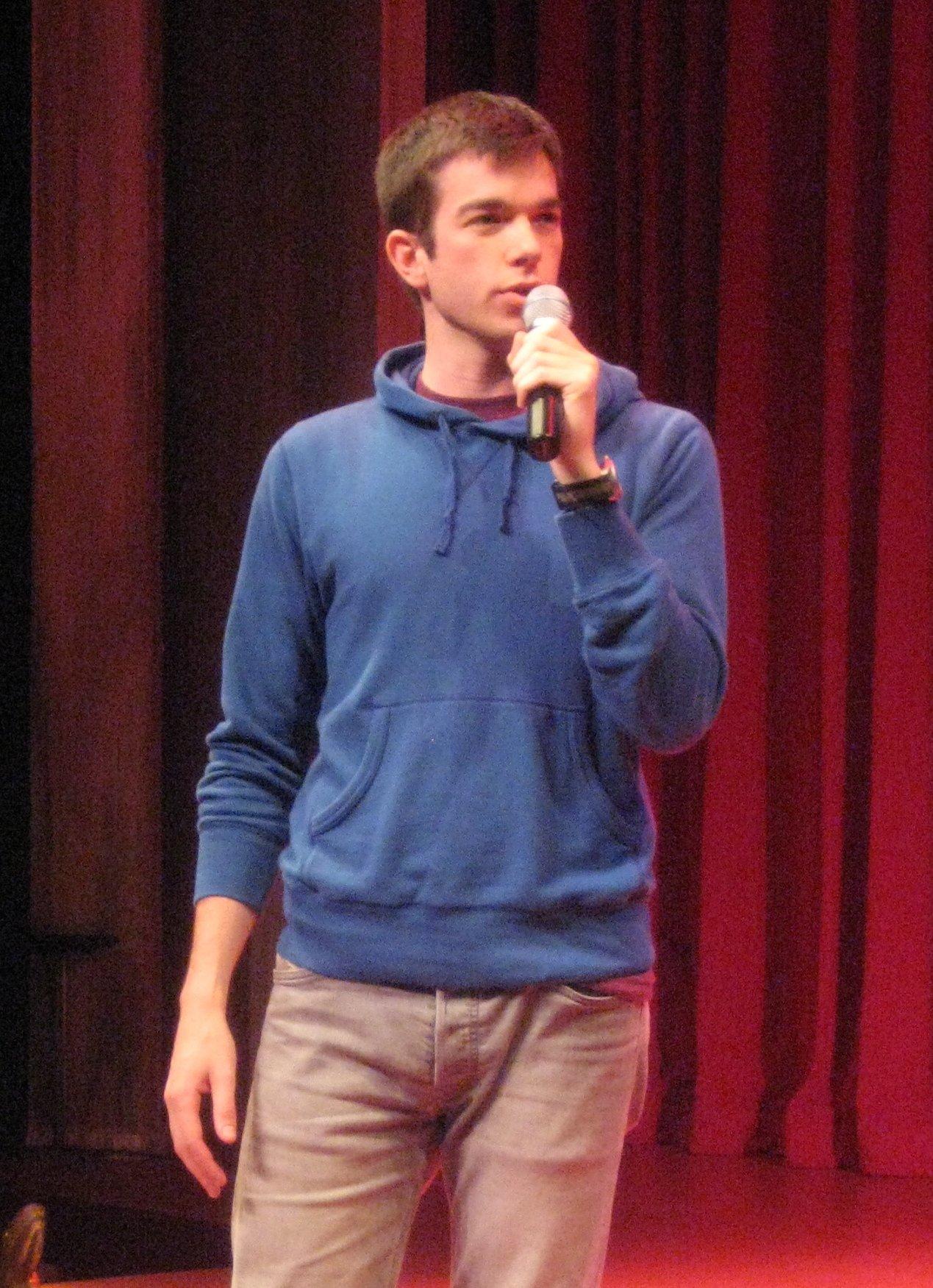
John Mulaney.

Comedian · Writer · Producer · Host

John Mulaney can make an airport sushi counter, a children’s variety special, or a six-night Los Angeles talk show feel like part of the same worldview. From SNL writer and Stefon co-creator to Radio City headliner, Broadway comic partner, and the neatly suited ringmaster of Everybody’s in LA, he keeps turning old entertainment formats into something fussy, precise, and unmistakably his.

OBJECTIVE PERSONALITY CLASSIFICATIONMF-Ni/Fi-SB/C(P) #3What does this mean?
PERSONALITY SYSTEMObjective Personality
LEAD FUNCTIONNi · Introverted Intuition
SECOND SAVIOR FUNCTIONFi · Introverted Feeling
MBTI EQUIVALENTINTJ
01 / BEHIND THE CLASSIFICATION

The personality behind the fame.

How does a recorded OPS classification like MF-Ni/Fi-SB/C(P) #3 break down? Walk through nine coins and watch the proposed type take shape. These are deductions from the archived code, not independent evidence of typing accuracy.

Scroll below to see John Mulaney take shape.

STARTING POINT512 possible OPS typesEach type combines core functions, an animal order, and sexual modalities.
THE FINISH LINEMF-Ni/Fi-SB/C(P) #3One recorded classification, decoded from its components.
John Mulaney’s HUMAN NEEDS 01—03
01
DECIDER OR OBSERVER?

Observer over Decider

Observers have more balanced Decider poles in the middle: Self (Di) and Tribe (De). Their own perspective and other people's perspectives tend to be easier to navigate. Things are the harder territory. Control (Oi) and Chaos (Oe) sit at the extremes, so disrupted plans, uncertainty, and a changing world can trigger the strongest reactions.

John Mulaney’s career keeps rewarding a man who can work a premise to the bone while the industry keeps changing the stage underneath him: SNL writer, failed network sitcom creator, Netflix stand-up star, then a live Los Angeles talk-show ringmaster. That is Observer friction with circumstances, formats, and timing more than a nonstop referendum on his worth. His strength is adapting the act to the room the culture actually built. The blind spot is thinking the next structural fix—a better format, cleaner setup, sharper container—will finally remove uncertainty instead of just changing its costume.

O
02
SELF OR TRIBE?

Di · Self over De · Tribe

Self (Di) is the stronger deciding pole. They check decisions against their own values or reasons first: what makes sense to me, what feels right to me? The strength is independent conviction; the recurring friction is the Tribe (De)—other people's standards, feedback, and expectations. As the portrait unfolds, notice how Self takes the lead.

Baby J, his semi-autobiographical sitcom Mulaney, and even Sack Lunch Bunch all carry the same tell: Mulaney does not sound assembled by committee. Self over Tribe is not about rejecting collaboration; it is about using an internal standard for what he will stand behind. That gives the comedy authorship, from the old-fashioned cadence to the moral fussiness inside the jokes. The cost is that a personally satisfying framing can still strike other people as incomplete, too neat, or too centered on his own interpretation of events.

Di
03
GATHER OR ORGANIZE?

Oi · Organize over Oe · Gather

Organize (Oi) leads with refining, preserving, and structuring what is already known. Its strength is preparation and clear direction; the recurring friction is unexpected change that disrupts the plan. Another layer of the personality portrait comes into focus.

Look at the recurring musical sketches he hosted on SNL—Diner Lobster, Bodega Bathroom, Airport Sushi, Port Authority Duane Reade. They are not random bits; they are tightly boxed little universes. Organize over Gather prefers a strong frame, a known lane, a premise that can hold a hundred details without wobbling. That is why Mulaney can make old show-business forms feel deliberate rather than nostalgic mush. The tradeoff is selectivity: once the structure is set, fresh options that do not fit the pattern can get ignored or admitted too late.

Oi
FIRST THREE COINSO + Di + Oi

These establish the preferred human needs in the OPS framework.

John Mulaney’s FUNCTIONS 04—05
04
FEELING OR THINKING?

Feeling · F over Thinking · T

Feeling (F) evaluates decisions through values, meaning, and what matters—not simply through emotion. Its strength is a clear sense of significance; Thinking (T) provides balance through impersonal reasons, consistency, and evidence. Combined with Self (Di), this forms the recorded Savior Fi.

When Mulaney made Baby J, he did not turn his public struggles into a neutral case study. He turned them into his version of the story, with carefully chosen emphasis, tone, and moral distance. Feeling here means personal valuation—what matters, what feels worth saying, what crosses a line—not a lack of craft. That is a strength: the work arrives with a real center. The blind spot is assuming sincerity finishes the job. A strong inner verdict does not automatically answer practical questions or satisfy everyone affected by the larger story.

F → Fi
05
SENSING OR INTUITION?

Intuition · N over Sensing · S

Intuition (N) focuses on concepts, patterns, and what information might mean. Sensing (S) balances it through observable facts, physical detail, and direct experience. Combined with Organize (Oi), this gives the recorded Savior Ni.

Ni shows up in how relentlessly Mulaney hunts the one angle that organizes everything else. Sack Lunch Bunch was not merely a pile of children’s-TV references; it was a stylized thesis about the genre. Everybody’s in LA was reviewed as a throwback vehicle for his hobby horses, which is exactly the point: a singular lens, not a buffet. The upside is unusual conceptual coherence. The downside is stubbornness. A compelling vision can keep marching even when the immediate evidence says the audience, network, or format wants something less elegantly obsessive.

N → Ni
THE TWO SAVIOR FUNCTIONSNi / Fi

Opposing functions: Se and Te. This is a jumper classification.

John Mulaney’s ANIMAL STACK 06—07
06
PLAY OR SLEEP?

Sleep over Play

Play emphasizes external real-time engagement; Sleep emphasizes internal processing. The recorded stack places Sleep earlier.

Before Mulaney goes public, he often seems to want the material fully metabolized. From the long refinement behind Kid Gorgeous to the From Scratch material that became Baby J, Sleep comes earlier than Play: build the private structure first, then let other people in. The strength is polish with a point of view; the joke arrives sounding owned, not improvised into existence by committee. The cost is that real-time interaction can feel secondary to the already-processed version. Other people enter a house whose floor plan has mostly been drawn.

S > P
07
CONSUME OR BLAST?

Blast over Consume

Consume gathers information for internal processing; Blast organizes and communicates information. The recorded order is Sleep → Blast → Consume → Play. This comparison follows their positions in that stack.

His public work also shows Blast landing earlier than Consume. At SNL he wrote monologues; on Everybody’s in LA he served as the composed master of ceremonies; in stand-up he likes a clean declarative bit, not an endless cloud of maybe. That pairing with earlier Sleep gives him a strong delivery pipeline: process privately, then present crisply. The growth cost is informational humility. A sharp premise can be so satisfying that there is less appetite for wandering longer, researching wider, or letting extra raw material complicate the conclusion.

B > C
John Mulaney’s ANIMAL ORIENTATION 08—09
08
INFO OR ENERGY DOMINANT?

Info over Energy

Info dominant means Consume and Blast are both in the top three: gathering and communicating information are more balanced. Play last leaves the energy side uneven—Sleep can conserve energy without enough spontaneous outward engagement.

Mulaney’s stack lands on Info dominance, which fits a career built on shaping material into public form: stand-up specials, monologues, Broadway characters, and a talk show with an unmistakable frame. The strength is the handoff between taking in ideas and turning them into something other people can follow. The missing balance is Play last. He can be very social on camera and still prefer a world where the exchange has rails. The growth edge is tolerating more unscripted back-and-forth before tightening it into a finished bit.

Info
09
INTROVERSION OR EXTROVERSION?

Introversion over Extroversion

The last animal, Play, determines this OPS coin: Play or Blast last means Introversion; Consume or Sleep last means Extroversion. This describes animal orientation, not sociability or shyness.

Six SNL hosting gigs, Broadway with Nick Kroll, and a live Netflix show do not cancel the Introversion result. In OPS terms, this coin is about where the animal energy bottlenecks, not whether a person can command a crowd. With Play last, Mulaney can look dazzlingly public while still preferring prepared perspective over open-ended real-time exchange. That gap can make the performance seem effortless and the spontaneity more selective. Growth means letting another person or moment dent the script sooner, instead of only after the joke is fully armored.

I
Sexual Modalities

The four sexual modalities.

OPS uses masculine/feminine sensory and extroverted-deciding distinctions as framework-specific terms, not gender categories. The four modalities are already included in the original 512 types. The recorded modality is MF · Audio.

MM KinestheticMasculine Sensory · Masculine De
MF RECORDED MODALITYAudioMasculine Sensory · Feminine De
FF TesterFeminine Sensory · Feminine De
FM VisualFeminine Sensory · Masculine De
ADDITIONAL LAYER · SOCIAL TYPE

The four social types.

Social types are an additional layer on top of the original Objective Personality classification, introduced later in OPS research. They describe two proposed social preference coins: Flex vs. Friends and Generalize vs. Specialize. The combination and priority of these preferences produce four social types. John Mulaney's recorded social type is #3.

SOCIAL #1 #1Flex · Generalize
SOCIAL #2 #2Generalize · Friends
SOCIAL #3 RECORDED SOCIAL TYPE#3Specialize · Flex
SOCIAL #4 #4Friends · Specialize
COMPLETE RECORDED OPS TYPE · MODALITY INCLUDED + SOCIAL TYPEMF-Ni/Fi-SB/C(P) #3

Ni leads, Fi supports, and the animal stack is Sleep → Blast → Consume → Play.

THE FINISHED PORTRAIT · ALL NINE COINS REVEALED

John Mulaney's complete function and animal stack

SleepBlastConsumePlayfNifTemFimSe
MF-Ni/Fi-SB/C(P) #3DOUBLE ACTIVATED · SLEEPExplore the Interactive Coin Builder →
THE JOHN MULANEY LENS

The formalist behind the mayhem

Those SNL musical sketches—Diner Lobster, Bodega Bathroom, Airport Sushi—make Mulaney look like pure showbiz confidence, the man who can turn civic irritation into a tuxedoed thesis. Behind that polish is somebody less interested in random zaniness than in building a frame sturdy enough to hold every stray detail and make it sing.

His Ni/Fi pairing gives him that elegant control. Ni narrows sprawling material into one guiding concept; Fi decides what version feels worth standing behind. That can produce comedy with an unusually authored voice, from Sack Lunch Bunch to Baby J. The limit is trusting the inner frame before every outside fact or reaction has finished speaking.

As an Observer and Double Decider, Mulaney is more likely to get stuck on the shape of reality than on chronic people-drama. The imbalance sits in control versus chaos, not in lacking empathy. The neglected function opposite his lead savior is Se: direct contact with what is actually happening now, even when it is messier and less elegant than the pattern he prefers.

Sleep → Blast → Consume → Play explains why the voice can feel so composed. Private processing comes first, then delivery, then more intake, while open-ended interaction lands last. The risk is not shyness; it is overprotecting the polished version before the room has had its say. Keep the formal precision, but test material earlier and let guests disrupt the premise in public.

Want to understand the Savior and Demon states behind these nine coins? Explore the complete explanation, visual examples, and typing principles on our Methodology page →

02 / KEEP EXPLORING

Different faces. Familiar patterns.

Explore other celebrities with related recorded OPS classifications. Related functions are not necessarily exact type matches.

Discover Type Twins
YOUR TURN

Curious about your own type?

Discover how your own personality might be classified through Objective Personality.

Get objectively typed
John Mulaney's Personality Type & OPS Profile | The Personality Atlas