The Personality Atlas
THE CELEBRITY PERSONALITY ARCHIVE / COMEDY

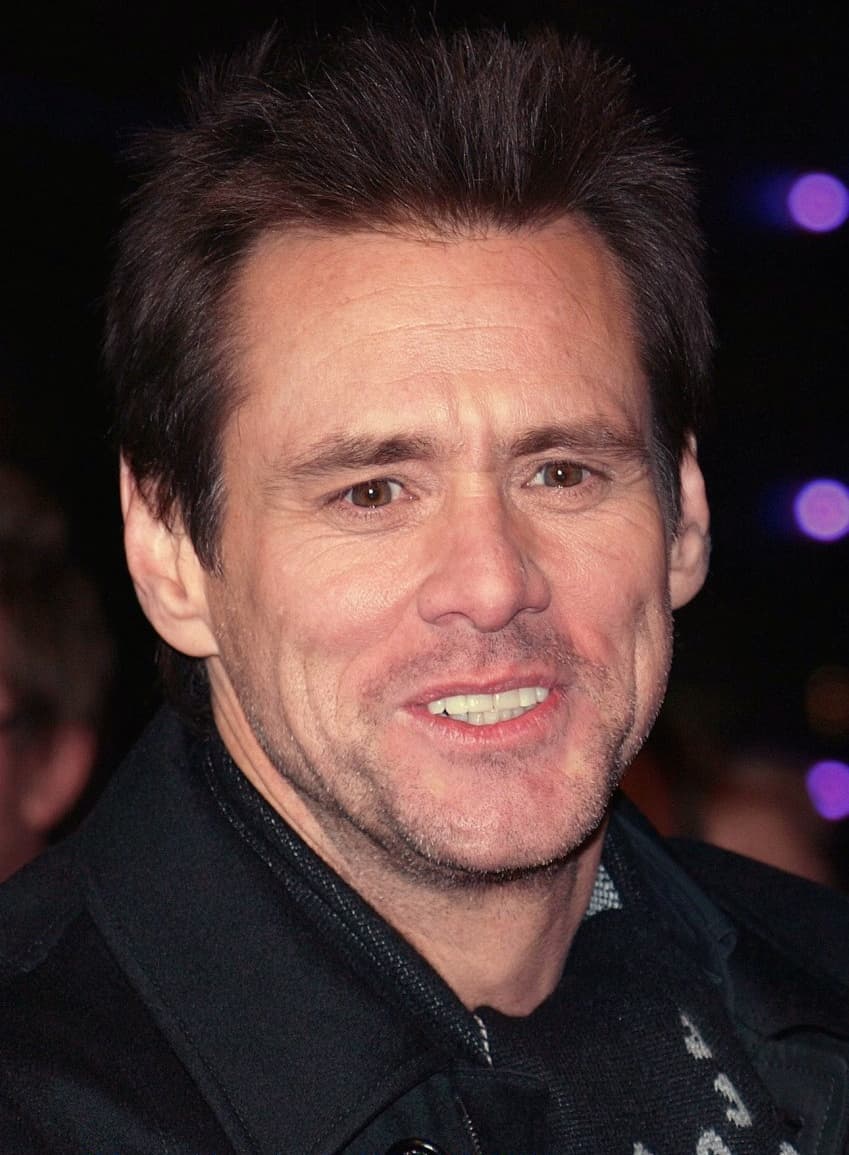
Jim Carrey.

Actor · Comedian · Visual artist

The elastic comedy of The Mask, the poignancy of The Truman Show, and a later turn toward painting reveal a restless creative imagination. Explore the personality framework behind Carrey's transformations.

OBJECTIVE PERSONALITY CLASSIFICATIONFF-Te/Se-PB/C(S)What does this mean?
PERSONALITY SYSTEMObjective Personality
LEAD FUNCTIONTe · Extroverted Thinking
SECOND SAVIOR FUNCTIONSe · Extroverted Sensing
MBTI EQUIVALENTENTJ
01 / BEHIND THE CLASSIFICATION

The personality behind the fame.

How does a recorded OPS classification like FF-Te/Se-PB/C(S) break down? Walk through nine coins and watch the proposed type take shape. These are deductions from the archived code, not independent evidence of typing accuracy.

Scroll below to see Jim Carrey take shape.

STARTING POINT512 possible OPS typesEach type combines core functions, an animal order, and sexual modalities.
THE FINISH LINEFF-Te/Se-PB/C(S)One recorded classification, decoded from its components.
Jim Carrey’s HUMAN NEEDS 01—03
01
DECIDER OR OBSERVER?

Decider over Observer

Deciders have more balanced Observer poles in the middle: Control (Oi) and Chaos (Oe). Organizing what's known and handling what's new tend to feel more manageable. People are the harder territory. Self (Di) and Tribe (De) sit at the extremes, so judgment, rejection, approval, and conflict can trigger the strongest reactions.

He became one of Hollywood's biggest comedy stars, then spoke publicly about how fame and approval failed to deliver the fulfillment he'd expected. The Decider tension is a career built on making millions laugh while wrestling with what other people's admiration actually means.

D
02
SELF OR TRIBE?

De · Tribe over Di · Self

Tribe (De) is the stronger deciding pole. They check decisions against people, shared standards, and what works for the group: what do we need, what will others think? The strength is coordination and responsiveness; the recurring friction is the Self (Di)—knowing and defending their own position. As the portrait unfolds, notice how Tribe takes the lead.

He built a career reading an audience and delivering outrageous performances that connected immediately. Later he spoke about how hollow fame and applause could feel. De's strength is connecting with the tribe; the struggle is discovering that its approval cannot supply an inner compass. Under pressure, this OPS pattern suggests Jim Carrey may neglect their own independent position. Greater balance comes from naming personal needs even when the group disagrees.

De
03
GATHER OR ORGANIZE?

Oe · Gather over Oi · Organize

Gather (Oe) leads with new information, experiences, and possibilities. Its strength is curiosity and adaptability; the recurring friction is narrowing the options and settling into what is already known. Another layer of the personality portrait comes into focus.

He jumped from outrageous physical comedy to dramatic acting, painting, and philosophical reflection. That breadth is the advantage of Gather: it creates room to explore a new direction rather than repeating an old formula. But the same openness can make deciding what not to pursue the harder part. Under pressure, this OPS pattern suggests Jim Carrey may neglect consistency, narrowing options, and following a settled plan. Greater balance comes from organizing what is already known and committing to a direction.

Oe
FIRST THREE COINSD + De + Oe

These establish the preferred human needs in the OPS framework.

Jim Carrey’s FUNCTIONS 04—05
04
FEELING OR THINKING?

Thinking · T over Feeling · F

Thinking (T) evaluates decisions through reasons, logic, and what works—not a lack of emotion. Its strength is analytical consistency; Feeling (F) provides balance through values, meaning, and the human consequences of a decision. Combined with Tribe (De), this forms the recorded Savior Te.

He turned physical comedy into major commercial hits and later explored painting and other creative pursuits. Through a Thinking lens, effectiveness and internal consistency take priority when evaluating a choice. That clarity is useful, but it does not automatically answer how the decision lands with other people. Under pressure, this OPS pattern suggests Jim Carrey may neglect values, emotional significance, and human consequences. Greater balance comes from considering what matters to people alongside logical effectiveness.

T → Te
05
SENSING OR INTUITION?

Sensing · S over Intuition · N

Sensing (S) focuses on concrete details, observable reality, and lived experience. Intuition (N) balances it by looking for broader patterns, concepts, and implications. Combined with Gather (Oe), this gives the recorded Savior Se.

His comedy uses exaggerated movement, facial expression, and precise physical timing. Sensing (S) brings the moment to life. A Sensing preference makes the tangible details especially important: what can be seen, heard, tested, or experienced directly. The risk is becoming so absorbed in what is immediately available that the broader interpretation gets less attention. Under pressure, this OPS pattern suggests Jim Carrey may neglect the wider pattern, underlying meaning, and future possibilities. Greater balance comes from stepping beyond immediate facts to consider the bigger picture.

S → Se
THE TWO SAVIOR FUNCTIONSTe / Se

Opposing functions: Fi and Ni. This is a jumper classification.

Jim Carrey’s ANIMAL STACK 06—07
06
PLAY OR SLEEP?

Play over Sleep

Play emphasizes external real-time engagement; Sleep emphasizes internal processing. The recorded stack places Play earlier.

His improvisational comedy relies on active exchange and immediate reactions. Play leads the energy exchange: momentum comes from real-time interaction and responding to what is happening around them. The difficult move is making space for solitary processing rather than staying in motion. Under pressure, this OPS pattern suggests Jim Carrey may neglect private processing, rest, and reflection. Greater balance comes from slowing down to reflect before responding to the outside world.

P > S
07
CONSUME OR BLAST?

Blast over Consume

Consume gathers information for internal processing; Blast organizes and communicates information. The recorded order is Play → Blast → Consume → Sleep. This comparison follows their positions in that stack.

As a teenager, Carrey tried stand-up at Toronto’s Yuk Yuk’s comedy club and returned to performing after a poor first set. In this OPS stack, Blast comes before Consume. Consume describes taking in information; Blast describes organizing and communicating it.

B > C
Jim Carrey’s ANIMAL ORIENTATION 08—09
08
INFO OR ENERGY DOMINANT?

Info over Energy

Info dominant means Consume and Blast are both in the top three: gathering and communicating information are more balanced. Sleep last leaves the energy side uneven—Play can keep engagement going without enough private recovery.

Away from acting, Carrey spent years painting, a practice he showed in the short documentary I Needed Color. For Jim, this OPS stack prioritizes the Info animals—Consume and Blast—over the Energy animals, Play and Sleep. The strength is working with information: taking it in, organizing it, and communicating it. Under pressure, the less-preferred energy side may show up as difficulty switching between collaboration and genuine recovery. Universal balance means moving beyond analysis and explanation to participate, rest, and respond to the moment.

Info
09
INTROVERSION OR EXTROVERSION?

Extroversion over Introversion

The last animal, Sleep, determines this OPS coin: Play or Blast last means Introversion; Consume or Sleep last means Extroversion. This describes animal orientation, not sociability or shyness.

Carrey co-wrote Memoirs and Misinformation with Dana Vachon. They made it a novel, which gave them room to play with the form of a celebrity memoir. Jim's OPS Extroversion is defined by Sleep coming last in the animal stack—not by being loud, outgoing, or constantly surrounded by people. This order suggests the more demanding edge lies in slowing down for private reflection and internal recovery. The strength is the orientation of the earlier animals; under pressure, the last animal can be deferred. Universal balance means intentionally developing that missing mode, regardless of how sociable someone appears.

E
Sexual Modalities

The four sexual modalities.

OPS uses masculine/feminine sensory and extroverted-deciding distinctions as framework-specific terms, not gender categories. The four modalities are already included in the original 512 types. The recorded modality is FF · Tester.

MM KinestheticMasculine Sensory · Masculine De
MF AudioMasculine Sensory · Feminine De
FF RECORDED MODALITYTesterFeminine Sensory · Feminine De
FM VisualFeminine Sensory · Masculine De
COMPLETE RECORDED OPS TYPE · MODALITY INCLUDEDFF-Te/Se-PB/C(S)

Te leads, Se supports, and the animal stack is Play → Blast → Consume → Sleep.

THE FINISHED PORTRAIT · ALL NINE COINS REVEALED

Jim Carrey's complete function and animal stack

PlayBlastConsumeSleepfTemNifSemFi
FF-Te/Se-PB/C(S)DOUBLE ACTIVATED · PLAYExplore the Interactive Coin Builder →
THE JIM CARREY LENS

The elastic face and the searching mind

The Mask and Ace Ventura made Carrey's physical comedy unmistakable, while Eternal Sunshine of the Spotless Mind revealed a different emotional register. His public reflections on identity make the distance between character and self an especially compelling question.

His elastic comedy and later philosophical interviews reveal a striking shift in public emphasis. His strength is total imaginative commitment; the shadow is the challenge of being taken seriously when the world expects the clown to keep performing.

Jim's Te Savior points toward measurable effectiveness and public standards. That strength can also become the reflex that gets overused when pressure rises. As a Single Decider, the sharper pressure point is navigating Self versus Tribe: how much to trust a personal position when other people disagree, criticize, or demand something different. The neglected Fi side calls for standing behind a personal value or boundary without outsourcing the decision to public approval. Greater balance means practicing that less-preferred territory rather than pushing the dominant instinct harder.

Jim's animal stack (Play → Blast → Consume → Sleep) offers another pressure test. Play comes naturally first, while Sleep sits last. In practical terms, balance would mean learning to protect time for private reflection rather than answering every external demand. That is the uncomfortable growth edge worth looking for—not another flattering description of a strength.
Want to understand the Savior and Demon states behind these nine coins? Explore the complete explanation, visual examples, and typing principles on our Methodology page →

02 / KEEP EXPLORING

Different faces. Familiar patterns.

Explore other celebrities with related recorded OPS classifications. Related functions are not necessarily exact type matches.

Discover Type Twins
YOUR TURN

Curious about your own type?

Discover how your own personality might be classified through Objective Personality.

Get objectively typed
Jim Carrey's Personality Type & OPS Profile | The Personality Atlas