The Personality Atlas
THE CELEBRITY PERSONALITY ARCHIVE / EDUCATION & DIGITAL MEDIA

Jess McCabe.

Writer · Educator · YouTube Host

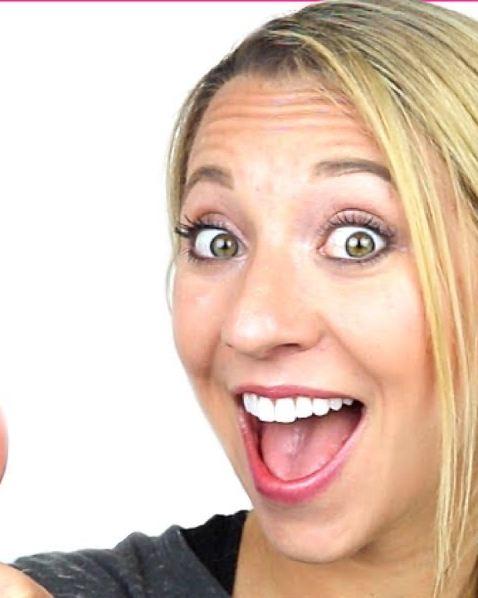
Jessica McCabe turned a scattered résumé—actor, ghostwriter, massage therapist, server, pet-store employee—into How to ADHD, a channel and bestselling book that make a notoriously misunderstood condition feel concrete, useful and survivable. Her public style is bright, generous and practical: less distant expert than hard-won translator.

OBJECTIVE PERSONALITY CLASSIFICATIONFF-Fe/Si-BP/C(S)What does this mean?
PERSONALITY SYSTEMObjective Personality
LEAD FUNCTIONFe · Extroverted Feeling
SECOND SAVIOR FUNCTIONSi · Introverted Sensing
MBTI EQUIVALENTESFJ
01 / BEHIND THE CLASSIFICATION

The personality behind the fame.

How does a recorded OPS classification like FF-Fe/Si-BP/C(S) break down? Walk through nine coins and watch the proposed type take shape. These are deductions from the archived code, not independent evidence of typing accuracy.

Scroll below to see Jess McCabe take shape.

STARTING POINT512 possible OPS typesEach type combines core functions, an animal order, and sexual modalities.
THE FINISH LINEFF-Fe/Si-BP/C(S)One recorded classification, decoded from its components.
Jess McCabe’s HUMAN NEEDS 01—03
01
DECIDER OR OBSERVER?

Decider over Observer

Deciders have more balanced Observer poles in the middle: Control (Oi) and Chaos (Oe). Organizing what's known and handling what's new tend to feel more manageable. People are the harder territory. Self (Di) and Tribe (De) sit at the extremes, so judgment, rejection, approval, and conflict can trigger the strongest reactions.

McCabe’s breakout identity was not a glamorous reinvention but a public argument with what “normal” is supposed to look like. Her TEDx talk, Failing at Normal: An ADHD Success Story, and the rise of How to ADHD both put her in the middle of other people’s expectations about competence, adulthood and legitimacy. That is classic Decider pressure: the friction lives in standards, judgment and who gets to define success. Her strength is making a loaded topic humane and discussable. The blind spot is letting the social temperature of the room set the agenda.
D
02
SELF OR TRIBE?

De · Tribe over Di · Self

Tribe (De) is the stronger deciding pole. They check decisions against people, shared standards, and what works for the group: what do we need, what will others think? The strength is coordination and responsiveness; the recurring friction is the Self (Di)—knowing and defending their own position. As the portrait unfolds, notice how Tribe takes the lead.

Her work is relentlessly audience-facing. As host of How to ADHD, a public speaker and later a bestselling author, McCabe keeps translating experience into language other people can use. That points to Tribe over Self: the instinct to check whether the message lands, whether the explanation helps, whether the other person feels met. It is a real strength for an educator, because viewers do not need to decode her point alone. The cost is subtler. When outside needs stay loud, personal limits and privately held standards can become the part that gets negotiated away first.

De
03
GATHER OR ORGANIZE?

Oi · Organize over Oe · Gather

Organize (Oi) leads with refining, preserving, and structuring what is already known. Its strength is preparation and clear direction; the recurring friction is unexpected change that disrupts the plan. Another layer of the personality portrait comes into focus.

Before How to ADHD became her signature, McCabe worked a string of jobs—actor, ghostwriter, massage therapist, server, pet-store employee. What stands out now is not endless reinvention for its own sake, but the way she consolidated scattered experience into one organized lane. Organize over Gather prefers a stable framework people can return to, and her channel and book both lean into that repeatable structure. The strength is turning mess into usable systems. The blind spot is that a well-built framework can start looking complete, even when new exceptions or better options deserve more room.

Oi
FIRST THREE COINSD + De + Oi

These establish the preferred human needs in the OPS framework.

Jess McCabe’s FUNCTIONS 04—05
04
FEELING OR THINKING?

Feeling · F over Thinking · T

Feeling (F) evaluates decisions through values, meaning, and what matters—not simply through emotion. Its strength is a clear sense of significance; Thinking (T) provides balance through impersonal reasons, consistency, and evidence. Combined with Tribe (De), this forms the recorded Savior Fe.

McCabe’s recorded judging function is Feeling, specifically Fe, and you can see it in the tone of her public work. Being selected as a spokesperson for CHADD and building a channel around ADHD education both require more than information; they require social readability, warmth and an instinct for what will actually help people feel included rather than shamed. That is Fe at its best. The limit is that emotional accessibility does not answer every question by itself. A message can feel supportive and still need firmer boundaries, sharper disagreement or less cushioning than Fe naturally prefers.

F → Fe
05
SENSING OR INTUITION?

Sensing · S over Intuition · N

Sensing (S) focuses on concrete details, observable reality, and lived experience. Intuition (N) balances it by looking for broader patterns, concepts, and implications. Combined with Organize (Oi), this gives the recorded Savior Si.

Her observer axis lands on Sensing, specifically Si, which helps explain why How to ADHD feels practical instead of merely inspirational. McCabe did not just brand herself around a diagnosis; after being diagnosed at 12, she publicly said she did not seriously investigate what ADHD meant until 32, then built concrete explanations from lived patterns and repeatable tools. Si trusts accumulated reality, what has happened, what has worked, what can be demonstrated again. That grounding is useful. The cost is that yesterday’s workable method can hold its place longer than it should when a new context asks for a different approach.

S → Si
THE TWO SAVIOR FUNCTIONSFe / Si

Opposing functions: Ti and Ne.

Jess McCabe’s ANIMAL STACK 06—07
06
CONSUME OR BLAST?

Blast over Consume

Consume gathers information for internal processing; Blast organizes and communicates information. The recorded order is Blast → Play → Consume → Sleep. This comparison follows their positions in that stack.

Between Consume and Blast, Blast shows up earlier. McCabe’s public career makes that visible: a YouTube host, TEDx speaker, CHADD spokesperson and bestselling author is somebody repeatedly turning knowledge into a clear package for other people. The strength of earlier Blast is usefulness. She does not hoard insight in rough-note form; she shapes it into a lesson, a script, a title people can remember. The growth cost is that explanation can become the default pace. When Blast gets moving, it is easy to package the current understanding before Consume has fully widened the field.

B > C
07
PLAY OR SLEEP?

Play over Sleep

Play emphasizes external real-time engagement; Sleep emphasizes internal processing. The recorded stack places Play earlier.

The next comparison puts Play ahead of Sleep. That fits a teacher whose work became powerful partly because it feels like a conversation instead of a sealed manual. Interviews, videos and advocacy appearances let McCabe meet people in real time, react, clarify and normalize a subject that is often discussed with either panic or condescension. Earlier Play gives her social momentum and immediacy. The tradeoff is that internal processing can become the late bill. If every useful insight is quickly brought back to the group, there is less protected space for slower digestion away from the audience.

P > S
Jess McCabe’s ANIMAL ORIENTATION 08—09
08
INFO OR ENERGY DOMINANT?

Info over Energy

Info dominant means Consume and Blast are both in the top three: gathering and communicating information are more balanced. Sleep last leaves the energy side uneven—Play can keep engagement going without enough private recovery.

This stack lands on Info over Energy, which matches the scale of McCabe’s public output. Her top three animals keep information moving: she can teach it, socially circulate it and still take more in. That combination helped turn How to ADHD from a channel into speaking work and a New York Times bestselling book. The advantage is obvious—people do not just hear that ADHD is complicated; they leave with language and tools. The missing piece is Sleep. Private consolidation and recovery can be the step that gets postponed because the next question, episode or explanation already needs answering.

Info
09
INTROVERSION OR EXTROVERSION?

Extroversion over Introversion

The last animal, Sleep, determines this OPS coin: Play or Blast last means Introversion; Consume or Sleep last means Extroversion. This describes animal orientation, not sociability or shyness.

McCabe’s recorded animal order is Blast → Play → Consume → Sleep, which gives OPS Extroversion because Sleep lands last. That is not a claim about being bubbly all day or loving crowds. It means the least natural part of the sequence is slowing down long enough to fully sort the inner world before re-entering the stream of teaching, responding and clarifying. The strength is obvious in her career: information gets outward fast and help becomes public. The blind spot is that her own settled center can become the final draft, scheduled after everyone else has already benefited from the lesson.

E
Sexual Modalities

The four sexual modalities.

OPS uses masculine/feminine sensory and extroverted-deciding distinctions as framework-specific terms, not gender categories. The four modalities are already included in the original 512 types. The recorded modality is FF · Tester.

MM KinestheticMasculine Sensory · Masculine De
MF AudioMasculine Sensory · Feminine De
FF RECORDED MODALITYTesterFeminine Sensory · Feminine De
FM VisualFeminine Sensory · Masculine De
COMPLETE RECORDED OPS TYPE · MODALITY INCLUDEDFF-Fe/Si-BP/C(S)

Fe leads, Si supports, and the animal stack is Blast → Play → Consume → Sleep.

THE FINISHED PORTRAIT · ALL NINE COINS REVEALED

Jess McCabe's complete function and animal stack

BlastPlayConsumeSleepfFefSimNemTi
FF-Fe/Si-BP/C(S)DOUBLE ACTIVATED · PLAYExplore the Interactive Coin Builder →
THE JESS MCCABE LENS

The translator of overwhelm

How to ADHD works because McCabe never sells expertise as polished perfection. The public impression is bright and reassuring; behind it is a career that ran through acting, ghostwriting and service jobs, plus a long gap between being diagnosed at 12 and seriously studying ADHD at 32. That history makes the teaching feel earned.

Her savior pair, Fe and Si, is built for translation. Fe keeps the audience in view, which is why her explanations feel humane instead of scolding. Si turns scattered experience into repeatable examples, routines and scripts. Together they make her unusually practical. The limit is that caring about what lands, and trusting what already works, can slow sharper revisions.

As a Decider and Double Observer, McCabe’s core imbalance sits with people and significance, not with managing chaos in the world. Her Observer range gives her many ways to structure information, but the human question still runs hot: how is this landing, and what do others need from me? The neglected function is Ti, opposite lead Fe, the colder internal metric that cuts cleaner lines.

Blast → Play → Consume → Sleep explains the pace. She naturally moves toward teaching, engaging and gathering before fully retreating to process. That last-animal Sleep imbalance can make her highly useful in public while delaying her own internal settling. The balancing move is specific: keep the generous teaching style, but protect off-camera blocks to write and simplify for herself before the next explanation goes live.

Want to understand the Savior and Demon states behind these nine coins? Explore the complete explanation, visual examples, and typing principles on our Methodology page →

02 / KEEP EXPLORING

Different faces. Familiar patterns.

Explore other celebrities with related recorded OPS classifications. Related functions are not necessarily exact type matches.

Discover Type Twins
YOUR TURN

Curious about your own type?

Discover how your own personality might be classified through Objective Personality.

Get objectively typed
Jess McCabe's Personality Type & OPS Profile | The Personality Atlas