The Personality Atlas
THE CELEBRITY PERSONALITY ARCHIVE / FILM & ACTION

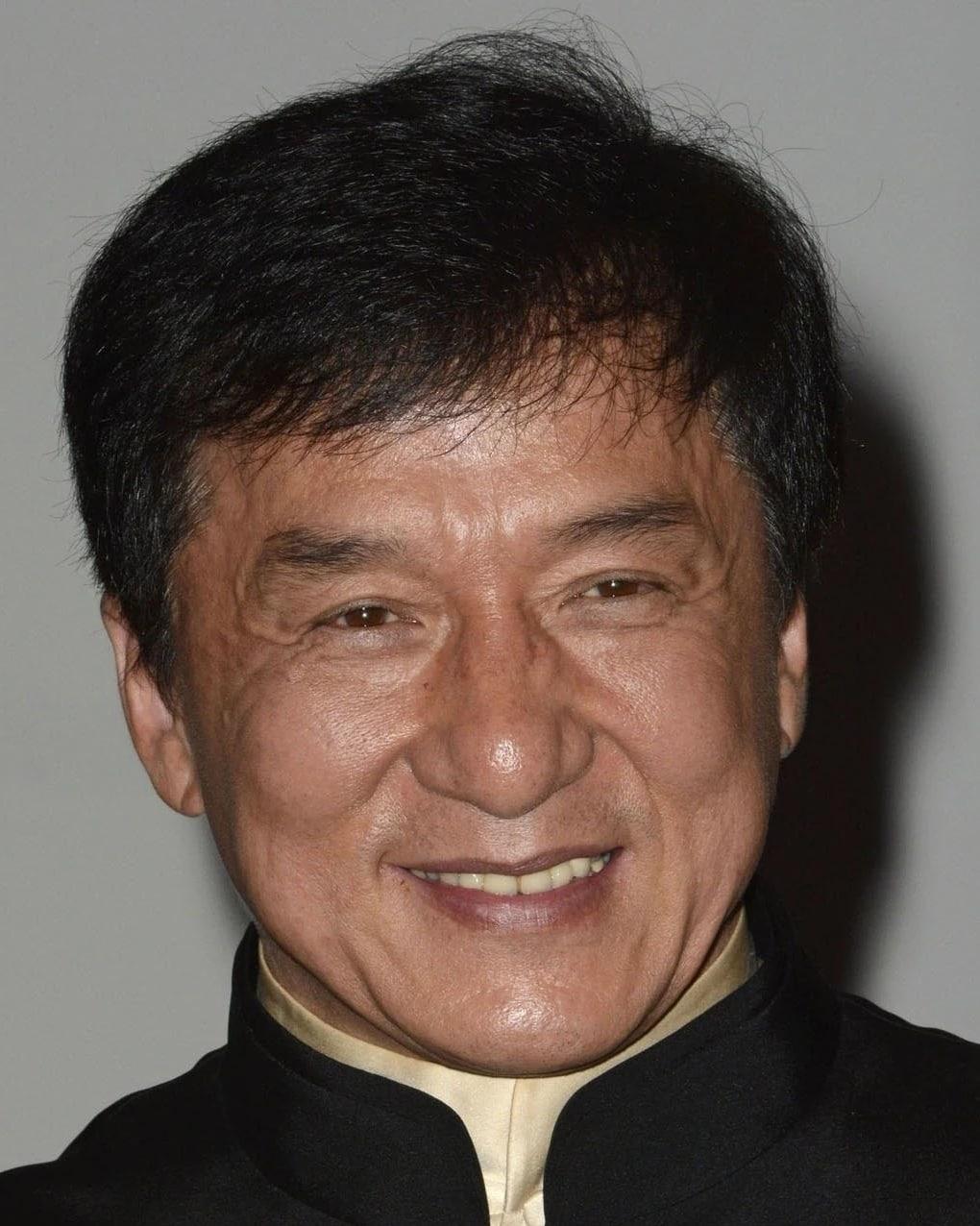
Jackie Chan.

Actor · Martial Artist · Filmmaker

Jackie Chan turned the discipline of the China Drama Academy and the risk of stunt work into a global screen language: the clock-tower drop of Project A, the shattered-glass mayhem of Police Story, the comic snap of Rush Hour. Behind the grin is a relentless builder who kept remaking action cinema across Hong Kong, Hollywood and his own productions.

OBJECTIVE PERSONALITY CLASSIFICATIONFF-Se/Te-PC/B(S)What does this mean?
PERSONALITY SYSTEMObjective Personality
LEAD FUNCTIONSe · Extroverted Sensing
SECOND SAVIOR FUNCTIONTe · Extroverted Thinking
MBTI EQUIVALENTESFP
01 / BEHIND THE CLASSIFICATION

The personality behind the fame.

How does a recorded OPS classification like FF-Se/Te-PC/B(S) break down? Walk through nine coins and watch the proposed type take shape. These are deductions from the archived code, not independent evidence of typing accuracy.

Scroll below to see Jackie Chan take shape.

STARTING POINT512 possible OPS typesEach type combines core functions, an animal order, and sexual modalities.
THE FINISH LINEFF-Se/Te-PC/B(S)One recorded classification, decoded from its components.
Jackie Chan’s HUMAN NEEDS 01—03
01
DECIDER OR OBSERVER?

Observer over Decider

Observers have more balanced Decider poles in the middle: Self (Di) and Tribe (De). Their own perspective and other people's perspectives tend to be easier to navigate. Things are the harder territory. Control (Oi) and Chaos (Oe) sit at the extremes, so disrupted plans, uncertainty, and a changing world can trigger the strongest reactions.

Jackie Chan’s career is full of brute facts he had to work around: a failed first year in primary school, a decade of punishing opera-school training, Hollywood starts that stalled with The Big Brawl and The Protector, then a new opening with Rumble in the Bronx. That is classic Observer friction—less about whether people value him, more about how to navigate changing conditions and stubborn reality. The strength is adaptability under pressure. The blind spot is thinking the next environmental fix, market shift or stunt innovation will solve a problem that also demands patience and limits.
O
02
SELF OR TRIBE?

De · Tribe over Di · Self

Tribe (De) is the stronger deciding pole. They check decisions against people, shared standards, and what works for the group: what do we need, what will others think? The strength is coordination and responsiveness; the recurring friction is the Self (Di)—knowing and defending their own position. As the portrait unfolds, notice how Tribe takes the lead.

Chan’s recorded Decider side is Tribe-first, and his public career shows how often he worked outward from what a team, a market or an audience could use. Willie Chan helped guide his early international career; the Jackie Chan Stunt Team turned risk into coordinated group execution; Rush Hour worked because he calibrated his style inside a buddy formula that American audiences could instantly read. The strength is practical responsiveness to other people’s needs. The growth cost is that outside demands can become so loud that private preference, exhaustion or a narrower personal standard gets pushed to the back.

De
03
GATHER OR ORGANIZE?

Oe · Gather over Oi · Organize

Gather (Oe) leads with new information, experiences, and possibilities. Its strength is curiosity and adaptability; the recurring friction is narrowing the options and settling into what is already known. Another layer of the personality portrait comes into focus.

His career refuses to sit still. Chan moved from child roles to stunt work, from kung fu comedy breakthroughs like Snake in the Eagle’s Shadow and Drunken Master to Hollywood buddy comedies, dramatic turns such as Shinjuku Incident and The Foreigner, voice acting, albums and his own production company. Gather-first fits that restless expansion into new terrain. The strength is range: another format, genre or market can become usable material. The blind spot is that more options do not choose themselves. Exploration keeps a career alive, but it can make narrowing the next long-term direction more expensive.

Oe
FIRST THREE COINSO + De + Oe

These establish the preferred human needs in the OPS framework.

Jackie Chan’s FUNCTIONS 04—05
04
FEELING OR THINKING?

Thinking · T over Feeling · F

Thinking (T) evaluates decisions through reasons, logic, and what works—not a lack of emotion. Its strength is analytical consistency; Feeling (F) provides balance through values, meaning, and the human consequences of a decision. Combined with Tribe (De), this forms the recorded Savior Te.

Te shows up in the industrial side of the Jackie Chan myth. He did not just perform stunts; he built systems around them—coordinating the Jackie Chan Stunt Team, directing films, co-directing 1911, launching JCE Movies, and earning Guinness records on CZ12 for both stunt volume and total credits. The strength of Thinking here is executable structure: get the shot, solve the logistics, make the machine work. The blind spot is that efficiency can start calling the shots. A workable plan can look so convincing that bodily wear, nuance or future fallout arrives late.

T → Te
05
SENSING OR INTUITION?

Sensing · S over Intuition · N

Sensing (S) focuses on concrete details, observable reality, and lived experience. Intuition (N) balances it by looking for broader patterns, concepts, and implications. Combined with Gather (Oe), this gives the recorded Savior Se.

Chan’s screen legacy is unusually physical even by action-star standards. Project A’s clock-tower fall, Police Story’s pole slide through exploding lights, and the long line of stunts he performed himself are not abstractions; they are Sensing turned into cinema. Se trusts what is happening right now—the timing of a jump, the angle of impact, the room, the body, the prop that is actually there. The strength is visceral immediacy no wire-heavy imitation can fake. The cost is that the present moment can dominate so completely that the slower forecast—age, recovery, long-range wear—has to fight for room.

S → Se
THE TWO SAVIOR FUNCTIONSSe / Te

Opposing functions: Ni and Fi. This is a jumper classification.

Jackie Chan’s ANIMAL STACK 06—07
06
PLAY OR SLEEP?

Play over Sleep

Play emphasizes external real-time engagement; Sleep emphasizes internal processing. The recorded stack places Play earlier.

Play comes earlier than Sleep, and Jackie Chan’s career has rarely hidden it. The Three Dragons era, the Jackie Chan Stunt Team, the buddy-cop chemistry of Rush Hour, even the outtakes he popularized in end credits all show a performer who comes alive in motion with other people. The strength of Play is contagious momentum: action becomes social, funny and collaborative instead of sealed off in private perfection. The growth cost sits with Sleep. When movement and interaction solve so much, slower retreat, recovery and internal consolidation can look optional until reality says otherwise.

P > S
07
CONSUME OR BLAST?

Consume over Blast

Consume gathers information for internal processing; Blast organizes and communicates information. The recorded order is Play → Consume → Blast → Sleep. This comparison follows their positions in that stack.

After that outward Play edge, Consume arrives before Blast. Chan’s public record makes sense of that order: before he became a global star, he spent a decade absorbing acrobatics, martial arts and acting at the China Drama Academy, then years as a stuntman and choreographer. Even later, he kept taking in new markets, formats and roles before locking them into a single message. The strength is a huge working vocabulary. The blind spot is that gathering more experience can delay the cleaner, narrower declaration Blast demands—say plainly what the project is, then let it be judged.

C > B
Jackie Chan’s ANIMAL ORIENTATION 08—09
08
INFO OR ENERGY DOMINANT?

Info over Energy

Info dominant means Consume and Blast are both in the top three: gathering and communicating information are more balanced. Sleep last leaves the energy side uneven—Play can keep engagement going without enough private recovery.

Jackie’s top-three animal balance is Info-first: he can gather material, test it in action, and then package it for mass audiences across Hong Kong, Hollywood and Chinese cinema. That helps explain a career that spans performing, directing, producing, singing and even a film like CZ12 that piled on credits almost absurdly. The strength is throughput. He does a lot, and much of it becomes legible to other people. The missing balance is Sleep last. When private recovery and slower internal processing trail the rest, output can stay impressive while restoration, long-view integration and body-level limits arrive behind schedule.

Info
09
INTROVERSION OR EXTROVERSION?

Extroversion over Introversion

The last animal, Sleep, determines this OPS coin: Play or Blast last means Introversion; Consume or Sleep last means Extroversion. This describes animal orientation, not sociability or shyness.

Atlas marks Jackie Chan as OPS Extroverted because Sleep is last, not because he smiles on talk shows or headlines giant franchises. The pattern is subtler: external engagement, live problem-solving and forward motion tend to get priority before private withdrawal and inner recalibration. His public career supports that reading—he kept pushing through Hong Kong cinema, Hollywood, voice work, directing and later-career reinventions, even announcing fewer stunts only after age and wear made the cost impossible to ignore. The strength is sustained outward momentum. The blind spot is needing reality, especially the body, to enforce pauses he is less likely to volunteer.

E
Sexual Modalities

The four sexual modalities.

OPS uses masculine/feminine sensory and extroverted-deciding distinctions as framework-specific terms, not gender categories. The four modalities are already included in the original 512 types. The recorded modality is FF · Tester.

MM KinestheticMasculine Sensory · Masculine De
MF AudioMasculine Sensory · Feminine De
FF RECORDED MODALITYTesterFeminine Sensory · Feminine De
FM VisualFeminine Sensory · Masculine De
COMPLETE RECORDED OPS TYPE · MODALITY INCLUDEDFF-Se/Te-PC/B(S)

Se leads, Te supports, and the animal stack is Play → Consume → Blast → Sleep.

THE FINISHED PORTRAIT · ALL NINE COINS REVEALED

Jackie Chan's complete function and animal stack

PlayConsumeBlastSleepfSemFifTemNi
FF-Se/Te-PC/B(S)DOUBLE ACTIVATED · PLAYExplore the Interactive Coin Builder →
THE JACKIE CHAN LENS

The stunt is the strategy.

Jackie Chan’s public image is so bright it can hide the engineering underneath it. The man dropping from the clock tower in Project A or crashing through Police Story looks like chaos with a grin. The biography gives the missing context: years at the China Drama Academy, stunt work, then a career spent redesigning action around timing, impact and control.

His Se and Te saviors are a formidable public combination. Se locks onto what can be physically done now; Te turns that immediacy into coordinated films, stunt teams and Guinness-record workloads like CZ12. The strength is obvious: action that feels real because it was built through reality. The limit is just as concrete. What works in the shot can outrun the slower question of long-range cost.

Jackie Chan is an Observer and, by Atlas’s pairing rule, a Double Decider. The people side can stay relatively flexible while the real pressure lands on uncertainty, changing conditions and how to keep control when the environment will not cooperate. He is built to wrestle reality into motion. The neglected function is Ni, the narrowing lens that asks where all this immediate action is headed before the next leap.

Play → Consume → Blast → Sleep gives the pattern away. He moves first through contact and live action, then takes in more material, then packages it for an audience; private retreat lands last. That imbalance can keep a legend productive, but it can also postpone recovery until the body sets the limit. The balancing move is not becoming timid. It is scheduling real off-camera recovery and future planning so the daring stays sharp.

Want to understand the Savior and Demon states behind these nine coins? Explore the complete explanation, visual examples, and typing principles on our Methodology page →

02 / KEEP EXPLORING

Different faces. Familiar patterns.

Explore other celebrities with related recorded OPS classifications. Related functions are not necessarily exact type matches.

Discover Type Twins
YOUR TURN

Curious about your own type?

Discover how your own personality might be classified through Objective Personality.

Get objectively typed
Jackie Chan's Personality Type & OPS Profile | The Personality Atlas