The Personality Atlas
THE CELEBRITY PERSONALITY ARCHIVE / PHILOSOPHY & EDUCATION

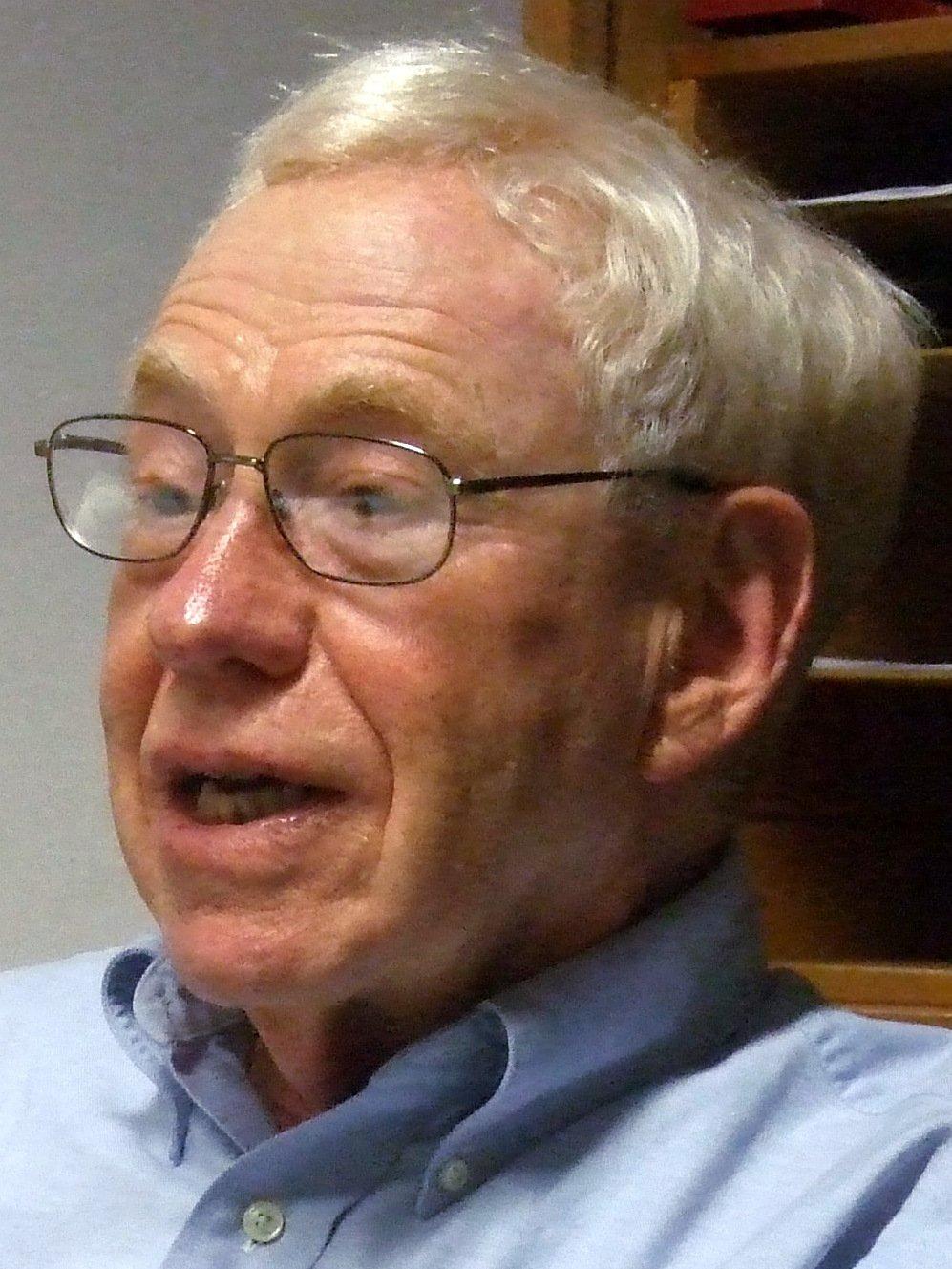
Hubert Dreyfus.

Philosopher · Berkeley professor

Hubert Dreyfus made philosophy feel like a public argument worth having. The Berkeley professor became famous for reading Heidegger so intensely critics dubbed it “Dreydegger,” then used that continental training to attack early artificial intelligence at RAND, MIT and in What Computers Can't Do. Behind the stereotype of the combative contrarian was a teacher whose lectures, interviews and podcasts pulled difficult ideas far beyond the seminar room.

OBJECTIVE PERSONALITY CLASSIFICATIONFF-Ti/Ne-CP/B(S)What does this mean?
PERSONALITY SYSTEMObjective Personality
LEAD FUNCTIONTi · Introverted Thinking
SECOND SAVIOR FUNCTIONNe · Extroverted Intuition
MBTI EQUIVALENTINTP
01 / BEHIND THE CLASSIFICATION

The personality behind the fame.

How does a recorded OPS classification like FF-Ti/Ne-CP/B(S) break down? Walk through nine coins and watch the proposed type take shape. These are deductions from the archived code, not independent evidence of typing accuracy.

Scroll below to see Hubert Dreyfus take shape.

STARTING POINT512 possible OPS typesEach type combines core functions, an animal order, and sexual modalities.
THE FINISH LINEFF-Ti/Ne-CP/B(S)One recorded classification, decoded from its components.
Hubert Dreyfus’ HUMAN NEEDS 01—03
01
DECIDER OR OBSERVER?

Decider over Observer

Deciders have more balanced Observer poles in the middle: Control (Oi) and Chaos (Oe). Organizing what's known and handling what's new tend to feel more manageable. People are the harder territory. Self (Di) and Tribe (De) sit at the extremes, so judgment, rejection, approval, and conflict can trigger the strongest reactions.

Dreyfus became publicly famous not just for ideas, but for picking fights with the people advancing them. As a RAND consultant, he reviewed early AI work by Allen Newell and Herbert A. Simon, then published the famously combative Alchemy and Artificial Intelligence. That is classic Decider pressure: the friction centers on people, authority, reputation and whose judgment carries weight. His strength was unusual nerve around intellectual conflict. The blind spot is that a real argument can harden into a status battle, making the social cost of being right almost as important as the reasoning itself.

D
02
SELF OR TRIBE?

Di · Self over De · Tribe

Self (Di) is the stronger deciding pole. They check decisions against their own values or reasons first: what makes sense to me, what feels right to me? The strength is independent conviction; the recurring friction is the Tribe (De)—other people's standards, feedback, and expectations. As the portrait unfolds, notice how Self takes the lead.

Dreyfus did not wait for a field-wide consensus before staking out his position. He kept pressing his critique of AI through papers, books and decades of teaching, even when the tone was controversial and the discipline pushed back. Self over Tribe shows up as an internal standard strong enough to survive disapproval. That independence gave him a durable voice instead of a fashionable one. The cost is equally visible: when your own read feels solid, other people's objections can sound less like needed correction and more like noise delaying the point.

Di
03
GATHER OR ORGANIZE?

Oe · Gather over Oi · Organize

Gather (Oe) leads with new information, experiences, and possibilities. Its strength is curiosity and adaptability; the recurring friction is narrowing the options and settling into what is already known. Another layer of the personality portrait comes into focus.

His career wandered productively across Harvard, Freiburg, Louvain, the École Normale Supérieure, MIT and Berkeley, while his interests ranged through phenomenology, existentialism, psychology, literature and artificial intelligence. Gather over Organize gives him an obvious advantage here: another field, language or problem becomes usable material instead of a threat to consistency. That breadth helped him connect Heidegger to modern technology and reach audiences outside philosophy. The tradeoff is closure. People looking for one tidy doctrine may instead meet a mind that keeps opening another door before the previous corridor is fully mapped.

Oe
FIRST THREE COINSD + Di + Oe

These establish the preferred human needs in the OPS framework.

Hubert Dreyfus’ FUNCTIONS 04—05
04
FEELING OR THINKING?

Thinking · T over Feeling · F

Thinking (T) evaluates decisions through reasons, logic, and what works—not a lack of emotion. Its strength is analytical consistency; Feeling (F) provides balance through values, meaning, and the human consequences of a decision. Combined with Self (Di), this forms the recorded Savior Ti.

Dreyfus's critique of AI did not rely on vague unease about machines. He broke the field into biological, psychological, epistemological and ontological assumptions, then attacked the structure underneath the claims. Ti's strength is exactly that internal audit: where does the model fail, and what hidden premise is doing too much work? It made his criticism sharper than a general cultural complaint. The blind spot is that rigorous demolition can sound like intellectual contempt. A framework may deserve dismantling, but people rarely enjoy being told their deepest assumptions are incoherent.

T → Ti
05
SENSING OR INTUITION?

Intuition · N over Sensing · S

Intuition (N) focuses on concepts, patterns, and what information might mean. Sensing (S) balances it through observable facts, physical detail, and direct experience. Combined with Gather (Oe), this gives the recorded Savior Ne.

Long before embodied and situated cognition became fashionable language, Dreyfus argued that human intelligence depended on being-in-the-world, on bodies and on social acculturation rather than context-free symbol shuffling. Ne shows up in that ability to see the larger implication behind a technical program and ask what kind of reality it quietly assumes. The strength is conceptual range: he could move from a chess program to Heidegger without losing the thread. The cost is that such reframing can feel maddeningly broad to critics who want narrower tests, cleaner metrics and fewer philosophical detours.

N → Ne
THE TWO SAVIOR FUNCTIONSTi / Ne

Opposing functions: Fe and Si.

Hubert Dreyfus’ ANIMAL STACK 06—07
06
CONSUME OR BLAST?

Consume over Blast

Consume gathers information for internal processing; Blast organizes and communicates information. The recorded order is Consume → Play → Blast → Sleep. This comparison follows their positions in that stack.

Dreyfus's public career was built on deep intake before declaration: Harvard training, archival research at Louvain, study in Freiburg, major translations, then books and lectures that made notoriously difficult thinkers teachable. On the Consume versus Blast axis, Consume clearly leads. The strength is substance. He was not bluffing with slogans; he had actually done the reading, the language work and the conceptual digging. The blind spot is familiar to any serious scholar: more source material can always be gathered, while the plainest, most shareable conclusion still waits to be stated cleanly.

C > B
07
PLAY OR SLEEP?

Play over Sleep

Play emphasizes external real-time engagement; Sleep emphasizes internal processing. The recorded stack places Play earlier.

After all that intake, Dreyfus did not keep the material sealed in private refinement. He taught at MIT and Berkeley for decades, won a teaching prize, appeared in a BBC philosophy series, featured in Being in the World, and drew non-academics to Berkeley webcasts on iTunes. Play over Sleep helps explain that outward testing of ideas in live exchange. The strength is animation: thought becomes social, audible and responsive. The cost is that another discussion can arrive before the previous one has fully settled into a quieter, more consolidated form.

P > S
Hubert Dreyfus’ ANIMAL ORIENTATION 08—09
08
INFO OR ENERGY DOMINANT?

Info over Energy

Info dominant means Consume and Blast are both in the top three: gathering and communicating information are more balanced. Sleep last leaves the energy side uneven—Play can keep engagement going without enough private recovery.

His public life shows a strong Info pattern: he absorbed difficult material and then turned it into books, interviews, classes and lectures that other people could actually use. Berkeley podcasts carrying a dense literature course into iTunes popularity is a concrete example of that loop working. With Sleep last, the missing balance is not intelligence or productivity but protected internal consolidation. The visible advantage is intellectual output that keeps circulating. The growth cost is that teaching, debating and explaining can keep winning the schedule while private reset and distillation are postponed again.

Info
09
INTROVERSION OR EXTROVERSION?

Extroversion over Introversion

The last animal, Sleep, determines this OPS coin: Play or Blast last means Introversion; Consume or Sleep last means Extroversion. This describes animal orientation, not sociability or shyness.

Sleep lands last, which gives the final orientation coin as Extroversion in the OPS sense. That does not mean cocktail-party charm; it means the overall pattern keeps moving outward through gathering, interaction and explanation before private processing gets first rights. Dreyfus's career fits that structure well: consulting, arguing, publishing, interviewing and teaching almost to the end of his life. The strength is public usefulness—ideas leave the study and enter the world. The blind spot is that solitude becomes the delayed task, even when the next breakthrough might require less engagement and more uninterrupted synthesis.

E
Sexual Modalities

The four sexual modalities.

OPS uses masculine/feminine sensory and extroverted-deciding distinctions as framework-specific terms, not gender categories. The four modalities are already included in the original 512 types. The recorded modality is FF · Tester.

MM KinestheticMasculine Sensory · Masculine De
MF AudioMasculine Sensory · Feminine De
FF RECORDED MODALITYTesterFeminine Sensory · Feminine De
FM VisualFeminine Sensory · Masculine De
COMPLETE RECORDED OPS TYPE · MODALITY INCLUDEDFF-Ti/Ne-CP/B(S)

Ti leads, Ne supports, and the animal stack is Consume → Play → Blast → Sleep.

THE FINISHED PORTRAIT · ALL NINE COINS REVEALED

Hubert Dreyfus's complete function and animal stack

ConsumePlayBlastSleepmTimNefSifFe
FF-Ti/Ne-CP/B(S)DOUBLE ACTIVATED · PLAYExplore the Interactive Coin Builder →
THE HUBERT DREYFUS LENS

The philosopher who refused the machine myth

Dreyfus built a public reputation by attacking one of the twentieth century’s most confident intellectual projects. His RAND critique of early AI and the later success of his Berkeley webcasts created an unusual combination: the famously combative philosopher who could also make difficult ideas feel alive to listeners far outside a seminar room.

His Ti/Ne pairing was the engine. Ti let him pry apart an argument until its hidden assumptions showed; Ne let him connect that analysis to wider questions about embodiment, expertise and being-in-the-world. That produced criticism with reach, not just heat. The limit is that a devastating conceptual takedown can sound more like a challenge issued from above than a bridge into shared understanding.

As a Decider and Double Observer, Dreyfus shows the people-and-significance pressure more than the chaos of information itself, even while he ranges widely across ideas. That pairing can make intellectual independence look natural and social calibration secondary. Neglected Fe, opposite his lead Ti, is the missing work of shaping truth so other people can enter it, not merely withstand it.

Consume → Play → Blast → Sleep explains why his career kept moving from research into classrooms, interviews and books. With Sleep last, private consolidation is the delayed need: the next exchange can outrun the quiet synthesis that makes the next insight cleaner. Keep the sharp public teaching, but protect post-lecture solitude to distill the argument before starting the next debate.

Want to understand the Savior and Demon states behind these nine coins? Explore the complete explanation, visual examples, and typing principles on our Methodology page →

02 / KEEP EXPLORING

Different faces. Familiar patterns.

Explore other celebrities with related recorded OPS classifications. Related functions are not necessarily exact type matches.

Discover Type Twins
YOUR TURN

Curious about your own type?

Discover how your own personality might be classified through Objective Personality.

Get objectively typed
Hubert Dreyfus's Personality Type & OPS Profile | The Personality Atlas