The Personality Atlas
THE CELEBRITY PERSONALITY ARCHIVE / INDUSTRY & ENGINEERING

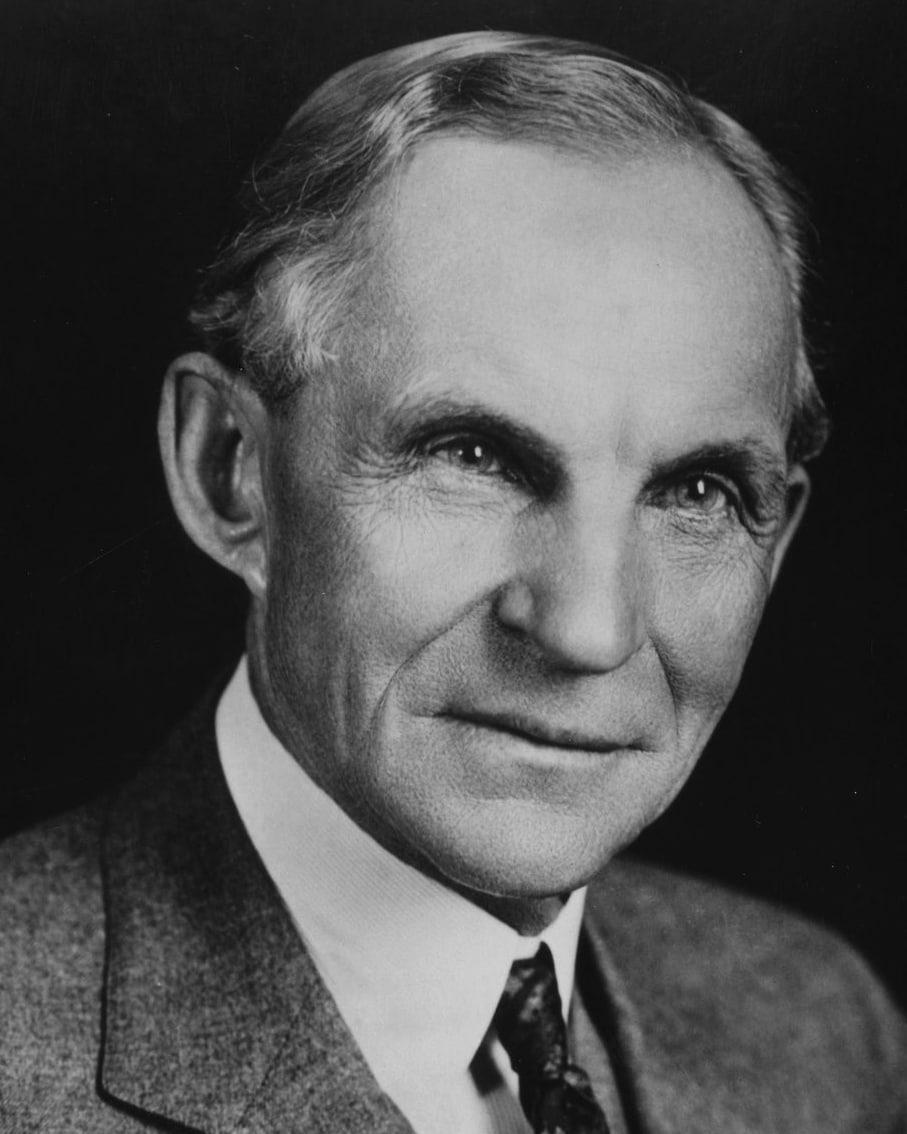
Henry Ford.

Industrialist · Engineer · Automaker

Henry Ford did not merely sell cars; he reorganized industrial life around a machine ordinary Americans could afford. From the Model T to the moving assembly line and the five-dollar day, he kept forcing messy production problems into repeatable systems that changed how modern work, manufacturing and consumer life looked.

OBJECTIVE PERSONALITY CLASSIFICATIONFM-Si/Fi-SB/P(C)What does this mean?
PERSONALITY SYSTEMObjective Personality
LEAD FUNCTIONSi · Introverted Sensing
SECOND SAVIOR FUNCTIONFi · Introverted Feeling
MBTI EQUIVALENTISTJ
01 / BEHIND THE CLASSIFICATION

The personality behind the fame.

How does a recorded OPS classification like FM-Si/Fi-SB/P(C) break down? Walk through nine coins and watch the proposed type take shape. These are deductions from the archived code, not independent evidence of typing accuracy.

Scroll below to see Henry Ford take shape.

STARTING POINT512 possible OPS typesEach type combines core functions, an animal order, and sexual modalities.
THE FINISH LINEFM-Si/Fi-SB/P(C)One recorded classification, decoded from its components.
Henry Ford’s HUMAN NEEDS 01—03
01
DECIDER OR OBSERVER?

Observer over Decider

Observers have more balanced Decider poles in the middle: Self (Di) and Tribe (De). Their own perspective and other people's perspectives tend to be easier to navigate. Things are the harder territory. Control (Oi) and Chaos (Oe) sit at the extremes, so disrupted plans, uncertainty, and a changing world can trigger the strongest reactions.

Ford’s public life keeps circling the same kind of fight: engines that fail, costs that stay too high, factories that must be reorganized, a market that shifts underneath him. From building engines in a farm workshop to turning the Model T into a mass product, his attention stayed locked on the problem in front of him. That Observer style is a real strength; he could treat chaos as something to be engineered. The blind spot is expecting enough system and force to solve realities that are not purely mechanical, especially when conditions change faster than the old solution.


O
02
SELF OR TRIBE?

Di · Self over De · Tribe

Self (Di) is the stronger deciding pole. They check decisions against their own values or reasons first: what makes sense to me, what feels right to me? The strength is independent conviction; the recurring friction is the Tribe (De)—other people's standards, feedback, and expectations. As the portrait unfolds, notice how Self takes the lead.

Ford repeatedly chose his own standard over broader agreement. He wanted inexpensive cars, resisted luxury ambitions, kept final decision authority even after Edsel became president, and maneuvered to buy out remaining shareholders so the family controlled strategy. That Self-first stance gives a founder unusual backbone. He did not need a committee to tell him what kind of company he wanted. The cost is familiar: when your private verdict feels obvious, other capable people start looking like obstacles. Conviction can build an empire and still narrow the range of feedback that gets taken seriously.

Di
03
GATHER OR ORGANIZE?

Oi · Organize over Oe · Gather

Organize (Oi) leads with refining, preserving, and structuring what is already known. Its strength is preparation and clear direction; the recurring friction is unexpected change that disrupts the plan. Another layer of the personality portrait comes into focus.

The Model T was not just a successful car; it was a settled system. Standardized parts, moving assembly belts, black paint for quicker drying, and a dealer network all reveal Organize over Gather. Ford’s gift was taking a messy industry and locking it into routines that scaled. That is how affordability stopped being a slogan and became output. The growth cost showed up later. General Motors kept multiplying options while Ford stayed attached to a proven formula, and the eventual shift to the Model A required an expensive, disruptive reset instead of a smoother evolution.

Oi
FIRST THREE COINSO + Di + Oi

These establish the preferred human needs in the OPS framework.

Henry Ford’s FUNCTIONS 04—05
04
FEELING OR THINKING?

Feeling · F over Thinking · T

Feeling (F) evaluates decisions through values, meaning, and what matters—not simply through emotion. Its strength is a clear sense of significance; Thinking (T) provides balance through impersonal reasons, consistency, and evidence. Combined with Self (Di), this forms the recorded Savior Fi.

Ford’s Feeling side shows up less as sentiment than as values turned into policy. The five-dollar day and later five-day workweek were public statements about what he believed workers should receive and what industrial life should allow. That Fi strength can be impressively principled: he was willing to stake money and reputation on a conviction. The limit is that private moral certainty does not stay harmless just because it is deeply held. Ford’s Social Department intruded into workers’ lives, and his promotion of antisemitism through The Dearborn Independent showed how a personal value framework can become publicly damaging when it stops meeting correction.

F → Fi
05
SENSING OR INTUITION?

Sensing · S over Intuition · N

Sensing (S) focuses on concrete details, observable reality, and lived experience. Intuition (N) balances it by looking for broader patterns, concepts, and implications. Combined with Organize (Oi), this gives the recorded Savior Si.

Before he became a titan, Ford was the kid dismantling pocket watches and the young mechanic describing bore sizes, belts, clutches and cooling jackets in exacting detail. Si gives that concrete, repeatable precision its backbone. He excelled at making a machine dependable, repairable and consistent enough for ordinary use, not merely impressive in theory. That grounded realism helped make the Model T workable at scale. The blind spot is that what has proven itself can become too persuasive. Ford underestimated shifts in styling, financing and changing taste, treating yesterday’s reliable structure as if it should keep winning by default.

S → Si
THE TWO SAVIOR FUNCTIONSSi / Fi

Opposing functions: Ne and Te. This is a jumper classification.

Henry Ford’s ANIMAL STACK 06—07
06
PLAY OR SLEEP?

Sleep over Play

Play emphasizes external real-time engagement; Sleep emphasizes internal processing. The recorded stack places Sleep earlier.

Sleep appears earlier than Play in the public pattern of Ford’s life. He repeatedly built from a private workshop inwardness first: repairing watches, constructing engines on the farm, developing early cars through long stretches of solitary refinement, then bringing the result outside. The strength is clear. A person who can withdraw, process and return with a sharper design often outperforms louder real-time brainstorming. The cost is that live feedback arrives later. When private certainty hardens before enough back-and-forth, other people are more likely to meet a finished stance than a genuinely shared search.

S > P
07
CONSUME OR BLAST?

Blast over Consume

Consume gathers information for internal processing; Blast organizes and communicates information. The recorded order is Sleep → Blast → Play → Consume. This comparison follows their positions in that stack.

Blast shows up earlier than Consume. Once Ford had a settled answer, he pushed it hard: the Model T was publicized relentlessly, dealerships spread across continents, prices were driven down, and the factory itself became a message about how production should work. That willingness to declare a direction helped change an industry. The tradeoff is visible in the slower appetite for fresh input. He resisted replacing the Model T, lagged on financing and styling, and often trusted the established system over new evidence. Strong conclusions scale fast; they can also start screening out inconvenient information.

B > C
Henry Ford’s ANIMAL ORIENTATION 08—09
08
INFO OR ENERGY DOMINANT?

Energy over Info

Energy dominant means Play and Sleep are both in the top three: there is access to expending energy through engagement and conserving it through internal processing. Consume last leaves the information side uneven—Blast may broadcast more than gets taken in.

With Sleep, Blast and Play all ahead of the last animal, Ford reads as Energy-dominant. His life was not built on endless gathering but on cycling between private consolidation, clear execution and outward engagement: tinker, decide, implement, repeat. That balance can generate enormous output, from factory reorganization to labor policy changes. The missing piece is Consume. When new input sits last, the risk is not laziness but overextension—driving a system forward faster than you refresh it. The later struggles around market change show the bill coming due when execution outruns curiosity.

Energy
09
INTROVERSION OR EXTROVERSION?

Extroversion over Introversion

The last animal, Consume, determines this OPS coin: Play or Blast last means Introversion; Consume or Sleep last means Extroversion. This describes animal orientation, not sociability or shyness.

Consume sits last, which makes this OPS Extroversion coin about orientation, not charm. Ford did not need to be socially breezy to keep pushing outward. His style was to take what already seemed proven and press it into the world through factories, franchises, publicity and policy. That is Extroversion here: action and external imposition arriving more readily than open-ended intake. The advantage is historic scale. The blind spot is harder to see from the driver’s seat. A person can keep moving the machine forward while missing newer data, dissent or alternatives that would have updated the map.

E
Sexual Modalities

The four sexual modalities.

OPS uses masculine/feminine sensory and extroverted-deciding distinctions as framework-specific terms, not gender categories. The four modalities are already included in the original 512 types. The recorded modality is FM · Visual.

MM KinestheticMasculine Sensory · Masculine De
MF AudioMasculine Sensory · Feminine De
FF TesterFeminine Sensory · Feminine De
FM RECORDED MODALITYVisualFeminine Sensory · Masculine De
COMPLETE RECORDED OPS TYPE · MODALITY INCLUDEDFM-Si/Fi-SB/P(C)

Si leads, Fi supports, and the animal stack is Sleep → Blast → Play → Consume.

THE FINISHED PORTRAIT · ALL NINE COINS REVEALED

Henry Ford's complete function and animal stack

SleepBlastPlayConsumefSimTefFimNe
FM-Si/Fi-SB/P(C)DOUBLE ACTIVATED · BLASTExplore the Interactive Coin Builder →
THE HENRY FORD LENS

The assembly line was his answer to almost everything.

The iconic image is black Model Ts rolling off an ever-faster line, but the man behind it started as a farm boy taking apart watches, servicing steam engines and building engines in a workshop. Ford looked less like a mystical visionary than a stubborn mechanic who kept scaling his own fixes until they reorganized daily American life.

Si/Fi gave him an unusually coherent industrial worldview. Si anchored him in repeatable mechanics, standardized processes and durable machines ordinary people could actually use. Fi supplied the inner standard behind bold decisions on wages, prices and company control. That pairing made him decisive. It also made private certainty dangerous when his value framework resisted correction and justified intrusive or harmful public choices.

As an Observer and Double Decider, Ford’s pressure centered first on fixing circumstances—cost, production flow, standardization, physical systems—more than securing social agreement. That Double Decider steadiness helped him keep building through conflict with investors, workers and rivals. The imbalance is overinvesting in control of conditions while underweighting wider possibilities. The neglected function opposite his lead savior is Ne: alternative futures, options and competing directions.

Sleep → Blast → Play → Consume shows the full pattern: private refinement first, then direction-setting, then outward implementation, with new intake last. That last-animal imbalance helps explain why he kept driving the Model T system while competitors changed styling, financing and product range. Balance would not mean becoming less decisive. It would mean deliberately scheduling fresh engineering and market input before locking the next standard into steel.

Want to understand the Savior and Demon states behind these nine coins? Explore the complete explanation, visual examples, and typing principles on our Methodology page →

02 / KEEP EXPLORING

Different faces. Familiar patterns.

Explore other celebrities with related recorded OPS classifications. Related functions are not necessarily exact type matches.

Discover Type Twins
YOUR TURN

Curious about your own type?

Discover how your own personality might be classified through Objective Personality.

Get objectively typed
Henry Ford's Personality Type & OPS Profile | The Personality Atlas