The Personality Atlas
THE CELEBRITY PERSONALITY ARCHIVE / FILM & MUSIC

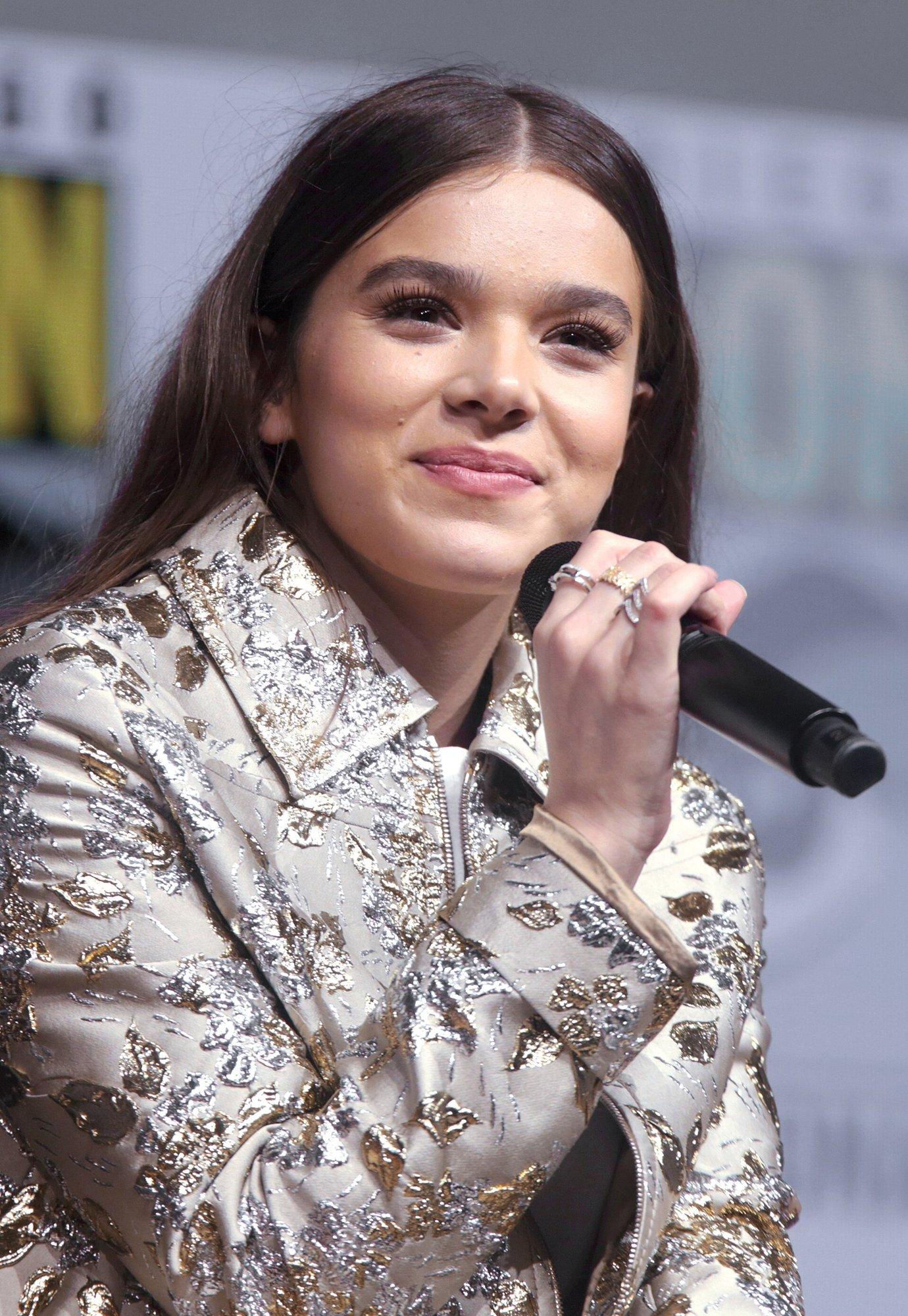
Hailee Steinfeld.

Actor · Singer · Voice Performer

Hailee Steinfeld broke through at 13 by staring down grown men in True Grit, then refused the neat Hollywood script that should have followed. She kept splitting the frame—Oscar-nominated actor, pop hitmaker, voice of Spider-Gwen, Marvel archer—while the industry kept trying to decide which version was supposed to be the main one.

OBJECTIVE PERSONALITY CLASSIFICATIONFF-Se/Fe-PC/S(B) #3What does this mean?
PERSONALITY SYSTEMObjective Personality
LEAD FUNCTIONSe · Extroverted Sensing
SECOND SAVIOR FUNCTIONFe · Extroverted Feeling
MBTI EQUIVALENTESTP
01 / BEHIND THE CLASSIFICATION

The personality behind the fame.

How does a recorded OPS classification like FF-Se/Fe-PC/S(B) #3 break down? Walk through nine coins and watch the proposed type take shape. These are deductions from the archived code, not independent evidence of typing accuracy.

Scroll below to see Hailee Steinfeld take shape.

STARTING POINT512 possible OPS typesEach type combines core functions, an animal order, and sexual modalities.
THE FINISH LINEFF-Se/Fe-PC/S(B) #3One recorded classification, decoded from its components.
Hailee Steinfeld’s HUMAN NEEDS 01—03
01
DECIDER OR OBSERVER?

Observer over Decider

Observers have more balanced Decider poles in the middle: Self (Di) and Tribe (De). Their own perspective and other people's perspectives tend to be easier to navigate. Things are the harder territory. Control (Oi) and Chaos (Oe) sit at the extremes, so disrupted plans, uncertainty, and a changing world can trigger the strongest reactions.

Steinfeld’s public story keeps colliding with variables no performer controls: breakthrough at 13 in True Grit, then a run of announced films that stalled, shifted, or recast before reaching screens, even while other doors opened in Pitch Perfect, Bumblebee, and Marvel. That pattern fits Observer friction more than people-drama obsession. Her strength is tactical adaptability when the industry changes around her. The blind spot is the classic Observer tax: waiting for circumstances to settle before forcing a narrower direction, as if the next project will finally remove uncertainty for her.


O
02
SELF OR TRIBE?

De · Tribe over Di · Self

Tribe (De) is the stronger deciding pole. They check decisions against people, shared standards, and what works for the group: what do we need, what will others think? The strength is coordination and responsiveness; the recurring friction is the Self (Di)—knowing and defending their own position. As the portrait unfolds, notice how Tribe takes the lead.

Her career repeatedly leans toward Tribe standards. She played songs for a Republic Records representative and turned that opening into a recording deal; later, tracks like “Most Girls” and the Beau Society newsletter were framed around connection and resonance with an audience. That outward attunement helps her collaborate across franchises, labels, and fan communities without seeming locked in her own bubble. The cost is that response can become the scoreboard. When outside reception matters this much, saying no, simplifying, or disappointing expectations can feel pricier than it looks from the seats.

De
03
GATHER OR ORGANIZE?

Oe · Gather over Oi · Organize

Gather (Oe) leads with new information, experiences, and possibilities. Its strength is curiosity and adaptability; the recurring friction is narrowing the options and settling into what is already known. Another layer of the personality portrait comes into focus.

Few mainstream careers hop lanes this casually: western prestige in True Grit, teen-musical comedy in Pitch Perfect, coming-of-age lead in The Edge of Seventeen, Spider-Gwen in animation, Emily Dickinson in prestige TV, Kate Bishop in Marvel, then back to singles and soundtrack work. That is Gather at full speed—more doors, more formats, more chances to discover the next fit. The advantage is range without paralysis in the moment. The growth cost is pruning. A career can keep expanding options long after it needs a firmer center of gravity.

Oe
FIRST THREE COINSO + De + Oe

These establish the preferred human needs in the OPS framework.

Hailee Steinfeld’s FUNCTIONS 04—05
04
FEELING OR THINKING?

Feeling · F over Thinking · T

Feeling (F) evaluates decisions through values, meaning, and what matters—not simply through emotion. Its strength is a clear sense of significance; Thinking (T) provides balance through impersonal reasons, consistency, and evidence. Combined with Tribe (De), this forms the recorded Savior Fe.

Steinfeld’s judging style lands through Feeling, and the music gives the cleanest public evidence. “Love Myself” broke out partly because its message felt empowering and discussable; “Most Girls” was praised for embracing individuality in a way listeners could join, not just admire from a distance. The same outward human read shows up in charity work aimed at children and hunger relief. The strength is emotional calibration for a crowd. The blind spot is that shared uplift can become the test, while colder impersonal standards or blunt critique get less natural emphasis.

F → Fe
05
SENSING OR INTUITION?

Sensing · S over Intuition · N

Sensing (S) focuses on concrete details, observable reality, and lived experience. Intuition (N) balances it by looking for broader patterns, concepts, and implications. Combined with Gather (Oe), this gives the recorded Savior Se.

Se shows up in how concrete her performances tend to feel. In True Grit, critics praised a 13-year-old who could stare down adults and make old-fashioned dialogue sound physically present; later, Kate Bishop and Spider-Gwen kept that same immediacy in action-centered roles. Even her pop career broke wider after visible, public moments like Pitch Perfect 2 and the MTV Europe Music Awards. The strength is tangible presence: she makes material hit now. The tradeoff is that immediate openings and real-time momentum can crowd out the slower work of reducing everything to one long-range throughline.

S → Se
THE TWO SAVIOR FUNCTIONSSe / Fe

Opposing functions: Ni and Ti. This is a jumper classification.

Hailee Steinfeld’s ANIMAL STACK 06—07
06
PLAY OR SLEEP?

Play over Sleep

Play emphasizes external real-time engagement; Sleep emphasizes internal processing. The recorded stack places Play earlier.

Play leads, which is hard to miss in a career built on ensemble motion. Pitch Perfect, Hawkeye, brand campaigns, live performances, and hosting the MTV Europe Music Awards all reward quick engagement, chemistry, and learning by doing with other people in real time. That gives her an active, responsive public gear instead of a precious one. The weakness arrives when Play outruns Sleep. Constant participation can keep the machine moving before an experience has been fully distilled, leaving the person behind the momentum to define what a season of work was actually saying.

P > S
07
CONSUME OR BLAST?

Consume over Blast

Consume gathers information for internal processing; Blast organizes and communicates information. The recorded order is Play → Consume → Sleep → Blast. This comparison follows their positions in that stack.

With Consume ahead of Blast, the second pressure is less about declaring a thesis than about taking in more material before summarizing it. Steinfeld’s career makes sense here: EPs, soundtrack singles, featured collaborations, voice roles, franchise parts, and returns to music after pauses all add to a wide reservoir of experience. That range is a real asset; she rarely feels one-note. The cost is clarity. A performer can keep accumulating characters, songs, and opportunities longer than audiences get a crisp statement of what the current artistic chapter is.

C > B
Hailee Steinfeld’s ANIMAL ORIENTATION 08—09
08
INFO OR ENERGY DOMINANT?

Energy over Info

Energy dominant means Play and Sleep are both in the top three: there is access to expending energy through engagement and conserving it through internal processing. Blast last leaves the information side uneven—Consume may gather far more than gets communicated.

This is Energy over Info: Play and Sleep both make the top three, so the system has room for outward activation and private recalibration, even in a very public career. You can see it in the bounce between large ensemble projects, studio recording, voice work, and periods where music releases thin out before another return. The missing tax is Blast last. The issue is not needing more experience; she already has plenty. It is packaging that experience into a simpler, more directive message so collaborators and audiences do not have to infer the thesis themselves.

Energy
09
INTROVERSION OR EXTROVERSION?

Introversion over Extroversion

The last animal, Blast, determines this OPS coin: Play or Blast last means Introversion; Consume or Sleep last means Extroversion. This describes animal orientation, not sociability or shyness.

Steinfeld’s OPS Introversion does not disappear just because she can host an awards show, front a franchise, or work a red carpet. In this system, Blast coming last means broadcasting settled conclusions is less preferred than engaging, gathering, and processing first. That fits a career often expressed through roles, features, and selectively timed releases rather than one blunt manifesto. The strength is texture over slogan. The blind spot is leaving too much unsaid. Growth looks less like becoming louder and more like stating the point of an era before the public writes it for her.

I
Sexual Modalities

The four sexual modalities.

OPS uses masculine/feminine sensory and extroverted-deciding distinctions as framework-specific terms, not gender categories. The four modalities are already included in the original 512 types. The recorded modality is FF · Tester.

MM KinestheticMasculine Sensory · Masculine De
MF AudioMasculine Sensory · Feminine De
FF RECORDED MODALITYTesterFeminine Sensory · Feminine De
FM VisualFeminine Sensory · Masculine De
ADDITIONAL LAYER · SOCIAL TYPE

The four social types.

Social types are an additional layer on top of the original Objective Personality classification, introduced later in OPS research. They describe two proposed social preference coins: Flex vs. Friends and Generalize vs. Specialize. The combination and priority of these preferences produce four social types. Hailee Steinfeld's recorded social type is #3.

SOCIAL #1 #1Flex · Generalize
SOCIAL #2 #2Generalize · Friends
SOCIAL #3 RECORDED SOCIAL TYPE#3Specialize · Flex
SOCIAL #4 #4Friends · Specialize
COMPLETE RECORDED OPS TYPE · MODALITY INCLUDED + SOCIAL TYPEFF-Se/Fe-PC/S(B) #3

Se leads, Fe supports, and the animal stack is Play → Consume → Sleep → Blast.

THE FINISHED PORTRAIT · ALL NINE COINS REVEALED

Hailee Steinfeld's complete function and animal stack

PlayConsumeSleepBlastfSemTifFemNi
FF-Se/Fe-PC/S(B) #3DOUBLE ACTIVATED · CONSUMEExplore the Interactive Coin Builder →
THE HAILEE STEINFELD LENS

The crossover is the point.

At 13, Steinfeld walked into True Grit and did the unnerving thing great young actors sometimes do: she made adults adjust to her gravity instead of the other way around. That public impression—poised, versatile, impossible to box into one lane—hides a career spent navigating changing formats, stalled projects, and constant redefinition.

Her Se/Fe pairing is a commercial weapon. Se makes the performance immediate and usable on camera, onstage, or in a booth; Fe makes it legible to other people, whether the project is Most Girls, Hawkeye banter, or a franchise handoff. The limit is subtler: moments can connect beautifully while the larger statement stays more implied than plainly declared.

As an Observer and Double Decider, her main instability is not people chaos so much as the shifting map of opportunities, timing, and direction. The human-needs imbalance leans toward solving circumstances before settling on a single interpretation of them. Neglected Ni is the missing compression: what does all this range add up to, and which version of the future deserves exclusion?

Play → Consume → Sleep → Blast shows why the career feels busy, versatile, and slightly hard to pin down. Blast last can leave the public with strong moments but a softer headline for the era. The balancing move is not less range; it is choosing one thesis for the next phase and saying it plainly enough that collaborators can build around it.

Want to understand the Savior and Demon states behind these nine coins? Explore the complete explanation, visual examples, and typing principles on our Methodology page →

02 / KEEP EXPLORING

Different faces. Familiar patterns.

Explore other celebrities with related recorded OPS classifications. Related functions are not necessarily exact type matches.

Discover Type Twins
YOUR TURN

Curious about your own type?

Discover how your own personality might be classified through Objective Personality.

Get objectively typed
Hailee Steinfeld's Personality Type & OPS Profile | The Personality Atlas