The Personality Atlas
THE CELEBRITY PERSONALITY ARCHIVE / BOXING

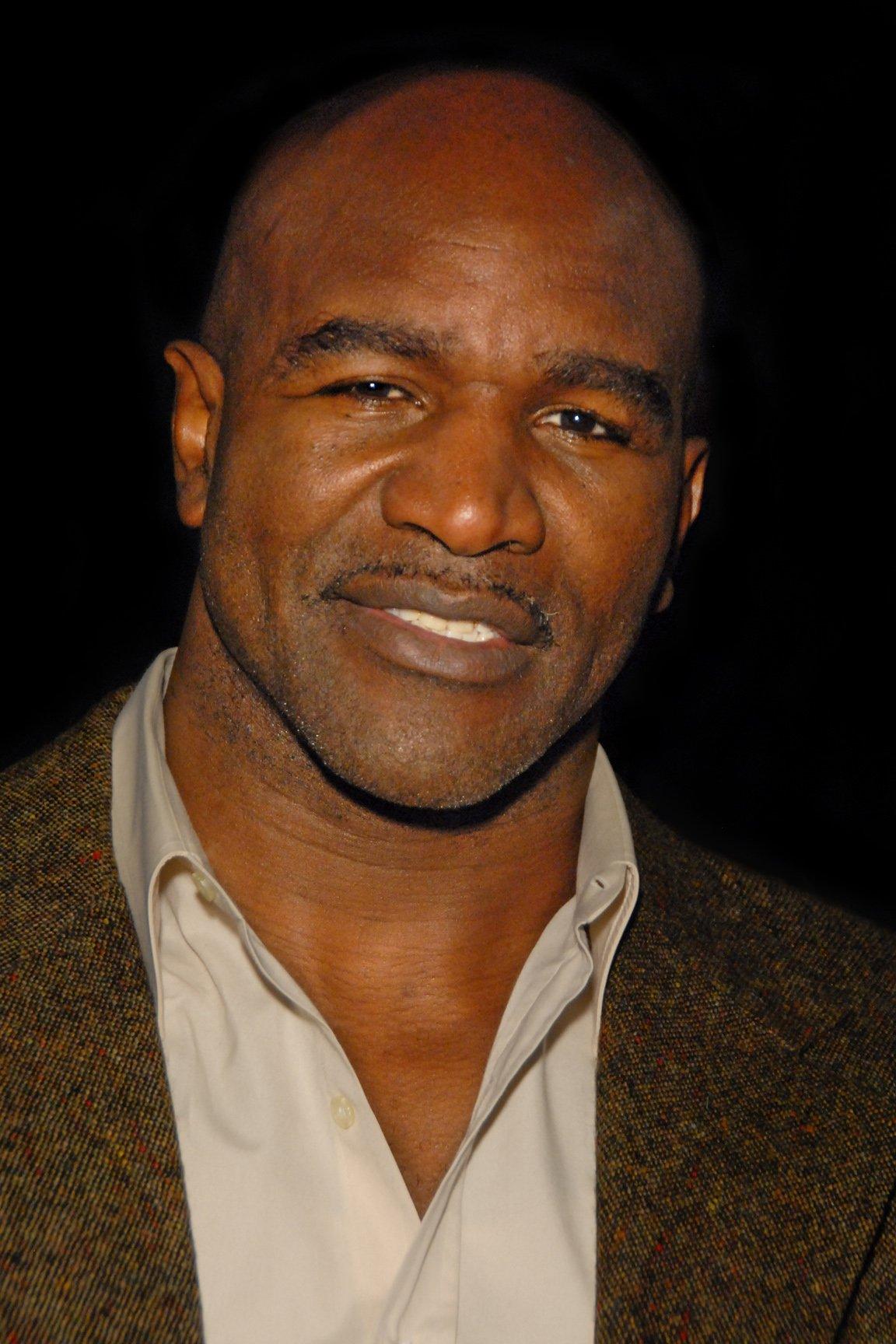
Evander Holyfield.

Former boxer · Undisputed cruiserweight and heavyweight champion

Evander Holyfield’s public image is all damage, discipline and impossible durability—the man who went fifteen rounds with Dwight Muhammad Qawi, outlasted George Foreman, upset Mike Tyson and kept reappearing in heavyweight title history. But the career behind “the Real Deal” is even more revealing: an undersized late bloomer from Atlanta who kept meeting new physical realities, changed weight classes without losing his identity, and made adaptation look like a craft rather than a slogan.

OBJECTIVE PERSONALITY CLASSIFICATIONMM-Se/Ti-CS/P(B)What does this mean?
PERSONALITY SYSTEMObjective Personality
LEAD FUNCTIONSe · Extroverted Sensing
SECOND SAVIOR FUNCTIONTi · Introverted Thinking
MBTI EQUIVALENTESTP
01 / BEHIND THE CLASSIFICATION

The personality behind the fame.

How does a recorded OPS classification like MM-Se/Ti-CS/P(B) break down? Walk through nine coins and watch the proposed type take shape. These are deductions from the archived code, not independent evidence of typing accuracy.

Scroll below to see Evander Holyfield take shape.

STARTING POINT512 possible OPS typesEach type combines core functions, an animal order, and sexual modalities.
THE FINISH LINEMM-Se/Ti-CS/P(B)One recorded classification, decoded from its components.
Evander Holyfield’s HUMAN NEEDS 01—03
01
DECIDER OR OBSERVER?

Observer over Decider

Observers have more balanced Decider poles in the middle: Self (Di) and Tribe (De). Their own perspective and other people's perspectives tend to be easier to navigate. Things are the harder territory. Control (Oi) and Chaos (Oe) sit at the extremes, so disrupted plans, uncertainty, and a changing world can trigger the strongest reactions.

Holyfield’s story keeps running into conditions no fighter could simply will away. He was a self-described late bloomer, grew from a 147-pound high-school graduate into a heavyweight, lost his original Tyson route when Buster Douglas changed the division, and was forced into retirement in 1994 before returning the next year. That is classic Observer pressure: the fight is with changing circumstances, timing and physical reality. The strength is adaptation under unstable conditions. The blind spot is staying in prove-it mode so long that a changed situation gets answered with more toughness instead of an earlier boundary.
O
02
SELF OR TRIBE?

Di · Self over De · Tribe

Self (Di) is the stronger deciding pole. They check decisions against their own values or reasons first: what makes sense to me, what feels right to me? The strength is independent conviction; the recurring friction is the Tribe (De)—other people's standards, feedback, and expectations. As the portrait unfolds, notice how Self takes the lead.

Holyfield repeatedly trusted his own read over the noise around him. After losing to Riddick Bowe, then to Michael Moorer, and then retiring on medical advice in 1994, he still came back, beat Ray Mercer, upset Tyson in 1996 and later won another heavyweight title in 2000. That Self-over-Tribe pattern gives him enormous inner steadiness when public opinion swings. The cost is expensive stubbornness. Outside warnings about timing, punishment and diminishing returns can register, yet arrive too slowly at the level of final decision. Conviction becomes strength until it delays a necessary stop.

Di
03
GATHER OR ORGANIZE?

Oe · Gather over Oi · Organize

Gather (Oe) leads with new information, experiences, and possibilities. Its strength is curiosity and adaptability; the recurring friction is narrowing the options and settling into what is already known. Another layer of the personality portrait comes into focus.

Holyfield’s career is practically a study in reopening options. He boxed as a light heavyweight, unified cruiserweight, moved up to heavyweight, rebuilt after losses, and kept finding another route into contention as titles fragmented and opponents changed. Gather over Organize fits that willingness to keep scanning for the next workable opening. The strength is adaptability: one blocked path does not end the mission. The blind spot is narrowing. When another rematch, comeback or belt path keeps appearing, choosing the one road worth committing to can be harder than spotting several roads that still technically exist.

Oe
FIRST THREE COINSO + Di + Oe

These establish the preferred human needs in the OPS framework.

Evander Holyfield’s FUNCTIONS 04—05
04
FEELING OR THINKING?

Thinking · T over Feeling · F

Thinking (T) evaluates decisions through reasons, logic, and what works—not a lack of emotion. Its strength is analytical consistency; Feeling (F) provides balance through values, meaning, and the human consequences of a decision. Combined with Self (Di), this forms the recorded Savior Ti.

Holyfield’s Thinking side shows up in the technical logic of his best moments. Against Buster Douglas in 1990, he did not need mythology; he read Douglas opening with a right uppercut and answered with a straight right that ended the fight. The same career that produced slugfests also produced precise tactical problem-solving. Ti’s strength is trusting an internally calibrated read of what works under pressure. The limit is that a correct technical answer can feel like the whole answer. It may solve the exchange while leaving bigger questions—career timing, message, exit point—underexplained.

T → Ti
05
SENSING OR INTUITION?

Sensing · S over Intuition · N

Sensing (S) focuses on concrete details, observable reality, and lived experience. Intuition (N) balances it by looking for broader patterns, concepts, and implications. Combined with Gather (Oe), this gives the recorded Savior Se.

Holyfield’s savior Sensing is easy to picture because his greatness kept showing up in concrete, punishing reality. The fifteen-round Qawi war, the move into heavyweight, the physical give-and-take with Foreman, and the Tyson fights all demanded immediate adjustment to what was actually happening in front of him. Se’s strength is direct calibration: distance, pressure, timing, openings. The blind spot is forecasting. The present contest can feel more trustworthy than the long-range pattern of what repeated wars are adding up to. Immediate proof is persuasive; future cost is quieter until it arrives.

S → Se
THE TWO SAVIOR FUNCTIONSSe / Ti

Opposing functions: Ni and Fe.

Evander Holyfield’s ANIMAL STACK 06—07
06
CONSUME OR BLAST?

Consume over Blast

Consume gathers information for internal processing; Blast organizes and communicates information. The recorded order is Consume → Sleep → Play → Blast. This comparison follows their positions in that stack.

Consume sits earlier than Blast, and Holyfield’s record gives that contrast substance. Before the heavyweight titles and Tyson upset, he had already built a massive base: a 160–14 amateur record, an Olympic bronze medal, and undisputed cruiserweight status. The strength of Consume is earned authority through firsthand proof, not premature declaration. The blind spot is over-accumulation. A person can keep gathering rounds, evidence and demonstrations long after the larger conclusion should be said plainly. The growth cost is admitting that more proof does not always improve the message; sometimes it only raises the price of learning it.

C > B
07
PLAY OR SLEEP?

Sleep over Play

Play emphasizes external real-time engagement; Sleep emphasizes internal processing. The recorded stack places Sleep earlier.

Sleep comes earlier than Play, and Holyfield’s public career often showed a reset-before-reentry rhythm. After the 1994 retirement, he returned with a clean bill of health, rebuilt through Mercer, then shocked Tyson in 1996; later he avenged Moorer and climbed back again. The strength here is consolidation before renewed action: absorb the hit, reset privately, return with a tighter center. The blind spot is delayed live feedback. If the internal reset becomes the main reassurance, outside reality testing can arrive only after more punishment, criticism or extra rounds than the situation really required.

S > P
Evander Holyfield’s ANIMAL ORIENTATION 08—09
08
INFO OR ENERGY DOMINANT?

Energy over Info

Energy dominant means Play and Sleep are both in the top three: there is access to expending energy through engagement and conserving it through internal processing. Blast last leaves the information side uneven—Consume may gather far more than gets communicated.

Holyfield lands on Energy over Info because private regrouping and real-time engagement both sit in his top three. Publicly, that looks like a fighter who could recover from brutal trilogies, return after retirement, and still meet the immediate demands of Foreman, Bowe, Tyson, Lewis and Ruiz across different eras. The strength is stamina in both conserving and spending energy. The missing balance is Blast last: experience kept piling up, but the clean public conclusion could lag. The growth cost is staying in proving mode too long instead of naming the limit, the role or the ending sooner.

Energy
09
INTROVERSION OR EXTROVERSION?

Introversion over Extroversion

The last animal, Blast, determines this OPS coin: Play or Blast last means Introversion; Consume or Sleep last means Extroversion. This describes animal orientation, not sociability or shyness.

Holyfield can headline giant pay-per-views and still land on the Introversion coin. This result comes from Blast being last, not from camera comfort or lack of courage. He spent decades in the brightest arenas in boxing, yet private processing and firsthand proof seem easier than turning everything into one settled, shared message. That preference protects depth, craft and resilience. The blind spot is finality. Saying the conclusion earlier—about fight selection, decline or retirement—can be harder than enduring another camp and trying to let performance communicate what words and boundaries should state directly.

I
Sexual Modalities

The four sexual modalities.

OPS uses masculine/feminine sensory and extroverted-deciding distinctions as framework-specific terms, not gender categories. The four modalities are already included in the original 512 types. The recorded modality is MM · Kinesthetic.

MM RECORDED MODALITYKinestheticMasculine Sensory · Masculine De
MF AudioMasculine Sensory · Feminine De
FF TesterFeminine Sensory · Feminine De
FM VisualFeminine Sensory · Masculine De
COMPLETE RECORDED OPS TYPE · MODALITY INCLUDEDMM-Se/Ti-CS/P(B)

Se leads, Ti supports, and the animal stack is Consume → Sleep → Play → Blast.

THE FINISHED PORTRAIT · ALL NINE COINS REVEALED

Evander Holyfield's complete function and animal stack

ConsumeSleepPlayBlastmSefTimFefNi
MM-Se/Ti-CS/P(B)DOUBLE ACTIVATED · CONSUMEExplore the Interactive Coin Builder →
THE EVANDER HOLYFIELD LENS

The punishment was public; the pattern was quieter.

People remember Evander Holyfield through spectacle: the Tyson bite fight, the Bowe trilogy, the nickname “the Real Deal.” But that image hides the late-blooming technician from Atlanta who kept solving harder physical problems, from cruiserweight unification to heavyweight history, usually by adjusting faster than the other man.

His exact savior pairing, Se/Ti, is a brutal boxing engine. Se tracks the opening, range and pressure of the exchange happening now; Ti trusts a personal technical read of what will actually work. The straight right that finished Buster Douglas captures both. The strength is precise real-time adjustment. The limit is that momentary solutions can postpone bigger career conclusions.

As an Observer and Double Decider, Holyfield is fundamentally wrestling with circumstances, control and unpredictability more than constant people-friction. That Double Decider balance can absorb public conflict without making every opinion the center of the story. The human-needs imbalance stays with the changing environment, and the neglected function opposite his lead Se is Ni: narrowing, forecasting and asking what all this evidence adds up to.

Consume → Sleep → Play → Blast explains why the final bottleneck is not courage but explicit delivery. Blast last can leave the summary, cutoff or retirement line underdeveloped even after decades of proof. The balancing move is to keep the technical toughness and adaptability, but let trusted advisors force earlier decisions on opponent selection, role and exit timing.

Want to understand the Savior and Demon states behind these nine coins? Explore the complete explanation, visual examples, and typing principles on our Methodology page →

02 / KEEP EXPLORING

Different faces. Familiar patterns.

Explore other celebrities with related recorded OPS classifications. Related functions are not necessarily exact type matches.

Discover Type Twins
YOUR TURN

Curious about your own type?

Discover how your own personality might be classified through Objective Personality.

Get objectively typed
Evander Holyfield's Personality Type & OPS Profile | The Personality Atlas