The Personality Atlas
THE CELEBRITY PERSONALITY ARCHIVE / FAITH & LEADERSHIP

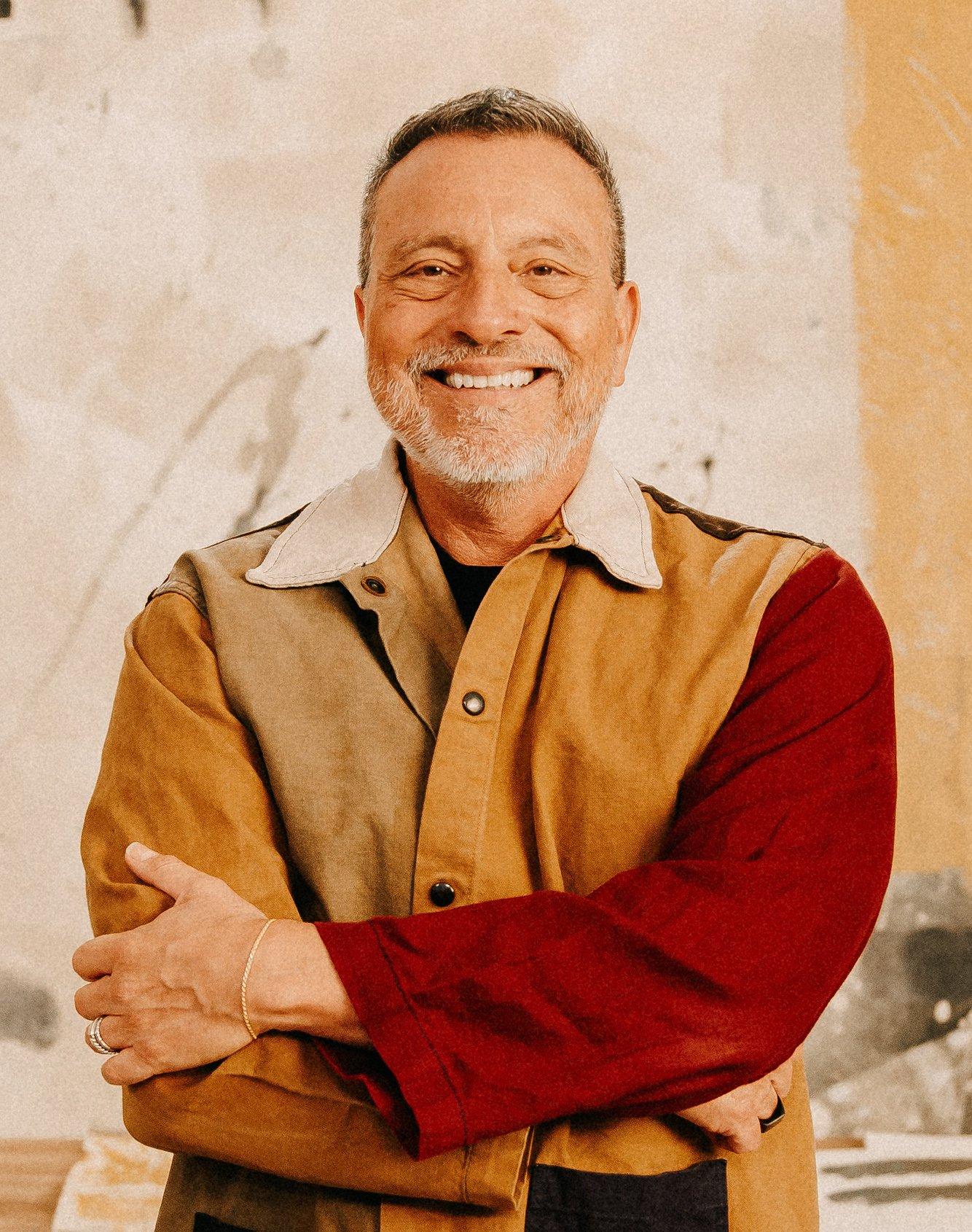
Erwin McManus.

Pastor · Author · Speaker · Filmmaker

Erwin McManus has spent decades turning ministry into a cross-platform brand: building Mosaic in Los Angeles, publishing books like The Artisan Soul, The Genius of Jesus, and Mind Shift, speaking to Fortune 100 and Fortune 500 companies, and pushing into film, television, and fashion. The through-line is not quiet caretaking but directional influence—an insistence on giving people a story big enough to organize a room around.

OBJECTIVE PERSONALITY CLASSIFICATIONFM-Fe/Ni-BP/S(C)What does this mean?
PERSONALITY SYSTEMObjective Personality
LEAD FUNCTIONFe · Extroverted Feeling
SECOND SAVIOR FUNCTIONNi · Introverted Intuition
MBTI EQUIVALENTENFJ
01 / BEHIND THE CLASSIFICATION

The personality behind the fame.

How does a recorded OPS classification like FM-Fe/Ni-BP/S(C) break down? Walk through nine coins and watch the proposed type take shape. These are deductions from the archived code, not independent evidence of typing accuracy.

Scroll below to see Erwin McManus take shape.

STARTING POINT512 possible OPS typesEach type combines core functions, an animal order, and sexual modalities.
THE FINISH LINEFM-Fe/Ni-BP/S(C)One recorded classification, decoded from its components.
Erwin McManus’ HUMAN NEEDS 01—03
01
DECIDER OR OBSERVER?

Decider over Observer

Deciders have more balanced Observer poles in the middle: Control (Oi) and Chaos (Oe). Organizing what's known and handling what's new tend to feel more manageable. People are the harder territory. Self (Di) and Tribe (De) sit at the extremes, so judgment, rejection, approval, and conflict can trigger the strongest reactions.

McManus’s public life keeps circling people problems, not logistics problems. He founded congregations while in graduate school, built Mosaic into a Los Angeles megachurch, and now speaks to companies on culture and community—roles where the live issue is how humans align, belong, and respond. That Decider pressure can be a strength: he steps into rooms that need morale, direction, and connection. The blind spot is that relationship tension can start to look like the whole battlefield, while practical constraints or factual ambiguity get less oxygen than the audience in front of him.

D
02
SELF OR TRIBE?

De · Tribe over Di · Self

Tribe (De) is the stronger deciding pole. They check decisions against people, shared standards, and what works for the group: what do we need, what will others think? The strength is coordination and responsiveness; the recurring friction is the Self (Di)—knowing and defending their own position. As the portrait unfolds, notice how Tribe takes the lead.

His public language is consistently tribe-facing. In HYPEBEAST he described Mosaic’s posture as “we’re for everybody,” and his speaking career depends on addressing what organizations and communities need from the outside in. De at its best reads the room and frames a message for collective uptake, which helps explain why he moves easily between church, business, and media. The cost shows up when broad inclusion language meets demands for specific standards and policies. A tribe-centered answer can soothe the room while leaving critics asking for sharper, more personal clarity.

De
03
GATHER OR ORGANIZE?

Oi · Organize over Oe · Gather

Organize (Oi) leads with refining, preserving, and structuring what is already known. Its strength is preparation and clear direction; the recurring friction is unexpected change that disrupts the plan. Another layer of the personality portrait comes into focus.

McManus is not presented here as a collector of endless options so much as a builder of a single worldview. He started two congregations while earning his master’s degree, developed Mosaic into a recognizable institution, and wrote a long run of books that keep returning to leadership, culture, and spiritual reinvention. Oi organizes life around an internal map and then keeps refining that map. The strength is direction: people know they are stepping into an authored vision. The cost is selectivity. A strong framework can make contradictory facts or alternative structures feel like noise instead of useful correction.

Oi
FIRST THREE COINSD + De + Oi

These establish the preferred human needs in the OPS framework.

Erwin McManus’ FUNCTIONS 04—05
04
FEELING OR THINKING?

Feeling · F over Thinking · T

Feeling (F) evaluates decisions through values, meaning, and what matters—not simply through emotion. Its strength is a clear sense of significance; Thinking (T) provides balance through impersonal reasons, consistency, and evidence. Combined with Tribe (De), this forms the recorded Savior Fe.

Feeling is unusually visible in how he sells ideas. McManus speaks on culture, community, equality, humanity, and leadership, and when controversy hit over Mosaic’s stance toward LGBTQ people, his response emphasized welcome, diversity, and posture rather than a technical policy brief. Fe’s strength is translating conviction into relational language other people can enter. That can calm a room and widen a tent. The void sits across from it: when a conflict turns on definitions, rules, or evidence, people may want the colder Ti precision that tribe-centered warmth does not automatically provide.

F → Fe
05
SENSING OR INTUITION?

Intuition · N over Sensing · S

Intuition (N) focuses on concepts, patterns, and what information might mean. Sensing (S) balances it through observable facts, physical detail, and direct experience. Combined with Organize (Oi), this gives the recorded Savior Ni.

Ni shows up in McManus’s habit of turning ministry into an overarching thesis about where culture is headed. Postmodern Christianity, futuristic ideas, The Artisan Soul, The Genius of Jesus, Mind Shift—again and again he packages the moment into a directional narrative. That is the gift: he can pull scattered anxieties into one memorable arc and give followers language for what the future requires. The cost is compression. A strong vision can skip past awkward local details, making the big pattern feel persuasive before every supporting piece has been slowed down and checked.

N → Ni
THE TWO SAVIOR FUNCTIONSFe / Ni

Opposing functions: Ti and Se.

Erwin McManus’ ANIMAL STACK 06—07
06
CONSUME OR BLAST?

Blast over Consume

Consume gathers information for internal processing; Blast organizes and communicates information. The recorded order is Blast → Play → Sleep → Consume. This comparison follows their positions in that stack.

Blast clearly gets the first push. McManus has spent years preaching, keynoting for major companies, publishing books, and launching a talk show built around the “hottest, hardest topics.” This profile reads as someone more inclined to package and send than to linger in open-ended intake. The strength is obvious: audiences do not have to guess what he wants to say. The growth cost is less glamorous. When Blast outruns Consume, another message can be ready before enough fresh information, dissent, or technical detail has been seriously absorbed.

B > C
07
PLAY OR SLEEP?

Play over Sleep

Play emphasizes external real-time engagement; Sleep emphasizes internal processing. The recorded stack places Play earlier.

With Blast already ahead of Consume, Play landing before Sleep keeps his leadership publicly kinetic. McManus does not just formulate ideas alone; he moves them through congregations, corporate stages, advisory work, films, fashion ventures, and a television panel with his son. Play’s advantage is momentum through real-time exchange and collaboration. The tradeoff is that movement itself can start to feel like proof. When Play stays ahead of Sleep, the room keeps changing and responding, but the slower work of withdrawing, distilling, and rechecking the message can lose ground to the next conversation.

P > S
Erwin McManus’ ANIMAL ORIENTATION 08—09
08
INFO OR ENERGY DOMINANT?

Energy over Info

Energy dominant means Play and Sleep are both in the top three: there is access to expending energy through engagement and conserving it through internal processing. Consume last leaves the information side uneven—Blast may broadcast more than gets taken in.

His top three animals cluster around activity and output, which fits a career spread across church leadership, books, paid speaking, design, film, and television. Energy dominance here is not about being loud; it is about having both outward engagement and internal drive available before the system reaches for more input. That balance helps him keep initiatives moving across very different arenas. The missing piece is Consume last. The blind spot is not laziness or lack of curiosity, but a tendency to keep broadcasting, rallying, and refining from existing vision before enough new raw material has been taken in.

Energy
09
INTROVERSION OR EXTROVERSION?

Extroversion over Introversion

The last animal, Consume, determines this OPS coin: Play or Blast last means Introversion; Consume or Sleep last means Extroversion. This describes animal orientation, not sociability or shyness.

Consume sits fourth in Blast → Play → Sleep → Consume, which makes this OPS Extroversion result even if someone mistakes stage presence for the whole story. The point is not sociability. It is that explaining, engaging, and processing arrive before prolonged intake of new information. McManus’s public record—sermons, books, corporate talks, TV, fashion, film—shows a life built on projecting a worldview into the world. The growth edge is deliberately creating study, listening, and research time that can challenge the message, not just furnish another example for it.

E
Sexual Modalities

The four sexual modalities.

OPS uses masculine/feminine sensory and extroverted-deciding distinctions as framework-specific terms, not gender categories. The four modalities are already included in the original 512 types. The recorded modality is FM · Visual.

MM KinestheticMasculine Sensory · Masculine De
MF AudioMasculine Sensory · Feminine De
FF TesterFeminine Sensory · Feminine De
FM RECORDED MODALITYVisualFeminine Sensory · Masculine De
COMPLETE RECORDED OPS TYPE · MODALITY INCLUDEDFM-Fe/Ni-BP/S(C)

Fe leads, Ni supports, and the animal stack is Blast → Play → Sleep → Consume.

THE FINISHED PORTRAIT · ALL NINE COINS REVEALED

Erwin McManus's complete function and animal stack

BlastPlaySleepConsumemFemNifSefTi
FM-Fe/Ni-BP/S(C)DOUBLE ACTIVATED · BLASTExplore the Interactive Coin Builder →
THE ERWIN MCMANUS LENS

The architect in the pulpit

McManus’s public image is bigger than a Sunday sermon. Mosaic in Los Angeles, leadership books, corporate stages at companies like Nike and Apple, and a TV panel with his son all project the same impression: not a caretaker preserving one institution, but a builder trying to shape a whole culture around a message.

Fe paired with Ni makes that style easy to recognize. Fe reads the room and frames ideas for collective buy-in; Ni compresses complexity into a directional vision. That combination can inspire quickly and memorably. Its limit is that a clean, moving story can outrun definitions, policy details, or stubborn facts that refuse to fit the arc.

As a Decider and Double Observer, McManus’s core imbalance centers on people, significance, and alignment before information and control. His observer side still supports a stable worldview, but the neglected function opposite his lead savior is Ti: tighter definitions, cleaner logic, and a willingness to let precision interrupt a relationally effective answer.

Blast → Play → Sleep → Consume explains the momentum. He can broadcast, engage, and internally reinforce a message before seeking more raw input, which is why Consume last becomes the pinch point. Keep the rallying voice, but build in recurring time to read critics, ask narrower factual questions, and let new material rewrite the next talk before it goes onstage.

Want to understand the Savior and Demon states behind these nine coins? Explore the complete explanation, visual examples, and typing principles on our Methodology page →

02 / KEEP EXPLORING

Different faces. Familiar patterns.

Explore other celebrities with related recorded OPS classifications. Related functions are not necessarily exact type matches.

Discover Type Twins
YOUR TURN

Curious about your own type?

Discover how your own personality might be classified through Objective Personality.

Get objectively typed
Erwin McManus's Personality Type & OPS Profile | The Personality Atlas