
The Personality Atlas
THE CELEBRITY PERSONALITY ARCHIVE / NEUROSCIENCE & LEADERSHIP

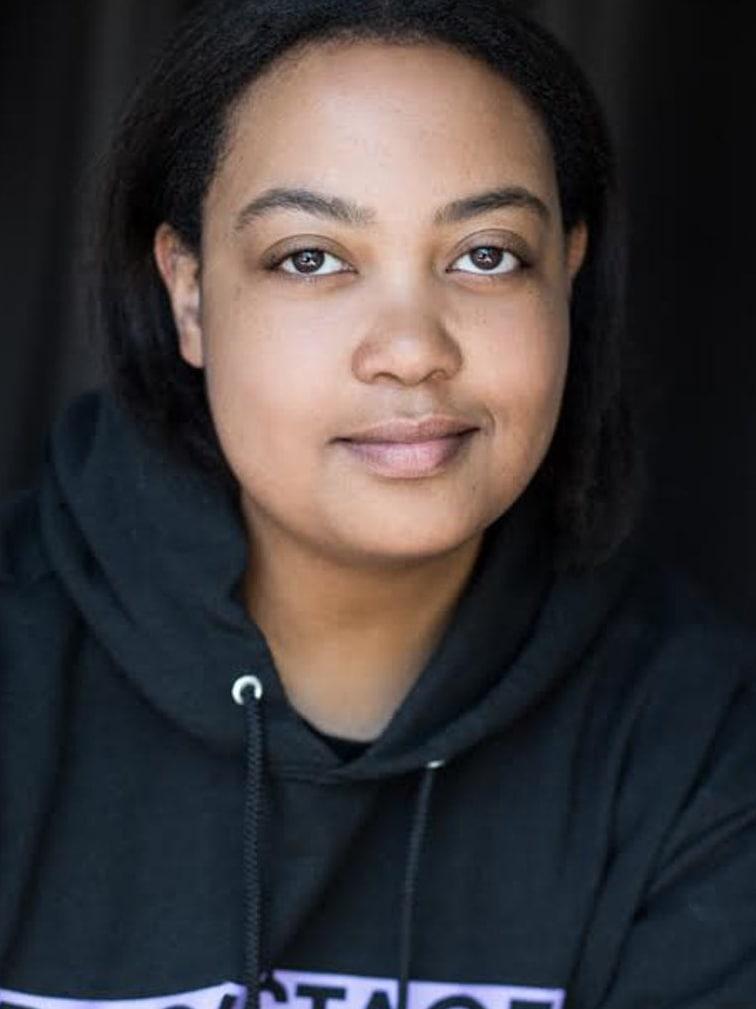
Dr Tara Swart.

Neuroscientist · Physician · Executive Educator · Author

Dr. Tara Swart built a public career on an unusual borderland: biomedical science, neuropharmacology, medicine and psychiatry on one side; executive education, leadership books, resilience studies and neuroplasticity content on the other. From teaching applied neuroscience at MIT Sloan to discussing The Source, launching short Instagram meditation exercises and later writing The Signs, she repeatedly turns technical authority into practical frameworks with a very personal signature.

OBJECTIVE PERSONALITY CLASSIFICATIONMM-Se/Fi-CS/P(B) #3What does this mean?
PERSONALITY SYSTEMObjective Personality
LEAD FUNCTIONSe · Extroverted Sensing
SECOND SAVIOR FUNCTIONFi · Introverted Feeling
MBTI EQUIVALENTESFP
01 / BEHIND THE CLASSIFICATION

The personality behind the fame.

How does a recorded OPS classification like MM-Se/Fi-CS/P(B) #3 break down? Walk through nine coins and watch the proposed type take shape. These are deductions from the archived code, not independent evidence of typing accuracy.

Scroll below to see Dr Tara Swart take shape.

STARTING POINT512 possible OPS typesEach type combines core functions, an animal order, and sexual modalities.
THE FINISH LINEMM-Se/Fi-CS/P(B) #3One recorded classification, decoded from its components.
Dr Tara Swart’s HUMAN NEEDS 01—03
01
DECIDER OR OBSERVER?

Observer over Decider

Observers have more balanced Decider poles in the middle: Self (Di) and Tribe (De). Their own perspective and other people's perspectives tend to be easier to navigate. Things are the harder territory. Control (Oi) and Chaos (Oe) sit at the extremes, so disrupted plans, uncertainty, and a changing world can trigger the strongest reactions.

Swart’s public career keeps landing her in messy real-world contexts: medical training, psychiatry, executive classrooms at MIT, a hotel resilience study, an Instagram meditation series, and books for a general audience. That spread points to an Observer problem more than a people problem. The tension is not mainly whether everyone approves of her; it is whether a complicated world can be mapped clearly enough to act inside it. Her strength is adaptability across changing formats. The blind spot is assuming another application or new environment will finally make uncertainty disappear.
O
02
SELF OR TRIBE?

Di · Self over De · Tribe

Self (Di) is the stronger deciding pole. They check decisions against their own values or reasons first: what makes sense to me, what feels right to me? The strength is independent conviction; the recurring friction is the Tribe (De)—other people's standards, feedback, and expectations. As the portrait unfolds, notice how Self takes the lead.

After clinical work in psychiatry, Swart did not stay inside one institutional lane. She moved into executive education, wrote general-audience books, and later launched a platform around applied neuroplasticity. Self over Tribe helps explain that willingness to back her own frame rather than wait for a profession, publisher or academic culture to define every boundary first. The advantage is authorship: her work sounds like it belongs to someone. The growth cost is social friction. A personally satisfying standard can still leave colleagues, skeptics or readers wanting clearer accommodation of their concerns.

Di
03
GATHER OR ORGANIZE?

Oe · Gather over Oi · Organize

Gather (Oe) leads with new information, experiences, and possibilities. Its strength is curiosity and adaptability; the recurring friction is narrowing the options and settling into what is already known. Another layer of the personality portrait comes into focus.

Her public work rarely sits still. Swart has taught executives, co-authored Neuroscience for Leadership, worked on an organizational plasticity project, collaborated on a hotel resilience study, published short exercises, and moderated a museum discussion. Gather over Organize gives that spread a recognizable advantage: she can keep finding another use case, another audience, another angle. It makes a career feel portable. The cost is selectivity. A professional life cannot pursue every promising application of neuroscience at once. New openings create momentum, but they do not choose which lane deserves the deepest commitment.

Oe
FIRST THREE COINSO + Di + Oe

These establish the preferred human needs in the OPS framework.

Dr Tara Swart’s FUNCTIONS 04—05
04
FEELING OR THINKING?

Feeling · F over Thinking · T

Feeling (F) evaluates decisions through values, meaning, and what matters—not simply through emotion. Its strength is a clear sense of significance; Thinking (T) provides balance through impersonal reasons, consistency, and evidence. Combined with Self (Di), this forms the recorded Savior Fi.

Swart’s collaboration on a resilience study at London’s Corinthia Hotel is revealing because it focused on employees in guest-facing roles and behind-the-scenes teams rather than abstract theory alone. Feeling, specifically Fi, tends to ask what matters to people and what personally feels worth standing behind. That can make neuroscience sound usable instead of sterile, especially when paired with leadership work. The limit is that sincere value does not settle every argument. A framework can feel humane, relevant and motivating while still leaving outsiders asking for harder criteria, sharper boundaries or broader comparison.

F → Fi
05
SENSING OR INTUITION?

Sensing · S over Intuition · N

Sensing (S) focuses on concrete details, observable reality, and lived experience. Intuition (N) balances it by looking for broader patterns, concepts, and implications. Combined with Gather (Oe), this gives the recorded Savior Se.

Her training in biomedical science and neuropharmacology, later medical qualification, and habit of turning ideas into exercises, courses and public discussions all make Se a grounded fit. Sensing here is not just liking concrete things; it is noticing what can be observed, practiced and applied now. That is a strength in executive education, where abstractions die quickly if nobody can use them on Monday morning. The blind spot is mistaking immediate usefulness for full direction. A vivid technique, study or example can land powerfully in the moment without answering what the larger long-term pattern should be.

S → Se
THE TWO SAVIOR FUNCTIONSSe / Fi

Opposing functions: Ni and Te.

Dr Tara Swart’s ANIMAL STACK 06—07
06
CONSUME OR BLAST?

Consume over Blast

Consume gathers information for internal processing; Blast organizes and communicates information. The recorded order is Consume → Sleep → Play → Blast. This comparison follows their positions in that stack.

Consume over Blast fits the long runway in Swart’s public work: biomedical science, doctoral study in neuropharmacology, medicine, psychiatry, leadership writing, then courses and books built from that accumulation. The strength is obvious. She has a large reservoir to draw from, so her teaching rarely sounds improvised out of thin air. But Consume carries its own tax. More reading, more cases and more frameworks can keep enriching the material while postponing the blunt public conclusion. Blast asks for a simpler demand: say plainly what the takeaway is, even when the supporting material could keep expanding.

C > B
07
PLAY OR SLEEP?

Sleep over Play

Play emphasizes external real-time engagement; Sleep emphasizes internal processing. The recorded stack places Sleep earlier.

Sleep comes earlier than Play in Swart’s recorded animal balance, and that sequence is easy to picture in work that turns dense material into curated frameworks. Books, executive courses and structured public exercises all suggest time spent consolidating an inner model before testing it in looser real-time exchange. The advantage is coherence. People get a shaped perspective instead of raw fragments. The cost is that a well-processed model can feel finished too soon. When outside challenge arrives live—through questions, skepticism or competing priorities—it has to interrupt a framework that may already feel settled.

S > P
Dr Tara Swart’s ANIMAL ORIENTATION 08—09
08
INFO OR ENERGY DOMINANT?

Energy over Info

Energy dominant means Play and Sleep are both in the top three: there is access to expending energy through engagement and conserving it through internal processing. Blast last leaves the information side uneven—Consume may gather far more than gets communicated.

Swart’s stack lands on Energy over Info because Sleep and Play both make the top three while Blast sits last. That creates an interesting public mix: she can withdraw to consolidate, then re-emerge to teach, discuss and build with other people. The strength is rhythm, not constant output—private processing and outward engagement can both serve the work. The void shows up elsewhere. With Blast last, the problem is not a lack of material or contact. It is the risk of holding a nuanced body of information without compressing it into the clearest shared message for a mixed audience.

Energy
09
INTROVERSION OR EXTROVERSION?

Introversion over Extroversion

The last animal, Blast, determines this OPS coin: Play or Blast last means Introversion; Consume or Sleep last means Extroversion. This describes animal orientation, not sociability or shyness.

Swart’s public visibility can mislead people on this coin. She has taught at MIT Sloan, published books, moderated a Rubin Museum discussion and released an Instagram meditation series, all of which look extroverted in the casual sense. OPS Introversion here means something narrower: Blast is fourth, after Consume, Sleep and Play. Private understanding and interaction can come more readily than broadcasting a final organized conclusion. The strength is nuance. The growth edge is sharper closure—stating where a framework stops, what it claims, and what collaborators or readers should do next without needing to infer the structure themselves.

I
Sexual Modalities

The four sexual modalities.

OPS uses masculine/feminine sensory and extroverted-deciding distinctions as framework-specific terms, not gender categories. The four modalities are already included in the original 512 types. The recorded modality is MM · Kinesthetic.

MM RECORDED MODALITYKinestheticMasculine Sensory · Masculine De
MF AudioMasculine Sensory · Feminine De
FF TesterFeminine Sensory · Feminine De
FM VisualFeminine Sensory · Masculine De
ADDITIONAL LAYER · SOCIAL TYPE

The four social types.

Social types are an additional layer on top of the original Objective Personality classification, introduced later in OPS research. They describe two proposed social preference coins: Flex vs. Friends and Generalize vs. Specialize. The combination and priority of these preferences produce four social types. Dr Tara Swart's recorded social type is #3.

SOCIAL #1 #1Flex · Generalize
SOCIAL #2 #2Generalize · Friends
SOCIAL #3 RECORDED SOCIAL TYPE#3Specialize · Flex
SOCIAL #4 #4Friends · Specialize
COMPLETE RECORDED OPS TYPE · MODALITY INCLUDED + SOCIAL TYPEMM-Se/Fi-CS/P(B) #3

Se leads, Fi supports, and the animal stack is Consume → Sleep → Play → Blast.

THE FINISHED PORTRAIT · ALL NINE COINS REVEALED

Dr Tara Swart's complete function and animal stack

ConsumeSleepPlayBlastmSefFimTefNi
MM-Se/Fi-CS/P(B) #3DOUBLE ACTIVATED · CONSUMEExplore the Interactive Coin Builder →
THE DR TARA SWART LENS

The translator with a private filter.

At MIT’s book talk for The Source, Swart came across less like a cloistered specialist than a practiced translator—doctor, executive educator and public guide in one frame. She moved from brain science to exercises and leadership language with ease. That smooth public impression hides a career built by crossing several institutions and audiences, not by staying in one protected lane.

Her Se/Fi savior pairing gives that translation its tone. Se keeps pulling ideas toward what can be observed, practiced and applied now; Fi filters those applications through a personal sense of what feels worth backing. That makes specialized material feel immediate and human. The limit is that a compelling example plus conviction can sound complete before the larger long-range pattern is equally clear.

As an Observer and Double Decider, Swart is likelier to feel pressure around sorting reality than around lasting people chaos. The imbalance lands in managing variables, contexts and uncertainty, while human significance stays more negotiable. That pairing keeps the central strain on the world she is mapping. The neglected function opposite her lead savior is Ni, narrowing present facts into one deeper throughline.

Consume → Sleep → Play → Blast shows why she can absorb, refine and then engage without leading with the bluntest summary. Blast last creates the Introversion coin here: not shyness, but a relative reluctance to finalize and broadcast one clean conclusion. The balance is not less range or curiosity. Keep the richness, then end the talk, chapter or program with one explicit claim, one boundary and one practical next step.

Want to understand the Savior and Demon states behind these nine coins? Explore the complete explanation, visual examples, and typing principles on our Methodology page →

02 / KEEP EXPLORING

Different faces. Familiar patterns.

Explore other celebrities with related recorded OPS classifications. Related functions are not necessarily exact type matches.

Discover Type Twins
YOUR TURN

Curious about your own type?

Discover how your own personality might be classified through Objective Personality.

Get objectively typed
Dr Tara Swart's Personality Type & OPS Profile | The Personality Atlas