The Personality Atlas
THE CELEBRITY PERSONALITY ARCHIVE / FILM & TELEVISION

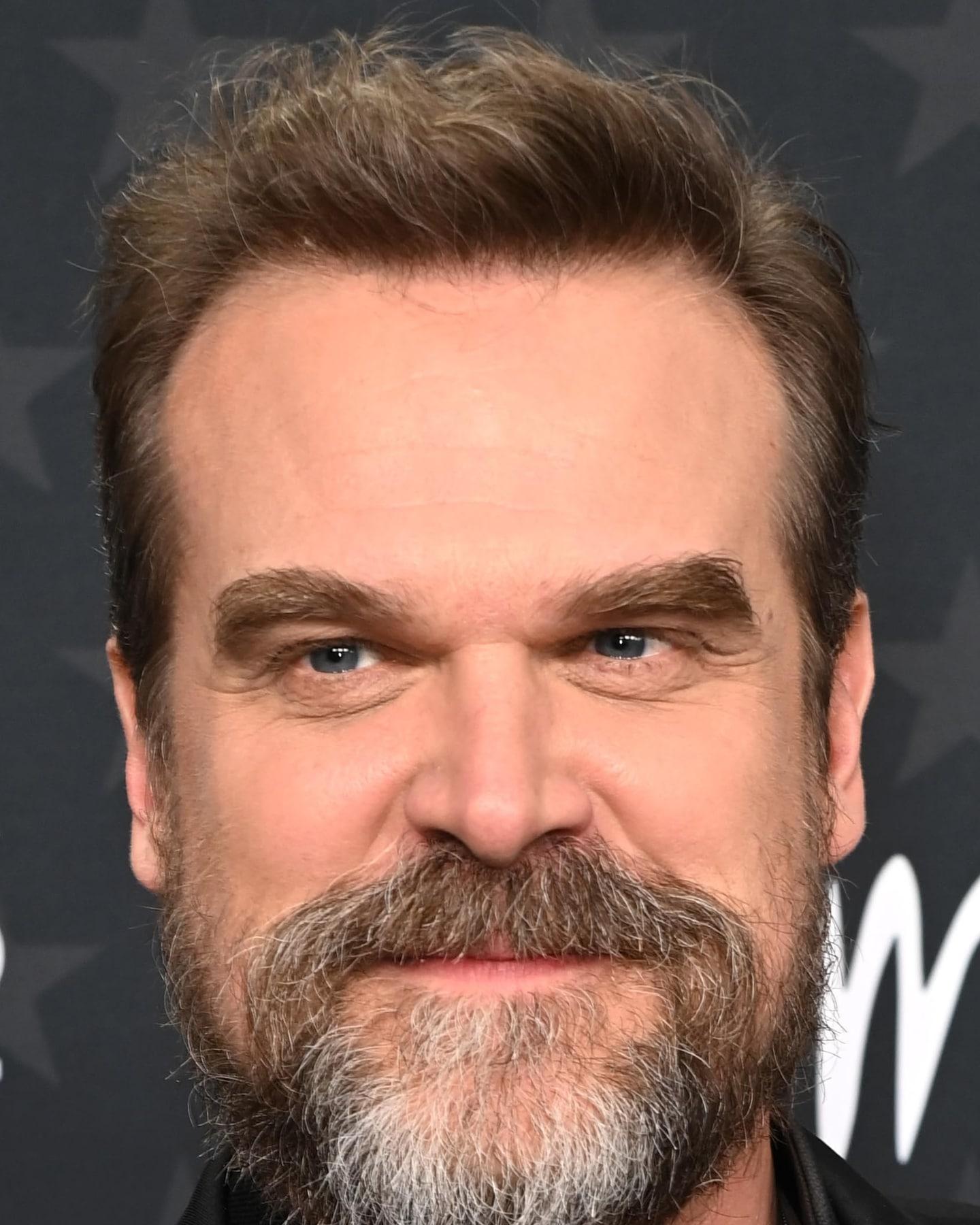
David Harbour.

Actor · Stage and screen performer

David Harbour built his reputation the slow way: Shakespeare in summer stock, Broadway revivals, procedurals, prestige dramas, then the bruised gravity of Jim Hopper making him globally recognizable. Since then he has swung from Hellboy to Marvel’s Red Guardian to the blood-soaked Santa of Violent Night, carrying a career that feels more lived-in than manufactured.

OBJECTIVE PERSONALITY CLASSIFICATIONMM-Se/Fi-CP/S(B) #4What does this mean?
PERSONALITY SYSTEMObjective Personality
LEAD FUNCTIONSe · Extroverted Sensing
SECOND SAVIOR FUNCTIONFi · Introverted Feeling
MBTI EQUIVALENTESFP
01 / BEHIND THE CLASSIFICATION

The personality behind the fame.

How does a recorded OPS classification like MM-Se/Fi-CP/S(B) #4 break down? Walk through nine coins and watch the proposed type take shape. These are deductions from the archived code, not independent evidence of typing accuracy.

Scroll below to see David Harbour take shape.

STARTING POINT512 possible OPS typesEach type combines core functions, an animal order, and sexual modalities.
THE FINISH LINEMM-Se/Fi-CP/S(B) #4One recorded classification, decoded from its components.
David Harbour’s HUMAN NEEDS 01—03
01
DECIDER OR OBSERVER?

Observer over Decider

Observers have more balanced Decider poles in the middle: Self (Di) and Tribe (De). Their own perspective and other people's perspectives tend to be easier to navigate. Things are the harder territory. Control (Oi) and Chaos (Oe) sit at the extremes, so disrupted plans, uncertainty, and a changing world can trigger the strongest reactions.

Harbour’s career reads like a long negotiation with circumstance: Shakespeare in Maine, a waiter on Law & Order, years of supporting parts, then the exact cultural moment of Stranger Things turning Jim Hopper into a global fixture. That pattern fits an Observer problem better than a people problem. The pressure is timing, roles, and an industry that can swing from Hellboy disappointment to Marvel visibility in a few years. The strength is adaptability inside changing conditions. The blind spot is waiting for the next project, franchise, or set of circumstances to provide the certainty that no career ever fully provides.
O
02
SELF OR TRIBE?

Di · Self over De · Tribe

Self (Di) is the stronger deciding pole. They check decisions against their own values or reasons first: what makes sense to me, what feels right to me? The strength is independent conviction; the recurring friction is the Tribe (De)—other people's standards, feedback, and expectations. As the portrait unfolds, notice how Self takes the lead.

Harbour’s 2021 Guardian interview was unusually direct: he called himself a socialist and described a “kindergarten-type society where we share things” as his ideal. Whatever one thinks of the politics, the public pattern is Self over Tribe: he is willing to plant a personal flag instead of laundering every opinion through the safest celebrity consensus. That helps him play characters with a stubborn center rather than a bland friendliness. The cost is obvious. A conviction that feels clear and humane from the inside can still need translation, evidence, and room for people who do not begin from the same premise.

Di
03
GATHER OR ORGANIZE?

Oe · Gather over Oi · Organize

Gather (Oe) leads with new information, experiences, and possibilities. Its strength is curiosity and adaptability; the recurring friction is narrowing the options and settling into what is already known. Another layer of the personality portrait comes into focus.

Harbour’s resume refuses one lane: Broadway revival, Bond film, newsroom drama, period science series, streaming horror hit, comic-book reboot, Marvel bruiser, Christmas action comedy, racing drama, then voice work in Creature Commandos. Gather over Organize shows up in that willingness to keep opening new doors instead of living off one proven template. The advantage is range; he can meet a new production on its own terms. The growth cost is curation. A career cannot be every interesting possibility forever. At some point, variety needs a through-line strong enough to decide which opportunity actually deserves the next stretch of years.

Oe
FIRST THREE COINSO + Di + Oe

These establish the preferred human needs in the OPS framework.

David Harbour’s FUNCTIONS 04—05
04
FEELING OR THINKING?

Feeling · F over Thinking · T

Feeling (F) evaluates decisions through values, meaning, and what matters—not simply through emotion. Its strength is a clear sense of significance; Thinking (T) provides balance through impersonal reasons, consistency, and evidence. Combined with Self (Di), this forms the recorded Savior Fi.

When Harbour has discussed getting sober at 24, the striking detail is how personally framed the decision sounds: he said he hit rock bottom, needed a different direction, and now enjoys consciousness too much to drink again. That is useful evidence for Fi as the recorded Feeling coin—an inward standard about what kind of life he can stand behind. The strength is conviction that does not wait for a committee. The limit is scale. A deeply true personal line can guide his own choices without automatically becoming a complete map for everybody else facing different circumstances.

F → Fi
05
SENSING OR INTUITION?

Sensing · S over Intuition · N

Sensing (S) focuses on concrete details, observable reality, and lived experience. Intuition (N) balances it by looking for broader patterns, concepts, and implications. Combined with Gather (Oe), this gives the recorded Savior Se.

Harbour’s most memorable screen work lands through physical presence as much as concept. Hopper’s heavy-footed authority, Red Guardian’s blustering body comedy, the brutal Santa of Violent Night, even the former racer in Gran Turismo—these are roles sold in concrete gestures, timing, voice, and visible impact. That is a clean Se example: making the performance real in the room instead of only interesting on paper. The strength is immediacy. Audiences know what they are looking at. The blind spot is that a commanding moment can feel complete even when it still needs the quieter long-range pattern that explains where all that force is going.

S → Se
THE TWO SAVIOR FUNCTIONSSe / Fi

Opposing functions: Ni and Te.

David Harbour’s ANIMAL STACK 06—07
06
CONSUME OR BLAST?

Consume over Blast

Consume gathers information for internal processing; Blast organizes and communicates information. The recorded order is Consume → Play → Sleep → Blast. This comparison follows their positions in that stack.

Consume comes earlier than Blast here, and Harbour’s career before Stranger Things makes the difference visible. He spent years accumulating stage work, television guest spots, supporting film roles, and enough varied material to arrive at Hopper with a thicker toolbox than an overnight breakout usually has. That is the strength of Consume: take in experience until the performance has texture. The cost is familiar to any long apprenticeship. Gathering more credits, more references, and more range can keep paying off while also postponing the cleaner, riskier act of stating exactly what you now do best.

C > B
07
PLAY OR SLEEP?

Play over Sleep

Play emphasizes external real-time engagement; Sleep emphasizes internal processing. The recorded stack places Play earlier.

Play comes earlier than Sleep, which helps explain why Harbour has often become most vivid inside ensembles rather than sealed-off showcases. Stranger Things lives on reactions and collisions; Hopper works because he is constantly bouncing off kids, Joyce, and the town’s panic. The same social charge helps a loud role like Red Guardian land. Play’s strength is immediacy with other people in motion. The growth cost is that external action can outrun slower internal consolidation. Interaction creates momentum, but it does not automatically force the quieter pause that turns experience into a steadier private conclusion.

P > S
David Harbour’s ANIMAL ORIENTATION 08—09
08
INFO OR ENERGY DOMINANT?

Energy over Info

Energy dominant means Play and Sleep are both in the top three: there is access to expending energy through engagement and conserving it through internal processing. Blast last leaves the information side uneven—Consume may gather far more than gets communicated.

Harbour lands on the Energy side because Play and Sleep both make the top three: there is room for outward engagement on set and enough inward reset to keep a demanding career going. You can see that balance in the jump from ensemble television to major film roles without losing his grounding as a character actor. The missing pressure sits at Blast last. The likely issue is not lack of information or effort, but packaging it cleanly for others. A big personality and a memorable performance can travel farther than a neatly stated long-term message about what the next chapter is.

Energy
09
INTROVERSION OR EXTROVERSION?

Introversion over Extroversion

The last animal, Blast, determines this OPS coin: Play or Blast last means Introversion; Consume or Sleep last means Extroversion. This describes animal orientation, not sociability or shyness.

Blast sits last, which makes this an OPS Introversion result even though Harbour can dominate a talk show couch, command a convention crowd, or carry a superhero press cycle. The question is not whether he can be public. Clearly he can. The question is what comes least naturally: converting everything he has gathered, acted through, and privately sorted into a concise shared doctrine other people can immediately run with. That gap can leave a performer looking larger than life yet still somewhat unresolved in his messaging. The growth edge is deliberate clarity, not louder charisma.

I
Sexual Modalities

The four sexual modalities.

OPS uses masculine/feminine sensory and extroverted-deciding distinctions as framework-specific terms, not gender categories. The four modalities are already included in the original 512 types. The recorded modality is MM · Kinesthetic.

MM RECORDED MODALITYKinestheticMasculine Sensory · Masculine De
MF AudioMasculine Sensory · Feminine De
FF TesterFeminine Sensory · Feminine De
FM VisualFeminine Sensory · Masculine De
ADDITIONAL LAYER · SOCIAL TYPE

The four social types.

Social types are an additional layer on top of the original Objective Personality classification, introduced later in OPS research. They describe two proposed social preference coins: Flex vs. Friends and Generalize vs. Specialize. The combination and priority of these preferences produce four social types. David Harbour's recorded social type is #4.

SOCIAL #1 #1Flex · Generalize
SOCIAL #2 #2Generalize · Friends
SOCIAL #3 #3Specialize · Flex
SOCIAL #4 RECORDED SOCIAL TYPE#4Friends · Specialize
COMPLETE RECORDED OPS TYPE · MODALITY INCLUDED + SOCIAL TYPEMM-Se/Fi-CP/S(B) #4

Se leads, Fi supports, and the animal stack is Consume → Play → Sleep → Blast.

THE FINISHED PORTRAIT · ALL NINE COINS REVEALED

David Harbour's complete function and animal stack

ConsumePlaySleepBlastmSefFimTefNi
MM-Se/Fi-CP/S(B) #4DOUBLE ACTIVATED · CONSUMEExplore the Interactive Coin Builder →
THE DAVID HARBOUR LENS

The bruiser with real mileage

Harbour’s public image is the bruised protector: Hopper in Stranger Things, Red Guardian barking through Marvel chaos, Santa turning Violent Night into slapstick carnage. But the man behind that impression spent years in theater, procedurals, and supporting film parts before the breakout. The swagger is not effortless myth. It is mileage, a career built by surviving many rooms.

Se/Fi gives that mileage its shape. Se makes Harbour concrete and immediate: Hopper’s stomp, Red Guardian’s body comedy, the sheer physicality of Violent Night. Fi adds the private standard underneath, visible in his blunt public statements about politics and sobriety. Together they create presence with conviction. The limit is mistaking vivid force and personal certainty for a complete larger pattern.

As an Observer and Double Decider, Harbour’s bigger struggle is not people approval so much as circumstances, timing, and what reality is doing next. The double-deciding side gives him more flexibility with self and tribe than with outer chaos. His neglected function is Ni, opposite lead Se. Growth means asking what the immediate scene is building toward before momentum chooses for him.

Consume → Play → Sleep → Blast explains the texture. He gathers material, tests it with others, and still needs enough private reset to keep going; Blast last makes concise broadcasting the weaker muscle. The balancing move is practical: after the next major role, state the through-line plainly—what work he wants more of and why—so clarity supports the range instead of flattening it.

Want to understand the Savior and Demon states behind these nine coins? Explore the complete explanation, visual examples, and typing principles on our Methodology page →

02 / KEEP EXPLORING

Different faces. Familiar patterns.

Explore other celebrities with related recorded OPS classifications. Related functions are not necessarily exact type matches.

Discover Type Twins
YOUR TURN

Curious about your own type?

Discover how your own personality might be classified through Objective Personality.

Get objectively typed
David Harbour's Personality Type & OPS Profile | The Personality Atlas