The Personality Atlas
THE CELEBRITY PERSONALITY ARCHIVE / MUSIC & FILM

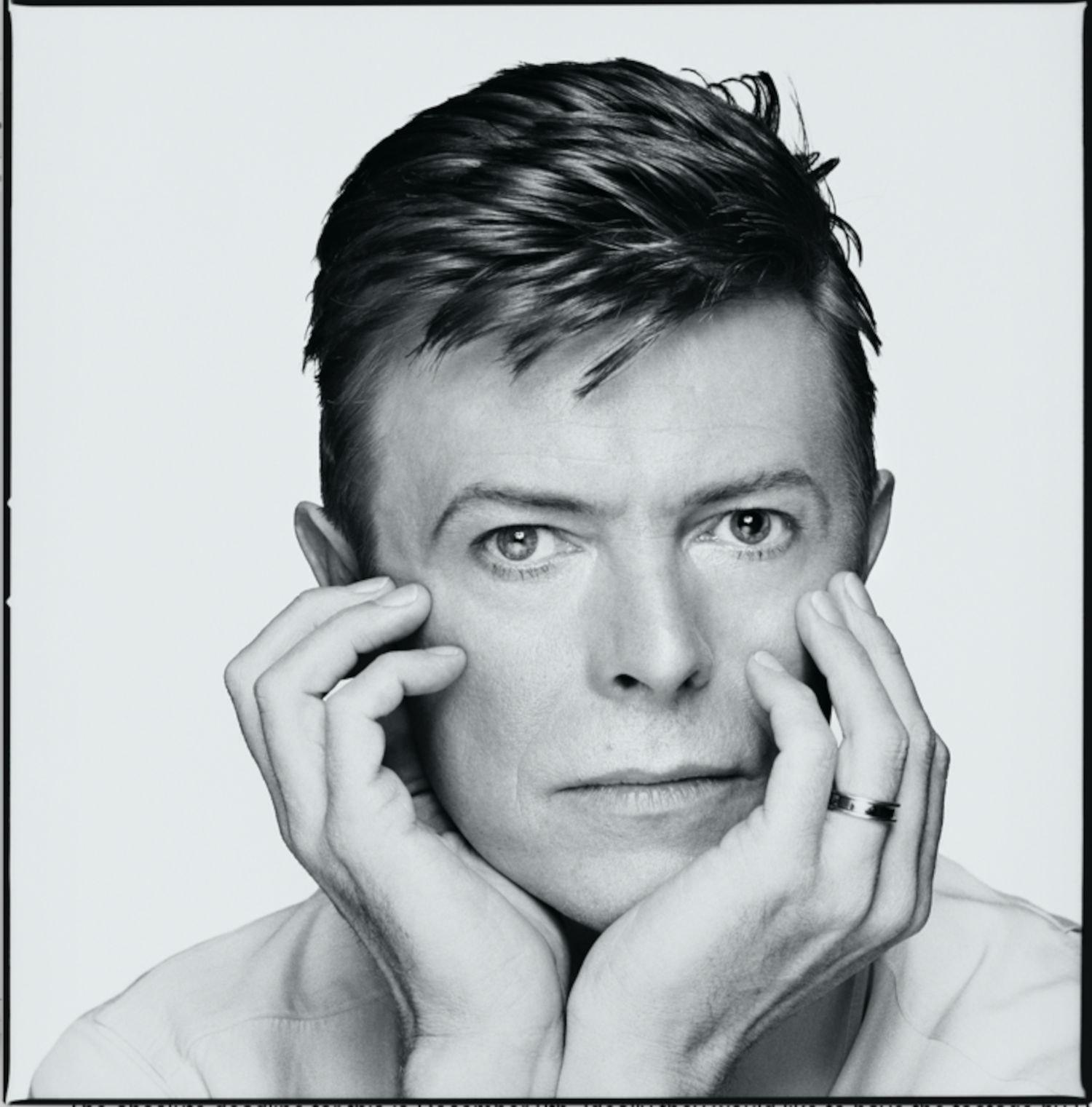
David Bowie.

Singer · Songwriter · Actor

David Bowie made a career out of escaping the version of himself the public had just learned to worship. From Space Oddity and Ziggy Stardust to the Berlin Trilogy, BowieNet and Blackstar, he kept turning reinvention into authorship rather than drift—then paid a price whenever a persona, a trend or an audience tried to freeze him in place.

OBJECTIVE PERSONALITY CLASSIFICATIONFM-Fi/Ne-CS/P(B)What does this mean?
PERSONALITY SYSTEMObjective Personality
LEAD FUNCTIONFi · Introverted Feeling
SECOND SAVIOR FUNCTIONNe · Extroverted Intuition
MBTI EQUIVALENTINFP
01 / BEHIND THE CLASSIFICATION

The personality behind the fame.

How does a recorded OPS classification like FM-Fi/Ne-CS/P(B) break down? Walk through nine coins and watch the proposed type take shape. These are deductions from the archived code, not independent evidence of typing accuracy.

Scroll below to see David Bowie take shape.

STARTING POINT512 possible OPS typesEach type combines core functions, an animal order, and sexual modalities.
THE FINISH LINEFM-Fi/Ne-CS/P(B)One recorded classification, decoded from its components.
David Bowie’s HUMAN NEEDS 01—03
01
DECIDER OR OBSERVER?

Decider over Observer

Deciders have more balanced Observer poles in the middle: Control (Oi) and Chaos (Oe). Organizing what's known and handling what's new tend to feel more manageable. People are the harder territory. Self (Di) and Tribe (De) sit at the extremes, so judgment, rejection, approval, and conflict can trigger the strongest reactions.

Before the issue was ever circumstances, it was identity under public judgment. Bowie did not stall out for lack of worlds to explore; he kept colliding with what he meant to other people—David Jones, Bowie, Ziggy Stardust, the Thin White Duke, the supposed “chameleon of rock.” Even his 1973 onstage retirement of Ziggy reads like a people-and-significance problem more than a logistics problem. The strength of a Decider profile is that people matter enough to build culture around. The blind spot is letting persona-management eclipse simpler practical steadiness.


D
02
SELF OR TRIBE?

Di · Self over De · Tribe

Self (Di) is the stronger deciding pole. They check decisions against their own values or reasons first: what makes sense to me, what feels right to me? The strength is independent conviction; the recurring friction is the Tribe (De)—other people's standards, feedback, and expectations. As the portrait unfolds, notice how Self takes the lead.

Bowie repeatedly chose his own compass over consensus. He changed his name to avoid being confused with Davy Jones, wore a blue dress on a 1971 US press tour, and later pivoted from glam to the “plastic soul” of Young Americans even though that shift initially alienated many UK devotees. Self over Tribe does not mean antisocial; it means the internal standard gets final say. That independence made the catalog impossible to mass-produce by committee. The growth cost is obvious: if your own judgment keeps winning, other people often experience the brilliance only after the disruption.

Di
03
GATHER OR ORGANIZE?

Oe · Gather over Oi · Organize

Gather (Oe) leads with new information, experiences, and possibilities. Its strength is curiosity and adaptability; the recurring friction is narrowing the options and settling into what is already known. Another layer of the personality portrait comes into focus.

Few major artists treated a finished identity as provisional as aggressively as Bowie. He moved from folk rock to Ziggy glam, then to Halloween Jack, soul, the Berlin Trilogy, Tin Machine, industrial, jungle and drum and bass, while also acting, painting, writing, inventing Bowie Bonds and using BowieNet early. Gather over Organize thrives on the next live option rather than a settled formula. The advantage is cultural range. The blind spot is that novelty can become its own appetite; every new doorway makes it harder to defend one lane long enough for other people to call it stable.

Oe
FIRST THREE COINSD + Di + Oe

These establish the preferred human needs in the OPS framework.

David Bowie’s FUNCTIONS 04—05
04
FEELING OR THINKING?

Feeling · F over Thinking · T

Feeling (F) evaluates decisions through values, meaning, and what matters—not simply through emotion. Its strength is a clear sense of significance; Thinking (T) provides balance through impersonal reasons, consistency, and evidence. Combined with Self (Di), this forms the recorded Savior Fi.

When Bowie wrote “The Prettiest Star” for Angela Barnett, or filled Hunky Dory with pointed tributes like “Song for Bob Dylan,” “Andy Warhol” and “Kooks” for his newborn son, he was not operating like a neutral strategist. Feeling here shows up as selective personal meaning—what matters to him, what deserves shape, what feels worth standing behind. That can give the work an unmistakable signature instead of anonymous craft. The void sits on the other side: a choice can feel artistically true and still leave labels, collaborators or audiences asking for clearer practical terms.

F → Fi
05
SENSING OR INTUITION?

Intuition · N over Sensing · S

Intuition (N) focuses on concepts, patterns, and what information might mean. Sensing (S) balances it through observable facts, physical detail, and direct experience. Combined with Gather (Oe), this gives the recorded Savior Ne.

Ziggy Stardust is a textbook Bowie move: he observed Iggy Pop and Lou Reed, then fused those influences into what he called “the ultimate pop idol”—not just another singer, but a conceptual container. The same future-leaning instinct appears in BowieNet and even Bowie Bonds, both early bets on how fame and ownership might work differently. Intuition gives him a strength for spotting the next pattern before it looks obvious. The cost is that the concept can outrun the immediate ground; people may understand the vision only after the world finally catches up to it.

N → Ne
THE TWO SAVIOR FUNCTIONSFi / Ne

Opposing functions: Te and Si.

David Bowie’s ANIMAL STACK 06—07
06
CONSUME OR BLAST?

Consume over Blast

Consume gathers information for internal processing; Blast organizes and communicates information. The recorded order is Consume → Sleep → Play → Blast. This comparison follows their positions in that stack.

Consume comes earlier than Blast, and Bowie’s apprenticeship makes that visible. Before the breakthrough, he studied art, music and design, learned from Lindsay Kemp’s avant-garde theater and mime, absorbed Little Richard, modern jazz, Beat poetry and American proto-punk, and spent years in bands that went nowhere commercially. The strength of Consume is obvious: by the time a major statement lands, the reservoir is deep. The weakness is subtler. Taking in one more influence can feel productive enough to postpone the blunter task of stating, plainly and publicly, what the new phase is for.

C > B
07
PLAY OR SLEEP?

Sleep over Play

Play emphasizes external real-time engagement; Sleep emphasizes internal processing. The recorded stack places Sleep earlier.

Sleep comes earlier than Play, which helps explain why Bowie so often seemed to disappear into a character before offering it to the room. “Offstage I’m a robot. Onstage I achieve emotion” is a sharp clue: the public spectacle was often built on heavy private distillation first. That can create unusually coherent worlds, from Ziggy to the Berlin records to the long silence before The Next Day. The cost is over-identification with the internally processed version. By the time other people meet the idea, it may already feel finished enough to resist interruption.

S > P
David Bowie’s ANIMAL ORIENTATION 08—09
08
INFO OR ENERGY DOMINANT?

Energy over Info

Energy dominant means Play and Sleep are both in the top three: there is access to expending energy through engagement and conserving it through internal processing. Blast last leaves the information side uneven—Consume may gather far more than gets communicated.

Bowie’s stack lands on Energy over Info, and his public life shows the alternation. He could withdraw, reconfigure, then return with a new stage world, a new band, a new sound, or a carefully chosen acting cameo. Touring, performance and private reset both stay active; the missing ease is in straightforward, settled transmission. With Blast pushed to the end, the potential bottleneck is not a lack of material but a lack of one clean explanatory lane. The strength is restless vitality. The growth cost is making the thesis clear enough that others do not have to decode every reinvention from scratch.

Energy
09
INTROVERSION OR EXTROVERSION?

Introversion over Extroversion

The last animal, Blast, determines this OPS coin: Play or Blast last means Introversion; Consume or Sleep last means Extroversion. This describes animal orientation, not sociability or shyness.

Bowie’s OPS Introversion does not contradict the arena tours, Top of the Pops shockwaves or years of live performance. This coin is about animal orientation, not sociability. With Blast last, he could command a room yet still prefer embodying and exploring over turning everything into a single settled doctrine. That distinction matters with someone so theatrical. His work often arrived as a world to enter rather than a lecture to agree with. The upside is depth and mystique. The blind spot is that audiences, journalists and collaborators may fill in the missing explanation with stories he never actually chose.

I
Sexual Modalities

The four sexual modalities.

OPS uses masculine/feminine sensory and extroverted-deciding distinctions as framework-specific terms, not gender categories. The four modalities are already included in the original 512 types. The recorded modality is FM · Visual.

MM KinestheticMasculine Sensory · Masculine De
MF AudioMasculine Sensory · Feminine De
FF TesterFeminine Sensory · Feminine De
FM RECORDED MODALITYVisualFeminine Sensory · Masculine De
COMPLETE RECORDED OPS TYPE · MODALITY INCLUDEDFM-Fi/Ne-CS/P(B)

Fi leads, Ne supports, and the animal stack is Consume → Sleep → Play → Blast.

THE FINISHED PORTRAIT · ALL NINE COINS REVEALED

David Bowie's complete function and animal stack

ConsumeSleepPlayBlastfFimNefSimTe
FM-Fi/Ne-CS/P(B)DOUBLE ACTIVATED · CONSUMEExplore the Interactive Coin Builder →
THE DAVID BOWIE LENS

The man inside the masks

Bowie’s public legend loves the costume changes: Ziggy at the mic, the Hammersmith farewell, the Berlin reinvention, the late Blackstar exit. But the person behind that mythology looks less random than disciplined. He kept using persona as a tool for authorship, not as an excuse to coast on one successful self.

Fi with Ne gave him a rare combination of personal taste and conceptual range. He could decide what felt artistically worth backing, then open a new lane for it—glam, plastic soul, ambient, internet-era fan contact. The limit is built in: private conviction and a brilliant possibility still need clearer terms than the art alone supplies.

As a Decider and Double Observer, Bowie’s recurring pressure point is significance, identity and human judgment more than a shortage of options. He could see plenty of angles; the strain was what to stand behind, and how public meaning attached to him. Neglected Te leaves the obvious tax: cleaner external structure, simpler explanations, firmer shared metrics.

Consume → Sleep → Play → Blast fits the pattern of absorption, private distillation, performance and only then straightforward delivery. Blast last can leave the message more implied than declared, which is part of the allure and part of the confusion. Keep the reinvention; add a deliberate plainspoken debrief with collaborators before the next transformation locks in.

Want to understand the Savior and Demon states behind these nine coins? Explore the complete explanation, visual examples, and typing principles on our Methodology page →

02 / KEEP EXPLORING

Different faces. Familiar patterns.

Explore other celebrities with related recorded OPS classifications. Related functions are not necessarily exact type matches.

Discover Type Twins
YOUR TURN

Curious about your own type?

Discover how your own personality might be classified through Objective Personality.

Get objectively typed
David Bowie's Personality Type & OPS Profile | The Personality Atlas