The Personality Atlas
THE CELEBRITY PERSONALITY ARCHIVE / FILMMAKING

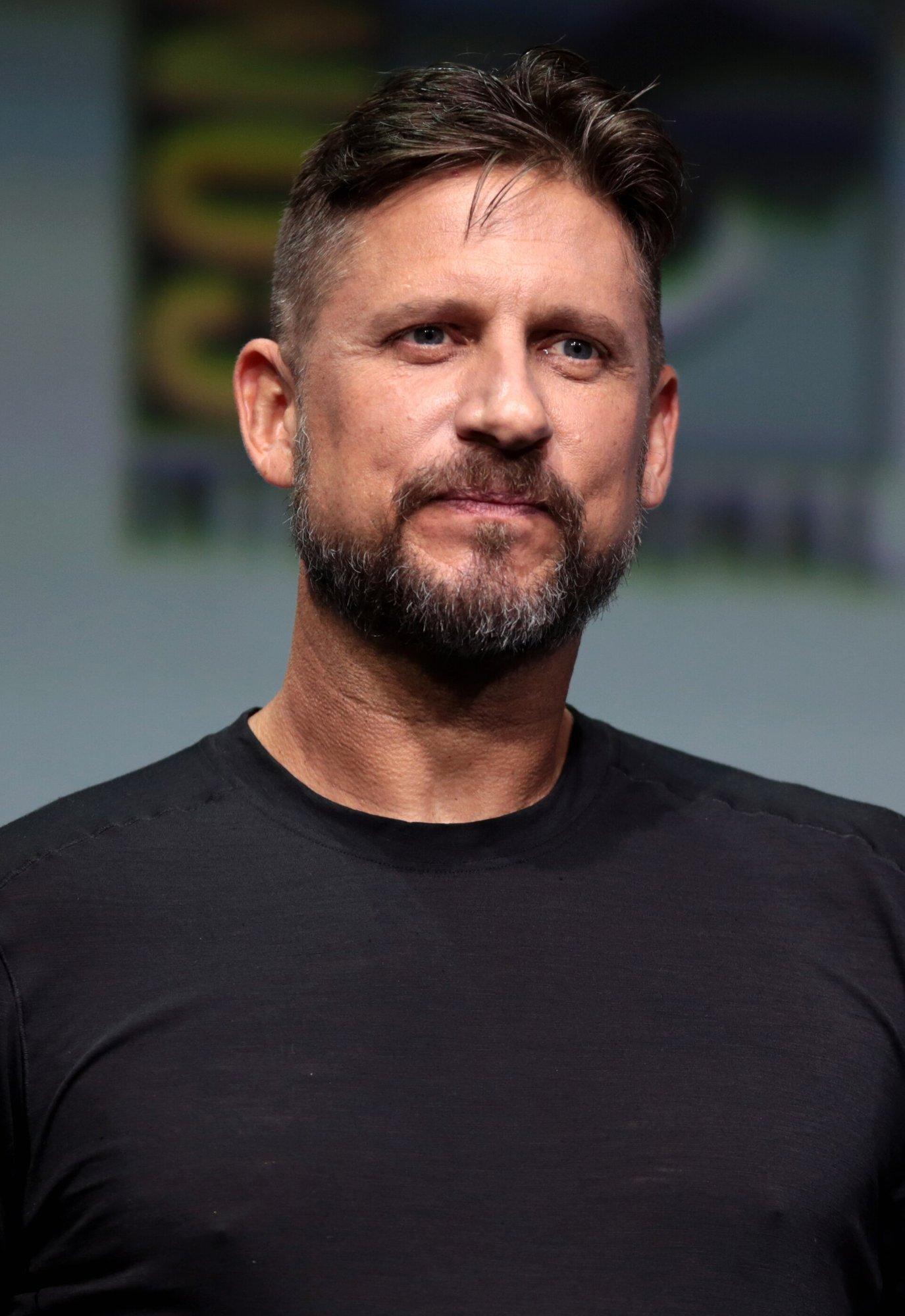
David Ayer.

Filmmaker · Screenwriter · Producer

David Ayer built a career out of closed systems under stress: South Central streets, submarine compartments, police cars, tank interiors. From Training Day and End of Watch to Fury, he keeps dragging viewers into institutions where violence, procedure and survival crowd out sentiment—and much of that authority traces back to his own years in Los Angeles and the Navy.

OBJECTIVE PERSONALITY CLASSIFICATIONFM-Ni/Ti-SC/P(B)What does this mean?
PERSONALITY SYSTEMObjective Personality
LEAD FUNCTIONNi · Introverted Intuition
SECOND SAVIOR FUNCTIONTi · Introverted Thinking
MBTI EQUIVALENTINFJ
01 / BEHIND THE CLASSIFICATION

The personality behind the fame.

How does a recorded OPS classification like FM-Ni/Ti-SC/P(B) break down? Walk through nine coins and watch the proposed type take shape. These are deductions from the archived code, not independent evidence of typing accuracy.

Scroll below to see David Ayer take shape.

STARTING POINT512 possible OPS typesEach type combines core functions, an animal order, and sexual modalities.
THE FINISH LINEFM-Ni/Ti-SC/P(B)One recorded classification, decoded from its components.
David Ayer’s HUMAN NEEDS 01—03
01
DECIDER OR OBSERVER?

Observer over Decider

Observers have more balanced Decider poles in the middle: Self (Di) and Tribe (De). Their own perspective and other people's perspectives tend to be easier to navigate. Things are the harder territory. Control (Oi) and Chaos (Oe) sit at the extremes, so disrupted plans, uncertainty, and a changing world can trigger the strongest reactions.

Ayer’s career keeps circling systems under pressure: submarine warfare in U-571, LAPD research feeding Training Day, South Central patrol life in End of Watch, a tank crew boxed into World War II in Fury. The recurring tension is not mainly “Do people approve of me?” but “Can I get the environment right, and what happens when reality is harsher than the plan?” That Observer focus gives him a strength for building worlds with hard edges and consequences. The blind spot is treating the setting as so decisive that alternative tones or approaches can seem less credible than they really are.

O
02
SELF OR TRIBE?

Di · Self over De · Tribe

Self (Di) is the stronger deciding pole. They check decisions against their own values or reasons first: what makes sense to me, what feels right to me? The strength is independent conviction; the recurring friction is the Tribe (De)—other people's standards, feedback, and expectations. As the portrait unfolds, notice how Self takes the lead.

His 2006 admission about U-571 is unusually revealing. Ayer called the historical distortion a “mercenary decision” and said he would not do it again, adding that he would be personally offended if someone distorted his grandparents’ achievements in World War II. That is Self over Tribe in a concrete form: an internal standard strong enough to publicly revisit a commercially useful choice. The advantage is a work life that can course-correct from personal conviction rather than applause. The cost is that a privately settled verdict can become the measure, even when collaborators or audiences are weighing different priorities.

Di
03
GATHER OR ORGANIZE?

Oi · Organize over Oe · Gather

Organize (Oi) leads with refining, preserving, and structuring what is already known. Its strength is preparation and clear direction; the recurring friction is unexpected change that disrupts the plan. Another layer of the personality portrait comes into focus.

Ayer does not look like a man chasing endless new lanes for their own sake. He keeps organizing around a few dense worlds he knows well: South Central Los Angeles, military structures, police procedure, men working inside violent institutions. Even his breakthroughs came from deepening a line—Navy experience into U-571, LAPD research into Training Day, South Central realism into Harsh Times and End of Watch. Organize gives him coherence and atmosphere. The tradeoff is selectivity. A tightly arranged worldview can produce authority while making radically different subject matter, lighter textures or looser experimentation harder to trust.

Oi
FIRST THREE COINSO + Di + Oi

These establish the preferred human needs in the OPS framework.

David Ayer’s FUNCTIONS 04—05
04
FEELING OR THINKING?

Thinking · T over Feeling · F

Thinking (T) evaluates decisions through reasons, logic, and what works—not a lack of emotion. Its strength is analytical consistency; Feeling (F) provides balance through values, meaning, and the human consequences of a decision. Combined with Self (Di), this forms the recorded Savior Ti.

Thinking shows up in how Ayer talks about accuracy, systems and consequences. His public regret over U-571 was not framed as a vague bad feeling; he identified a distortion in the logic of the story and objected to rewriting who captured the Enigma cipher. The same drive toward internal consistency helps explain why End of Watch drew praise for a realistic portrayal of Los Angeles police. The strength in Ti is rigor: the machine should make sense on its own terms. The blind spot is severity. A clean internal conclusion can outrun diplomacy, sentiment or the need to translate the logic gently.

T → Ti
05
SENSING OR INTUITION?

Intuition · N over Sensing · S

Intuition (N) focuses on concepts, patterns, and what information might mean. Sensing (S) balances it through observable facts, physical detail, and direct experience. Combined with Organize (Oi), this gives the recorded Savior Ni.

Ayer’s Ni is visible in how his life compresses into recurring themes rather than sprawling variety. Being pushed out as a teenager, living with his cousin in Los Angeles, serving as a submarine sonar technician, and later mining South Central and military experience for scripts all point to one habit: distill chaos into a focused narrative line and return to it until it hits. That gives his filmography a strong throughline from Training Day to Fury. The cost is tunnel vision. A singular reading of a world can be powerful and still miss newer data, alternate interpretations or unexpected tonal room.

N → Ni
THE TWO SAVIOR FUNCTIONSNi / Ti

Opposing functions: Se and Fe. This is a jumper classification.

David Ayer’s ANIMAL STACK 06—07
06
PLAY OR SLEEP?

Sleep over Play

Play emphasizes external real-time engagement; Sleep emphasizes internal processing. The recorded stack places Sleep earlier.

Between Play and Sleep, Ayer reads as more Sleep. That fits a filmmaker who keeps turning processed experience into story: years after Navy service, it becomes U-571; years after living around South Central Los Angeles, it keeps resurfacing in Harsh Times and End of Watch. The strength is depth. Sleep lets a person sit with material long enough for it to become a personal framework instead of a quick reaction. The growth cost is that a privately settled version can harden. More real-time exchange would not erase the vision; it could pressure-test it before it becomes the only acceptable cut.

S > P
07
CONSUME OR BLAST?

Consume over Blast

Consume gathers information for internal processing; Blast organizes and communicates information. The recorded order is Sleep → Consume → Play → Blast. This comparison follows their positions in that stack.

After that private consolidation, Ayer appears to lean Consume over Blast. His career breakthroughs came through taking in material first: researching the LAPD before Training Day, drawing on submarine experience for U-571, and repeatedly gathering details from institutions he knows before building a script or film around them. That second-animal support gives his work texture and credibility. It also creates a familiar cost. More research, more lived detail and more immersion can always feel useful, which makes the simpler public task—state the point cleanly, package it, move on—easier to postpone than the material itself deserves.

C > B
David Ayer’s ANIMAL ORIENTATION 08—09
08
INFO OR ENERGY DOMINANT?

Energy over Info

Energy dominant means Play and Sleep are both in the top three: there is access to expending energy through engagement and conserving it through internal processing. Blast last leaves the information side uneven—Consume may gather far more than gets communicated.

Ayer’s stack lands on Energy over Info, which fits the public shape of his career better than a lazy “quiet artist” stereotype. He has both private processing and outward engagement in the top three: he can incubate a worldview, then step into active directing, rewrites and production, later even launching Cedar Park Entertainment. That balance helps him move between solitude and pressure. The missing piece is Blast last. The likely void is not lack of ideas or effort, but a thinner appetite for reducing everything into one bluntly shareable message. The work can be vivid and forceful while the explicit summary trails behind the lived intensity.

Energy
09
INTROVERSION OR EXTROVERSION?

Introversion over Extroversion

The last animal, Blast, determines this OPS coin: Play or Blast last means Introversion; Consume or Sleep last means Extroversion. This describes animal orientation, not sociability or shyness.

Blast being fourth gives Ayer the OPS Introversion result, and that should not be confused with whether he can command a set or run a company. He plainly works in a collaborative, public medium. The issue is orientation: does a person naturally move first toward settled explanation, or toward private processing and direct experience? In Ayer’s case, the films often arrive from immersion in a world before a neat public thesis about that world. The strength is density and atmosphere. The blind spot is that if the conclusion is left mostly inside the work, collaborators and audiences may still be debating the larger point after the scene already landed.

I
Sexual Modalities

The four sexual modalities.

OPS uses masculine/feminine sensory and extroverted-deciding distinctions as framework-specific terms, not gender categories. The four modalities are already included in the original 512 types. The recorded modality is FM · Visual.

MM KinestheticMasculine Sensory · Masculine De
MF AudioMasculine Sensory · Feminine De
FF TesterFeminine Sensory · Feminine De
FM RECORDED MODALITYVisualFeminine Sensory · Masculine De
COMPLETE RECORDED OPS TYPE · MODALITY INCLUDEDFM-Ni/Ti-SC/P(B)

Ni leads, Ti supports, and the animal stack is Sleep → Consume → Play → Blast.

THE FINISHED PORTRAIT · ALL NINE COINS REVEALED

David Ayer's complete function and animal stack

SleepConsumePlayBlastmNimFefTifSe
FM-Ni/Ti-SC/P(B)DOUBLE ACTIVATED · CONSUMEExplore the Interactive Coin Builder →
THE DAVID AYER LENS

The hard world comes first.

Onscreen, Ayer’s films move like sealed compartments: the corruption of Training Day, the patrol-car intimacy of End of Watch, the tank pressure of Fury. That public impression of relentless grit sits on a specific biography—kicked out as a teenager, working house-painting jobs, then finding structure as a Navy sonar technician before turning those environments into scripts.

His Ni/Ti pairing is built for compression. Ayer takes sprawling institutions—police culture, submarine warfare, battlefield hierarchy—and narrows them into one harsh governing frame, then checks whether the logic inside that frame holds. That strength creates pressure and coherence. Its limit is that once the thesis feels internally sound, alternate readings or tonal detours can register as dilution rather than useful expansion.

As an Observer and Double Decider, Ayer’s recurring imbalance centers on circumstances, control and whether the world is arranged tightly enough to trust. People issues still matter, but they are not the first fire. The neglected function opposite his lead savior Ni is Se: the raw present-tense data that can interrupt a singular read with inconvenient reality.

Sleep → Consume → Play → Blast rounds out the picture. Blast last helps explain why his films can feel intensely lived-in without always arriving with one clean public thesis attached. The balancing move is not to sand off the grit; it is to state the core intention earlier and more plainly in development and on set, so collaborators can sharpen the same blade instead of inferring it scene by scene.

Want to understand the Savior and Demon states behind these nine coins? Explore the complete explanation, visual examples, and typing principles on our Methodology page →

02 / KEEP EXPLORING

Different faces. Familiar patterns.

Explore other celebrities with related recorded OPS classifications. Related functions are not necessarily exact type matches.

Discover Type Twins
YOUR TURN

Curious about your own type?

Discover how your own personality might be classified through Objective Personality.

Get objectively typed
David Ayer's Personality Type & OPS Profile | The Personality Atlas