The Personality Atlas
THE CELEBRITY PERSONALITY ARCHIVE / FILM & ADVOCACY

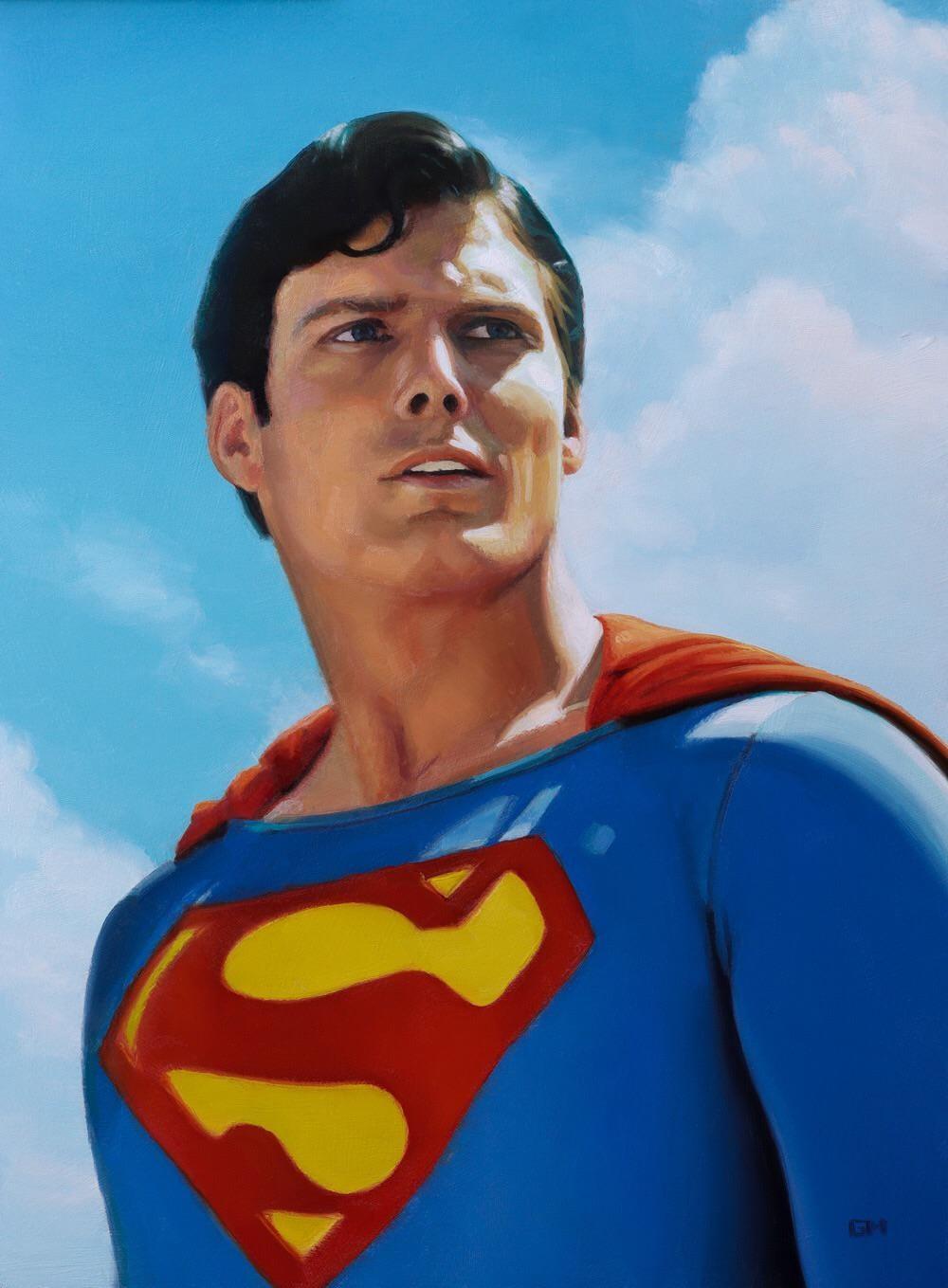
Christopher Reeve.

Actor · Director · Activist · Author

Christopher Reeve became a global icon by making Superman feel less like a costume gimmick and more like a believable moral presence, then spent the second act of his public life turning catastrophic bodily change into visible advocacy for disability access, insurance reform, and spinal-cord research. The through-line was not abstract inspiration. It was a forcefully concrete, public-minded way of meeting reality head-on and then insisting other people meet it too.

OBJECTIVE PERSONALITY CLASSIFICATIONFF-Se/Fe-PB/C(S) #2What does this mean?
PERSONALITY SYSTEMObjective Personality
LEAD FUNCTIONSe · Extroverted Sensing
SECOND SAVIOR FUNCTIONFe · Extroverted Feeling
MBTI EQUIVALENTESTP
01 / BEHIND THE CLASSIFICATION

The personality behind the fame.

How does a recorded OPS classification like FF-Se/Fe-PB/C(S) #2 break down? Walk through nine coins and watch the proposed type take shape. These are deductions from the archived code, not independent evidence of typing accuracy.

Scroll below to see Christopher Reeve take shape.

STARTING POINT512 possible OPS typesEach type combines core functions, an animal order, and sexual modalities.
THE FINISH LINEFF-Se/Fe-PB/C(S) #2One recorded classification, decoded from its components.
Christopher Reeve’s HUMAN NEEDS 01—03
01
DECIDER OR OBSERVER?

Observer over Decider

Observers have more balanced Decider poles in the middle: Self (Di) and Tribe (De). Their own perspective and other people's perspectives tend to be easier to navigate. Things are the harder territory. Control (Oi) and Chaos (Oe) sit at the extremes, so disrupted plans, uncertainty, and a changing world can trigger the strongest reactions.

Reeve’s public life split in two at the 1995 riding accident, but the through-line is older: he kept meeting hard reality as a thing to confront. First he reshaped his body and technique to make Superman believable; later he faced paralysis, a ventilator, insurance battles, and the slow grind of research advocacy. That is classic Observer friction: circumstances, limitations, logistics, what can and cannot be controlled. The strength is adaptive realism under pressure. The blind spot is pouring so much force into fixing the situation that rest or dependence on others can look like just another obstacle to beat.

O
02
SELF OR TRIBE?

De · Tribe over Di · Self

Tribe (De) is the stronger deciding pole. They check decisions against people, shared standards, and what works for the group: what do we need, what will others think? The strength is coordination and responsiveness; the recurring friction is the Self (Di)—knowing and defending their own position. As the portrait unfolds, notice how Tribe takes the lead.

After the accident, Reeve did not retreat into a purely personal comeback story. He made his case in public—advocating spinal-cord research, better insurance coverage, and institutional support through the Christopher & Dana Reeve Foundation and the Reeve-Irvine Research Center. Tribe-first judgment shows up as attention to what other people need to hear, fund, or support. The strength is social traction: he could turn a private catastrophe into a collective cause. The cost is obvious too. When the mission is aimed at everybody else, it becomes easier to sideline one’s own limits and keep performing usefulness for the group.

De
03
GATHER OR ORGANIZE?

Oe · Gather over Oi · Organize

Gather (Oe) leads with new information, experiences, and possibilities. Its strength is curiosity and adaptability; the recurring friction is narrowing the options and settling into what is already known. Another layer of the personality portrait comes into focus.

Reeve’s career rarely sat still. He moved from childhood theater to Cornell, from Juilliard to soap opera work, from Broadway to Superman, then deliberately back toward independent films, plays, directing, writing, and eventually advocacy. Earlier, he even took leave to travel through Britain and France, soaking up productions and training. Gather-first profiles trust that another avenue may open if they keep exploring. That gives Reeve range and reinvention. The tradeoff is selectivity. A life full of promising roles, causes, and directions still demands closure somewhere, and more options do not automatically answer which path deserves the next decade.

Oe
FIRST THREE COINSO + De + Oe

These establish the preferred human needs in the OPS framework.

Christopher Reeve’s FUNCTIONS 04—05
04
FEELING OR THINKING?

Feeling · F over Thinking · T

Feeling (F) evaluates decisions through values, meaning, and what matters—not simply through emotion. Its strength is a clear sense of significance; Thinking (T) provides balance through impersonal reasons, consistency, and evidence. Combined with Tribe (De), this forms the recorded Savior Fe.

Reeve’s Feeling coin is visible in how he framed public action. His advocacy was not just technical fundraising; it was a values case about dignity, access, artistic freedom, environmental issues, and what society owes people living with disability. Even his idea for Superman IV to center nuclear disarmament shows that instinct to steer work toward human consequences. The strength of Fe is moral clarity in public language: people can understand what is being protected and why it matters. The blind spot is that a compelling shared value does not, by itself, settle every scientific, financial, or strategic disagreement.

F → Fe
05
SENSING OR INTUITION?

Sensing · S over Intuition · N

Sensing (S) focuses on concrete details, observable reality, and lived experience. Intuition (N) balances it by looking for broader patterns, concepts, and implications. Combined with Gather (Oe), this gives the recorded Savior Se.

Reeve’s Sensing side was impossible to miss. He put on roughly thirty pounds of muscle for Superman, learned how to use the flying harness so convincingly that the effects team said his body made the shots come alive, and built Clark Kent and Superman as physically distinct presences rather than a pair of glasses and a cape. Se gives ideas weight, timing, posture, and immediate reality. The gift is credibility: audiences believe what they can see. The weakness is that the urgent visible problem can dominate the frame, while the slower long-range pattern requires a more patient, less physical kind of attention.

S → Se
THE TWO SAVIOR FUNCTIONSSe / Fe

Opposing functions: Ni and Ti. This is a jumper classification.

Christopher Reeve’s ANIMAL STACK 06—07
06
PLAY OR SLEEP?

Play over Sleep

Play emphasizes external real-time engagement; Sleep emphasizes internal processing. The recorded stack places Play earlier.

Play comes earlier than Sleep here, and Reeve’s public record makes that easy to picture. He was repeatedly drawn into live exchange—stage ensembles, film sets, festival companies, interviews, and later the outward work of advocacy. He seemed built to meet other people in motion rather than wait for perfect private consolidation first. The strength of Play is contagious momentum: rooms wake up, causes gather force, collaboration becomes real. The blind spot of Sleep being later is predictable too. Recovery, solitude, and slower internal integration can get postponed until after the next appearance, project, or public ask.

P > S
07
CONSUME OR BLAST?

Blast over Consume

Consume gathers information for internal processing; Blast organizes and communicates information. The recorded order is Play → Blast → Consume → Sleep. This comparison follows their positions in that stack.

Blast comes earlier than Consume, which helps explain how often Reeve turned experience into a message. He wrote Still Me and Nothing Is Impossible, took partial creative control over Superman IV around a clear anti-nuclear premise, directed In the Gloaming, and publicly argued for research and coverage in language ordinary people could follow. The strength is decisive communication: he did not wait forever to make the point legible. The cost is that broadcasting a direction can outrun slower intake. Sometimes the next useful move is less eloquence and more time gathering, reading, or letting other expertise complicate the pitch.

B > C
Christopher Reeve’s ANIMAL ORIENTATION 08—09
08
INFO OR ENERGY DOMINANT?

Info over Energy

Info dominant means Consume and Blast are both in the top three: gathering and communicating information are more balanced. Sleep last leaves the energy side uneven—Play can keep engagement going without enough private recovery.

Reeve’s stack lands on Info over Energy. Publicly, that fits a man who kept turning lived experience into communication—performances, speeches, books, and advocacy campaigns—while still taking in new material and roles. He could gather from the world and then package it for an audience or a cause. That balance is a real strength: people knew where he stood and why. But with Sleep last, the missing piece is not knowledge or willingness to engage. It is protected internal recovery. A life this outward can keep producing admirable information long after the body and mind need quieter processing than the schedule naturally allows.

Info
09
INTROVERSION OR EXTROVERSION?

Extroversion over Introversion

The last animal, Sleep, determines this OPS coin: Play or Blast last means Introversion; Consume or Sleep last means Extroversion. This describes animal orientation, not sociability or shyness.

His final coin is OPS Extroversion, and that does not simply mean sociable. It means the overall pattern tilts toward engaging the outside world before withdrawing long enough to fully consolidate it. Reeve’s life after paralysis shows that bias vividly: instead of narrowing his public footprint, he expanded it through books, directing, television appearances, foundation leadership, and relentless advocacy. The strength is unmistakable reach. He kept converting experience into shared action. The blind spot is subtler. With Sleep last, stepping back can feel less urgent than the next obligation, even when distance would sharpen the mission rather than weaken it.

E
Sexual Modalities

The four sexual modalities.

OPS uses masculine/feminine sensory and extroverted-deciding distinctions as framework-specific terms, not gender categories. The four modalities are already included in the original 512 types. The recorded modality is FF · Tester.

MM KinestheticMasculine Sensory · Masculine De
MF AudioMasculine Sensory · Feminine De
FF RECORDED MODALITYTesterFeminine Sensory · Feminine De
FM VisualFeminine Sensory · Masculine De
ADDITIONAL LAYER · SOCIAL TYPE

The four social types.

Social types are an additional layer on top of the original Objective Personality classification, introduced later in OPS research. They describe two proposed social preference coins: Flex vs. Friends and Generalize vs. Specialize. The combination and priority of these preferences produce four social types. Christopher Reeve's recorded social type is #2.

SOCIAL #1 #1Flex · Generalize
SOCIAL #2 RECORDED SOCIAL TYPE#2Generalize · Friends
SOCIAL #3 #3Specialize · Flex
SOCIAL #4 #4Friends · Specialize
COMPLETE RECORDED OPS TYPE · MODALITY INCLUDED + SOCIAL TYPEFF-Se/Fe-PB/C(S) #2

Se leads, Fe supports, and the animal stack is Play → Blast → Consume → Sleep.

THE FINISHED PORTRAIT · ALL NINE COINS REVEALED

Christopher Reeve's complete function and animal stack

PlayBlastConsumeSleepfSemTifFemNi
FF-Se/Fe-PB/C(S) #2DOUBLE ACTIVATED · PLAYExplore the Interactive Coin Builder →
THE CHRISTOPHER REEVE LENS

The Hero Who Stayed Concrete

Reeve’s star image was built on physical conviction. In Superman, the lanky stage actor turned a comic-book role credible through added muscle and uncanny control in the flying harness. That public certainty can hide the person behind it: a serious craftsman who kept choosing demanding work, then later carried the same visible resolve into disability advocacy.

The Se/Fe pairing gave him a rare public instrument: make the thing real, then make its human meaning legible. Se shows up in the body, timing, and grounded presence that sold Superman. Fe shows up in the way he framed research, insurance, and access as shared responsibilities. The strength is persuasive embodiment; the limit is pushing public action before every longer-range uncertainty is clarified.

As an Observer and Double Decider, Reeve’s deeper imbalance sits in managing reality more than managing people. He could move through praise, criticism, and public expectation more steadily than through brute circumstance. That Double Decider steadiness matters. The hungrier need is control and certainty, and the neglected function opposite his lead savior is Ni, asking what larger pattern the immediate facts point toward.

Play → Blast → Consume → Sleep shows a man built to engage, state the case, and keep learning, with quieter internal consolidation coming last. Sleep last is the imbalance: the mission can stay outward so long that recovery looks optional. The balancing move is specific—protect offstage stretches before major commitments to step back, map the long arc, and choose the few causes or roles worth his full force.

Want to understand the Savior and Demon states behind these nine coins? Explore the complete explanation, visual examples, and typing principles on our Methodology page →

02 / KEEP EXPLORING

Different faces. Familiar patterns.

Explore other celebrities with related recorded OPS classifications. Related functions are not necessarily exact type matches.

Discover Type Twins
YOUR TURN

Curious about your own type?

Discover how your own personality might be classified through Objective Personality.

Get objectively typed
Christopher Reeve's Personality Type & OPS Profile | The Personality Atlas