The Personality Atlas
THE CELEBRITY PERSONALITY ARCHIVE / FILM & STAGE

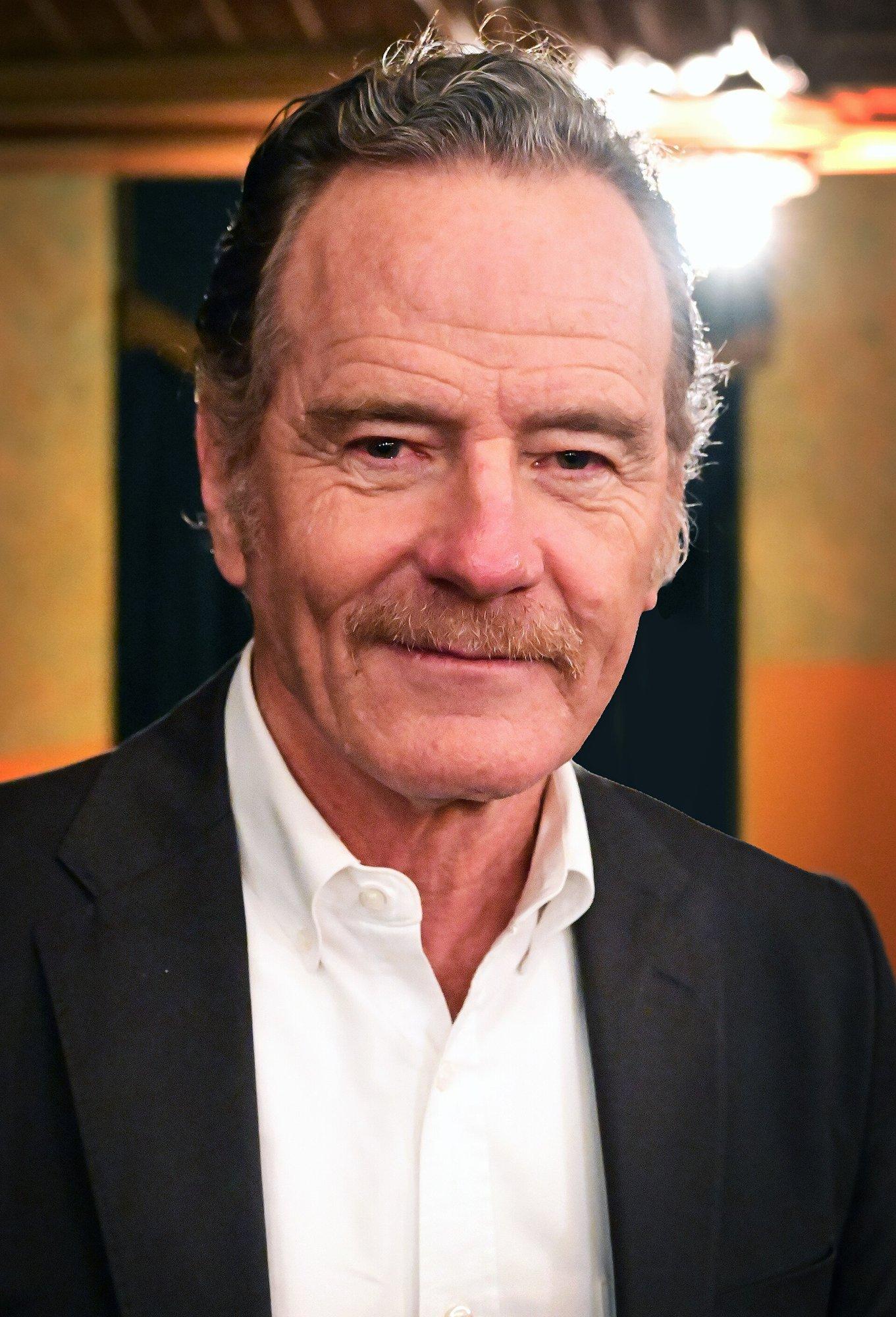
Bryan Cranston.

Actor · Producer · Director

Bryan Cranston spent decades turning unlikely openings into leverage: soap operas, anime dubbing, a delirious sitcom dad, then Walter White, LBJ, Howard Beale and an A-list producing career. What makes him compelling is not just range. It is his ability to seize the immediate reality of a part—body, cadence, pressure, stakes—and make even chaos look usable.

OBJECTIVE PERSONALITY CLASSIFICATIONFF-Se/Te-PC/S(B)What does this mean?
PERSONALITY SYSTEMObjective Personality
LEAD FUNCTIONSe · Extroverted Sensing
SECOND SAVIOR FUNCTIONTe · Extroverted Thinking
MBTI EQUIVALENTESFP
01 / BEHIND THE CLASSIFICATION

The personality behind the fame.

How does a recorded OPS classification like FF-Se/Te-PC/S(B) break down? Walk through nine coins and watch the proposed type take shape. These are deductions from the archived code, not independent evidence of typing accuracy.

Scroll below to see Bryan Cranston take shape.

STARTING POINT512 possible OPS typesEach type combines core functions, an animal order, and sexual modalities.
THE FINISH LINEFF-Se/Te-PC/S(B)One recorded classification, decoded from its components.
Bryan Cranston’s HUMAN NEEDS 01—03
01
DECIDER OR OBSERVER?

Observer over Decider

Observers have more balanced Decider poles in the middle: Self (Di) and Tribe (De). Their own perspective and other people's perspectives tend to be easier to navigate. Things are the harder territory. Control (Oi) and Chaos (Oe) sit at the extremes, so disrupted plans, uncertainty, and a changing world can trigger the strongest reactions.

Bryan Cranston’s career is almost a catalog of changing conditions: regional theater, anime dubbing, Seinfeld side parts, Malcolm in the Middle, then the seismic turn into Breaking Bad and major stage acclaim. That pattern fits an Observer problem more than a people problem. The friction is the unstable landscape itself—timing, roles, opportunities, the reality in front of him—not simply whether others approve. His strength is practical adaptability inside chaos. The blind spot is letting the next available circumstance set the agenda instead of forcing one clean long-range lane.

O
02
SELF OR TRIBE?

De · Tribe over Di · Self

Tribe (De) is the stronger deciding pole. They check decisions against people, shared standards, and what works for the group: what do we need, what will others think? The strength is coordination and responsiveness; the recurring friction is the Self (Di)—knowing and defending their own position. As the portrait unfolds, notice how Tribe takes the lead.

Cranston’s public work repeatedly leans toward external standards and shared outcomes. He didn’t just star in Breaking Bad; he produced it, directed episodes, co-developed Sneaky Pete, and publicly argued that hoping a president fails means the country is in jeopardy. That is Tribe-first logic: measure choices by what they do to the larger system, team or audience. The strength is usefulness—he can align people around results. The growth cost is that private preference can get outvoted by what seems most effective, responsible or workable for everyone else.

De
03
GATHER OR ORGANIZE?

Oe · Gather over Oi · Organize

Gather (Oe) leads with new information, experiences, and possibilities. Its strength is curiosity and adaptability; the recurring friction is narrowing the options and settling into what is already known. Another layer of the personality portrait comes into focus.

He has refused the tidy career plan. Cranston moved from sitcom father to terrifying antihero, from voice work to Broadway presidents and news prophets, from memoir to producing. Gather-first shows up in that willingness to keep opening doors instead of living inside one settled identity. The advantage is range: he can meet a new genre without looking trapped by the previous one. The cost is selectivity. A career full of possibilities can make it harder to decide which direction deserves sustained narrowing, especially when the next intriguing role is already arriving.

Oe
FIRST THREE COINSO + De + Oe

These establish the preferred human needs in the OPS framework.

Bryan Cranston’s FUNCTIONS 04—05
04
FEELING OR THINKING?

Thinking · T over Feeling · F

Thinking (T) evaluates decisions through reasons, logic, and what works—not a lack of emotion. Its strength is analytical consistency; Feeling (F) provides balance through values, meaning, and the human consequences of a decision. Combined with Tribe (De), this forms the recorded Savior Te.

Cranston’s public persona often carries a blunt, outcome-focused edge. In politics he framed a Trump failure as national jeopardy, not just a personal dislike; in All the Way, his celebrated Lyndon B. Johnson portrayal centered on a president forcing legislation through Congress. That is Thinking in a visible form: organize around what works, what moves, what gets done. The strength is decisive usefulness under pressure. The blind spot is that effectiveness can sound harsher than intended, leaving emotional nuance or individual sensitivity to catch up after the plan is already moving.

T → Te
05
SENSING OR INTUITION?

Sensing · S over Intuition · N

Sensing (S) focuses on concrete details, observable reality, and lived experience. Intuition (N) balances it by looking for broader patterns, concepts, and implications. Combined with Gather (Oe), this gives the recorded Savior Se.

His best work is unusually physical and concrete. Hal’s loose-body comedy, Walter White’s hunched posture modeled on his father, and the stage electricity praised in Network all depend on details an audience can immediately see. Se gives him leverage with the tangible world: behavior, timing, posture, voice, room response. That makes performances feel embodied rather than theoretical. The cost is that vivid present-moment impact can become so compelling that the slower task of reducing everything to one distilled through-line gets less attention than the next observable beat.

S → Se
THE TWO SAVIOR FUNCTIONSSe / Te

Opposing functions: Ni and Fi. This is a jumper classification.

Bryan Cranston’s ANIMAL STACK 06—07
06
PLAY OR SLEEP?

Play over Sleep

Play emphasizes external real-time engagement; Sleep emphasizes internal processing. The recorded stack places Play earlier.

Play shows up early in how Cranston works the room. Long ensemble runs on Malcolm in the Middle and Breaking Bad, repeated collaborations, and even his ease jumping between screen and stage all point to momentum through live exchange. Play before Sleep gives him a strength in contact: ideas and energy sharpen when other people are there to bounce against. The tradeoff is that Sleep comes later. Internal consolidation can lag behind the performance, making it easier to stay in motion than to stop, narrow, and sit with what the experience actually changed.

P > S
07
CONSUME OR BLAST?

Consume over Blast

Consume gathers information for internal processing; Blast organizes and communicates information. The recorded order is Play → Consume → Sleep → Blast. This comparison follows their positions in that stack.

After Play starts the engine, Consume comes earlier than Blast. Cranston’s career reads like someone willing to keep taking in material—new genres, historical figures, producing roles, even a memoir titled A Life in Parts—before reducing it to one broad public thesis. That earlier Consume is a strength: the performances draw from accumulated specifics instead of canned messaging. The cost appears on the later Blast side. Another example, another role, another layer of context can feel more natural than flattening the work into a simple headline everyone else can instantly run with.

C > B
Bryan Cranston’s ANIMAL ORIENTATION 08—09
08
INFO OR ENERGY DOMINANT?

Energy over Info

Energy dominant means Play and Sleep are both in the top three: there is access to expending energy through engagement and conserving it through internal processing. Blast last leaves the information side uneven—Consume may gather far more than gets communicated.

His stack lands on Energy over Info, which fits a career built on active engagement and rechargeable downtime rather than nonstop message delivery. Cranston can be publicly kinetic—sitcom chaos, Broadway command, producing and directing—while still needing the quieter reset that keeps the work from going hollow. The missing balance is Blast last. He can gather, perform and process plenty, but packaging it into a simple, repeatable directive is less automatic. The growth cost is turning earned experience into clearer transmission so collaborators do not have to infer the main point from fragments.

Energy
09
INTROVERSION OR EXTROVERSION?

Introversion over Extroversion

The last animal, Blast, determines this OPS coin: Play or Blast last means Introversion; Consume or Sleep last means Extroversion. This describes animal orientation, not sociability or shyness.

This profile also lands on OPS Introversion, and Bryan Cranston is a perfect reminder that this is not about shyness. He is famously watchable, funny, and socially skilled in interviews and ensembles. The issue is Blast sitting last: broadcasting a settled conclusion comes later than engaging, taking in, and privately organizing experience. The strength is depth before proclamation; he rarely feels like a slogan machine. The blind spot is leaving the larger thesis too implicit, as if vivid scenes should explain themselves. Sometimes the room still needs the plainspoken summary.

I
Sexual Modalities

The four sexual modalities.

OPS uses masculine/feminine sensory and extroverted-deciding distinctions as framework-specific terms, not gender categories. The four modalities are already included in the original 512 types. The recorded modality is FF · Tester.

MM KinestheticMasculine Sensory · Masculine De
MF AudioMasculine Sensory · Feminine De
FF RECORDED MODALITYTesterFeminine Sensory · Feminine De
FM VisualFeminine Sensory · Masculine De
COMPLETE RECORDED OPS TYPE · MODALITY INCLUDEDFF-Se/Te-PC/S(B)

Se leads, Te supports, and the animal stack is Play → Consume → Sleep → Blast.

THE FINISHED PORTRAIT · ALL NINE COINS REVEALED

Bryan Cranston's complete function and animal stack

PlayConsumeSleepBlastfSemFifTemNi
FF-Se/Te-PC/S(B)DOUBLE ACTIVATED · CONSUMEExplore the Interactive Coin Builder →
THE BRYAN CRANSTON LENS

A master of vivid control under pressure

Cranston can look like pure command: Hal detonating a sitcom scene, Walter White tightening a room with one stare, Lyndon Johnson muscling history across a stage. But the public impression misses the long apprenticeship underneath—years of odd jobs, voice work, bit parts and lateral moves before the authority looked inevitable.

His Se/Te pairing is excellent at making a scene usable. Se grabs the concrete detail—the posture, cadence, physical timing—while Te organizes it toward an effect an audience can immediately feel. That combination gives him unusual practical force as a performer. Its limit is obvious too: what lands powerfully now can outrun the slower work of narrowing meaning.

As an Observer and Double Decider, Cranston’s core imbalance is not primarily between self and tribe; he can flex there more easily than many people. The recurring strain is with changing conditions, uncertainty and what reality is doing next. The neglected function is Ni, opposite his lead Se: fewer vivid options, more singular direction, more willingness to say what all the evidence is adding up to.

Play → Consume → Sleep → Blast explains why he can be so alive in collaboration without being defined by easy proclamation. Blast last makes the weakest point the final public packaging: the neat summary, directive or clean thesis. Balance does not mean becoming less vivid. It means pausing after the performance to state the takeaway plainly—whether in rehearsal, producing meetings or role selection—so the clarity matches the talent.

Want to understand the Savior and Demon states behind these nine coins? Explore the complete explanation, visual examples, and typing principles on our Methodology page →

02 / KEEP EXPLORING

Different faces. Familiar patterns.

Explore other celebrities with related recorded OPS classifications. Related functions are not necessarily exact type matches.

Discover Type Twins
YOUR TURN

Curious about your own type?

Discover how your own personality might be classified through Objective Personality.

Get objectively typed
Bryan Cranston's Personality Type & OPS Profile | The Personality Atlas