The Personality Atlas
THE CELEBRITY PERSONALITY ARCHIVE / FILM & TELEVISION

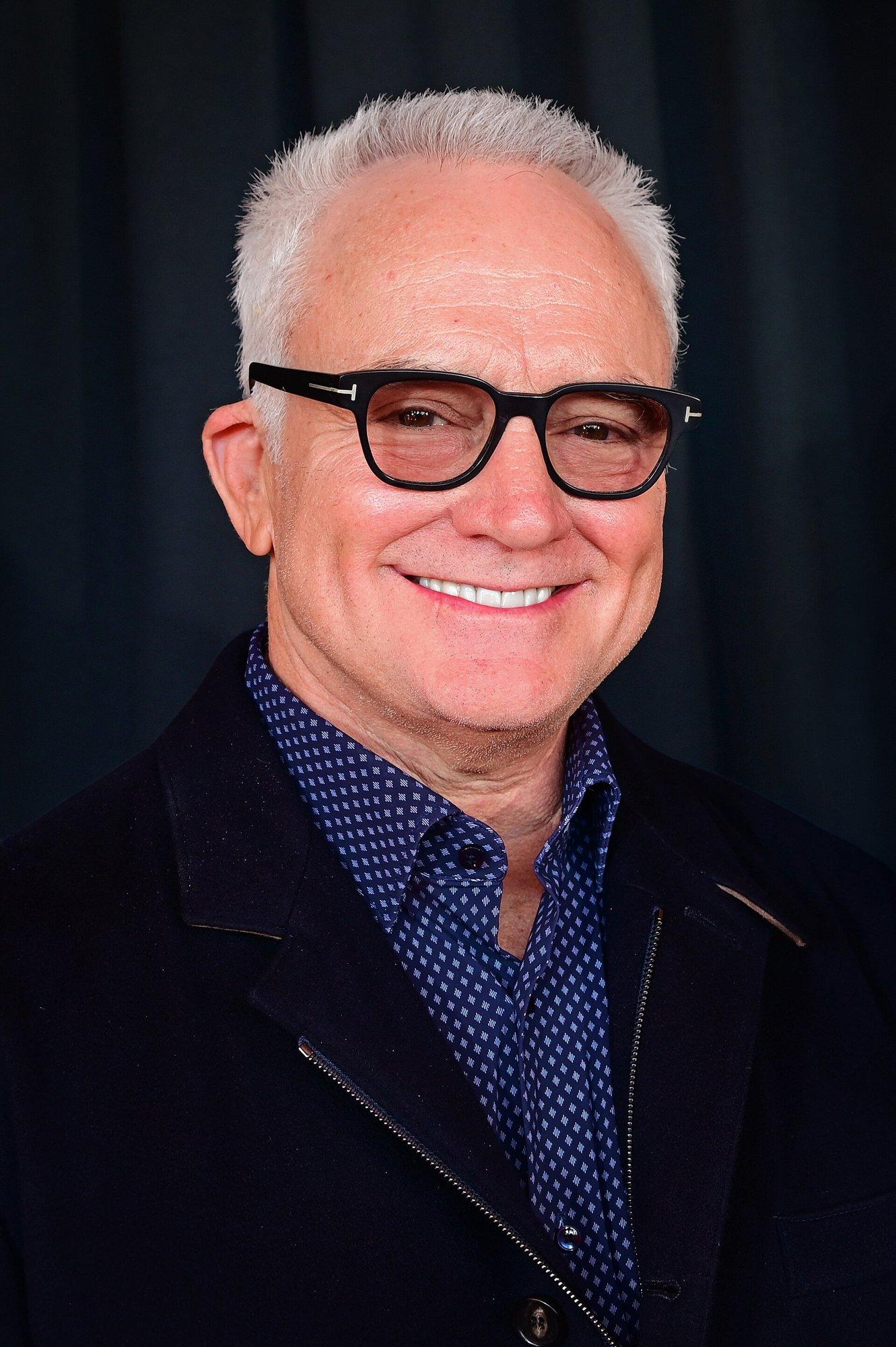
Bradley Whitford.

Actor · Producer · Civic Advocate

Bradley Whitford has spent four decades turning verbal intelligence into a weapon, a joke, or a trapdoor. From Josh Lyman’s caffeinated idealism on The West Wing to the smiling menace of Get Out and the morally slippery Joseph Lawrence on The Handmaid’s Tale, he thrives where fast thinking meets uneasy power. Offscreen, his speeches, columns and political activism show the same appetite for ideas that do not sit politely in one lane.

OBJECTIVE PERSONALITY CLASSIFICATIONMF-Ne/Fi-CP/S(B)What does this mean?
PERSONALITY SYSTEMObjective Personality
LEAD FUNCTIONNe · Extroverted Intuition
SECOND SAVIOR FUNCTIONFi · Introverted Feeling
MBTI EQUIVALENTENFP
01 / BEHIND THE CLASSIFICATION

The personality behind the fame.

How does a recorded OPS classification like MF-Ne/Fi-CP/S(B) break down? Walk through nine coins and watch the proposed type take shape. These are deductions from the archived code, not independent evidence of typing accuracy.

Scroll below to see Bradley Whitford take shape.

STARTING POINT512 possible OPS typesEach type combines core functions, an animal order, and sexual modalities.
THE FINISH LINEMF-Ne/Fi-CP/S(B)One recorded classification, decoded from its components.
Bradley Whitford’s HUMAN NEEDS 01—03
01
DECIDER OR OBSERVER?

Observer over Decider

Observers have more balanced Decider poles in the middle: Self (Di) and Tribe (De). Their own perspective and other people's perspectives tend to be easier to navigate. Things are the harder territory. Control (Oi) and Chaos (Oe) sit at the extremes, so disrupted plans, uncertainty, and a changing world can trigger the strongest reactions.

Whitford’s career is full of timing problems no actor controls: The West Wing ends, Trophy Wife gets canceled after one season, The Cabin in the Woods sits on a shelf until 2012, and then another opening appears in Transparent or The Handmaid’s Tale. That is Observer friction with changing conditions, not a simple referendum on his worth. His advantage is adaptability; he can keep moving when the industry reshuffles. The blind spot is waiting for the next external opening to clarify everything instead of forcing a decision before the circumstances feel settled.

O
02
SELF OR TRIBE?

Di · Self over De · Tribe

Self (Di) is the stronger deciding pole. They check decisions against their own values or reasons first: what makes sense to me, what feels right to me? The strength is independent conviction; the recurring friction is the Tribe (De)—other people's standards, feedback, and expectations. As the portrait unfolds, notice how Self takes the lead.

Whitford’s public life shows a strong internal standard. He spoke against Scott Walker’s budget bill in Madison, campaigned for Mary Burke, supported Clinton, Buttigieg, Biden and Harris, and serves with groups focused on voting rights and climate policy. Self over Tribe is not anti-social; it means he is willing to stand on a position that feels like his. That gives his activism a clear owner. The cost is that conviction can sound sufficient in itself, even when persuasion requires more patience with people who do not begin from the same premise.

Di
03
GATHER OR ORGANIZE?

Oe · Gather over Oi · Organize

Gather (Oe) leads with new information, experiences, and possibilities. Its strength is curiosity and adaptability; the recurring friction is narrowing the options and settling into what is already known. Another layer of the personality portrait comes into focus.

Look at the spread: Aaron Sorkin drama, horror satire in Get Out, dystopia in The Handmaid’s Tale, Broadway farce in Boeing-Boeing, a goofy father on Brooklyn Nine-Nine, even a one-night reading of 8. Gather over Organize likes the open door more than the settled lane. The strength is range; Whitford does not need one genre identity to stay useful. The growth cost is selectivity. A career can become impressively varied while still postponing the harder question of which lanes deserve the deepest long-term build.

Oe
FIRST THREE COINSO + Di + Oe

These establish the preferred human needs in the OPS framework.

Bradley Whitford’s FUNCTIONS 04—05
04
FEELING OR THINKING?

Feeling · F over Thinking · T

Feeling (F) evaluates decisions through values, meaning, and what matters—not simply through emotion. Its strength is a clear sense of significance; Thinking (T) provides balance through impersonal reasons, consistency, and evidence. Combined with Self (Di), this forms the recorded Savior Fi.

His recorded judging function is Fi, and the public examples fit a man who wants roles and causes to pass a personal values filter. Founding Clothes Off Our Back with Jane Kaczmarek, joining voting-rights and climate boards, and appearing in an abortion-rights PSA all show work tied to meaning, not just exposure. The strength is moral ownership: he rarely comes off like a purely hired opinion. The blind spot is that sincerity does not settle implementation. A heartfelt position can be admirable and still leave practical questions, evidence, or audience resistance unanswered.

F → Fi
05
SENSING OR INTUITION?

Intuition · N over Sensing · S

Intuition (N) focuses on concepts, patterns, and what information might mean. Sensing (S) balances it through observable facts, physical detail, and direct experience. Combined with Gather (Oe), this gives the recorded Savior Ne.

Ne gives Whitford a career built on angles rather than one fixed persona. Josh Lyman’s fast political intelligence, Dean Armitage’s polished menace in Get Out, and Commander Lawrence’s unsettling ambiguity in The Handmaid’s Tale all reward an actor who can see multiple possible readings inside a scene. That conceptual agility is a real asset. The limit is that possibility can multiply faster than certainty. An intuitive performer can keep discovering new shades while delaying the simpler task of nailing down what the scene, the role, or the public message most needs to communicate.

N → Ne
THE TWO SAVIOR FUNCTIONSNe / Fi

Opposing functions: Si and Te.

Bradley Whitford’s ANIMAL STACK 06—07
06
CONSUME OR BLAST?

Consume over Blast

Consume gathers information for internal processing; Blast organizes and communicates information. The recorded order is Consume → Play → Sleep → Blast. This comparison follows their positions in that stack.

Consume first makes sense for an actor who built steadily through stage training at Wesleyan and Juilliard, years of supporting film and TV work, and then deep immersion in The West Wing before even writing two episodes himself. The engine here is taking in material until it becomes usable. That creates texture, references and precision. The weakness on the other side of Consume versus Blast is familiar: more study, one more draft, one more example. The project can keep getting richer while the plain declarative message arrives later than it should.

C > B
07
PLAY OR SLEEP?

Play over Sleep

Play emphasizes external real-time engagement; Sleep emphasizes internal processing. The recorded stack places Play earlier.

Whitford’s second-animal edge is the shift from private intake into live exchange. Ensemble-heavy projects like The West Wing, Studio 60, Brooklyn Nine-Nine and The Handmaid’s Tale reward real-time chemistry, and his campaign events and commencement speeches show he can work a room without needing it to revolve around him. Play over Sleep gives public responsiveness and quick interpersonal movement. The tradeoff is that action with other people can outrun fuller private consolidation. A sharp line or stance can land immediately while the deeper solitary distillation keeps lagging behind the schedule.

P > S
Bradley Whitford’s ANIMAL ORIENTATION 08—09
08
INFO OR ENERGY DOMINANT?

Energy over Info

Energy dominant means Play and Sleep are both in the top three: there is access to expending energy through engagement and conserving it through internal processing. Blast last leaves the information side uneven—Consume may gather far more than gets communicated.

Because his top three animals include active engagement and private re-centering, Whitford lands on the Energy side of this coin. That fits a career that alternates between ensemble performance, public advocacy, and the quieter craft required to keep complicated characters coherent across years. The strength is rhythm: he can go outward, pull back, and re-enter without collapsing into one mode. The missing balance is last Blast. He may absorb, test and refine plenty, yet still leave the final packaged directive thinner than the material behind it deserves.

Energy
09
INTROVERSION OR EXTROVERSION?

Introversion over Extroversion

The last animal, Blast, determines this OPS coin: Play or Blast last means Introversion; Consume or Sleep last means Extroversion. This describes animal orientation, not sociability or shyness.

This Introversion result is easy to miss because Whitford is plainly public-facing. He gives speeches, does interviews, shows up at fundraisers, and spent years driving dialogue-heavy ensemble shows. OPS Introversion here is not about shyness; it comes from Blast landing last. Consume and private processing are readier than constant settled broadcasting. The strength is that his public persona keeps some interior reserve instead of turning into nonstop pronouncement. The growth edge is simple and uncomfortable: say the conclusion sooner, especially when the cause, script, or audience would benefit from a cleaner through-line.

I
Sexual Modalities

The four sexual modalities.

OPS uses masculine/feminine sensory and extroverted-deciding distinctions as framework-specific terms, not gender categories. The four modalities are already included in the original 512 types. The recorded modality is MF · Audio.

MM KinestheticMasculine Sensory · Masculine De
MF RECORDED MODALITYAudioMasculine Sensory · Feminine De
FF TesterFeminine Sensory · Feminine De
FM VisualFeminine Sensory · Masculine De
COMPLETE RECORDED OPS TYPE · MODALITY INCLUDEDMF-Ne/Fi-CP/S(B)

Ne leads, Fi supports, and the animal stack is Consume → Play → Sleep → Blast.

THE FINISHED PORTRAIT · ALL NINE COINS REVEALED

Bradley Whitford's complete function and animal stack

ConsumePlaySleepBlastfNemFifTemSi
MF-Ne/Fi-CP/S(B)DOUBLE ACTIVATED · CONSUMEExplore the Interactive Coin Builder →
THE BRADLEY WHITFORD LENS

The sharp tongue with the open tabs

Whitford is easy to mistake for pure velocity: Josh Lyman’s machine-gun competence, Sorkin patter, a fundraiser microphone, the unnerving smile in Get Out. But that public sharpness rests on a long apprenticeship through Wesleyan, Juilliard, supporting roles, and years of steady work before the breakthrough looked inevitable.

His Ne/Fi pairing gives him a particular edge: he spots multiple readings in a scene or public moment, then chooses the one that fits his own values filter. That range helps explain the leap from The West Wing to Get Out to The Handmaid’s Tale. The limit is clarity. Possibility and conviction still have to become a conclusion.

As an Observer and Double Decider, Whitford is fundamentally tracking changing conditions more than getting trapped in every interpersonal wobble. The imbalance leans toward uncertainty, options and context over steadier repetition and what is already known. His neglected function is Si, opposite his lead savior Ne: returning to established facts, routines and continuity instead of chasing the next angle.

Consume → Play → Sleep → Blast explains the final tension. He can gather material, spark off other people, and refine it privately before fully packaging the takeaway. With Blast last, the risk is leaving the thesis less explicit than the texture around it. Keep the wit and range, but add one deliberate summarizing pass before moving on.

Want to understand the Savior and Demon states behind these nine coins? Explore the complete explanation, visual examples, and typing principles on our Methodology page →

02 / KEEP EXPLORING

Different faces. Familiar patterns.

Explore other celebrities with related recorded OPS classifications. Related functions are not necessarily exact type matches.

Discover Type Twins
YOUR TURN

Curious about your own type?

Discover how your own personality might be classified through Objective Personality.

Get objectively typed
Bradley Whitford's Personality Type & OPS Profile | The Personality Atlas