The Personality Atlas
THE CELEBRITY PERSONALITY ARCHIVE / STAND-UP COMEDY

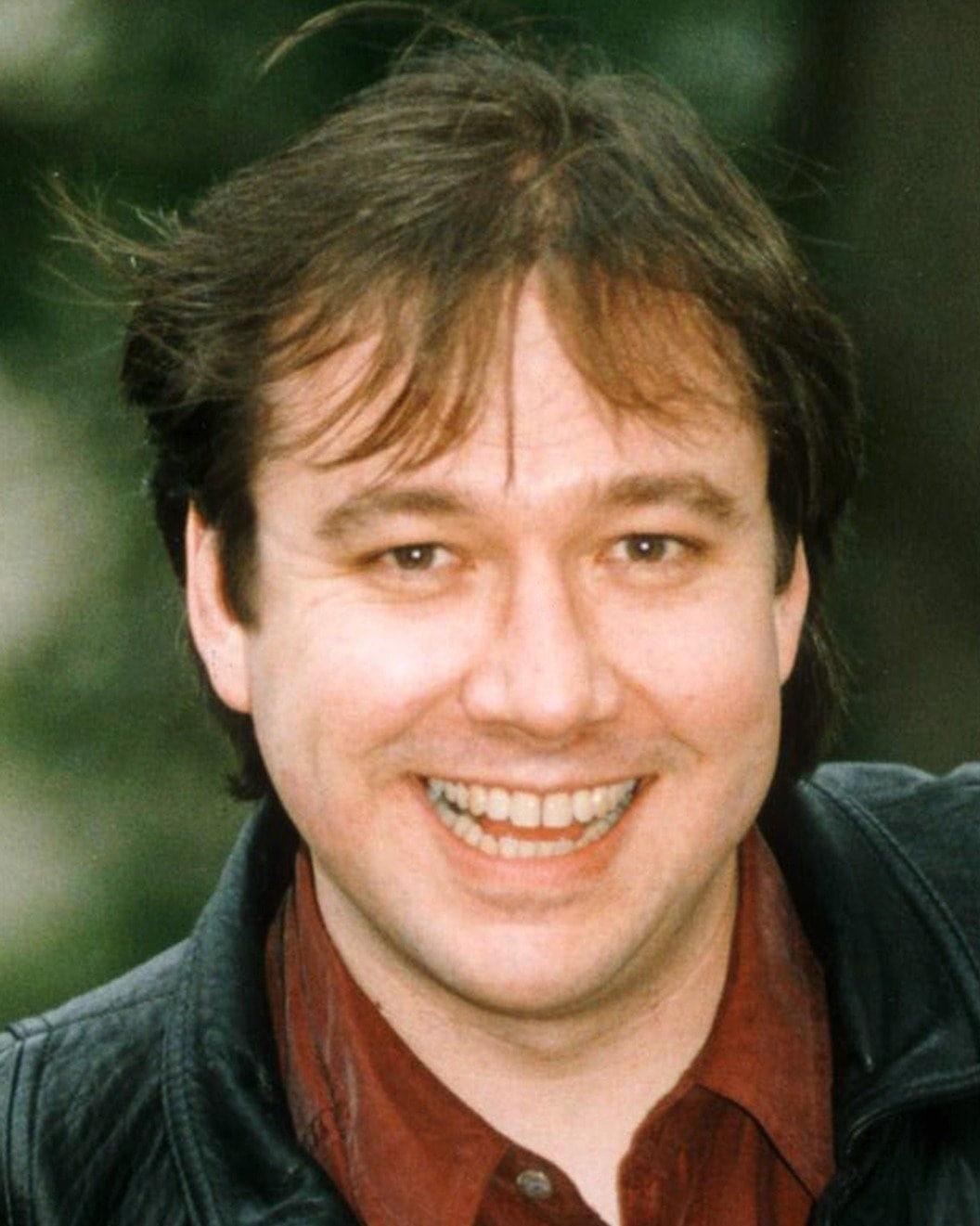
Bill Hicks.

Stand-up comedian · Satirist · Musician

Bill Hicks turned stand-up into a philosophical flamethrower. Starting at Houston's Comedy Workshop as a teenager, then grinding through roughly 300 shows a year, he built a career that made late-night TV nervous, packed UK venues and left behind lines people still quote like scripture or heresy, depending on the room.

OBJECTIVE PERSONALITY CLASSIFICATIONMM-Te/Ni-BP/C(S)What does this mean?
PERSONALITY SYSTEMObjective Personality
LEAD FUNCTIONTe · Extroverted Thinking
SECOND SAVIOR FUNCTIONNi · Introverted Intuition
MBTI EQUIVALENTENTJ
01 / BEHIND THE CLASSIFICATION

The personality behind the fame.

How does a recorded OPS classification like MM-Te/Ni-BP/C(S) break down? Walk through nine coins and watch the proposed type take shape. These are deductions from the archived code, not independent evidence of typing accuracy.

Scroll below to see Bill Hicks take shape.

STARTING POINT512 possible OPS typesEach type combines core functions, an animal order, and sexual modalities.
THE FINISH LINEMM-Te/Ni-BP/C(S)One recorded classification, decoded from its components.
Bill Hicks’ HUMAN NEEDS 01—03
01
DECIDER OR OBSERVER?

Decider over Observer

Deciders have more balanced Observer poles in the middle: Control (Oi) and Chaos (Oe). Organizing what's known and handling what's new tend to feel more manageable. People are the harder territory. Self (Di) and Tribe (De) sit at the extremes, so judgment, rejection, approval, and conflict can trigger the strongest reactions.

Hicks' public life kept circling human judgment. He mocked his family's Southern Baptist certainty, argued onstage with audiences who said they "don't come to comedy to think," and saw a full Late Show set cut after taping. That pattern fits a Decider problem: the heat is in people, approval, offense and who gets to define what can be said. The advantage is nerve under social pressure; he would not shrink his material to keep the room comfortable. The cost is living where every crowd, producer or critic can become another referendum.

D
02
SELF OR TRIBE?

De · Tribe over Di · Self

Tribe (De) is the stronger deciding pole. They check decisions against people, shared standards, and what works for the group: what do we need, what will others think? The strength is coordination and responsiveness; the recurring friction is the Self (Di)—knowing and defending their own position. As the portrait unfolds, notice how Tribe takes the lead.

Tribe over Self shows up in how Hicks aimed his conclusions outward. Even his most personal convictions arrived as public arguments meant to move a room: religion, politics, advertising, drugs, all turned into material delivered as if the audience could be talked into seeing the pattern. Performing constantly in clubs, on HBO and in UK theaters sharpened that skill. The strength is communicable conviction; he could make an idea land beyond his own diary. The blind spot is steamrolling the listener. A point can be clear, sharp and still leave little space for anyone else to enter it.

De
03
GATHER OR ORGANIZE?

Oi · Organize over Oe · Gather

Organize (Oi) leads with refining, preserving, and structuring what is already known. Its strength is preparation and clear direction; the recurring friction is unexpected change that disrupts the plan. Another layer of the personality portrait comes into focus.

For a comic associated with chaos, Hicks was remarkably organized in theme. From early club work through Revelations, he kept returning to the same central targets—consumerism, religion, politics, consciousness—refining them instead of abandoning them for novelty. That Organize preference gives his work a throughline; fans weren't just hearing bits, they were hearing a worldview being tightened. The tradeoff is rigidity. Once a person knows what everything means, fresh information can arrive looking like interruption rather than correction. Consistency builds a legacy; it can also harden into a sermon the room didn't agree to.

Oi
FIRST THREE COINSD + De + Oi

These establish the preferred human needs in the OPS framework.

Bill Hicks’ FUNCTIONS 04—05
04
FEELING OR THINKING?

Thinking · T over Feeling · F

Thinking (T) evaluates decisions through reasons, logic, and what works—not a lack of emotion. Its strength is analytical consistency; Feeling (F) provides balance through values, meaning, and the human consequences of a decision. Combined with Tribe (De), this forms the recorded Savior Te.

Hicks' judging function records as Thinking, specifically Te, and his career made that public. The censored 1993 Letterman set and his BBC defense of making audiences think both show someone trying to state conclusions in a form other people must contend with. Te's strength is external clarity: he could turn disgust at hypocrisy into an argument with edges, not just a mood. The limit is collateral damage. When the delivery becomes too prosecutorial, people start reacting to the force of the indictment instead of the structure of the case he is trying to make.

T → Te
05
SENSING OR INTUITION?

Intuition · N over Sensing · S

Intuition (N) focuses on concepts, patterns, and what information might mean. Sensing (S) balances it through observable facts, physical detail, and direct experience. Combined with Organize (Oi), this gives the recorded Savior Ni.

His observer function is Intuition, specifically Ni, and "It's Just a Ride" is the cleanest public example. Hicks kept compressing sprawling subjects—fear, media, religion, politics, death—into one overarching interpretation that could hold the whole act together. Even his final essay names his creative currency as "Vision." Ni gives that prophetic quality: disparate events become one destination, one meaning, one message. The cost is overcompression. A grand interpretation can feel revelatory and still skip inconvenient particulars. Vision is why his best material still echoes; it is also why some listeners heard certainty before they heard nuance.

N → Ni
THE TWO SAVIOR FUNCTIONSTe / Ni

Opposing functions: Fi and Se.

Bill Hicks’ ANIMAL STACK 06—07
06
CONSUME OR BLAST?

Blast over Consume

Consume gathers information for internal processing; Blast organizes and communicates information. The recorded order is Blast → Play → Consume → Sleep. This comparison follows their positions in that stack.

Blast comes before Consume in Hicks' recorded animal order, and his career makes that easy to picture. He wasn't hoarding observations in a notebook for decades; he was touring relentlessly, releasing albums, doing TV spots and firing fully formed conclusions into crowded rooms. Blast is the strength of decisive delivery, the instinct to teach, frame and declare. That's why a line like "It's Just a Ride" survives outside the original set. The blind spot is assuming another forceful explanation solves the problem. Sometimes the next step is less pronouncement and more intake.

B > C
07
PLAY OR SLEEP?

Play over Sleep

Play emphasizes external real-time engagement; Sleep emphasizes internal processing. The recorded stack places Play earlier.

Play comes before Sleep. Hicks' act wasn't only a lecture from a distance; it was live contact, shaped against an audience in real time. The BBC interview where he pushed back on "We don't come to comedy to think" and the Chicago heckler exchanges both show a comic willing to spar with the room rather than retreat from it. That gives his work electricity and immediacy. The cost is escalation. When Play runs hot, friction itself can become the fuel, and quieter internal settling arrives later than the moment probably needed it.

P > S
Bill Hicks’ ANIMAL ORIENTATION 08—09
08
INFO OR ENERGY DOMINANT?

Info over Energy

Info dominant means Consume and Blast are both in the top three: gathering and communicating information are more balanced. Sleep last leaves the energy side uneven—Play can keep engagement going without enough private recovery.

Hicks is Info-dominant here, not because he looked academic, but because Consume and Blast both sit in his top three while Sleep lands last. Publicly, that reads as a life built around taking in material—religion, philosophy, drugs, politics, media—and then turning it into a message an audience could grasp fast. The strength is throughput: ideas did not stay private for long. The void is the missing Sleep balance. A schedule of constant touring, recording and public argument can keep the signal loud while leaving less room for slower internal recovery, consolidation and recalibration.

Info
09
INTROVERSION OR EXTROVERSION?

Extroversion over Introversion

The last animal, Sleep, determines this OPS coin: Play or Blast last means Introversion; Consume or Sleep last means Extroversion. This describes animal orientation, not sociability or shyness.

Hicks also codes as OPS Extroversion, and that result comes from Sleep sitting last, not from whether he seemed socially outgoing. The pattern is about where the animal stack delays itself: longer private retreat comes after the work of broadcasting, interacting and even gathering more material. His career shows that outward tilt clearly—roughly 300 performances a year in New York, major TV spots, UK tours, even musical side projects. The growth edge is deliberate withdrawal before the next declaration. Without that pause, a brilliant public voice can keep running long after the inner center needs time to catch up.

E
Sexual Modalities

The four sexual modalities.

OPS uses masculine/feminine sensory and extroverted-deciding distinctions as framework-specific terms, not gender categories. The four modalities are already included in the original 512 types. The recorded modality is MM · Kinesthetic.

MM RECORDED MODALITYKinestheticMasculine Sensory · Masculine De
MF AudioMasculine Sensory · Feminine De
FF TesterFeminine Sensory · Feminine De
FM VisualFeminine Sensory · Masculine De
COMPLETE RECORDED OPS TYPE · MODALITY INCLUDEDMM-Te/Ni-BP/C(S)

Te leads, Ni supports, and the animal stack is Blast → Play → Consume → Sleep.

THE FINISHED PORTRAIT · ALL NINE COINS REVEALED

Bill Hicks's complete function and animal stack

BlastPlayConsumeSleepmTefNimSefFi
MM-Te/Ni-BP/C(S)DOUBLE ACTIVATED · PLAYExplore the Interactive Coin Builder →
THE BILL HICKS LENS

The preacher of doubt and precision.

When Bill Hicks walked onto a stage or into a televised set, the first impression was combustion: a comic ready to torch religion, consumerism or timid network standards. But the public image misses the worker underneath. He started at Houston's Comedy Workshop as a teenager, sharpened the act through relentless touring, and built British theater crowds because the fury always rode on structure.

His Te/Ni pairing gave him a rare comic weapon: turning a hunch about the culture into a public case against it. Te pushed the argument outward so an audience had to contend with the point; Ni narrowed politics, media and spirituality into one cutting thesis. That made him quotable. It also risked flattening softer details under the verdict.

As a Decider and Double Observer, Hicks' recurring pressure point was people and judgment, not basic uncertainty about the world. He could juggle wide ranges of information, yet belonging, offense and who gets to define truth stayed hot. That imbalance can overwork outer conclusions while undernourishing the quieter personal valuation underneath them. The neglected function opposite his lead savior is Fi.

Blast → Play → Consume → Sleep fits the public record: state the thesis, test it live, keep gathering material, and leave longer inner settling for last. Sleep last creates an extroverted imbalance where output can outrun recovery. The balancing move is not sanding off his bite; it is protecting real offstage decompression before the next room, so the vision stays sharp without running on fumes.

Want to understand the Savior and Demon states behind these nine coins? Explore the complete explanation, visual examples, and typing principles on our Methodology page →

02 / KEEP EXPLORING

Different faces. Familiar patterns.

Explore other celebrities with related recorded OPS classifications. Related functions are not necessarily exact type matches.

Discover Type Twins
YOUR TURN

Curious about your own type?

Discover how your own personality might be classified through Objective Personality.

Get objectively typed
Bill Hicks's Personality Type & OPS Profile | The Personality Atlas