The Personality Atlas
THE CELEBRITY PERSONALITY ARCHIVE / PRO WRESTLING & SCREEN

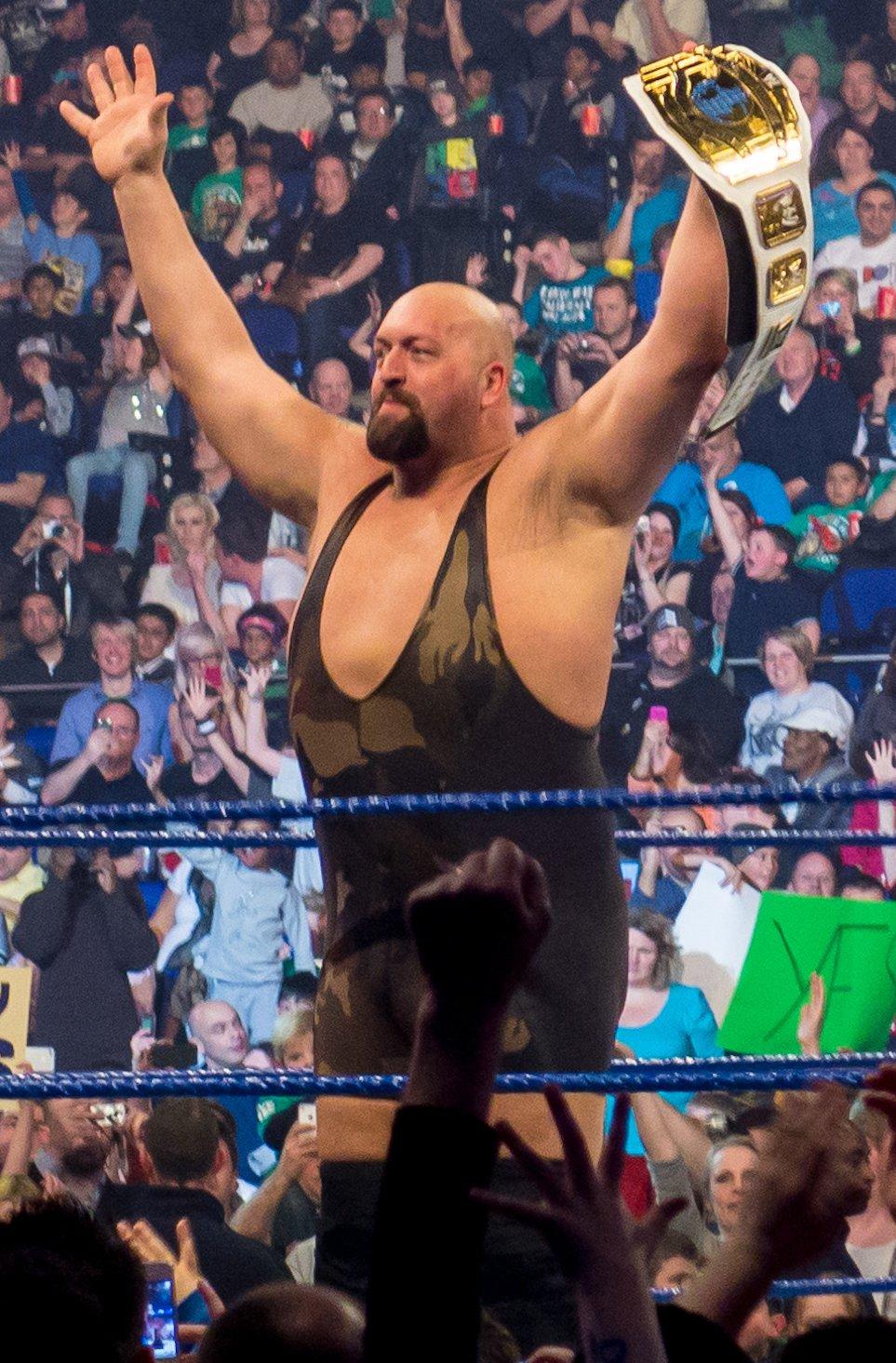
Big Show.

Professional Wrestler · Actor · Color Commentator

For three decades, Paul Wight made giantness look like a profession rather than a gimmick: WCW prodigy, WWE main-event attraction, 23-time champion, film and sitcom performer, and now an AEW commentator. The obvious image is brute scale. The more interesting pattern is a performer who kept reinventing how that scale could be used—monster, enforcer, comedy piece, tag partner, broadcaster—while the business around him kept changing.

OBJECTIVE PERSONALITY CLASSIFICATIONMM-Fi/Se-CS/P(B)What does this mean?
PERSONALITY SYSTEMObjective Personality
LEAD FUNCTIONFi · Introverted Feeling
SECOND SAVIOR FUNCTIONSe · Extroverted Sensing
MBTI EQUIVALENTISFP
01 / BEHIND THE CLASSIFICATION

The personality behind the fame.

How does a recorded OPS classification like MM-Fi/Se-CS/P(B) break down? Walk through nine coins and watch the proposed type take shape. These are deductions from the archived code, not independent evidence of typing accuracy.

Scroll below to see Big Show take shape.

STARTING POINT512 possible OPS typesEach type combines core functions, an animal order, and sexual modalities.
THE FINISH LINEMM-Fi/Se-CS/P(B)One recorded classification, decoded from its components.
Big Show’s HUMAN NEEDS 01—03
01
DECIDER OR OBSERVER?

Decider over Observer

Deciders have more balanced Observer poles in the middle: Control (Oi) and Chaos (Oe). Organizing what's known and handling what's new tend to feel more manageable. People are the harder territory. Self (Di) and Tribe (De) sit at the extremes, so judgment, rejection, approval, and conflict can trigger the strongest reactions.

Big Show’s public story is full of championships, but the recurring pressure point is people: coaches, promoters, factions, bosses, partners, and the question of where he stands with them. He quit high-school football after disputes with the coach, later left WCW after saying he was making only a fraction of what top stars made, and spent years in wrestling’s alliance-heavy world where status is never abstract. A Decider lens fits that human friction. The strength is making relationship stakes feel immediate. The blind spot is that every crossroads can start looking like a respect battle.

D
02
SELF OR TRIBE?

Di · Self over De · Tribe

Self (Di) is the stronger deciding pole. They check decisions against their own values or reasons first: what makes sense to me, what feels right to me? The strength is independent conviction; the recurring friction is the Tribe (De)—other people's standards, feedback, and expectations. As the portrait unfolds, notice how Self takes the lead.

When Wight said he let his WCW contract expire after making only a fraction of what the main eventers were making and not getting the raise he requested from Eric Bischoff, the pattern is distinctly Self-first. He did not wait for the room to settle his value for him; he made that judgment internally and acted on it. That independence helped produce a career-defining jump to WWF. The cost is equally clear: when your own valuation leads, compromise can feel like self-betrayal, even when patience or diplomacy might better serve the larger group.

Di
03
GATHER OR ORGANIZE?

Oe · Gather over Oi · Organize

Gather (Oe) leads with new information, experiences, and possibilities. Its strength is curiosity and adaptability; the recurring friction is narrowing the options and settling into what is already known. Another layer of the personality portrait comes into focus.

Wight’s biography is a chain of doors taken in the real world: basketball, football, bouncing, bounty hunting, answering phones, a radio-show encounter, an informal game with Hulk Hogan, then wrestling, film, sitcom work, and AEW commentary. Gather-first suits a life built less on one tidy master plan than on the next concrete opening. The advantage is responsiveness; he can use what is in front of him. The blind spot is that a career rich in possibilities can postpone the narrower structure that says no and commits to one lane.

Oe
FIRST THREE COINSD + Di + Oe

These establish the preferred human needs in the OPS framework.

Big Show’s FUNCTIONS 04—05
04
FEELING OR THINKING?

Feeling · F over Thinking · T

Feeling (F) evaluates decisions through values, meaning, and what matters—not simply through emotion. Its strength is a clear sense of significance; Thinking (T) provides balance through impersonal reasons, consistency, and evidence. Combined with Self (Di), this forms the recorded Savior Fi.

Wight’s public record keeps returning to personal lines rather than purely strategic calculations. He quit football over a coach conflict, joined the cheerleading squad partly out of spite, and later framed his WCW exit around what he believed his own value was. That gives useful texture to Fi. The strength is conviction that can survive a loud, political industry. He is less likely to feel borrowed or assembled by committee. The limit is that personal certainty does not automatically answer outside questions about timing, leverage, or how other people are measuring the situation.

F → Fi
05
SENSING OR INTUITION?

Sensing · S over Intuition · N

Sensing (S) focuses on concrete details, observable reality, and lived experience. Intuition (N) balances it by looking for broader patterns, concepts, and implications. Combined with Gather (Oe), this gives the recorded Savior Se.

Hulk Hogan reportedly noticed how Wight worked the crowd during an informal basketball promotion before Wight had real wrestling experience. That detail matters. Se is less about theory than about handling what is physically happening now: the room, the body, the reaction, the timing. Wight built a career on being undeniable in immediate space, from ring spectacle to comedy roles that used his size as a visible fact, not a metaphor. The blind spot is that commanding the present moment does not by itself supply the longer-range interpretation of where everything is heading.

S → Se
THE TWO SAVIOR FUNCTIONSFi / Se

Opposing functions: Te and Ni.

Big Show’s ANIMAL STACK 06—07
06
CONSUME OR BLAST?

Consume over Blast

Consume gathers information for internal processing; Blast organizes and communicates information. The recorded order is Consume → Sleep → Play → Blast. This comparison follows their positions in that stack.

Consume before Blast fits a career that kept absorbing worlds before defining one final message about them. Wight moved from college sports to monster-heel wrestling to comedy acting to commentary, gathering material from each stop instead of locking himself early into one explanatory brand. The strength is real range with substance behind it; he has actually lived the roles he later performs. The cost is familiar: taking in more assignments and more context can delay the sharper public conclusion about exactly what he wants others to understand about his career.

C > B
07
PLAY OR SLEEP?

Sleep over Play

Play emphasizes external real-time engagement; Sleep emphasizes internal processing. The recorded stack places Sleep earlier.

Sleep lands earlier than Play here, which helps explain why Wight’s career has visible retreat-and-reset points inside an unusually public profession. He transferred schools, adapted after surgery halted his growth, rebuilt conditioning in developmental, and later shifted from relentless in-ring work toward commentary. The strength is internal consolidation: he can step back, recalibrate, and return with a clearer handle on his role. The tradeoff is that live collaboration may come after that private settling, not always before it. He is not only reacting in public; he often seems to need a lane of his own first.

S > P
Big Show’s ANIMAL ORIENTATION 08—09
08
INFO OR ENERGY DOMINANT?

Energy over Info

Energy dominant means Play and Sleep are both in the top three: there is access to expending energy through engagement and conserving it through internal processing. Blast last leaves the information side uneven—Consume may gather far more than gets communicated.

Wight’s record lands on Energy because both the conserving side and the outward-engaging side arrive before the final communication task. That matches a career spent surviving brutal travel, constant physical demands, tag-team chemistry, acting work, and now commentary without reducing him to a one-note giant. He can pull back, recover, then re-enter a crowd-sized job. The weak point is what gets left for last: making the big clear explanation available to other people. More roles can keep accumulating while the simplest summary of his through-line stays less explicit than the talent itself.

Energy
09
INTROVERSION OR EXTROVERSION?

Introversion over Extroversion

The last animal, Blast, determines this OPS coin: Play or Blast last means Introversion; Consume or Sleep last means Extroversion. This describes animal orientation, not sociability or shyness.

Big Show’s arena presence does not cancel the Introversion result in this system. Blast sits fourth, after a pattern that first takes in, then processes, then engages before landing on a final delivered conclusion. That can still look huge, funny, and intensely social on television. The issue is not shyness; it is the relative cost of turning experience into a fixed shared message. His growth edge is demanding but useful: use the commentator’s seat, or veteran status backstage, to state the lesson more plainly instead of assuming the performance already said enough.

I
Sexual Modalities

The four sexual modalities.

OPS uses masculine/feminine sensory and extroverted-deciding distinctions as framework-specific terms, not gender categories. The four modalities are already included in the original 512 types. The recorded modality is MM · Kinesthetic.

MM RECORDED MODALITYKinestheticMasculine Sensory · Masculine De
MF AudioMasculine Sensory · Feminine De
FF TesterFeminine Sensory · Feminine De
FM VisualFeminine Sensory · Masculine De
COMPLETE RECORDED OPS TYPE · MODALITY INCLUDEDMM-Fi/Se-CS/P(B)

Fi leads, Se supports, and the animal stack is Consume → Sleep → Play → Blast.

THE FINISHED PORTRAIT · ALL NINE COINS REVEALED

Big Show's complete function and animal stack

ConsumeSleepPlayBlastfFimSefNimTe
MM-Fi/Se-CS/P(B)DOUBLE ACTIVATED · CONSUMEExplore the Interactive Coin Builder →
THE BIG SHOW LENS

The giant was never the whole point.

When Paul Wight tore through the ring from underneath at St. Valentine’s Day Massacre, the image sold itself: shock, size, instant authority. But the man behind Big Show kept proving he was more than a spectacle—college athlete, locker-room survivor, comic actor, and now an AEW commentator translating presence into language.

His Fi/Se pairing gives him embodied conviction. Se makes him undeniable in the immediate environment; Fi keeps the role from feeling borrowed. That combination helped him turn physical scale into memorable characters across WCW, WWE, film, and television. The limit is that personal certainty and stage command do not automatically organize the larger message for everyone else.

As a Decider and Double Observer, Wight is more flexible with changing circumstances than with the human question of respect, value, and where he stands with other people. That people-pressure shows up in coach disputes, contract friction, and alliance-heavy wrestling politics. The neglected function opposite his lead Fi is Te, so growth means stating standards and terms more explicitly, not abandoning conviction.

Consume → Sleep → Play → Blast fits a veteran who first takes in, then processes, then engages, and only later lands on the clean public conclusion. With Blast last, the imbalance is not low charisma; it is leaving the lesson trapped inside the performance. The balancing move is specific: keep the ring instinct and humor, but on commentary or in mentoring, stop and state the point in one plain sentence.

Want to understand the Savior and Demon states behind these nine coins? Explore the complete explanation, visual examples, and typing principles on our Methodology page →

02 / KEEP EXPLORING

Different faces. Familiar patterns.

Explore other celebrities with related recorded OPS classifications. Related functions are not necessarily exact type matches.

Discover Type Twins
YOUR TURN

Curious about your own type?

Discover how your own personality might be classified through Objective Personality.

Get objectively typed
Big Show's Personality Type & OPS Profile | The Personality Atlas