The Personality Atlas
THE CELEBRITY PERSONALITY ARCHIVE / FILM & TELEVISION

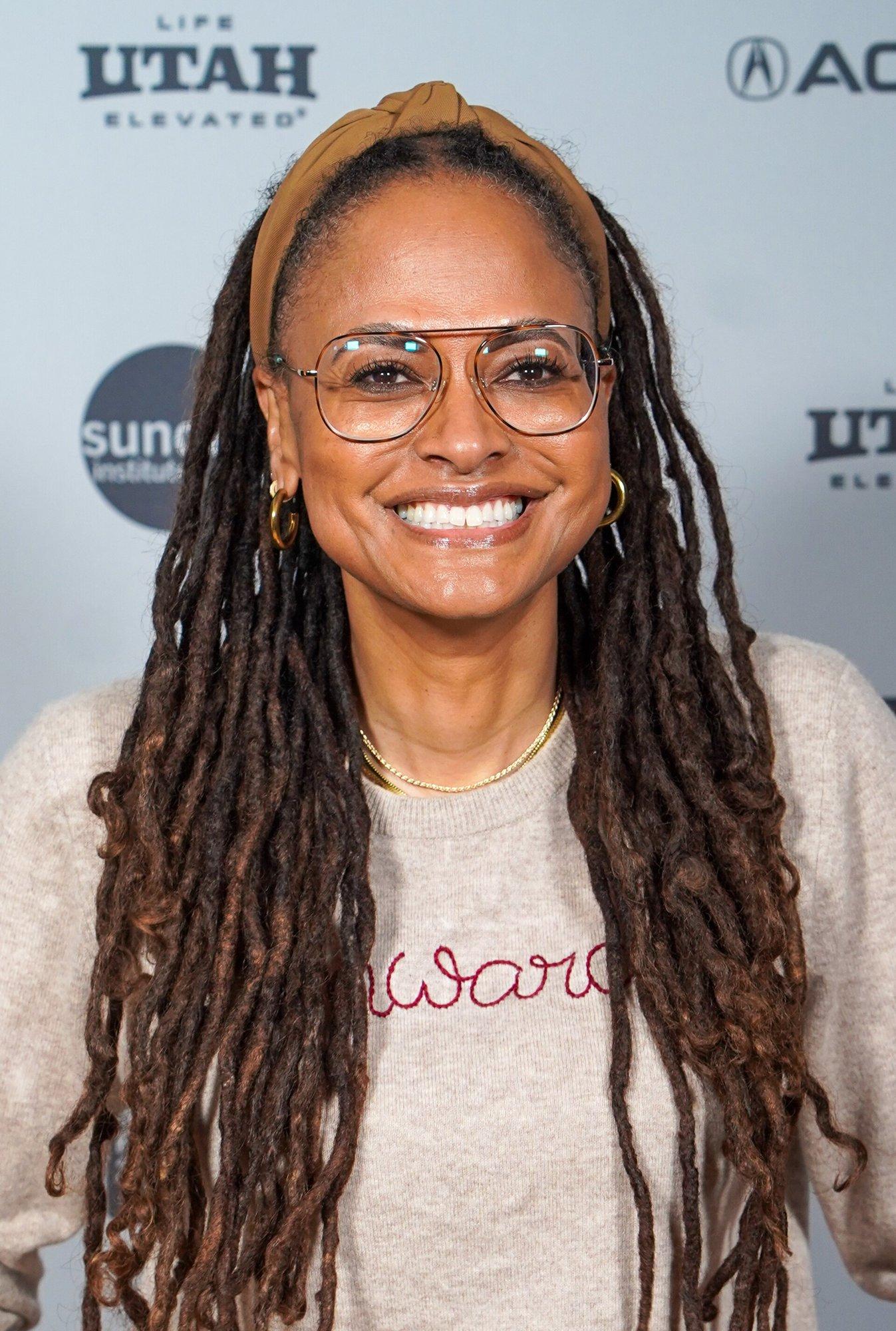
Ava DuVernay.

Filmmaker · Director · Producer

Ava DuVernay built one of the most forceful directing careers in contemporary American film by refusing to wait for a cleaner route. From founding ARRAY to directing Selma, 13th, When They See Us and Origin, she keeps turning blocked access, historical material and institutional scale into concrete public work.

OBJECTIVE PERSONALITY CLASSIFICATIONMM-Se/Te-PC/B(S)What does this mean?
PERSONALITY SYSTEMObjective Personality
LEAD FUNCTIONSe · Extroverted Sensing
SECOND SAVIOR FUNCTIONTe · Extroverted Thinking
MBTI EQUIVALENTESFP
01 / BEHIND THE CLASSIFICATION

The personality behind the fame.

How does a recorded OPS classification like MM-Se/Te-PC/B(S) break down? Walk through nine coins and watch the proposed type take shape. These are deductions from the archived code, not independent evidence of typing accuracy.

Scroll below to see Ava DuVernay take shape.

STARTING POINT512 possible OPS typesEach type combines core functions, an animal order, and sexual modalities.
THE FINISH LINEMM-Se/Te-PC/B(S)One recorded classification, decoded from its components.
Ava DuVernay’s HUMAN NEEDS 01—03
01
DECIDER OR OBSERVER?

Observer over Decider

Observers have more balanced Decider poles in the middle: Self (Di) and Tribe (De). Their own perspective and other people's perspectives tend to be easier to navigate. Things are the harder territory. Control (Oi) and Chaos (Oe) sit at the extremes, so disrupted plans, uncertainty, and a changing world can trigger the strongest reactions.

DuVernay’s career keeps running straight into material conditions: journalism during the O.J. Simpson trial soured her on that path, Hollywood financing pushed her into publicity, and at 32 she finally started shooting her own work with $6,000 and whatever access she had. That is classic Observer pressure—less “Do they like me?” than “What can be built inside these limits?” Her strength is adaptability under constraint. The blind spot is that better circumstances can start to look like the missing ingredient, when the harder task is narrowing the chaos and choosing one lane anyway.
O
02
SELF OR TRIBE?

De · Tribe over Di · Self

Tribe (De) is the stronger deciding pole. They check decisions against people, shared standards, and what works for the group: what do we need, what will others think? The strength is coordination and responsiveness; the recurring friction is the Self (Di)—knowing and defending their own position. As the portrait unfolds, notice how Tribe takes the lead.

Founding ARRAY after her breakthrough says a lot about where DuVernay naturally points her effort: toward the audience, the industry pipeline, and the larger group that gets blocked from distribution. The same pattern showed up earlier in Urban Beauty Collective, which connected more than 10,000 Black salons and barbershops across multiple cities. Tribe-first strength is obvious here: she can organize around what other people need access to. The growth cost is over-responsibility. When the mission is collective, your own narrower preferences or limits can feel secondary, even when honoring them would prevent burnout or cleaner conflict later.

De
03
GATHER OR ORGANIZE?

Oe · Gather over Oi · Organize

Gather (Oe) leads with new information, experiences, and possibilities. Its strength is curiosity and adaptability; the recurring friction is narrowing the options and settling into what is already known. Another layer of the personality portrait comes into focus.

Few film careers move this restlessly: PR executive, documentary filmmaker, indie director, network creator, Disney director, Netflix limited-series maker, museum short, branded films, television episodes. DuVernay does not build one airtight box and live inside it. Gather-first gives her range and responsiveness; a new format or partnership is another opening, not a threat to identity. That flexibility is a serious career weapon. The downside is brutal selectivity. Every new possibility arrives with its own momentum, and not every compelling avenue deserves equal time, money or years of life.

Oe
FIRST THREE COINSO + De + Oe

These establish the preferred human needs in the OPS framework.

Ava DuVernay’s FUNCTIONS 04—05
04
FEELING OR THINKING?

Thinking · T over Feeling · F

Thinking (T) evaluates decisions through reasons, logic, and what works—not a lack of emotion. Its strength is analytical consistency; Feeling (F) provides balance through values, meaning, and the human consequences of a decision. Combined with Tribe (De), this forms the recorded Savior Te.

DuVernay’s work often looks morally charged, but the machinery underneath is unmistakably Thinking. She built DVAPR, then ARRAY, and she has repeatedly turned vision into logistics: I Will Follow was made for $50,000 in 14 days, and she walked away from Black Panther when her story ideas did not align with Marvel’s. That is Te at its most useful—clear standards, executable plans, no fake consensus. The blind spot is tone. A decisive, results-first approach can sound uncompromising to people who want more room for open-ended alignment before the train leaves the station.

T → Te
05
SENSING OR INTUITION?

Sensing · S over Intuition · N

Sensing (S) focuses on concrete details, observable reality, and lived experience. Intuition (N) balances it by looking for broader patterns, concepts, and implications. Combined with Gather (Oe), this gives the recorded Savior Se.

Her films rarely stay at the level of vague principle. Selma is roads, bodies, weather and movement; 13th opens with hard incarceration numbers; Compton in C Minor came from a two-hour challenge to capture what was actually there. Se gives DuVernay a concrete grip on reality as it is seen, heard and historically documented right now. That strength makes big themes land. The tradeoff is that immediate facts, images and scale can become the battlefield. A project as massive as A Wrinkle in Time proved that tangible execution and marketplace reality still get the final word.

S → Se
THE TWO SAVIOR FUNCTIONSSe / Te

Opposing functions: Ni and Fi. This is a jumper classification.

Ava DuVernay’s ANIMAL STACK 06—07
06
PLAY OR SLEEP?

Play over Sleep

Play emphasizes external real-time engagement; Sleep emphasizes internal processing. The recorded stack places Play earlier.

Play comes earlier than Sleep here, and DuVernay’s public career makes that believable in the least fluffy way possible. She has not just made films; she has built companies, directed series, taken board roles, and moved ideas through collaborators, casts, executives and public audiences. The strength of Play is momentum in motion with other people. It pressure-tests ideas in the real world. The cost is quieter internal consolidation. If outward engagement stays hot long enough, reflection starts to look optional right up until the bill arrives in exhaustion, impatience or a message that needed more incubation.

P > S
07
CONSUME OR BLAST?

Consume over Blast

Consume gathers information for internal processing; Blast organizes and communicates information. The recorded order is Play → Consume → Blast → Sleep. This comparison follows their positions in that stack.

Consume comes earlier than Blast, which fits a filmmaker who learned late, studied the craft through documentaries because they were cheaper, and kept absorbing history, testimony and context before turning it into finished work. 13th is packed with interview voices and research; Origin grows from Isabel Wilkerson’s framework rather than a quick slogan. That intake is a strength: the work has substance behind it. The blind spot is compression. After taking in so much material, boiling it down into one blunt, easily exported conclusion can feel thinner than the reality warrants—even when an audience wants exactly that.

C > B
Ava DuVernay’s ANIMAL ORIENTATION 08—09
08
INFO OR ENERGY DOMINANT?

Info over Energy

Info dominant means Consume and Blast are both in the top three: gathering and communicating information are more balanced. Sleep last leaves the energy side uneven—Play can keep engagement going without enough private recovery.

DuVernay’s stack lands on Info over Energy, and her career shows why. She can gather material, shape it into a public message, and keep doing that across films, series, museum work and distribution infrastructure. ARRAY, 13th and When They See Us are not just expressive projects; they are information delivered to a mass audience with force. The missing balance sits in Sleep last. The risk is not a lack of knowledge or output, but too little protected time to privately distill what the next message must be before the next collaboration, campaign or production machine starts moving.

Info
09
INTROVERSION OR EXTROVERSION?

Extroversion over Introversion

The last animal, Sleep, determines this OPS coin: Play or Blast last means Introversion; Consume or Sleep last means Extroversion. This describes animal orientation, not sociability or shyness.

In OPS terms this profile lands on Extroversion because Sleep is last—not because DuVernay has a bubbly persona or needs constant social attention. The pattern is more specific: engaging the world, taking in material and pushing communication outward come more naturally than retreating to prolonged inner processing. That fits a public life spent building channels, directing ensemble projects and entering institutions like the Academy board. The strength is external impact. The growth edge is deliberately making room for the slower internal edit, so the next statement is chosen rather than simply launched from accumulated momentum.

E
Sexual Modalities

The four sexual modalities.

OPS uses masculine/feminine sensory and extroverted-deciding distinctions as framework-specific terms, not gender categories. The four modalities are already included in the original 512 types. The recorded modality is MM · Kinesthetic.

MM RECORDED MODALITYKinestheticMasculine Sensory · Masculine De
MF AudioMasculine Sensory · Feminine De
FF TesterFeminine Sensory · Feminine De
FM VisualFeminine Sensory · Masculine De
COMPLETE RECORDED OPS TYPE · MODALITY INCLUDEDMM-Se/Te-PC/B(S)

Se leads, Te supports, and the animal stack is Play → Consume → Blast → Sleep.

THE FINISHED PORTRAIT · ALL NINE COINS REVEALED

Ava DuVernay's complete function and animal stack

PlayConsumeBlastSleepmSefFimTefNi
MM-Se/Te-PC/B(S)DOUBLE ACTIVATED · PLAYExplore the Interactive Coin Builder →
THE AVA DUVERNAY LENS

She didn’t wait for permission.

When They See Us reached more than 23 million viewers in its first month, but the person behind that prestige-filmmaker aura is the woman who spent years in publicity, then took $6,000 and started making films herself at 32. DuVernay’s public authority was built from improvising around closed doors, not strolling through open ones.

Her Se/Te pairing is excellent at turning a charged subject into something concrete: a production plan, a distribution route, a visual fact, a deadline that actually holds. That is why ARRAY, Selma and 13th feel made, not merely discussed. The limit is that what is actionable can start to outrun what has been fully inwardly processed.

As an Observer and Double Decider, DuVernay’s deeper imbalance is less about people-drama paralysis than about wrestling the chaos of reality into a workable path. She can move between her own judgment and the tribe’s needs better than many public figures. The neglected opposite of her lead savior is Ni: slowing down enough to narrow the pattern, not just master the immediate facts.

Play → Consume → Blast → Sleep shows a life that naturally engages, researches and communicates before fully retreating. Sleep last can make private consolidation the expensive afterthought, especially when the mission keeps producing another urgent project. The balance point is not becoming less bold; it is protecting a deliberate offstage development window before the next rollout, so her impact stays sharp instead of merely relentless.

Want to understand the Savior and Demon states behind these nine coins? Explore the complete explanation, visual examples, and typing principles on our Methodology page →

02 / KEEP EXPLORING

Different faces. Familiar patterns.

Explore other celebrities with related recorded OPS classifications. Related functions are not necessarily exact type matches.

Discover Type Twins
YOUR TURN

Curious about your own type?

Discover how your own personality might be classified through Objective Personality.

Get objectively typed
Ava DuVernay's Personality Type & OPS Profile | The Personality Atlas