The Personality Atlas
THE CELEBRITY PERSONALITY ARCHIVE / BROADCAST JOURNALISM

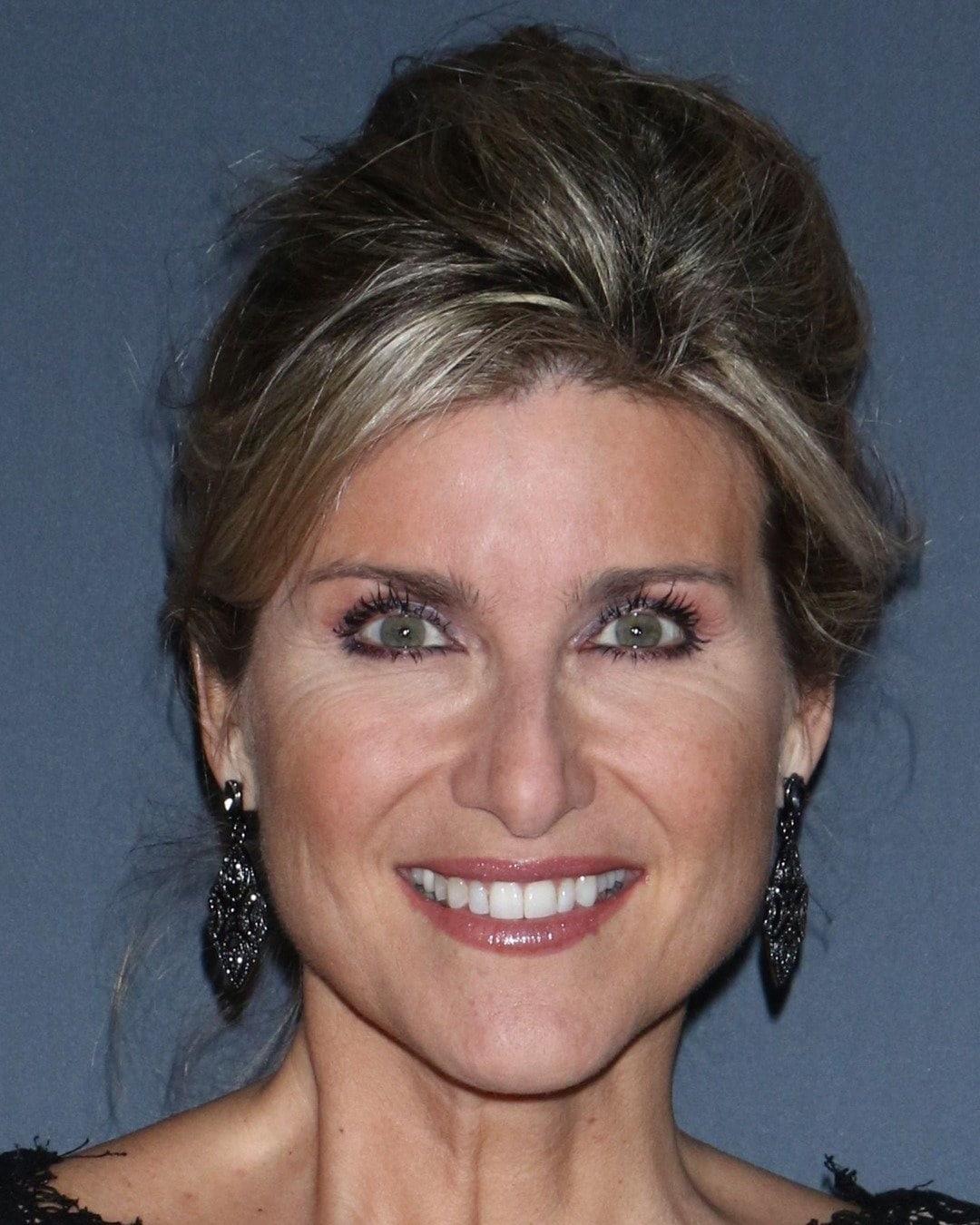
Ashleigh Banfield.

Broadcast Journalist · Anchor · Legal News Host

From local Canadian desks to MSNBC, CNN, CourtTV and NewsNation, Ashleigh Banfield built a career on walking straight into public tension. The signature glasses made her visually memorable; the real trademark was a style of journalism willing to go live from Manhattan on 9/11, challenge televised war coverage in a university lecture, and keep reappearing wherever law, crisis and argument met.

OBJECTIVE PERSONALITY CLASSIFICATIONFF-Fe/Ne-PB/C(S)What does this mean?
PERSONALITY SYSTEMObjective Personality
LEAD FUNCTIONFe · Extroverted Feeling
SECOND SAVIOR FUNCTIONNe · Extroverted Intuition
MBTI EQUIVALENTESFJ
01 / BEHIND THE CLASSIFICATION

The personality behind the fame.

How does a recorded OPS classification like FF-Fe/Ne-PB/C(S) break down? Walk through nine coins and watch the proposed type take shape. These are deductions from the archived code, not independent evidence of typing accuracy.

Scroll below to see Ashleigh Banfield take shape.

STARTING POINT512 possible OPS typesEach type combines core functions, an animal order, and sexual modalities.
THE FINISH LINEFF-Fe/Ne-PB/C(S)One recorded classification, decoded from its components.
Ashleigh Banfield’s HUMAN NEEDS 01—03
01
DECIDER OR OBSERVER?

Decider over Observer

Deciders have more balanced Observer poles in the middle: Control (Oi) and Chaos (Oe). Organizing what's known and handling what's new tend to feel more manageable. People are the harder territory. Self (Di) and Tribe (De) sit at the extremes, so judgment, rejection, approval, and conflict can trigger the strongest reactions.

Banfield’s career includes circumstance-heavy reporting, but her sharpest public collisions were with people and institutions. The clearest example is her 2003 Kansas State speech criticizing cable outlets that “wrap themselves in the American flag,” a move The New York Times reported angered NBC management and led to a lower profile. That is Decider friction: status, judgment, belonging, and who gets punished for saying the wrong thing in the wrong room. The strength is social courage under pressure. The blind spot is letting the human battle dominate attention longer than the practical next move deserves.

D
02
SELF OR TRIBE?

De · Tribe over Di · Self

Tribe (De) is the stronger deciding pole. They check decisions against people, shared standards, and what works for the group: what do we need, what will others think? The strength is coordination and responsiveness; the recurring friction is the Self (Di)—knowing and defending their own position. As the portrait unfolds, notice how Tribe takes the lead.

Her public work repeatedly points outward first. On September 11 she reported from Manhattan in the debris cloud, then later traveled for A Region in Conflict, interviewing Taliban prisoners, a priest in Pakistan, and an Iraqi woman aiding refugees. Tribe over Self is not mere friendliness; it is orienting around other people’s stakes and the social temperature of the moment. The strength is immediate relevance: she knows how to make coverage feel connected to the audience and the wider public. The cost is that outside judgment lands hard. When the room turns cold, the atmosphere can start grading the person, not just the work.

De
03
GATHER OR ORGANIZE?

Oe · Gather over Oi · Organize

Gather (Oe) leads with new information, experiences, and possibilities. Its strength is curiosity and adaptability; the recurring friction is narrowing the options and settling into what is already known. Another layer of the personality portrait comes into focus.

Banfield’s résumé refuses one lane. She moved from local Canadian stations to Dallas television, then MSNBC, CourtTV, CNN, HLN, A&E, CourtTV again, and NewsNation, while covering summits in Russia and Vancouver, reporting from Afghanistan and Pakistan, and later fronting legal analysis and rescue programming. Gather over Organize fits that professional mobility. The strength is adaptability: new formats and fresh assignments become usable material instead of disruption. The blind spot is selectivity. A career built on the next opening still has to decide which openings deserve years of commitment, not just another fast pivot.

Oe
FIRST THREE COINSD + De + Oe

These establish the preferred human needs in the OPS framework.

Ashleigh Banfield’s FUNCTIONS 04—05
04
FEELING OR THINKING?

Feeling · F over Thinking · T

Feeling (F) evaluates decisions through values, meaning, and what matters—not simply through emotion. Its strength is a clear sense of significance; Thinking (T) provides balance through impersonal reasons, consistency, and evidence. Combined with Tribe (De), this forms the recorded Savior Fe.

Her 2003 Landon Lecture was not a dry technical critique of ratings mechanics. It was a moral argument about what televised war coverage was doing to the country, and she delivered it in openly social language. That points to Feeling through Fe: reading the emotional meaning of public behavior and taking a stance on what a community is rewarding. The strength is editorial conscience with a live human signal. The limit is that a principled social judgment can sound like a public indictment, especially inside institutions that prefer loyalty, caution, or smoother optics.

F → Fe
05
SENSING OR INTUITION?

Intuition · N over Sensing · S

Intuition (N) focuses on concepts, patterns, and what information might mean. Sensing (S) balances it through observable facts, physical detail, and direct experience. Combined with Gather (Oe), this gives the recorded Savior Ne.

Banfield often works one layer above the isolated incident. After the street-level shock of 9/11, her next major MSNBC chapter became A Region in Conflict, a title that already broadens the frame from one event to a larger pattern. Ne sees implications, links, and emerging narratives across places that look separate on paper. That strength helps her move from breaking scenes to the bigger question underneath them. The cost is that patterns can outrun settled particulars. A sharp narrative about where events are heading still needs grounding in what is verifiably there today.

N → Ne
THE TWO SAVIOR FUNCTIONSFe / Ne

Opposing functions: Ti and Si. This is a jumper classification.

Ashleigh Banfield’s ANIMAL STACK 06—07
06
PLAY OR SLEEP?

Play over Sleep

Play emphasizes external real-time engagement; Sleep emphasizes internal processing. The recorded stack places Play earlier.

Play comes earlier than Sleep, and Banfield’s public career makes that easy to picture. On September 11 she was not tucked away refining a private conclusion; she was in the street, reporting live while conditions changed by the second, including the collapse of 7 World Trade Center behind her. The strength of Play is real-time engagement: fast adaptation, immediate feedback, contact with people as events unfold. The blind spot is that inward decompression becomes easier to postpone. Constantly meeting the moment can outpace the quieter work of settling what the moment did to you.

P > S
07
CONSUME OR BLAST?

Blast over Consume

Consume gathers information for internal processing; Blast organizes and communicates information. The recorded order is Play → Blast → Consume → Sleep. This comparison follows their positions in that stack.

With Play already earlier than Sleep, the next tilt is Blast earlier than Consume. Banfield has repeatedly been cast as a framer and explainer: Ashleigh Banfield on Location, Open Court, Legal View with Ashleigh Banfield, and Banfield. Those titles are practically broadcasting verbs. Blast gives her the strength of quick synthesis and a firm on-air point of view, turning sprawling legal or breaking-news material into a digestible line for viewers. The cost is impatience with endless intake. More research can always be gathered; television still demands that someone call the segment and say what it means.

B > C
Ashleigh Banfield’s ANIMAL ORIENTATION 08—09
08
INFO OR ENERGY DOMINANT?

Info over Energy

Info dominant means Consume and Blast are both in the top three: gathering and communicating information are more balanced. Sleep last leaves the energy side uneven—Play can keep engagement going without enough private recovery.

Banfield’s top three animals keep the information cycle moving: engage live, frame the story, then keep pulling in more material. That produces Info dominance, and it fits a career built on anchor chairs, field reports, legal analysis shows, and rapid format changes across networks. The strength is obvious: she can stay publicly useful while the story is still hot. The missing balance is Sleep. After so much outward motion, private recovery and internal calibration can become the part that waits. Even her documented decision to seek help after 9/11 underscores how inner settling may require deliberate protection, not leftover time.

Info
09
INTROVERSION OR EXTROVERSION?

Extroversion over Introversion

The last animal, Sleep, determines this OPS coin: Play or Blast last means Introversion; Consume or Sleep last means Extroversion. This describes animal orientation, not sociability or shyness.

Sleep lands last, which gives Banfield Extroversion in this system—not because she looks sociable on camera, but because outward engagement, explanation, and information exchange come before extended private consolidation. Her public résumé supports that order: local news, war reporting, trial coverage, morning television, prime-time hosting, and later podcast work all keep her in motion with other people and active stories. The strength is momentum and responsiveness. The growth edge is choosing when to step back long enough to build an inner verdict before the next assignment, feud, or breaking-news cycle claims the microphone.

E
Sexual Modalities

The four sexual modalities.

OPS uses masculine/feminine sensory and extroverted-deciding distinctions as framework-specific terms, not gender categories. The four modalities are already included in the original 512 types. The recorded modality is FF · Tester.

MM KinestheticMasculine Sensory · Masculine De
MF AudioMasculine Sensory · Feminine De
FF RECORDED MODALITYTesterFeminine Sensory · Feminine De
FM VisualFeminine Sensory · Masculine De
COMPLETE RECORDED OPS TYPE · MODALITY INCLUDEDFF-Fe/Ne-PB/C(S)

Fe leads, Ne supports, and the animal stack is Play → Blast → Consume → Sleep.

THE FINISHED PORTRAIT · ALL NINE COINS REVEALED

Ashleigh Banfield's complete function and animal stack

PlayBlastConsumeSleepfFefSimNemTi
FF-Fe/Ne-PB/C(S)DOUBLE ACTIVATED · PLAYExplore the Interactive Coin Builder →
THE ASHLEIGH BANFIELD LENS

The anchor who keeps stepping into the fire

Those rectangular glasses became part of Banfield’s public image, but the more revealing scene is still September 11: ash in the air, live television, and 7 World Trade Center collapsing behind her. The poise can read like pure toughness. The fuller record shows a journalist who kept stepping toward the story, then later acknowledged the cost and sought help afterward.

Fe with Ne gives her a broadcaster’s radar for social meaning and emerging patterns. It helps explain why she could move from 9/11 street reporting and A Region in Conflict to legal programming without sounding lost. The strength is making sprawling public events feel immediately human and connected. The limit is that a strong social read plus a fast pattern read can harden into a verdict before every quieter counterpoint arrives.

As a Decider and Double Observer, Banfield’s main pressure sits with people: judgment, status, loyalty, and what a public stance costs inside institutions. She can flex across subjects and settings, but the human fallout still hits hardest. The neglected function opposite her lead savior is Ti, the cooler internal logic that asks her to step out of the room’s emotional weather and define the principle more independently.

Play → Blast → Consume → Sleep is a forceful public order: jump into the exchange, frame it fast, keep gathering, then retreat last. Sleep fourth creates the imbalance of delayed inner recovery, not a shortage of presence. The balancing move is concrete: protect a real off-camera review window after major coverage or commentary—time to write, sort, and narrow the point—so her live edge stays sharp.

Want to understand the Savior and Demon states behind these nine coins? Explore the complete explanation, visual examples, and typing principles on our Methodology page →

02 / KEEP EXPLORING

Different faces. Familiar patterns.

Explore other celebrities with related recorded OPS classifications. Related functions are not necessarily exact type matches.

Discover Type Twins
YOUR TURN

Curious about your own type?

Discover how your own personality might be classified through Objective Personality.

Get objectively typed
Ashleigh Banfield's Personality Type & OPS Profile | The Personality Atlas