The Personality Atlas
THE CELEBRITY PERSONALITY ARCHIVE / EDUCATION & MEDIA

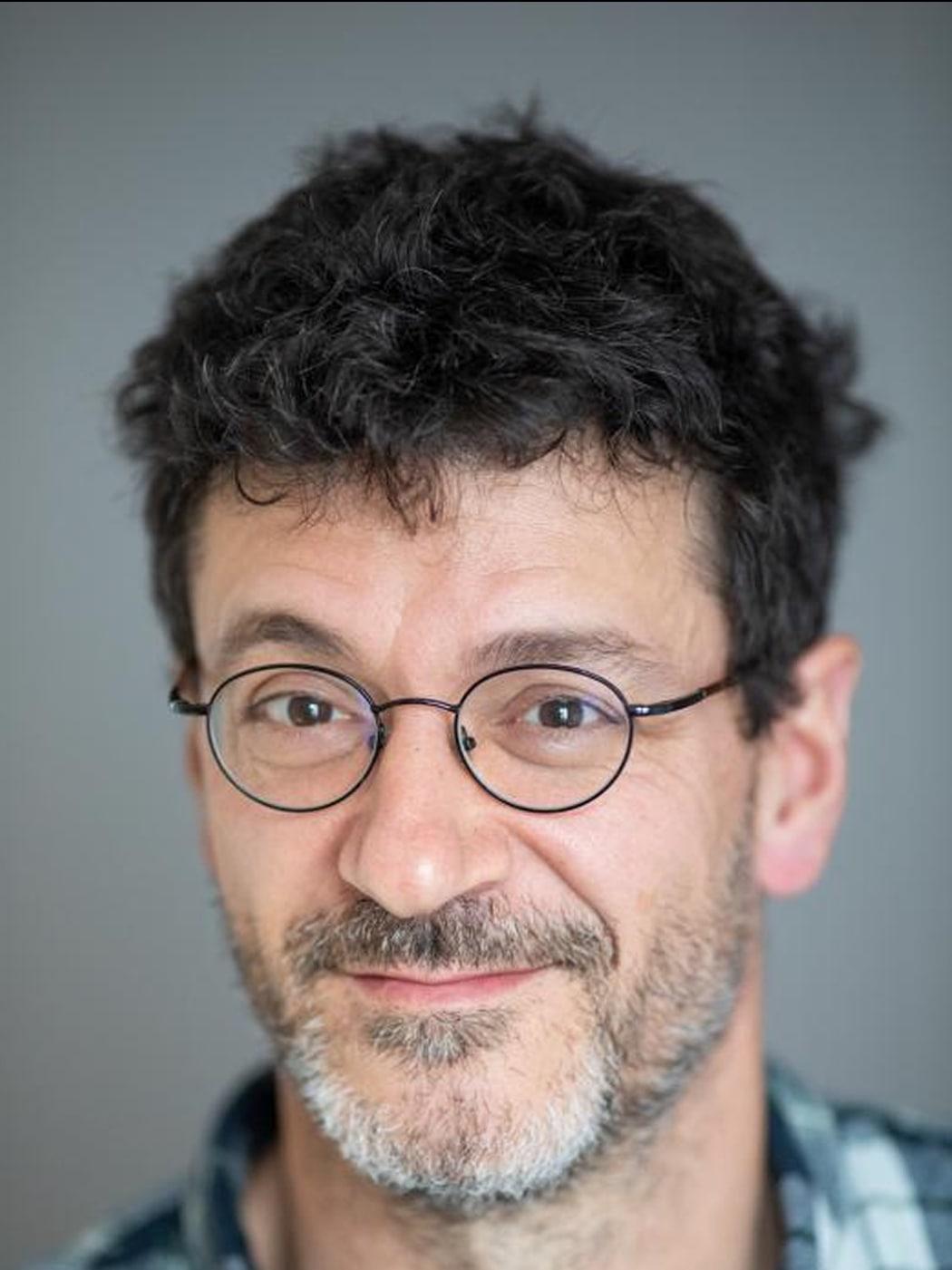
Arthur Brooks.

Author · Professor · Broadcaster

Arthur Brooks has moved from orchestra pits in Barcelona to think-tank leadership, Harvard classrooms, CBS segments and bestselling books on happiness. The public image is calm and professorial; the career underneath is restless, strategic and unusually willing to reinvent itself in full view.

OBJECTIVE PERSONALITY CLASSIFICATIONFF-Ti/Se-CP/B(S)What does this mean?
PERSONALITY SYSTEMObjective Personality
LEAD FUNCTIONTi · Introverted Thinking
SECOND SAVIOR FUNCTIONSe · Extroverted Sensing
MBTI EQUIVALENTISTP
01 / BEHIND THE CLASSIFICATION

The personality behind the fame.

How does a recorded OPS classification like FF-Ti/Se-CP/B(S) break down? Walk through nine coins and watch the proposed type take shape. These are deductions from the archived code, not independent evidence of typing accuracy.

Scroll below to see Arthur Brooks take shape.

STARTING POINT512 possible OPS typesEach type combines core functions, an animal order, and sexual modalities.
THE FINISH LINEFF-Ti/Se-CP/B(S)One recorded classification, decoded from its components.
Arthur Brooks’ HUMAN NEEDS 01—03
01
DECIDER OR OBSERVER?

Decider over Observer

Deciders have more balanced Observer poles in the middle: Control (Oi) and Chaos (Oe). Organizing what's known and handling what's new tend to feel more manageable. People are the harder territory. Self (Di) and Tribe (De) sit at the extremes, so judgment, rejection, approval, and conflict can trigger the strongest reactions.

Arthur Brooks built a public career around one social problem more than one policy problem: contempt. Love Your Enemies, his CBS commentary, and his classroom work on happiness all return to the strain between people who no longer trust each other enough to disagree decently. That is classic Decider terrain—friction over judgment, belonging, and how to live among other minds. The strength is moral seriousness about human conflict, not just abstract systems. The blind spot is treating better relationships as though they will automatically solve harder practical constraints that still require slower, uglier institutional work.

D
02
SELF OR TRIBE?

Di · Self over De · Tribe

Self (Di) is the stronger deciding pole. They check decisions against their own values or reasons first: what makes sense to me, what feels right to me? The strength is independent conviction; the recurring friction is the Tribe (De)—other people's standards, feedback, and expectations. As the portrait unfolds, notice how Self takes the lead.

When Brooks announced he would leave the presidency of AEI after about a decade, his public reason was revealing: organizations need refreshed vision and should not become overly identified with one leader. Self over Tribe often looks like that kind of internally set standard. He did not wait for status to drag him offstage; he applied his own rule and moved. The strength is independence from applause, titles, and organizational inertia. The cost is that an internally satisfying principle can still unsettle colleagues who would have preferred continuity, consultation, or a longer runway.

Di
03
GATHER OR ORGANIZE?

Oe · Gather over Oi · Organize

Gather (Oe) leads with new information, experiences, and possibilities. Its strength is curiosity and adaptability; the recurring friction is narrowing the options and settling into what is already known. Another layer of the personality portrait comes into focus.

Brooks’s life does not read like a tidy ladder. He left CalArts, spent years as a professional French hornist in Barcelona, earned an economics degree through distance learning, completed a RAND Ph.D. while working on Project Air Force, then moved through academia, think-tank leadership, television, podcasts, and executive education. Gather over Organize is visible in that appetite for new lanes and fresh inputs. The advantage is adaptability: he can keep building from what the world offers next. The growth cost is selectivity. A life this open always risks accumulating compelling directions faster than it can fully settle one.

Oe
FIRST THREE COINSD + Di + Oe

These establish the preferred human needs in the OPS framework.

Arthur Brooks’ FUNCTIONS 04—05
04
FEELING OR THINKING?

Thinking · T over Feeling · F

Thinking (T) evaluates decisions through reasons, logic, and what works—not a lack of emotion. Its strength is analytical consistency; Feeling (F) provides balance through values, meaning, and the human consequences of a decision. Combined with Self (Di), this forms the recorded Savior Ti.

Brooks’s published record—dozens of peer-reviewed articles, economics training, policy analysis at RAND, and books built around behavioral research—shows a repeated trust in reasoning things through. Thinking here is not coldness; it is confidence that a clean argument can clarify a messy public problem. That is part of what makes his teaching and writing so legible to large audiences. The blind spot is equally familiar: a framework elegant on paper can underweight the interpersonal texture that makes people resist even sensible advice. Logic can illuminate motives without automatically moving them.

T → Ti
05
SENSING OR INTUITION?

Sensing · S over Intuition · N

Sensing (S) focuses on concrete details, observable reality, and lived experience. Intuition (N) balances it by looking for broader patterns, concepts, and implications. Combined with Gather (Oe), this gives the recorded Savior Se.

Before he was a public intellectual, Brooks was a working French hornist, and that early career matters. His later books on happiness and purpose do not float as pure theory; they are repeatedly delivered through concrete cases, public-facing teaching, media appearances, and practical advice people can test in daily life. Sensing keeps the material grounded in what can actually be done, practiced, scheduled, or observed. The strength is tangibility. The cost is that a vivid present example can feel so persuasive that it crowds out slower pattern-building or longer-term implications that are less immediately visible.

S → Se
THE TWO SAVIOR FUNCTIONSTi / Se

Opposing functions: Fe and Ni.

Arthur Brooks’ ANIMAL STACK 06—07
06
CONSUME OR BLAST?

Consume over Blast

Consume gathers information for internal processing; Blast organizes and communicates information. The recorded order is Consume → Play → Blast → Sleep. This comparison follows their positions in that stack.

Consume comes before Blast in Brooks’s stack, and his career gives plenty of evidence why. He has written sixteen books, produced extensive academic research, and repeatedly reinvented his public work by taking in more material—economics, public policy, philosophy, aging, happiness, leadership. The strength of Consume is depth: he usually arrives with a stocked shelf rather than a slogan. Blast, arriving later, is the uncomfortable counterweight. More reading, more interviews, and more notes can always seem useful. The growth cost is deciding when the material is rich enough and the message clear enough to stop studying and start stating.

C > B
07
PLAY OR SLEEP?

Play over Sleep

Play emphasizes external real-time engagement; Sleep emphasizes internal processing. The recorded stack places Play earlier.

Play comes before Sleep, which fits how Brooks keeps moving ideas into live exchange: CBS commentary, podcast hosting, coauthoring with Oprah Winfrey, executive education, and a Harvard class built around direct contact with people. The strength is responsiveness. He does not wait for a perfect private conclusion before testing language in conversation and collaboration. Sleep, arriving later, names the cost. A life organized around public teaching can keep generating useful interactions while delaying the slower offstage digestion that decides which insights actually belong in the long term.

P > S
Arthur Brooks’ ANIMAL ORIENTATION 08—09
08
INFO OR ENERGY DOMINANT?

Info over Energy

Info dominant means Consume and Blast are both in the top three: gathering and communicating information are more balanced. Sleep last leaves the energy side uneven—Play can keep engagement going without enough private recovery.

Brooks is Info-dominant: Consume and Blast both land in his top three, so the profile naturally cycles between taking in material and packaging it for other people. That rhythm is all over his public life—research becomes books, books become courses, courses become columns, commentary, podcasts, and executive teaching. The strength is translation: he can turn specialized material into accessible guidance without abandoning seriousness. The missing balance comes from Sleep in last place. The cost is not ignorance; it is insufficient internal recovery. A person can keep teaching happiness publicly while still needing more unshared space to metabolize his own conclusions.

Info
09
INTROVERSION OR EXTROVERSION?

Extroversion over Introversion

The last animal, Sleep, determines this OPS coin: Play or Blast last means Introversion; Consume or Sleep last means Extroversion. This describes animal orientation, not sociability or shyness.

Sleep sits last, which makes this an OPS Extroversion result even if the subject also values prayer or solitude. The point is not party energy; it is where the stack places the pressure. Brooks’s work keeps pushing outward—classes, media hits, podcasts, public writing, institution-building—before extended private processing gets equal priority. That outward bias can be immensely useful in a teacher whose job is to make ideas usable. The blind spot is subtler: without deliberately protected internal time, the next audience, partnership, or platform can start determining pace. The growth edge is making solitude structural, not decorative.

E
Sexual Modalities

The four sexual modalities.

OPS uses masculine/feminine sensory and extroverted-deciding distinctions as framework-specific terms, not gender categories. The four modalities are already included in the original 512 types. The recorded modality is FF · Tester.

MM KinestheticMasculine Sensory · Masculine De
MF AudioMasculine Sensory · Feminine De
FF RECORDED MODALITYTesterFeminine Sensory · Feminine De
FM VisualFeminine Sensory · Masculine De
COMPLETE RECORDED OPS TYPE · MODALITY INCLUDEDFF-Ti/Se-CP/B(S)

Ti leads, Se supports, and the animal stack is Consume → Play → Blast → Sleep.

THE FINISHED PORTRAIT · ALL NINE COINS REVEALED

Arthur Brooks's complete function and animal stack

ConsumePlayBlastSleepmTifSemNifFe
FF-Ti/Se-CP/B(S)DOUBLE ACTIVATED · PLAYExplore the Interactive Coin Builder →
THE ARTHUR BROOKS LENS

The happiness teacher with a restless engine

Arthur Brooks can look like a serene happiness professor now, but the public record is far less static: a young musician leaves CalArts, spends years as a French hornist in Barcelona, later runs AEI, then pivots again into Harvard and Vanderbilt, podcasts, CBS, and books with Oprah. The calm delivery sits on top of a career built by repeated reinvention rather than one straight institutional ascent.

His Ti/Se pairing gives him a potent public asset: he can take a sprawling subject like happiness, leadership, or aging and make it concrete, argued, and usable. The same pairing also has a limit. A tight model and a vivid example can make the lesson feel settled before the social complexity is settled. People are rarely as clean as the framework that explains them.

As a Decider and Double Observer, Brooks is fundamentally balancing human significance while remaining comparatively flexible with changing circumstances and information. That pairing often leaves the ache around judgment, respect, and how to persuade people who do not share the same standard. The neglected function is Fe, opposite his lead Ti: the less-preferred work of directly tracking group sentiment, shared values, and the emotional temperature of the room instead of only refining the argument.

Consume → Play → Blast → Sleep shows the final imbalance. He gathers first, tests ideas with people, then teaches them broadly, while Sleep last makes sustained private consolidation easier to postpone than another class, column, or collaboration. That pattern is powerful for a public educator. The balancing move is not to speak less; it is to protect regular offstage hours—beyond performance and even beyond preparation—where the next insight must survive silence before it becomes the next lesson.

Want to understand the Savior and Demon states behind these nine coins? Explore the complete explanation, visual examples, and typing principles on our Methodology page →

02 / KEEP EXPLORING

Different faces. Familiar patterns.

Explore other celebrities with related recorded OPS classifications. Related functions are not necessarily exact type matches.

Discover Type Twins
YOUR TURN

Curious about your own type?

Discover how your own personality might be classified through Objective Personality.

Get objectively typed
Arthur Brooks's Personality Type & OPS Profile | The Personality Atlas