The Personality Atlas
THE CELEBRITY PERSONALITY ARCHIVE / SCIENCE & MEDIA

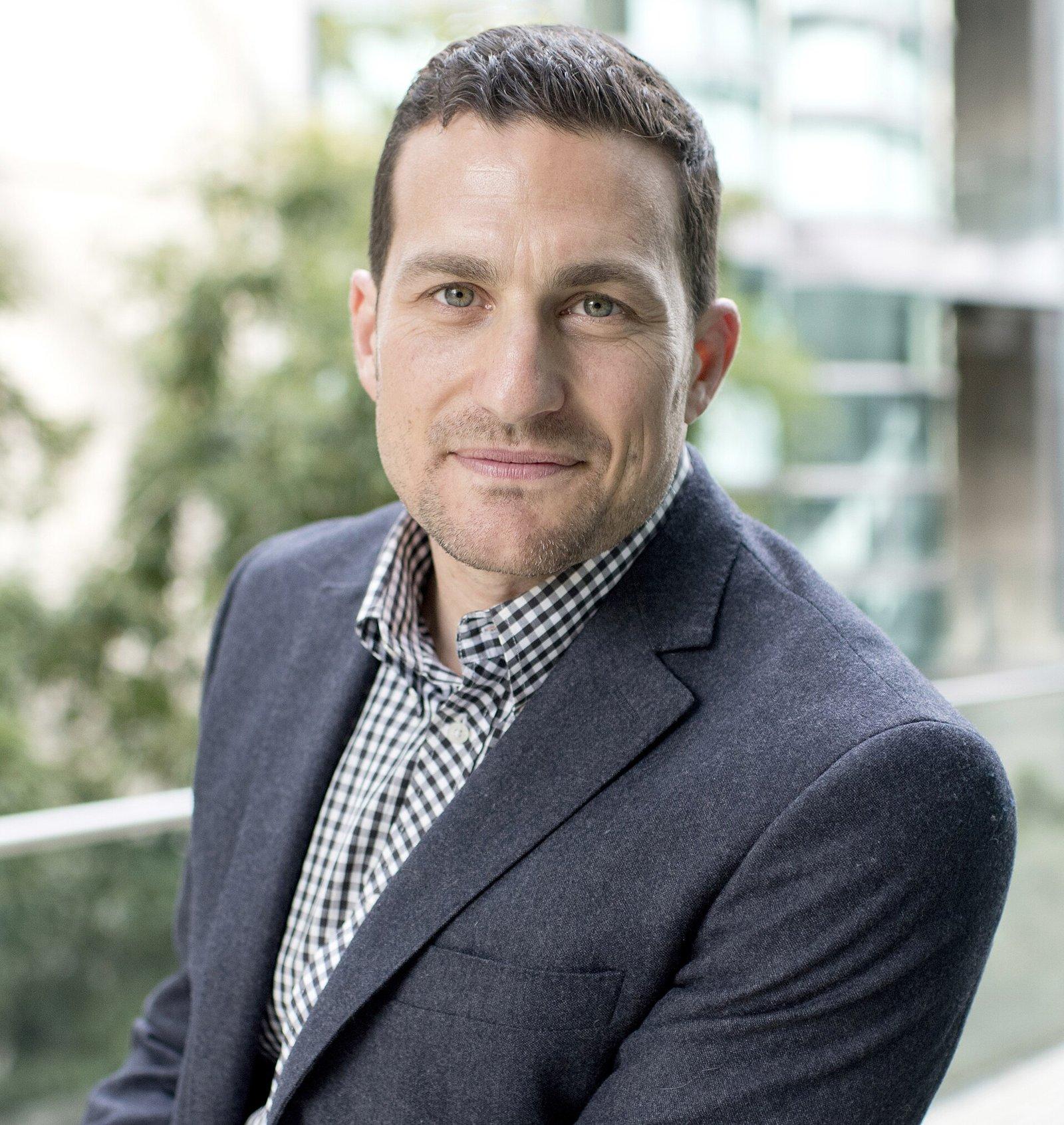
Andrew Huberman.

Neuroscientist · Professor · Podcaster · Author

Andrew Huberman turned a Stanford neuroscience career into a mass-media platform: visual-system research, a blockbuster health podcast, a bestselling manual and millions following his concrete science explanations. The same specificity that makes him persuasive also fuels the backlash, because when he sounds definitive about supplements or broader wellness claims, critics argue the evidence is not always moving at the same speed.

OBJECTIVE PERSONALITY CLASSIFICATIONMF-Se/Ti-CP/B(S)What does this mean?
PERSONALITY SYSTEMObjective Personality
LEAD FUNCTIONSe · Extroverted Sensing
SECOND SAVIOR FUNCTIONTi · Introverted Thinking
MBTI EQUIVALENTESTP
01 / BEHIND THE CLASSIFICATION

The personality behind the fame.

How does a recorded OPS classification like MF-Se/Ti-CP/B(S) break down? Walk through nine coins and watch the proposed type take shape. These are deductions from the archived code, not independent evidence of typing accuracy.

Scroll below to see Andrew Huberman take shape.

STARTING POINT512 possible OPS typesEach type combines core functions, an animal order, and sexual modalities.
THE FINISH LINEMF-Se/Ti-CP/B(S)One recorded classification, decoded from its components.
Andrew Huberman’s HUMAN NEEDS 01—03
01
DECIDER OR OBSERVER?

Observer over Decider

Observers have more balanced Decider poles in the middle: Self (Di) and Tribe (De). Their own perspective and other people's perspectives tend to be easier to navigate. Things are the harder territory. Control (Oi) and Chaos (Oe) sit at the extremes, so disrupted plans, uncertainty, and a changing world can trigger the strongest reactions.

Huberman’s career keeps running into a stubborn Observer problem: reality does not simplify because a communicator is gifted. His 2016 optic-nerve regeneration study reported retinal-axon regrowth and partial recovery in mice, while also not being ready for humans. Later, scientists criticized his podcast for presenting some health claims with too much certainty. The friction here is circumstances, evidence and biological limits, not mainly people drama. His strength is staying engaged with complexity. The blind spot is acting as if one more mechanism or protocol should finally make ambiguity behave.

O
02
SELF OR TRIBE?

Di · Self over De · Tribe

Self (Di) is the stronger deciding pole. They check decisions against their own values or reasons first: what makes sense to me, what feels right to me? The strength is independent conviction; the recurring friction is the Tribe (De)—other people's standards, feedback, and expectations. As the portrait unfolds, notice how Self takes the lead.

During the COVID-19 era, Huberman said he grew dissatisfied with health authorities focusing narrowly on the virus without broader guidance on public health. He did not wait for institutional permission to try a different lane. He went on major podcasts, launched Huberman Lab in 2021 and co-founded Scicomm Media. That Di / Self independence gives the work a clear owner instead of a committee voice. The cost is visible in later criticism of supplements and weakly evidenced claims: personal certainty can move faster than the wider scientific process still expects a slower, shared standard.

Di
03
GATHER OR ORGANIZE?

Oe · Gather over Oi · Organize

Gather (Oe) leads with new information, experiences, and possibilities. Its strength is curiosity and adaptability; the recurring friction is narrowing the options and settling into what is already known. Another layer of the personality portrait comes into focus.

Huberman’s path was not a neat single-track academic climb. He withdrew from academics after his parents’ divorce, got absorbed in skateboarding, attended Foothill College, then moved through UC Santa Barbara, Berkeley, UC Davis, Stanford, UC San Diego and back to Stanford. Later he expanded into Rogan- and Fridman-adjacent podcasting, YouTube and authorship. Oe / Gather fits that repeated move toward the next source, opening or platform. The strength is adaptability and range. The blind spot is scope creep: real expertise in one domain can start to make neighboring domains look more settled than they are.

Oe
FIRST THREE COINSO + Di + Oe

These establish the preferred human needs in the OPS framework.

Andrew Huberman’s FUNCTIONS 04—05
04
FEELING OR THINKING?

Thinking · T over Feeling · F

Thinking (T) evaluates decisions through reasons, logic, and what works—not a lack of emotion. Its strength is analytical consistency; Feeling (F) provides balance through values, meaning, and the human consequences of a decision. Combined with Self (Di), this forms the recorded Savior Ti.

Huberman’s public style is built on mechanism. His academic work focused on visual circuits, optic-nerve repair, defensive behavior and stress mitigation; his podcast often translates questions into pathways, causes and levers. Ti gives that unmistakable “show me how the system works” signature. It is a genuine strength when explaining difficult science to non-specialists. The growth cost is that a clean model can sound more verified than it is. Several scientific critics objected at exactly that point: polished reasoning stretched past strong human evidence or beyond his main field of expertise.

T → Ti
05
SENSING OR INTUITION?

Sensing · S over Intuition · N

Sensing (S) focuses on concrete details, observable reality, and lived experience. Intuition (N) balances it by looking for broader patterns, concepts, and implications. Combined with Gather (Oe), this gives the recorded Savior Se.

Huberman makes neuroscience feel physical. His lab studied visual circuits, responses to visual threats, VR exposure to controlled stressors, breathing techniques and cortisol. Even some of his public controversies turn on bodily specifics, like comments about sunscreen ingredients or his personal choice to avoid flu vaccination because he feels he does not interact with enough people daily. Se gives his work immediate, tactile authority. People can picture the body in an environment right now. The blind spot is that concrete detail can create a feeling of proof before the evidence base is actually settled.

S → Se
THE TWO SAVIOR FUNCTIONSSe / Ti

Opposing functions: Ni and Fe.

Andrew Huberman’s ANIMAL STACK 06—07
06
CONSUME OR BLAST?

Consume over Blast

Consume gathers information for internal processing; Blast organizes and communicates information. The recorded order is Consume → Play → Blast → Sleep. This comparison follows their positions in that stack.

Between Consume and Blast, Consume clearly comes first in Huberman’s public work. The signature product is the long-form episode that walks through studies, mechanisms, caveats and applications before reaching a takeaway. That earlier Consume position gives his audience density instead of slogans, and it helps explain why many listeners experience him as unusually informed. The tradeoff is subtle but real: more intake can start to feel like more authority. By the time the conclusion arrives, the sheer volume of gathered material can make a mixed evidence base sound firmer than it really is.

C > B
07
PLAY OR SLEEP?

Play over Sleep

Play emphasizes external real-time engagement; Sleep emphasizes internal processing. The recorded stack places Play earlier.

After that earlier Consume emphasis, the next comparison matters too: Play comes before Sleep. Huberman did not keep his work inside papers and faculty offices. He moved through guest appearances, launched a major podcast and kept testing ideas in public conversation at scale. That earlier Play helps explain the appetite for live exchange and active dissemination. Together, the pattern looks like someone who absorbs and then pushes material outward in motion. The cost is that external engagement can outrun deeper internal settling, especially when a huge audience wants a clear answer immediately.

P > S
Andrew Huberman’s ANIMAL ORIENTATION 08—09
08
INFO OR ENERGY DOMINANT?

Info over Energy

Info dominant means Consume and Blast are both in the top three: gathering and communicating information are more balanced. Sleep last leaves the energy side uneven—Play can keep engagement going without enough private recovery.

Info dominance fits the most visible loop in Huberman’s career: take in information, convert it into teachable form and send it back out at massive scale. Stanford professor, podcast host, YouTube educator and bestselling author all reward that intake-to-output circuit. The missing balance is not curiosity; he has plenty of that. It is what happens when Sleep sits outside the top three. A schedule built around recording, guesting and explaining can leave too little room for slower consolidation, revision and genuine internal recovery before the next claim hardens into public guidance.

Info
09
INTROVERSION OR EXTROVERSION?

Extroversion over Introversion

The last animal, Sleep, determines this OPS coin: Play or Blast last means Introversion; Consume or Sleep last means Extroversion. This describes animal orientation, not sociability or shyness.

Huberman’s recorded order is Consume → Play → Blast → Sleep, and that last Sleep is why this lands on OPS Extroversion. The point is not sociability or audience size. It is priority: gathering, engaging and broadcasting get serviced before extended retreat and private consolidation. That pattern fits a scientist who became a media force without losing the teacher’s instinct. The strength is reach; he can move ideas from research culture to millions. The blind spot is quieter: recalibration becomes the least preferred step, so persuasion can outrun the slower work of asking what still holds after the noise fades.

E
Sexual Modalities

The four sexual modalities.

OPS uses masculine/feminine sensory and extroverted-deciding distinctions as framework-specific terms, not gender categories. The four modalities are already included in the original 512 types. The recorded modality is MF · Audio.

MM KinestheticMasculine Sensory · Masculine De
MF RECORDED MODALITYAudioMasculine Sensory · Feminine De
FF TesterFeminine Sensory · Feminine De
FM VisualFeminine Sensory · Masculine De
COMPLETE RECORDED OPS TYPE · MODALITY INCLUDEDMF-Se/Ti-CP/B(S)

Se leads, Ti supports, and the animal stack is Consume → Play → Blast → Sleep.

THE FINISHED PORTRAIT · ALL NINE COINS REVEALED

Andrew Huberman's complete function and animal stack

ConsumePlayBlastSleepmSemTifFefNi
MF-Se/Ti-CP/B(S)DOUBLE ACTIVATED · PLAYExplore the Interactive Coin Builder →
THE ANDREW HUBERMAN LENS

The protocol is not the proof.

Huberman’s public image is almost too clean: Stanford neuroscientist, clipped delivery, millions listening for the next usable explanation. But the man behind that image took a less linear route through academic withdrawal, Foothill College, graduate training and years of vision research before the media machine ever made him look inevitable.

His Se/Ti pairing is the engine. Se keeps the teaching pinned to bodies, environments and measurable responses; Ti wants the mechanism to click into a coherent model. That combination makes difficult science unusually legible. The limit is obvious in the criticism: a sharp mechanistic story can feel more settled than the underlying evidence really is.

As an Observer and Double Decider, Huberman is built to spend more energy on uncertainty in the environment than on people-friction itself. The imbalance is the urge to narrow variables and make a chaotic field controllable. Neglected Ni, opposite lead Se, is the missing longer-range filter that asks what actually matters most.

Consume → Play → Blast → Sleep explains both the scale and the pinch point. He gathers hard, tests publicly and teaches clearly, while quieter consolidation gets serviced last. The balancing move is concrete: build protected review windows before major recommendations, so the explanatory power stays strong without outrunning revision.

Want to understand the Savior and Demon states behind these nine coins? Explore the complete explanation, visual examples, and typing principles on our Methodology page →

02 / KEEP EXPLORING

Different faces. Familiar patterns.

Explore other celebrities with related recorded OPS classifications. Related functions are not necessarily exact type matches.

Discover Type Twins
YOUR TURN

Curious about your own type?

Discover how your own personality might be classified through Objective Personality.

Get objectively typed
Andrew Huberman's Personality Type & OPS Profile | The Personality Atlas