The Personality Atlas
THE CELEBRITY PERSONALITY ARCHIVE / FILM, TV & WRITING

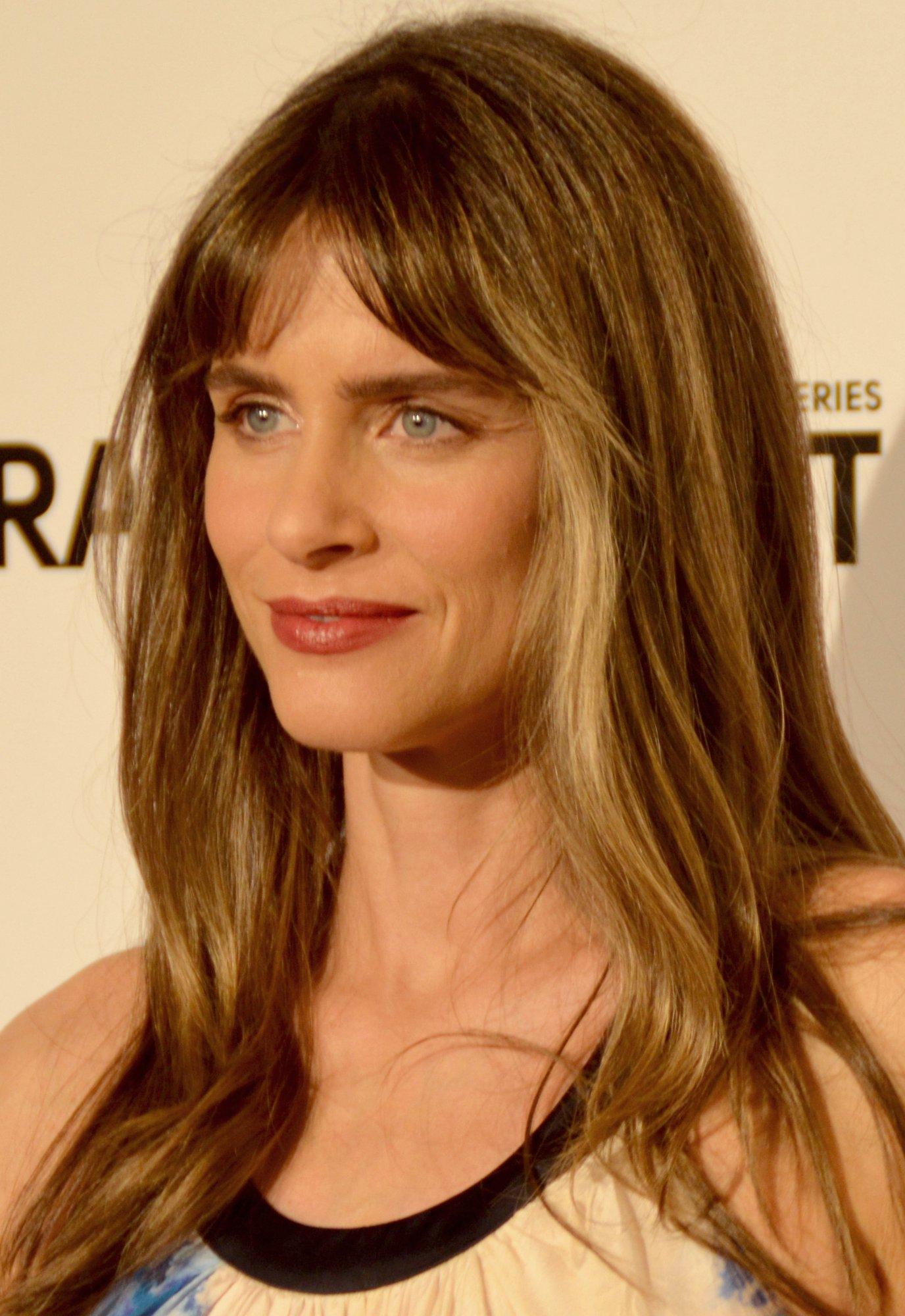
Amanda Peet.

Actor · Writer · Producer

Amanda Peet’s career moves from The Whole Nine Yards and Something’s Gotta Give to Togetherness, Brockmire and Dirty John. She has also written for the stage and co-created Netflix’s The Chair. The interesting continuity is craft across different jobs: delivering a performance, working inside an ensemble and eventually helping build the material other performers will inhabit.

OBJECTIVE PERSONALITY CLASSIFICATIONFM-Te/Se-PB/S(C)What does this mean?
PERSONALITY SYSTEMObjective Personality
LEAD FUNCTIONTe · Extroverted Thinking
SECOND SAVIOR FUNCTIONSe · Extroverted Sensing
MBTI EQUIVALENTENTJ
01 / BEHIND THE CLASSIFICATION

The personality behind the fame.

How does a recorded OPS classification like FM-Te/Se-PB/S(C) break down? Walk through nine coins and watch the proposed type take shape. These are deductions from the archived code, not independent evidence of typing accuracy.

Scroll below to see Amanda Peet take shape.

STARTING POINT512 possible OPS typesEach type combines core functions, an animal order, and sexual modalities.
THE FINISH LINEFM-Te/Se-PB/S(C)One recorded classification, decoded from its components.
Amanda Peet’s HUMAN NEEDS 01—03
01
DECIDER OR OBSERVER?

Decider over Observer

Deciders have more balanced Observer poles in the middle: Control (Oi) and Chaos (Oe). Organizing what's known and handling what's new tend to feel more manageable. People are the harder territory. Self (Di) and Tribe (De) sit at the extremes, so judgment, rejection, approval, and conflict can trigger the strongest reactions.

Peet’s public vaccine advocacy produced a revealing distinction between a position and its reception: she apologized for language directed at other parents while maintaining the underlying position. The Decider lens puts the pressure in people and competing judgments. A willingness to state a view can give an argument a clear owner. The blind spot is assuming that defending the point also resolves its effect on the audience. Growth means handling the relationship and the judgment as separate responsibilities, rather than expecting one successful argument to settle both.

D
02
SELF OR TRIBE?

De · Tribe over Di · Self

Tribe (De) is the stronger deciding pole. They check decisions against people, shared standards, and what works for the group: what do we need, what will others think? The strength is coordination and responsiveness; the recurring friction is the Self (Di)—knowing and defending their own position. As the portrait unfolds, notice how Tribe takes the lead.

The move from acting in an ensemble to co-creating The Chair placed Peet on both sides of a collaborative production. De gives this portrait an outward deciding reference: making a direction usable by other people, with standards that extend beyond a private preference. The advantage is a project that a cast and crew can actually execute. The possible cost is allowing reception to become the only measure of the work. A shared standard needs room for an individual judgment that can survive a difficult meeting or an initially disappointing response.

De
03
GATHER OR ORGANIZE?

Oe · Gather over Oi · Organize

Gather (Oe) leads with new information, experiences, and possibilities. Its strength is curiosity and adaptability; the recurring friction is narrowing the options and settling into what is already known. Another layer of the personality portrait comes into focus.

Peet’s résumé is practically an argument for gathering over settling. She moved from TV commercials and Law & Order to indie films, broad studio comedies, Broadway, HBO dramedy, playwriting, a children’s book and then a Netflix series she wrote and produced. That kind of career is fed by openings, not by one rigid lane. The strength is range: when one path narrows, another possibility appears. The blind spot is that novelty keeps offering fresh doors, while a life still demands choosing which ones deserve the next decade instead of remaining permanently available.

Oe
FIRST THREE COINSD + De + Oe

These establish the preferred human needs in the OPS framework.

Amanda Peet’s FUNCTIONS 04—05
04
FEELING OR THINKING?

Thinking · T over Feeling · F

Thinking (T) evaluates decisions through reasons, logic, and what works—not a lack of emotion. Its strength is analytical consistency; Feeling (F) provides balance through values, meaning, and the human consequences of a decision. Combined with Tribe (De), this forms the recorded Savior Te.

Co-creating and co-executive producing The Chair required more than having an interesting premise. Writing had to become a six-episode production with decisions other people could use. Thinking paired with De brings that practical accountability into focus: what works, what follows and what needs to be changed. The strength is turning a sensibility into a finished structure. Its counterpart asks how those decisions affect the people asked to carry them out. A workable solution can still need a more careful explanation of why it matters and what somebody will have to give up.

T → Te
05
SENSING OR INTUITION?

Sensing · S over Intuition · N

Sensing (S) focuses on concrete details, observable reality, and lived experience. Intuition (N) balances it by looking for broader patterns, concepts, and implications. Combined with Gather (Oe), this gives the recorded Savior Se.

Peet’s Sensing side shows up in how often her career has depended on immediate performance reality rather than abstract image management. She studied with Uta Hagen for four years, worked off-Broadway, and in 2005 stepped into This Is How It Goes for Marisa Tomei after only six days of rehearsal. That is concrete responsiveness: body, timing, lines, stage, now. Se’s strength is making pressure tangible and playable instead of theoretical. The blind spot is that immediate demands can crowd out longer-range filtering. Handling what is right in front of you brilliantly does not, by itself, decide what all those fast pivots are adding up to.

S → Se
THE TWO SAVIOR FUNCTIONSTe / Se

Opposing functions: Fi and Ni. This is a jumper classification.

Amanda Peet’s ANIMAL STACK 06—07
06
PLAY OR SLEEP?

Play over Sleep

Play emphasizes external real-time engagement; Sleep emphasizes internal processing. The recorded stack places Play earlier.

Play comes before Sleep in Peet’s recorded order. Jack & Jill, Studio 60 on the Sunset Strip, Togetherness and Brockmire all provide public settings in which a performance develops through timing and exchange with other people. The strength of outward engagement is responsiveness: an idea can change through the work rather than waiting for a perfectly settled private version. The possible cost is leaving consolidation until after momentum has made the next decision. Balance gives the experience a quieter checkpoint before another exchange supplies a fresh direction.

P > S
07
CONSUME OR BLAST?

Blast over Consume

Consume gathers information for internal processing; Blast organizes and communicates information. The recorded order is Play → Blast → Sleep → Consume. This comparison follows their positions in that stack.

Blast comes before Consume in this comparison. A play or television script makes the distinction tangible: private impressions eventually have to become words, scenes and a direction another performer can understand. Peet’s move into writing and producing gives that outward organization a concrete professional setting. The strength is making a conclusion usable rather than keeping the project permanently preparatory. The cost appears when clarity arrives before sufficient listening. More intake may change a scene, an assumption or the audience imagined for the work, even after the initial argument feels satisfyingly complete.

B > C
Amanda Peet’s ANIMAL ORIENTATION 08—09
08
INFO OR ENERGY DOMINANT?

Energy over Info

Energy dominant means Play and Sleep are both in the top three: there is access to expending energy through engagement and conserving it through internal processing. Consume last leaves the information side uneven—Blast may broadcast more than gets taken in.

Play and Sleep both fall within the first three animals, giving this profile Energy dominance. That describes the recorded balance between outward engagement and inward consolidation; it does not mean a person is always busy. A career spanning ensemble acting and writing offers useful settings for both kinds of work. Consume last leaves the information side less balanced: delivery can move ahead of fresh intake. The growth edge is therefore not simply another project or a better performance. It is taking in enough unfamiliar material to improve the direction already being expressed.

Energy
09
INTROVERSION OR EXTROVERSION?

Extroversion over Introversion

The last animal, Consume, determines this OPS coin: Play or Blast last means Introversion; Consume or Sleep last means Extroversion. This describes animal orientation, not sociability or shyness.

Peet’s complete recorded order is Play, Blast, Sleep, Consume. Consume last produces Extroversion in this OPS coin, independently of how sociable somebody appears. Performance, collaboration and writing for production all provide public illustrations of moving a position into the world. The strength is giving an idea contact with people who can respond to it. The possible blind spot is treating that response as sufficient intake. Growth leaves a separate space for unfamiliar information, including something that does not fit the current project or arrive in the form of an immediate exchange.

E
Sexual Modalities

The four sexual modalities.

OPS uses masculine/feminine sensory and extroverted-deciding distinctions as framework-specific terms, not gender categories. The four modalities are already included in the original 512 types. The recorded modality is FM · Visual.

MM KinestheticMasculine Sensory · Masculine De
MF AudioMasculine Sensory · Feminine De
FF TesterFeminine Sensory · Feminine De
FM RECORDED MODALITYVisualFeminine Sensory · Masculine De
COMPLETE RECORDED OPS TYPE · MODALITY INCLUDEDFM-Te/Se-PB/S(C)

Te leads, Se supports, and the animal stack is Play → Blast → Sleep → Consume.

THE FINISHED PORTRAIT · ALL NINE COINS REVEALED

Amanda Peet's complete function and animal stack

PlayBlastSleepConsumemTemNifSefFi
FM-Te/Se-PB/S(C)DOUBLE ACTIVATED · BLASTExplore the Interactive Coin Builder →
THE AMANDA PEET LENS

More than the quick line.

Peet’s film and television credits can look like a collection of sharp turns: broad comedy, ensemble drama, a thriller, a different network and another role. The writing credits add a second perspective. She is also somebody who has had to create the scenes and decisions another actor will eventually make look immediate.

Te/Se gives this portrait a useful tension between practical direction and the reality of the moment. A performance has to work here, with these words and these people. The strength is responsiveness that produces something concrete. The limit is that successfully handling the scene does not automatically determine which larger story deserves the next chapter.

As a Decider and Double Observer, the central imbalance is not simply keeping up with changing projects or imposing order on them. It is negotiating an outward standard without losing a position of her own. Neglected Fi asks what remains personally worth doing when the room wants something different. A performance can work for its audience while leaving that individual judgment unresolved.

Play → Blast → Sleep → Consume adds the final pressure test. Interaction, delivery and consolidation can move a project forward before enough unfamiliar material has been taken in. Balance means giving a collaborator’s objection or a detail outside the first draft room to change the direction. Keep the timing and willingness to finish; let the next strong line benefit from another serious listen.

Want to understand the Savior and Demon states behind these nine coins? Explore the complete explanation, visual examples, and typing principles on our Methodology page →

02 / KEEP EXPLORING

Different faces. Familiar patterns.

Explore other celebrities with related recorded OPS classifications. Related functions are not necessarily exact type matches.

Discover Type Twins
YOUR TURN

Curious about your own type?

Discover how your own personality might be classified through Objective Personality.

Get objectively typed
Amanda Peet's Personality Type & OPS Profile | The Personality Atlas