The Personality Atlas
THE CELEBRITY PERSONALITY ARCHIVE / DIY & Furniture Design

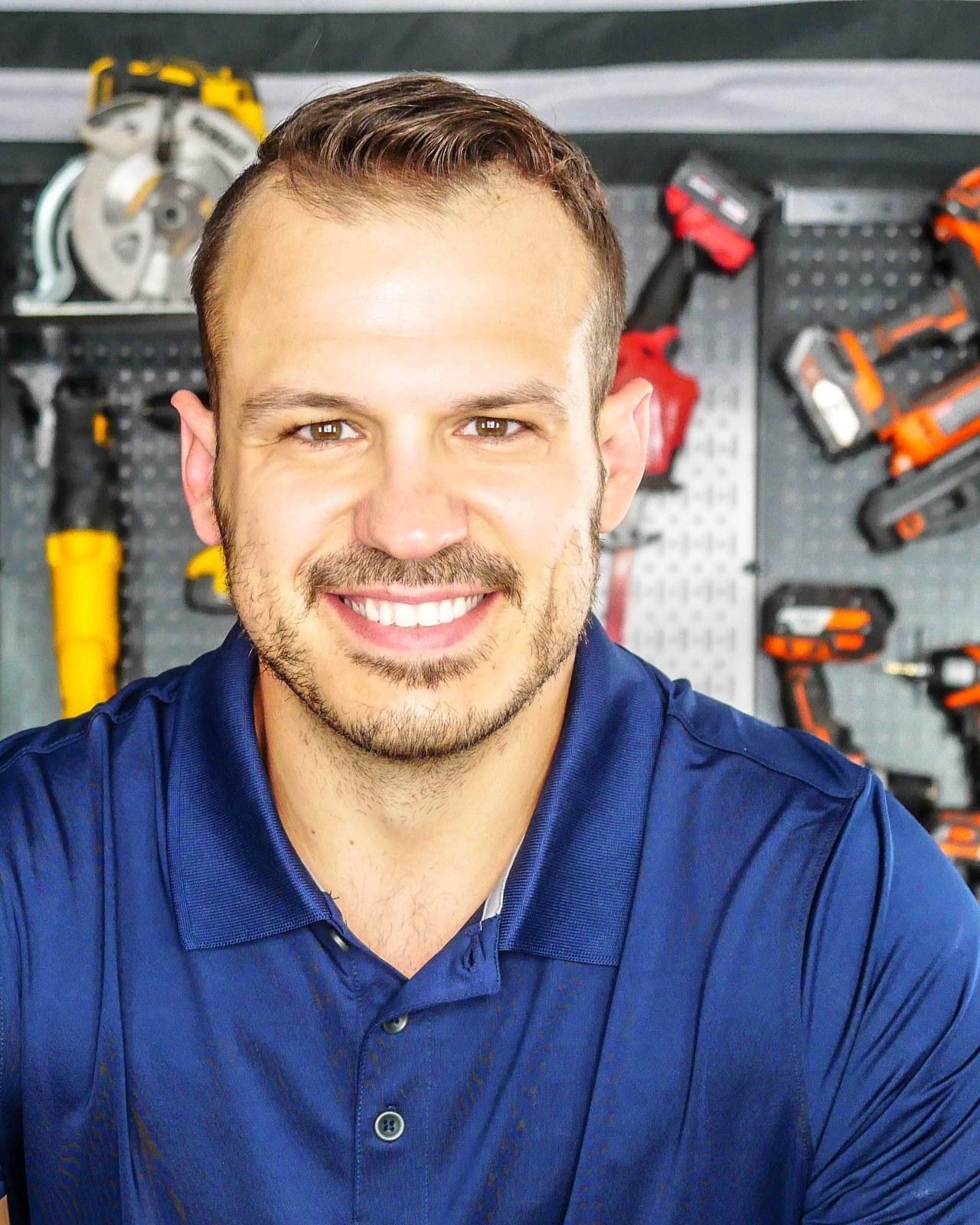
Alex Mazhukhin.

Furniture designer · Fabricator · DIY creator

Alex Mazhukhin built Mr. Build It from the practical pressure of a young family’s first home: unaffordable upgrades became self-taught projects, then tutorials, furniture fabrication, and a workshop-centered creator business that turns ordered design into watchable instruction.

OBJECTIVE PERSONALITY CLASSIFICATIONMF-Ni/Fe-BS/P(C)What does this mean?
PERSONALITY SYSTEMObjective Personality
LEAD FUNCTIONNi · Introverted Intuition
SECOND SAVIOR FUNCTIONFe · Extroverted Feeling
MBTI EQUIVALENTINFJ
01 / BEHIND THE CLASSIFICATION

The personality behind the fame.

How does a recorded OPS classification like MF-Ni/Fe-BS/P(C) break down? Walk through nine coins and watch the proposed type take shape. These are deductions from the archived code, not independent evidence of typing accuracy.

Scroll below to see Alex Mazhukhin take shape.

STARTING POINT512 possible OPS typesEach type combines core functions, an animal order, and sexual modalities.
THE FINISH LINEMF-Ni/Fe-BS/P(C)One recorded classification, decoded from its components.
Alex Mazhukhin’s HUMAN NEEDS 01—03
01
DECIDER OR OBSERVER?

Observer over Decider

Observers have more balanced Decider poles in the middle: Self (Di) and Tribe (De). Their own perspective and other people's perspectives tend to be easier to navigate. Things are the harder territory. Control (Oi) and Chaos (Oe) sit at the extremes, so disrupted plans, uncertainty, and a changing world can trigger the strongest reactions.

When Mazhukhin and his wife wanted upgrades in their first home, the defining obstacle was not whether people believed in him. It was the blunt math of circumstance. Hiring the work out was beyond their budget, so the house itself forced a different path: learn the tools, solve the constraint, build it yourself. That is classic Observer pressure—materials, layouts, timing, and reality refusing to bend for free. The strength is practical adaptation. The blind spot is expecting one cleaner setup or better plan to finally remove the uncertainty that every real project still carries.

O
02
SELF OR TRIBE?

De · Tribe over Di · Self

Tribe (De) is the stronger deciding pole. They check decisions against people, shared standards, and what works for the group: what do we need, what will others think? The strength is coordination and responsiveness; the recurring friction is the Self (Di)—knowing and defending their own position. As the portrait unfolds, notice how Tribe takes the lead.

Mr. Build It stopped being just private problem-solving once the projects began attracting an audience on a blog, Pinterest, and then YouTube. That shift fits Tribe-first decision-making: work gets shaped toward what other people can use, understand, and benefit from. The strength is obvious in tutorial-style content. He does not merely complete a build; he translates it for viewers. The cost is subtler and more uncomfortable. Outside usefulness can become the measuring stick for everything, making it easier to satisfy audience needs or shared standards than to stop and ask what his own preference would choose if nobody else had to follow along.

De
03
GATHER OR ORGANIZE?

Oi · Organize over Oe · Gather

Organize (Oi) leads with refining, preserving, and structuring what is already known. Its strength is preparation and clear direction; the recurring friction is unexpected change that disrupts the plan. Another layer of the personality portrait comes into focus.

Wall Control’s feature on his shop is basically a public tour of organized certainty: vertical pegboards, dedicated hooks, a workstation kit, and drawers assigned to specific categories of tools and supplies. Even his day, as described publicly, is segmented from family responsibilities into production and back again. Organize-first likes narrowing chaos into a dependable system. The payoff is obvious: less hunting, less drift, more consistent output. The blind spot is over-trusting the system. A tightly arranged workflow can make messy experiments, sudden detours, or alternate methods feel like disruptions when they may be the very things that improve the final build.

Oi
FIRST THREE COINSO + De + Oi

These establish the preferred human needs in the OPS framework.

Alex Mazhukhin’s FUNCTIONS 04—05
04
FEELING OR THINKING?

Feeling · F over Thinking · T

Feeling (F) evaluates decisions through values, meaning, and what matters—not simply through emotion. Its strength is a clear sense of significance; Thinking (T) provides balance through impersonal reasons, consistency, and evidence. Combined with Tribe (De), this forms the recorded Savior Fe.

The public story around Mr. Build It is not fabrication for fabrication’s sake. His projects start with home and family use, and his content is framed around helping other people understand, apply, or recreate what he learned. That people-centered calibration fits Fe. The strength is design that communicates care instead of just technical ego. The limit is that shared usability is not the whole verdict. A build can feel thoughtful and be presented clearly while still needing another pass on impersonal questions like long-term durability, hard cost tradeoffs, or whether the friendly explanation skipped a more technical objection.

F → Fe
05
SENSING OR INTUITION?

Intuition · N over Sensing · S

Intuition (N) focuses on concepts, patterns, and what information might mean. Sensing (S) balances it through observable facts, physical detail, and direct experience. Combined with Organize (Oi), this gives the recorded Savior Ni.

Mazhukhin’s work lands because he does more than react to whatever material happens to be on the bench. He tends to move toward a finished picture: the upgraded room, the fabricated piece, the workshop where each kind of tool already has a logical place. That is Ni’s strength—compressing many details into one guiding vision. Viewers can feel the destination before the build is done. The cost is premature certainty. When the end state feels vivid, real-time sensory feedback from the project can start looking like irritation instead of useful evidence that the original vision needs adjusting.

N → Ni
THE TWO SAVIOR FUNCTIONSNi / Fe

Opposing functions: Se and Ti.

Alex Mazhukhin’s ANIMAL STACK 06—07
06
CONSUME OR BLAST?

Blast over Consume

Consume gathers information for internal processing; Blast organizes and communicates information. The recorded order is Blast → Sleep → Play → Consume. This comparison follows their positions in that stack.

Mr. Build It grew because Blast shows up earlier than Consume. Instead of privately collecting endless techniques, Mazhukhin turned home upgrades into explanations other people could use—first on a blog and Pinterest, then on YouTube. Earlier Blast gives him a practical teaching force: package the lesson, define the point, move the information outward. That is a real advantage for a creator-business built on visible competence. The cost is that later Consume can get underfed. On unfamiliar projects, the temptation is to explain from the emerging method before fully sampling what another maker, source, or alternative process might contribute.

B > C
07
PLAY OR SLEEP?

Sleep over Play

Play emphasizes external real-time engagement; Sleep emphasizes internal processing. The recorded stack places Sleep earlier.

After Blast over Consume, the other split puts Sleep earlier than Play. Publicly, Mazhukhin describes a structured rhythm that moves from family responsibilities into production work and then back again. That pacing fits someone who wants an internal processing lane before everything turns into live exchange. The strength is steadiness. He can work through a design or fabrication problem and present a more considered result instead of improvising every step in public. The tradeoff is that later Play can delay fresh back-and-forth. Spontaneous collaboration or on-the-fly feedback may arrive after the internal version already feels settled.

S > P
Alex Mazhukhin’s ANIMAL ORIENTATION 08—09
08
INFO OR ENERGY DOMINANT?

Energy over Info

Energy dominant means Play and Sleep are both in the top three: there is access to expending energy through engagement and conserving it through internal processing. Consume last leaves the information side uneven—Blast may broadcast more than gets taken in.

His recorded stack lands on Energy because Sleep and Play both sit in the top three while Consume drops to the bottom. In public life, that tracks with a schedule built around doing: handle the morning with family, move into filming and fabrication, then switch contexts again. There is both internal recovery and outward engagement in that rhythm. The strength is momentum without total sprawl. The missing balance is intake. When unfamiliar design projects become content quickly, the weaker link is not effort or warmth; it is pausing long enough to gather one more method, measurement, or outside reference before committing.

Energy
09
INTROVERSION OR EXTROVERSION?

Extroversion over Introversion

The last animal, Consume, determines this OPS coin: Play or Blast last means Introversion; Consume or Sleep last means Extroversion. This describes animal orientation, not sociability or shyness.

This final coin is OPS Extroversion, and it comes from Consume landing last—not from how outgoing he may seem on camera. In practice, it points to a stack that more readily moves toward output, action, and engagement than toward prolonged information intake. His public origin story fits that pattern: faced with unaffordable home projects, he started building, documenting, and teaching. The advantage is initiative. The blind spot is informational impatience. A creator can become very good at solving, explaining, and moving on while underfeeding the slower work of studying alternatives that were not already inside the current plan.

E
Sexual Modalities

The four sexual modalities.

OPS uses masculine/feminine sensory and extroverted-deciding distinctions as framework-specific terms, not gender categories. The four modalities are already included in the original 512 types. The recorded modality is MF · Audio.

MM KinestheticMasculine Sensory · Masculine De
MF RECORDED MODALITYAudioMasculine Sensory · Feminine De
FF TesterFeminine Sensory · Feminine De
FM VisualFeminine Sensory · Masculine De
COMPLETE RECORDED OPS TYPE · MODALITY INCLUDEDMF-Ni/Fe-BS/P(C)

Ni leads, Fe supports, and the animal stack is Blast → Sleep → Play → Consume.

THE FINISHED PORTRAIT · ALL NINE COINS REVEALED

Alex Mazhukhin's complete function and animal stack

BlastSleepPlayConsumefNifFemTimSe
MF-Ni/Fe-BS/P(C)DOUBLE ACTIVATED · BLASTExplore the Interactive Coin Builder →
THE ALEX MAZHUKHIN LENS

The builder who makes order public.

Mr. Build It can look like pure confidence: a clean shop, a finished piece, a camera-ready explanation. The public origin is less glamorous and more revealing. Mazhukhin started because he and his wife wanted better spaces in their first home and could not afford to hire everything out. The polished creator grew out of ordinary constraint, not abstract branding.

His Ni/Fe pairing gives him a specific professional gift: envision the end state, then package it in a way other people can use. You can see it in the organized workshop systems and tutorial-driven project sharing. The limit is built into the same pairing. A strong vision delivered helpfully can become so persuasive that inconvenient physical feedback or alternate methods arrive later than they should.

As an Observer and Double Decider, Mazhukhin is more naturally stretched by uncertainty in tools, spaces, budgets, and changing project conditions than by endless people-drama. That Double Decider balance helps him keep moving without every audience reaction becoming a crisis. The human-needs imbalance sits on the sensory ground floor: neglected Se can miss what the material, room, or real-time evidence is doing right now.

Blast → Sleep → Play → Consume explains the public rhythm well: teach the build, process it internally, engage as needed, then leave new intake for last. With Consume fourth, the recurring imbalance is not laziness but under-collecting before commitment. The best correction is simple and concrete: keep the decisive tutorial voice, but add a deliberate research-and-test pass before publishing the next unfamiliar build.

Want to understand the Savior and Demon states behind these nine coins? Explore the complete explanation, visual examples, and typing principles on our Methodology page →

02 / KEEP EXPLORING

Different faces. Familiar patterns.

Explore other celebrities with related recorded OPS classifications. Related functions are not necessarily exact type matches.

Discover Type Twins
YOUR TURN

Curious about your own type?

Discover how your own personality might be classified through Objective Personality.

Get objectively typed
Alex Mazhukhin's Personality Type & OPS Profile | The Personality Atlas