THE PERSONALITYATLAS
THE CELEBRITY PERSONALITY ARCHIVE / FILM & THEATRE

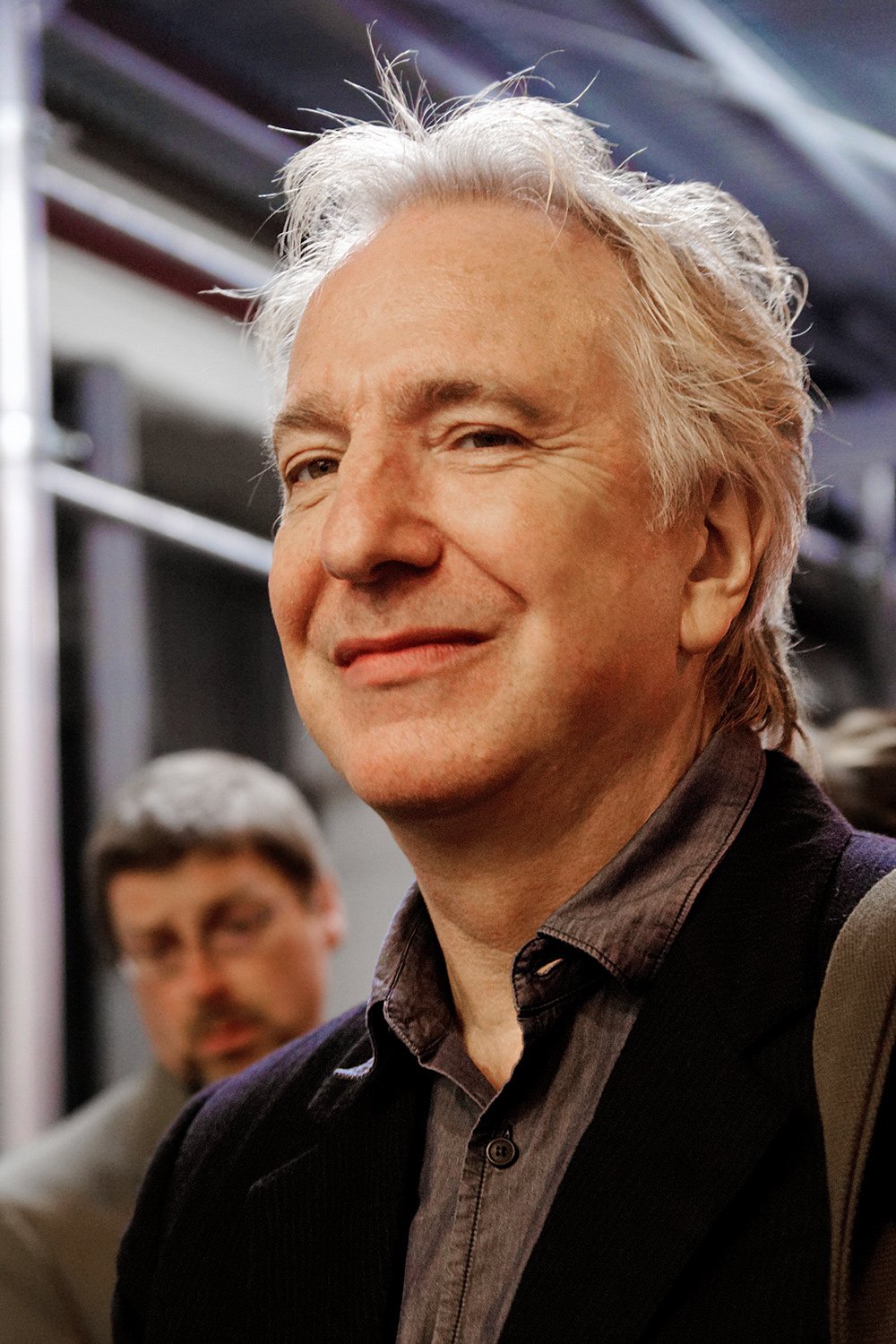
Alan Rickman.

Actor · Theatre veteran · Director

Alan Rickman found screen fame relatively late after stage work and an earlier design career, becoming memorable in Die Hard, Sense and Sensibility and Harry Potter. His long relationship with Rima Horton and the diaries published after his death reveal a life broader than his iconic voice and villains.

OBJECTIVE PERSONALITY CLASSIFICATIONMF-Ni/Ti-SC/B(P)What does this mean?
PERSONALITY SYSTEMObjective Personality
LEAD FUNCTIONNi · Introverted Intuition
SECOND SAVIOR FUNCTIONTi · Introverted Thinking
MBTI EQUIVALENTINFJ
01 / BEHIND THE CLASSIFICATION

The personality behind the fame.

How does a recorded OPS classification like MF-Ni/Ti-SC/B(P) break down? Walk through nine coins and watch the proposed type take shape. These are deductions from the archived code, not independent evidence of typing accuracy.

Scroll below to see Alan Rickman take shape.

STARTING POINT512 possible OPS typesNine binary choices narrow the possibilities in the original OPS model.
THE FINISH LINEMF-Ni/Ti-SC/B(P)One recorded classification, decoded from its components.
Alan Rickman’s HUMAN NEEDS 01—03
01
DECIDER OR OBSERVER?

Observer over Decider

Observers have more balanced Decider poles in the middle: Self (Di) and Tribe (De). Their own perspective and other people's perspectives tend to be easier to navigate. Things are the harder territory. Control (Oi) and Chaos (Oe) sit at the extremes, so disrupted plans, uncertainty, and a changing world can trigger the strongest reactions.

Rickman worked in design and theater for years before his first major film role arrived in his forties. The Observer difficulty is the timetable of the industry: developing a craft doesn't mean an opportunity will appear when you want it. His strength was building a career despite an uncertain route. The blind spot would be expecting preparation alone to guarantee that the world cooperates.
O
02
SELF OR TRIBE?

Di · Self over De · Tribe

Self (Di) is the stronger deciding pole. They check decisions against their own values or reasons first: what makes sense to me, what feels right to me? The strength is independent conviction; the recurring friction is the Tribe (De)—other people's standards, feedback, and expectations. As the portrait unfolds, notice how Self takes the lead.

Rickman's long relationship with Rima Horton and his years of theater work existed well before the worldwide attention of Harry Potter. Self-first can preserve priorities that don't require celebrity approval. The risk is mistaking an independent judgment for a complete one, especially when collaborators bring information that doesn't fit the private assessment.

Di
03
GATHER OR ORGANIZE?

Oi · Organize over Oe · Gather

Organize (Oi) leads with refining, preserving, and structuring what is already known. Its strength is preparation and clear direction; the recurring friction is unexpected change that disrupts the plan. Another layer of the personality portrait comes into focus.

Rickman moved from design into theater and eventually screen acting, a career built over many years rather than a sudden overnight breakthrough. Organize-first can sustain that direction when recognition arrives late. The blind spot is becoming so loyal to an established plan that an unexpected opportunity looks like an unwelcome disruption.

Oi
FIRST THREE COINSO + Di + Oi

These establish the preferred human needs in the OPS framework.

Alan Rickman’s FUNCTIONS 04—05
04
FEELING OR THINKING?

Thinking · T over Feeling · F

Thinking (T) evaluates decisions through reasons, logic, and what works—not a lack of emotion. Its strength is analytical consistency; Feeling (F) provides balance through values, meaning, and the human consequences of a decision. Combined with Self (Di), this forms the recorded Savior Ti.

His diaries reveal how seriously he approached work and colleagues, sometimes with strong opinions. Ti's Thinking preference is about making sense of information and criteria, not a license to declare that the actor was emotionally cold. The vulnerability is that a privately coherent evaluation can still collide with collaborators' very different standards. His diaries reveal sharp artistic judgments. Ti can spot a weak creative decision; the trap is mistaking a perfectly reasoned private critique for the whole truth about collaborators.

T → Ti
05
SENSING OR INTUITION?

Intuition · N over Sensing · S

Intuition (N) focuses on concepts, patterns, and what information might mean. Sensing (S) balances it through observable facts, physical detail, and direct experience. Combined with Organize (Oi), this gives the recorded Savior Ni.

Rickman's distinctive delivery and screen presence made him recognizable, yet Ni as Intuition is about pattern and meaning rather than merely a physical voice. The real sensory counterweight is the disciplined rehearsal and design craft that made an abstract interpretation concrete. A compelling inner picture still needs execution. His distinctive voice was a physical instrument, but the roles required meaning beyond sound. Ni provides the inner interpretation; sensory rehearsal makes it believable.

N → Ni
THE TWO SAVIOR FUNCTIONSNi / Ti

Opposing functions: Se and Fe. This is a jumper classification.

Alan Rickman’s ANIMAL STACK 06—07
06
PLAY OR SLEEP?

Sleep over Play

Play emphasizes external real-time engagement; Sleep emphasizes internal processing. The recorded stack places Sleep earlier.

Sleep leads Rickman's stack. The existence of extensive personal diaries gives a visible record of reflection, though it cannot prove how an OPS animal is prioritized inside a mind. The potential strength is consolidating experience before responding to the demands of a public profession. Years of diaries reveal sustained reflection behind the public image. Sleep allows integration; its risk is letting private conclusions harden before anyone challenges them.

S > P
07
CONSUME OR BLAST?

Consume over Blast

Consume gathers information for internal processing; Blast organizes and communicates information. The recorded order is Sleep → Consume → Blast → Play. This comparison follows their positions in that stack.

Consume follows Sleep, an appealing metaphor for an actor who moved between theater and film while taking in new scripts, directors and techniques. Gathering information makes depth possible. The risk appears when preparation becomes endless refinement and the opportunity to test it with another person passes by. Shakespeare, Die Hard and Harry Potter demanded very different scripts and directors. Consume builds range; endless preparation can postpone stepping into the scene.

C > B
Alan Rickman’s ANIMAL ORIENTATION 08—09
08
INFO OR ENERGY DOMINANT?

Info over Energy

Info dominant means Consume and Blast are both in the top three: gathering and communicating information are more balanced. Play last leaves the energy side uneven—Sleep can conserve energy without enough spontaneous outward engagement.

Rickman is Info-dominant because Consume and Blast are both in his top three. The model supports taking in scripts, interpreting them privately and communicating the result through a finished performance. Play is last, so the Energy pair is uneven: Sleep offers conservation and internal processing, while unplanned back-and-forth may be less preferred. His stage mastery doesn't disprove that distinction. The challenge is letting another person's unexpected contribution reshape an interpretation that already feels complete.

Info
09
INTROVERSION OR EXTROVERSION?

Introversion over Extroversion

The last animal, Play, determines this OPS coin: Play or Blast last means Introversion; Consume or Sleep last means Extroversion. This describes animal orientation, not sociability or shyness.

Play sits last after a later animal, suggesting that live, unpredictable exchange may be a less-preferred territory. Rickman excelled on stage, so performance alone cannot prove or disprove that interpretation. The more honest growth question is whether a carefully prepared conviction can remain open when another person changes the scene. He could command a stage, yet Play last asks how a prepared conviction responds when another person unexpectedly changes the scene.

I
ADDITIONAL LAYER · SEXUAL MODALITIES

The four sexual modalities.

OPS uses masculine/feminine sensory and extroverted-deciding distinctions as framework-specific terms, not gender categories. The recorded modality is MF · Audio.

MM KinestheticMasculine Sensory · Masculine De
MF RECORDED MODALITYAudioMasculine Sensory · Feminine De
FF TesterFeminine Sensory · Feminine De
FM VisualFeminine Sensory · Masculine De
COMPLETE RECORDED OPS TYPE · NINE COINS + SEXUAL MODALITIESMF-Ni/Ti-SC/B(P)

Ni leads, Ti supports, and the animal stack is Sleep → Consume → Blast → Play.

THE FINISHED PORTRAIT · ALL NINE COINS REVEALED

Alan Rickman's complete function and animal stack

SleepConsumeBlastPlayfNifFemTimSe
MF-Ni/Ti-SC/B(P)DOUBLE ACTIVATED · SLEEPExplore the Interactive Coin Builder →
THE ALAN RICKMAN LENS

The slow road to an unmistakable voice.

Alan Rickman's screen image is so instantly recognizable that it's easy to forget he arrived there after years in theater and design. Die Hard made him famous on screen, but a long career and committed relationship with Rima Horton preceded the villain everyone remembers. The timing of a breakthrough and the shape of a life are not the same story.

His recorded Ni/Ti pairing is Observer-first. Ni organizes around an interpretation; Ti tests internal consistency. The combination can lend focus and craft to a long project, but outside opportunities still have their own schedule. The less comfortable Se/Fe territory is where concrete surprises and other people's responses make the elegant interpretation work harder.

Rickman's diaries and stage history make a helpful contrast between inward reflection and outward performance. Sleep and Consume lead his recorded stack, while Blast and Play come later. That framework doesn't explain his personality from a notebook, but it asks a useful question about how a person handles the distance between private preparation and public engagement.

The most interesting growth edge isn't 'be less serious' or 'act more spontaneously.' Those are cheap readings of a complex career. It's the possibility that a finely constructed inner vision becomes stronger when it remains permeable to another actor, an unexpected opportunity or an interpretation that wasn't in the original plan.

These coins explain how to read the archived classification; they are not an independent typing assessment. OPS is not an independently scientifically validated personality assessment. Learn about the method →

Want to understand the Savior and Demon states behind these nine coins? Explore the complete explanation, visual examples, and typing principles on our Methodology page →

02 / KEEP EXPLORING

Different faces. Familiar patterns.

Explore other celebrities with related recorded OPS classifications. Related functions are not necessarily exact type matches.

Discover Type Twins
YOUR TURN

Curious about your own type?

Discover how your own personality might be classified through Objective Personality.

Get objectively typed