Why should you care?
You're about to discover a new way to map the patterns of the human nervous system.
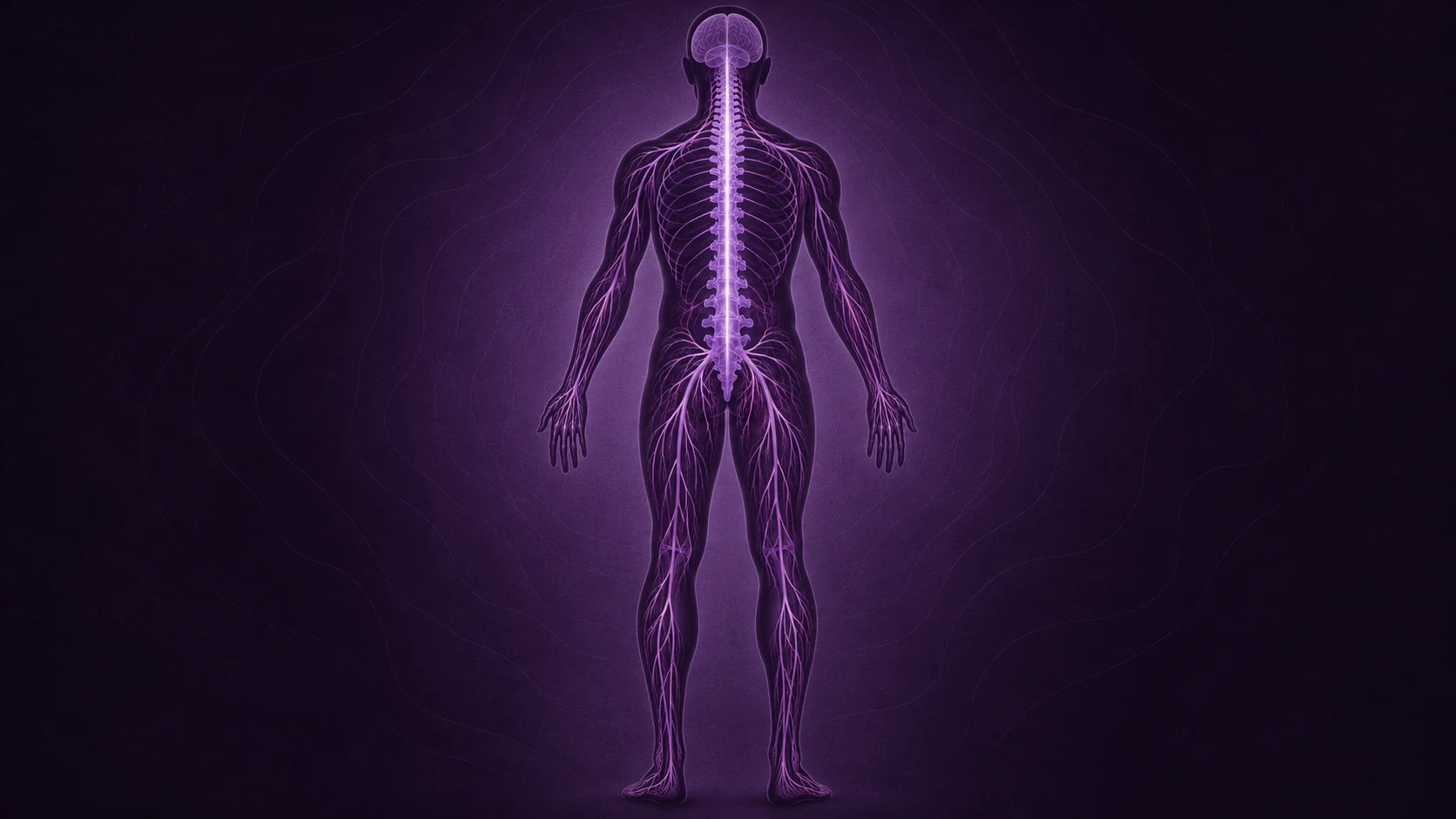
What if you had a clear language for understanding the problems that keep showing up in your life? Why do you handle some challenges with confidence while others leave you stuck, stressed, or putting things off?
Once you start seeing those patterns in yourself, you can use the same lens to understand the people around you. What feels straightforward to you might feel overwhelming to someone else. Seeing what each of you naturally pays attention to can help you make sense of your differences and work with them in everyday life.
That's what the Objective Personality framework sets out to explain. Learning its language can give you a new lens for understanding yourself, your relationships, and the people around you—not as fixed labels, but as recurring patterns worth noticing.
The possibilities for applying this language are wide-ranging. Let's start with why a different approach to personality was needed.
Can you accurately type yourself?
Most popular online personality quizzes begin with the same premise: you answer questions about yourself, and your answers reveal your type. But self-assessment has a built-in limitation. We don't always see our own habits clearly—and what we believe about ourselves can differ from what we consistently do.
People may respond based on their ideals, aspirations, or the person they want to be—not their everyday patterns.
Mood, stress, life circumstances, and how a question is phrased can influence responses and sometimes change a test result.
Some popular typology quizzes assign rigid labels without strong evidence that those categories are stable, distinct, or predictive.
No. Established trait assessments, especially well-designed Big Five measures, have meaningful research support and can provide useful information. The criticism applies more strongly to unsupported claims, overly rigid type systems, and tests that promise more certainty than the evidence allows. Self-report is a limitation to manage—not proof that all personality assessment is invalid.
What if personality were assessed through blind observation instead?
Objective Personality (OPS) was developed around that question. Rather than relying primarily on someone's self-description, OPS practitioners watch and analyze behavior to identify recurring cognitive patterns.
To reduce the influence of one operator on the other, two trained operators independently type the same individual in separate rooms. They do not discuss their observations until both have completed their analysis. They can then compare their findings and investigate disagreements.
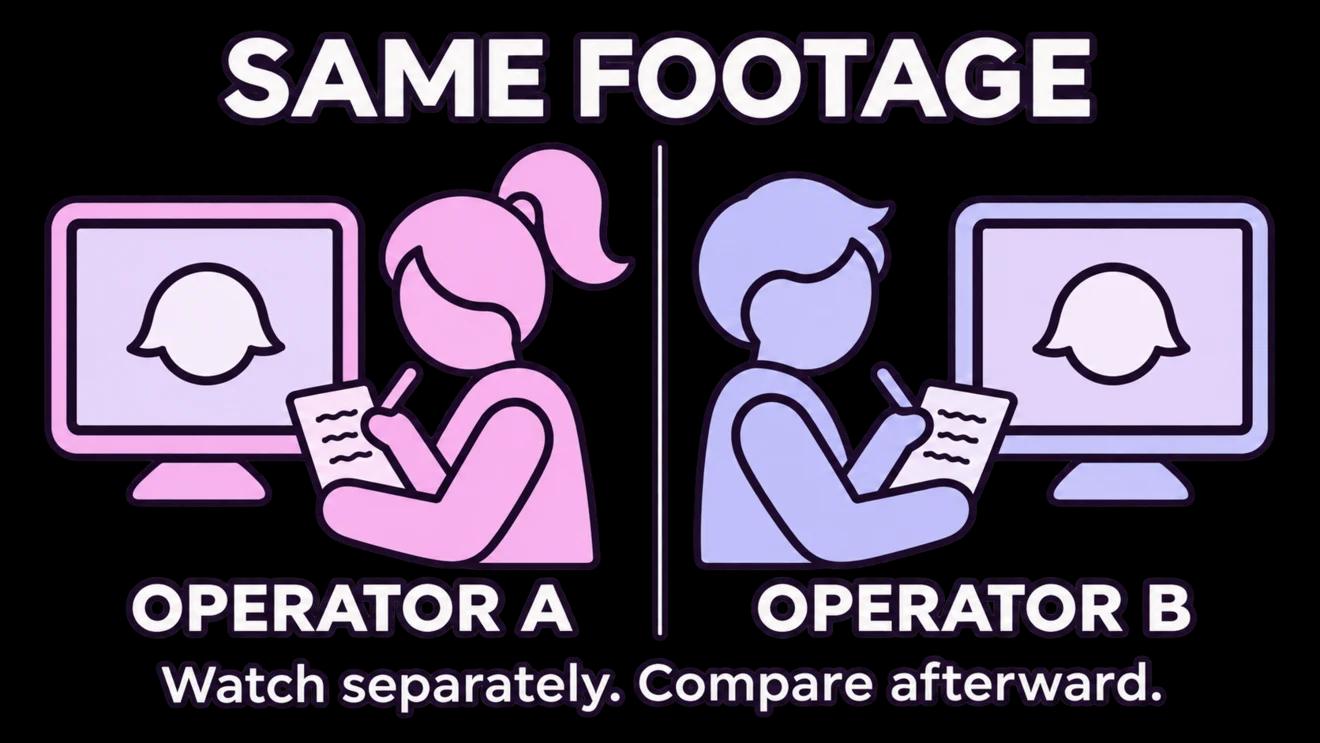
Using this process, more than 5,000 people have been typed by Objective Personality.*
* Independent typing is designed to improve consistency and limit interpersonal influence; it does not by itself establish scientific validity.
See how Objective Personality works.
Start with the basics, then explore how the OPS approach is used to identify patterns and build a personality classification.
Objective Personality: The Basics
A starting point for understanding the concepts and vocabulary behind OPS.
Watch on YouTube ↗How Objective Personality Works
Explore the method behind identifying recurring patterns and assembling a personality type.
Watch on YouTube ↗Savior & Demon States - Nervous System Math
When Dave and Shannon Powers began independently typing people, they found that anecdotes and self-descriptions were unreliable guides. Someone might say “I'm always organized,” “I'm great with people,” or “I love change”—but those claims did not consistently help two operators arrive at the same type. Stories are filtered through memory, identity, and the way we want to see ourselves.
What they report finding more consistently was a person's recurring relationship to comfort and stress: the mental processes they automatically trust, defend, and return to, versus the processes that feel threatening, draining, or difficult to sustain. OPS calls these Savior and Demon states. Within the framework, this distinction is the central lens for interpreting every other behavior.
The Key To Objectivity In Typing
It’s not what you can do. It’s what feels safe.
The most important distinction in Objective Personality is Savior versus Demon. It comes down to what someone naturally steps up to handle with relative ease and what tends to bring out stress, resistance, or a need to prove themselves. Someone can be highly skilled at something and still get visibly tense when it’s their responsibility. That difference is easy to miss if you’re only listening to what they say about themselves.
That’s the distinction Dave and Shan learned to track. When someone says “I’m always organized” or “I love meeting new people,” they look at what happens across situations. Where does someone calmly take ownership without being asked? Where do they repeatedly get defensive, avoid the task, or overcompensate? One tense moment doesn’t tell you much. But when the same contrast keeps showing up as the situation changes, it gives two observers something specific to look for and compare.
We tend to listen to the story a person tells and miss what’s happening while they tell it. The insight behind OPS is to notice the gap between the two. The words are clues. The recurring pattern is what makes the distinction trackable.
Listen past the “liar words.”
OPS uses the provocative term “liar words” for self-descriptions that can mislead a typing session—even when the person sincerely believes what they are saying. The point is not that people are deliberately dishonest. Humans are not perfectly objective observers of themselves. If operators simply accept someone's labels and anecdotes, independent agreement can break down. Instead, they look for the repeated patterns of ease, avoidance, emotional charge, and stress that OPS interprets as clues to the underlying nervous-system preferences.
In OPS, the question isn't whether you can perform a behavior—or even whether you enjoy it. The question is which processes you repeatedly trust, and which ones bring you into a more charged state.
The Most Important Thing To Distinguish In Typing
Savior State
AT EASECalm. Confident.
Collected.
These are the processes someone naturally trusts, prioritizes, and may overuse. They often take responsibility without being asked: “I’ll handle it.” The ease is real, even when the approach becomes excessive.
Demon State
UNDER PRESSUREProving. Defending.
Overcompensating.
Less-preferred processes can feel charged. Someone may avoid them, react defensively, or work hard to prove competence. When the need becomes unavoidable, they may resist responsibility or blame people and circumstances: “Why do I have to deal with this?”
Quick check
Answer both questions correctly to unlock the rest of the guide.
The Four Quadrants of The Human Mind
The diagram pairs the more primal aspects of the brain with Feeling and Sensing, and the more evolved “human” side, associated here with the frontal lobe, with logic and Intuition. Then there’s the left-right split. In the diagram, the “left brain” combines reason with what works in reality, while the right side represents our more “artsy,” creative side, bringing together Intuition and emotion.
The point isn’t to say that one part of the brain is better or worse, or that each function lives in one specific spot. This is a starting point for breaking down the cognitive functions. Remember, everyone can use all four. What matters is which ones you use calmly and which ones leave you feeling more keyed up. It isn’t about how smart you are. It’s about what activates your nervous system.
As we get further into the cognitive functions and look at which of these quadrants we rely on in a Savior or Demon state, it’ll become clearer what these differences mean in everyday life for people with different personality types.
Carl Jung described these four psychological functions: Sensing (S), Intuition (N), Thinking (T), and Feeling (F) as the ways that we make decisions (Thinking & Feeling) and perceive, interpret, and observe the world around us (Sensing & Intuition).
What do I notice?
Sensing (S): facts and direct experience.
Intuition (N): patterns and possibilities.
How do I evaluate it?
Thinking (T): reasons and logic.
Feeling (F): values and significance.
Carl Jung observed a recurring pattern that OPS practitioners report confirming through objective typing: we tend to rely on one Decider (Thinking or Feeling) in a Savior state and one Observer (Sensing or Intuition) in a Savior state. The other two functions tend to be underused and can trigger a stronger nervous system response. In OPS, these are called Demons. Those are the processes we seem to reach for first when we’re making a decision or trying to make sense of what’s happening. In OPS, these preferences help identify our two Savior functions. We still use the other functions, but they may feel less automatic, especially under stress.
Introversion vs. Extroversion
If you’re having a hard time following so far, don’t worry. As these sections unfold, there will be plenty of visuals to help you piece it all together. There are just a few more important fundamentals to cover first.
Now that you understand how two of your four “cognitive quadrants” operate in a Savior or Demon state, it’s important to understand that two of the four are linked to your identity and ground your sense of self. Those are your introverted functions. Introversion involves what you process alone and what’s personal to you. Extroversion involves what you process with others and how you connect with the tribe.
When we pair each of the four letters with either an introverted or extroverted charge, we get the eight cognitive functions Carl Jung described. Depending on your cognitive preferences, four of those eight make up your type. Because cognition is polar, your two extroverted functions must be the inverse of your two introverted functions. The idea is that your identity needs to stay stable and grounded, and your extroverted functions orient around it.
Identity
Your two introverted functions are what you process internally: how you make sense of things for yourself.
T+i=TiIntroverted ThinkingN+i=NiIntroverted Intuition
In this example: your own reasoning (Ti) and your internal picture of how things fit together (Ni).
Human Connection
Your two extroverted functions are how you engage with people and what’s happening around you.
S+e=SeExtroverted SensingF+e=FeExtroverted Feeling
In this example: noticing what’s happening around you (Se) and tuning in to what matters to other people (Fe).
Ti → Se → Ni → FeDecider opposites: Ti ↔ Fe · Observer opposites: Ni ↔ Se
Each of the four letters, T, F, S, and N, can take either an introverted i or extroverted e charge, giving us eight cognitive functions. A quadra combines one Decider pair with one Observer pair. There are two choices for each pair, giving us four possible quadras. Each row shows a group of four functions in no particular stack order.
The Four Quadras
| Quadra | Deciders | Observers |
|---|---|---|
| Alpha | Ti Fe | Si Ne |
| Beta | Ti Fe | Ni Se |
| Gamma | Fi Te | Ni Se |
| Delta | Fi Te | Si Ne |
In OPS, each person belongs to one quadra, determined by the four functions in their type. OPS treats those function preferences as stable and proposes a genetic basis for them. The repeatability OPS practitioners report describes how consistently they can identify a type. A genetic basis for those preferences has yet to be independently established.
Visualizing A Personality Type
Once we understand the four quadrants of the mind and the introverted and extroverted charges, we can start mapping a personality type. All four quadrants are still represented, but notice how the functions are now different sizes. The two colored functions are the Saviors, and the two gray functions are the Demons. The largest ball represents your dominant function, the one you rely on most. Its polar opposite is the smallest ball, representing your most underworked function.
That’s where the greatest imbalance shows up: between your top and bottom functions. There’s more balance between the middle two, even though one is a Savior and the other is a Demon.
Tracking these functions consistently is the core accomplishment of Objective Personality.
Ti / Se
Savior functions
TiIntroverted ThinkingSeExtroverted Sensing
Demon functions
NiIntroverted IntuitionFeExtroverted Feeling
The lines connect the opposites: Ti ↔ Fe and Se ↔ Ni.
The 4 Human Needs
Knowing what a cognitive function means and spotting it in real life are two different things. Dave and Shan learned that the long way: by trying to type people. You don’t watch someone smooth over a disagreement and immediately ask, “Is that Fe?” One moment can look like a lot of things. Instead, start with the human need underneath the function.
To see those needs, set the four letters aside for a moment. Thinking and Feeling both help us decide, so we group them under D for Deciding. Sensing and Intuition both help us take in and make sense of information, so we group them under O for Observing. Keep the i or e to show whether the focus is inward or outward, and the eight functions group into four basic needs:
- Fe and Te → De · Tribe. Feeling and Thinking take different approaches, but both look outward when deciding. The shared need is to take other people’s input, feedback, or standards into account. What makes sense to the people involved?
- Fi and Ti → Di · Self. Both look inward when deciding. The shared need is to come to your own judgment, whether it’s based on personal values or your own reasoning. What do I think is right?
- Se and Ne → Oe · Gathering. Both look outward for new information. One gathers concrete facts and details; the other gathers ideas and possibilities. What else is out there?
- Si and Ni → Oi · Organizing. Both look inward to make sense of information. One organizes remembered details and experiences; the other organizes patterns and insights. How does this fit with what I already know?
Everyone uses all four needs. When typing, look for which needs someone repeatedly takes responsibility for and which opposites tend to bring out stress or resistance. Then bring the letters back in. If the need is Gathering (Oe) and the person consistently gathers concrete details (Sensing), that combination is Se. If the need is Self (Di) and they consistently turn to their own reasoning (Thinking), that combination is Ti. The function is the name for the two pieces you’ve put together.
Gather or organize?
How do I handle information?
OeGatheringOutward
“What else is out there?”OiOrganizingInward
“How does this fit with what I already know?”
Self or tribe?
Whose judgment am I orienting around?
DiSelfInward
“What do I think is right?”DeTribeOutward
“What makes sense to the people involved?”
NEED + LETTER = FUNCTIONOe + S = SeDi + T = Ti
See all eight combinations
Observing
Oe + S = Se · extroverted Sensing
Oi + S = Si · introverted Sensing
Oe + N = Ne · extroverted Intuition
Oi + N = Ni · introverted Intuition
Deciding
Di + T = Ti · introverted Thinking
De + T = Te · extroverted Thinking
Di + F = Fi · introverted Feeling
De + F = Fe · extroverted Feeling
Four basic ways we move through life.
As Dave and Shannon developed OPS through their typing observations, they noticed cognitive functions appearing to work together in pairs, creating four recurring, almost primal patterns of behavior. They called these patterns the four animals.
Everyone uses all four. What differs is which ones feel natural and which take more effort.
Take information in.
Learning, exploring, and figuring things out for yourself.
Put information out.
Explaining, teaching, and sharing what you know.
Engage with the world.
Interacting, collaborating, and responding together.
Process things internally.
Reflecting, recharging, and working through your thoughts.
Why is one animal in parentheses?
Everyone uses all four animals. In CS/B(P), the parentheses mark Play (P) as the last animal in this example. Play pairs Se (taking in what’s happening around you) with Fe (taking other people’s perspectives and feedback into account).
In OPS, the last animal is the one a person tends to give the least consistent attention. For someone who is Play-last, jumping into a group activity and responding to people in real time may take more deliberate effort, even if they enjoy it or are good at it. The dashed line shows where Play fits in the stack.
The last animal also tells you which groups have two animals in the top three. Consume and Sleep are introverted, and Blast and Play are extroverted. Consume and Blast are information animals, and Sleep and Play are energy animals.
- Consume last: extrovert and energy-dominant.
- Sleep last: extrovert and info-dominant.
- Blast last: introvert and energy-dominant.
- Play last: introvert and info-dominant.
In CS/B(P), Consume and Sleep give the top three two introverted animals, while Consume and Blast give them two information animals. These labels describe the OPS animal stack.
Nine cards.
One unfolding example.
Follow Ti/Se-CS/B(P): introverted Thinking and extroverted Sensing, with Consume → Sleep → Blast → Play. Open each card when you are ready for its diagram.
The cards explain and cross-check the code. They overlap; they are not nine independent choices. Sexual Modalities are already part of the original 512 types.
01Where is the biggest imbalance?
Deciders show more stress around people and self-versus-tribe judgment. Observers show more stress around information and uncertainty. The extreme function positions show the main imbalance.
02Whose judgment comes first?
Di trusts personal reasons or values; De prioritizes outside feedback and shared outcomes. Look for which side feels like a natural responsibility.
03New information or the known?
Oe gathers new input and possibilities; Oi organizes what is already known. The Savior is the side the person returns to with greater ease.
04Reasons or values?
Thinking (T) emphasizes logic and consistency; Feeling (F) emphasizes worth and values. This coin identifies the preferred Decider letter.
05Details or patterns?
Sensing (S) focuses on concrete information; Intuition (N) focuses on patterns and possibilities. This coin identifies the preferred Observer letter.
06Which animal comes first?
The first five cards already determine the two Savior functions, so this card illustrates an implied result rather than adding an independent choice. They combine into the first animal: Di + Oe = Consume, Di + Oi = Sleep, De + Oe = Play, or De + Oi = Blast.
07Which animal comes second?
The next most comfortable animal comes from the opposite Info/Energy category. Together, the first two animals form the Savior pair.
08Which category is third?
Info animals are Consume and Blast; Energy animals are Sleep and Play. Info dominance means Consume and Blast are both in the top three; Energy dominance means Sleep and Play are both in the top three. This constrains the last animal and overlaps with the next cross-check.
09Which animal is last?
Play or Blast last indicates introversion in this OPS coin; Consume or Sleep last indicates extroversion. Together with dominance, this checks the last animal: Info + Introversion = Play last; Info + Extroversion = Sleep last; Energy + Introversion = Blast last; Energy + Extroversion = Consume last.
What do the yellow rings and dashed lines mean?
Yellow rings mark the double-activated functions. The two functions connected to the missing animal (red dashed lines) are the single-activated functions.
Why 512? The full count and overlapping cards
One original count. 512 types, modalities included.
The independent count is 32 Savior/lead configurations × 4 compatible animal orders × 4 modalities = 512. The first five contrasts identify 32 function configurations. Each allows four animal completions, giving 128 function-and-animal configurations. The four modalities complete the original 512; they do not multiply 512 again.
Our nine cards are a teaching sequence with interdependencies. The first animal follows from the Savior functions; its pair priority is therefore implied. The other pair priority and the dominance/orientation cross-checks constrain the remaining order. Cards 8 and 9 overlap rather than adding two unrestricted choices.
The founders describe the historical nine-coin, 512-type model on their origin page; their FAQ includes modality and animal-order differences within that typing process. The multiplication above expresses that count.
In the OPS framework, these coins were not simply invented as nine categories to fill out a test. According to its creators, they emerged from repeated independent typing: two operators analyzed the same person separately, compared their results afterward, and refined the distinctions they believed they could recognize consistently without influencing each other.
That independent agreement is the aim of the method, though the claimed reliability of the nine coins still needs independent scientific validation. Below, we explain the modality already included in that count and the separate, later social-type extension.
Quick check
Answer both questions correctly to unlock the rest of the guide.
Sexual Modalities
128 function-and-animal configurations × 4 modalities = 512. The two-letter prefix completes the original type.
How firm or flexible are the functions?
OPS uses Masculine (M) to describe comparatively firm or resistant processing and Feminine (F) to describe comparatively movable or adaptable processing. The first letter in the modality prefix describes Sensory (S); the second describes Extroverted Deciding (De), either Te or Fe. These terms do not describe a person's sex or gender.
Masculine Sensory + Masculine De. Both sensory processing and extroverted deciding are described as more firm or resistant.
Masculine Sensory + Feminine De. Sensory processing is described as firmer, while extroverted deciding is more movable.
Feminine Sensory + Feminine De. Both sensory processing and extroverted deciding are described as more movable.
Feminine Sensory + Masculine De. Sensory processing is described as more movable, while extroverted deciding is firmer.
The Kinesthetic, Audio, Tester, and Visual names are OPS shorthand for these combinations, not proof of a preferred learning style or a clinical sensory trait. For example, Taylor Swift's recorded FM-Fi/Se-CP/S(B) begins with the FM modality prefix.
A complete code key.
- MF
- Masculine Sensory + Feminine extroverted Deciding: the modality prefix.
- Ti/Se
- The two Savior functions. The slash separates them; Ti leads and Se supports.
- CS/B(P)
- Consume → Sleep → Blast → Play. The slash separates the first two animals from the third; parentheses identify the last animal.
- #2
- The separately recorded social extension: Generalize → Friends → Flex → Specialize.
Optional: jumper types and Savior positions
What is a jumper type?
In the OPS framework, roughly 50% of people are described as jumpers: instead of treating their second function as their second Savior, they skip over it and take Savior responsibility for the third function. This is a claim within the OPS model, not an independently verified population statistic.
The important distinction is that the function stack does not change. The balls stay the same size and in the same order. The third function is still the smaller muscle, but the person relies on it as a Savior—something they take responsibility for in a calm, preferred state. The second function may be larger yet carry more Demon-like resistance. What changes is the Savior pairing, not the underlying function-size hierarchy.
For example, an ISTP has the same Ti–Se–Ni–Fe function stack in both diagrams. A standard Ti/Se type has Savior positions 1 + 2; a Ti/Ni jumper has Savior positions 1 + 3. Compare which two balls are colored:
The same distinction can occur with INTJ: Ni/Te versus Ni/Fi. The diagrams illustrate the proposed Savior pattern; they do not independently establish that a person has that type. The term “jumper” comes from comparing OPS Savior positions with the conventional Myers–Briggs stack order, not from changing personalities.
That is why our Myers–Briggs search uses the first two recorded OPS Savior functions while keeping the familiar four-letter type as a search category. OPS and Myers–Briggs are not scientifically interchangeable.
Make room for the neglected side.
OPS uses “tidal waves” to describe recurring problems that build when someone overuses their first function while neglecting its opposing Demon. Think of the imbalance as a void: a need left unattended, even while the familiar side works harder. In this model, that neglected need can return as resistance, conflict, or demands that become harder to put off.
The growth question is: “What responsibility on the other side have I been avoiding?” Instead of automatically placing the whole problem on someone else, practice giving the neglected side attention before pressure builds. Taking responsibility for your part can coexist with recognizing other people’s conduct and setting boundaries. The aim is greater balance and a wider range of responses, not abandoning your strengths.
How these classifications are interpreted.
Look for the calm default, the recurring stress response, the opposite function, and whether the function and animal priorities tell a coherent story. Independent operator agreement is an aim of the method, not proof that OPS measures innate biology. The system's reliability and genetic claims have not been independently established. The Personality Atlas presents these classifications as interpretations within OPS, not clinical diagnoses or verified facts about someone's inner life.
This introduction is adapted and condensed from the creators' official OPS eBook guide ↗ and typing-process FAQ ↗.
Social types
Two social coins. Four possible stacks.
In OPS, the social layer is organized around two social coins: Friends versus Flex and Generalize versus Specialize. Each social number describes an ordered stack of all four priorities, rather than one standalone trait. Read each stack from most prominent to least prominent.
Friends prioritizes connection and relationships. Flex, or internal drive, prioritizes personal ambition and striving to be the best or reach the top. It is the social version of Di.
Working across a broad range of areas versus concentrating on a particular specialty.
Flex leads the stack; Friends is last.
Generalize leads the stack; Specialize is last.
Specialize leads the stack; Generalize is last.
Friends leads the stack; Flex is last.
The wiring—and the way we move through life.
Within the OPS model, your base personality type represents the underlying nervous-system wiring: the cognitive functions, preferred ways of processing information, and recurring patterns of comfort and stress. Your social type describes how that underlying type tends to engage with the world—how you approach relationships, responsibilities, opportunities, and the direction of your life.
The social layer emerged later in the development of OPS. As Dave and Shannon accumulated more typing observations, they began noticing that people with similar base types could approach life in strikingly different ways. The original function and animal classifications did not fully describe those differences, so the social coins were introduced as an additional lens.
Think of it this way: the base type describes the proposed wiring; the social type describes how that person tends to navigate the world with that wiring. This is the framework's interpretation of the patterns in its own typing data, not an independently established neuroscience finding.
These are OPS framework classifications, not independently validated scientific categories. We display a celebrity's social number only when their social classification is documented. Otherwise, the profile omits this layer rather than inferring it.
Friends + Generalize produces social type #2. With modality included and the separate social extension shown, the full example is MF TiSe CS/B(P) #2.